Some stretches gave me only the next few steps. That was enough to keep walking.
The journeys / 06
Nepal · Solo · June 2026
Everest.
Base Camp.
I went to see Everest.
I came back with more of myself.
A journey on foot. A little more trust in myself.
163 photographs / 27 moving memories
Everest Base Camp / June 2026 / Solo
A long walk.
A way back to myself.
It began with an itch to leave, a last-minute ticket and very little certainty. I organised it all myself. What followed was harder, warmer and more generous than anything I could have planned.
There was the afternoon I stood at base camp. And then there was the morning after: the clouds gone, Everest clear, and a sunrise I still return to.
- Lukla
- Phakding
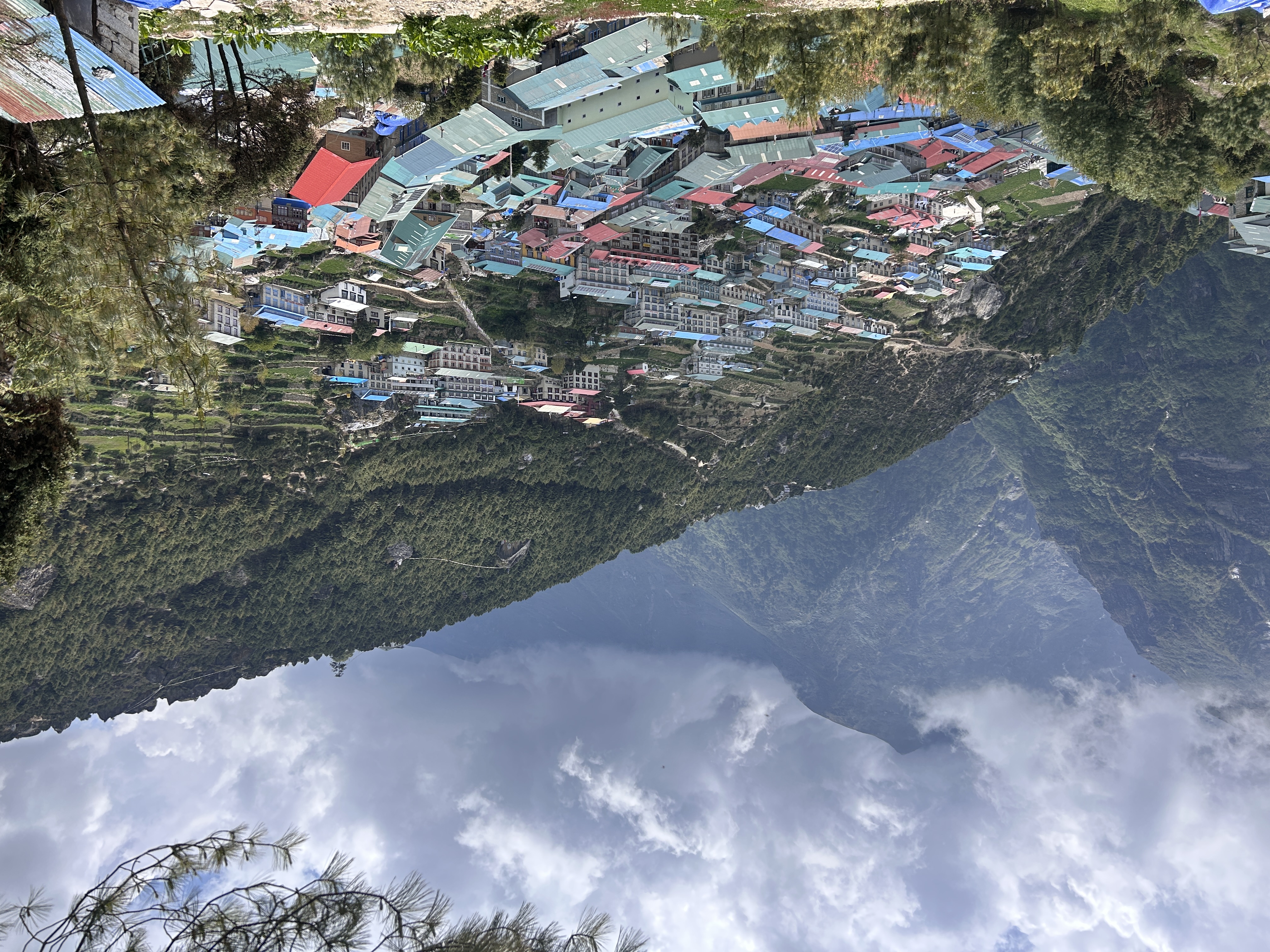
- Namche
- Khumjung
- Tengboche
- Dingboche
- Lobuche
- Gorakshep
- Base camp
- Kala Patthar slopes
- Pheriche
- Namche
- Lukla
01 / Hyderabad → Kathmandu → Lukla
A last-minute yes.
A long way from how I felt.
The thought arrived in the third week of May. I had been feeling low, restless in a way I recognised. I wanted to go somewhere that asked something of me. Within days, I had booked Nepal. Everest Base Camp was suddenly real.
There had been no physical preparation. Khopra had taught me the rhythm of teahouses: somewhere to sleep at the end of a day, and a trail to walk between them. I organised this journey myself, without an agency, guide or porter.
I left Hyderabad with a severe cold, a high fever and body aches. An overnight flight brought me to Kathmandu sleepless and ill. The excitement was there; so was a body that had a very different idea of what it needed.
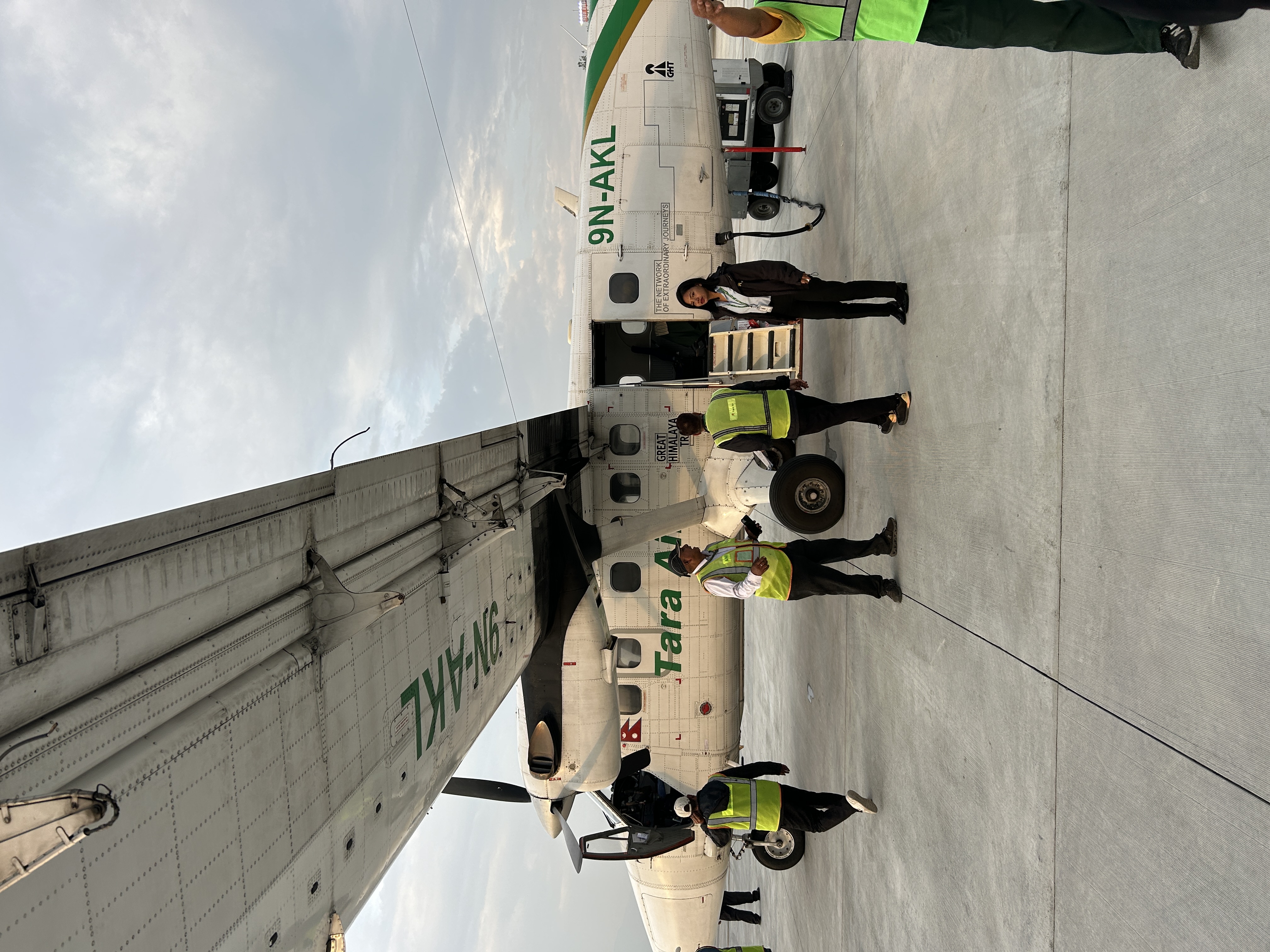
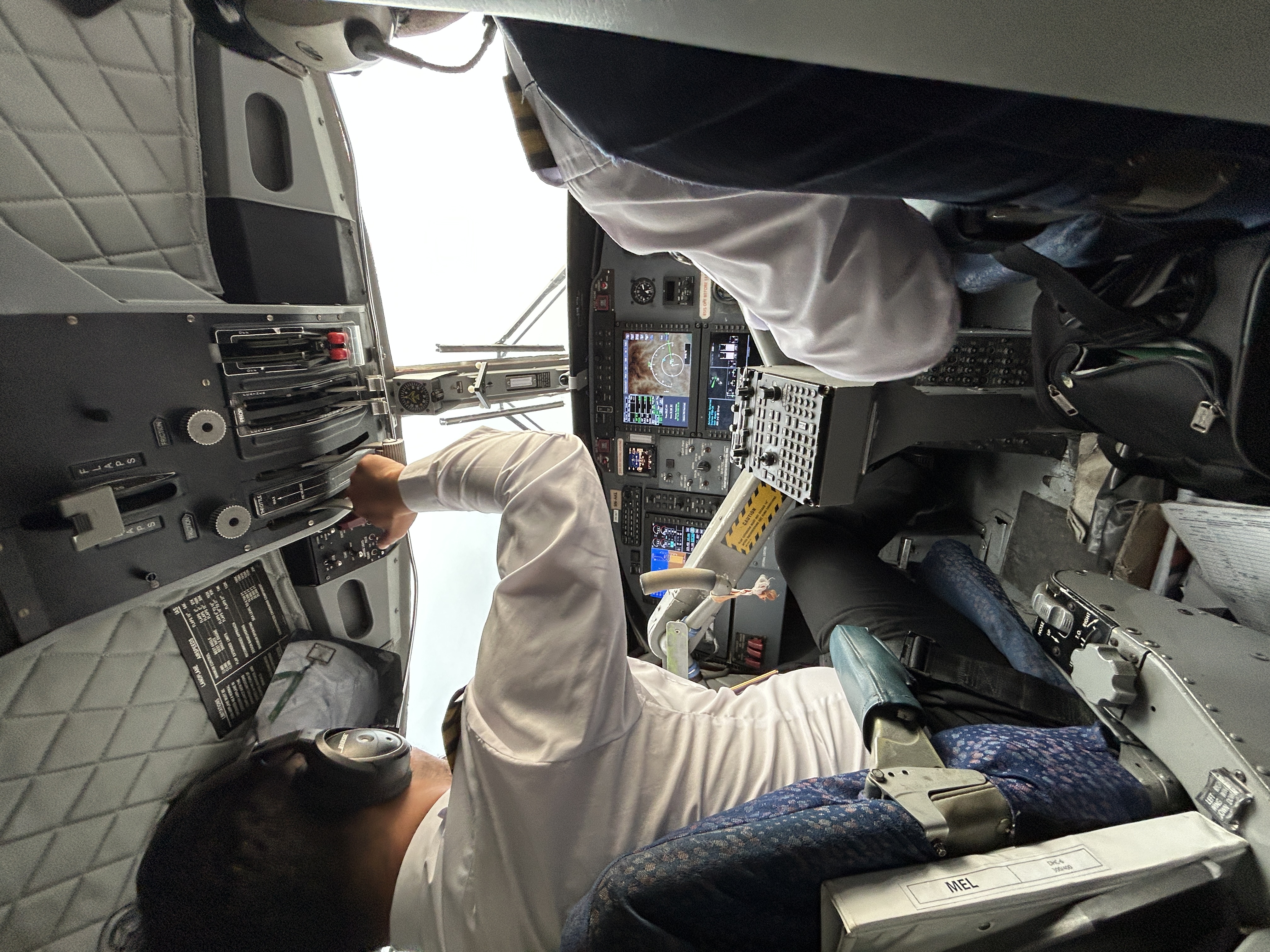
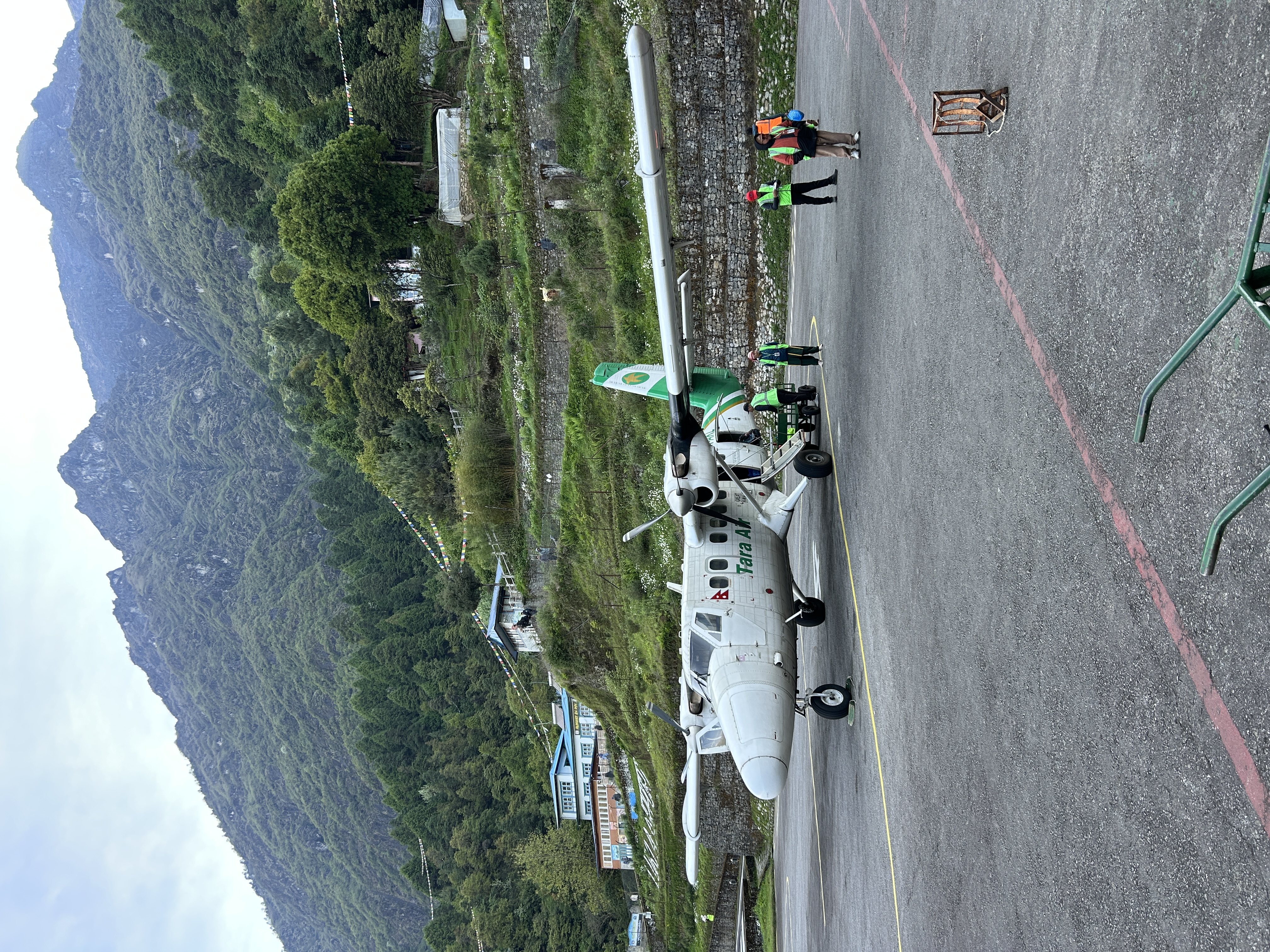
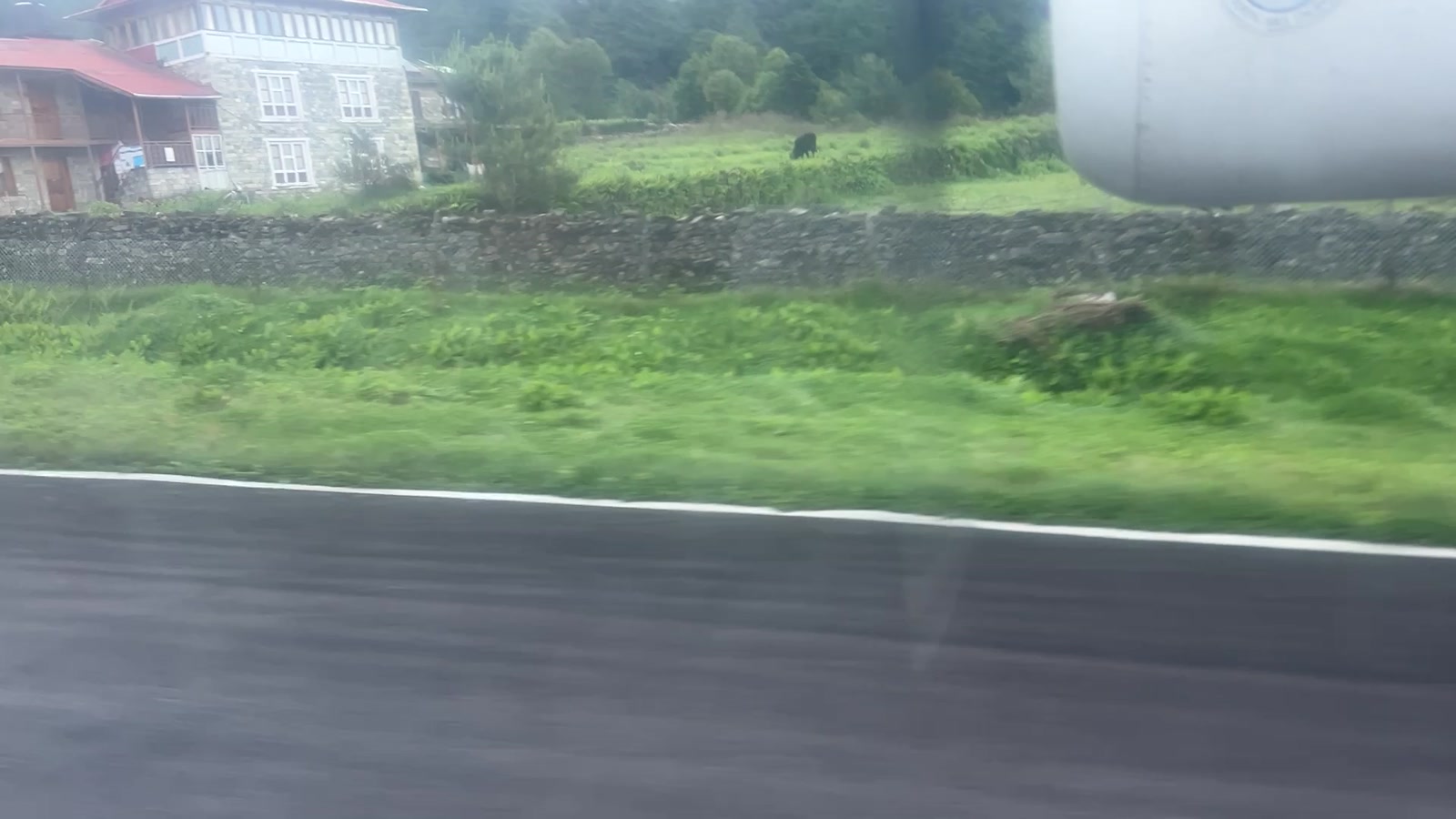
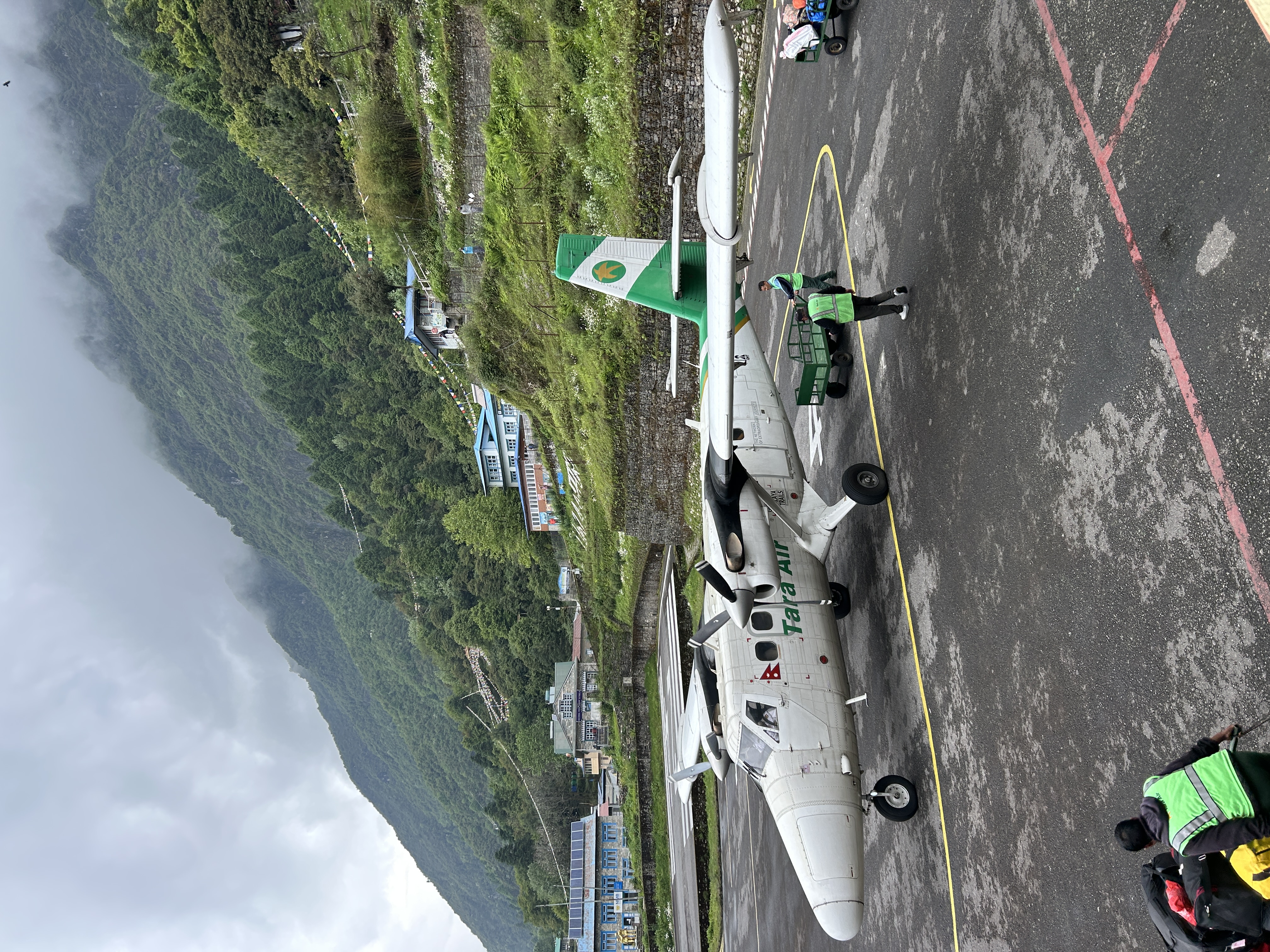
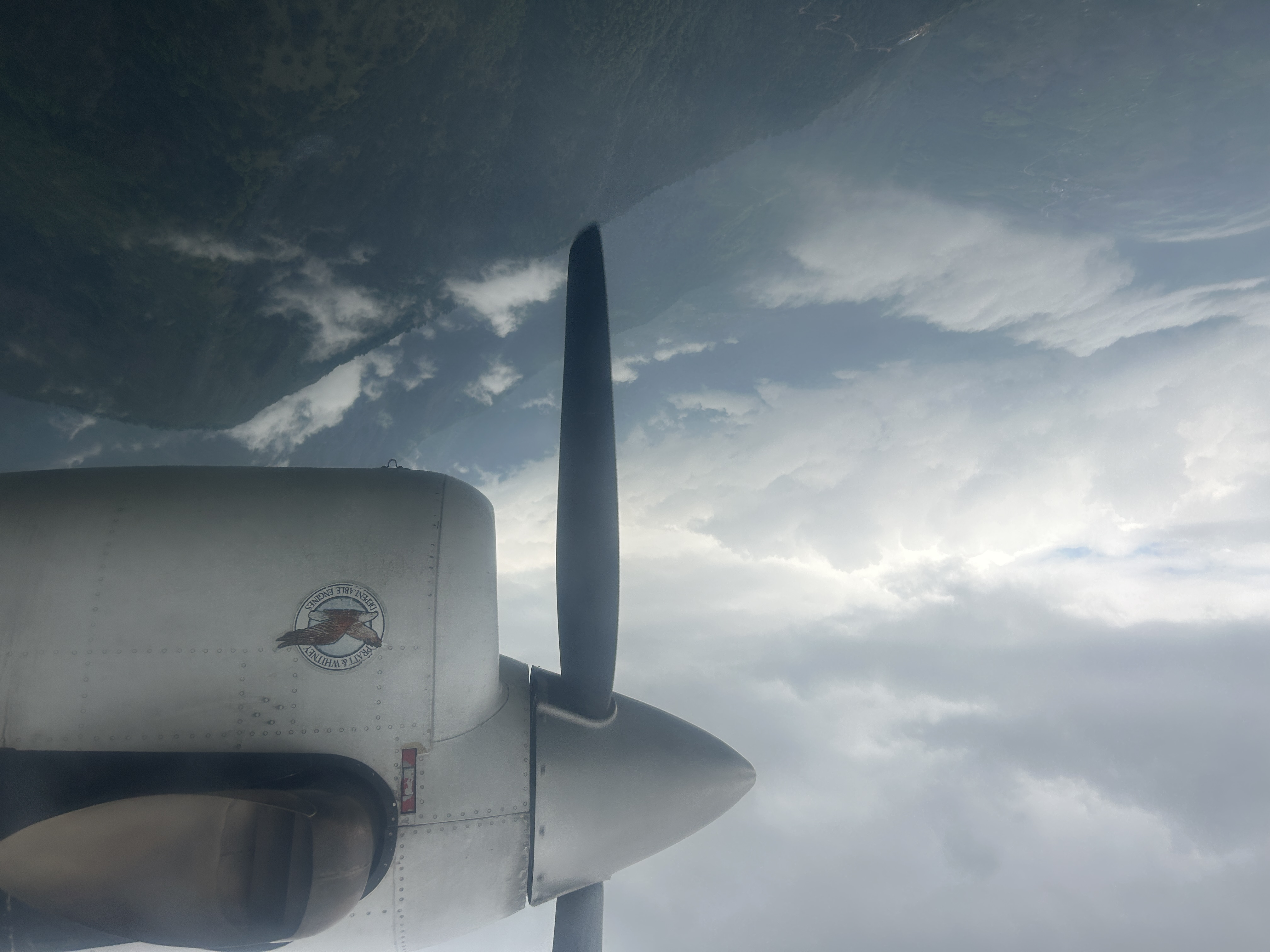
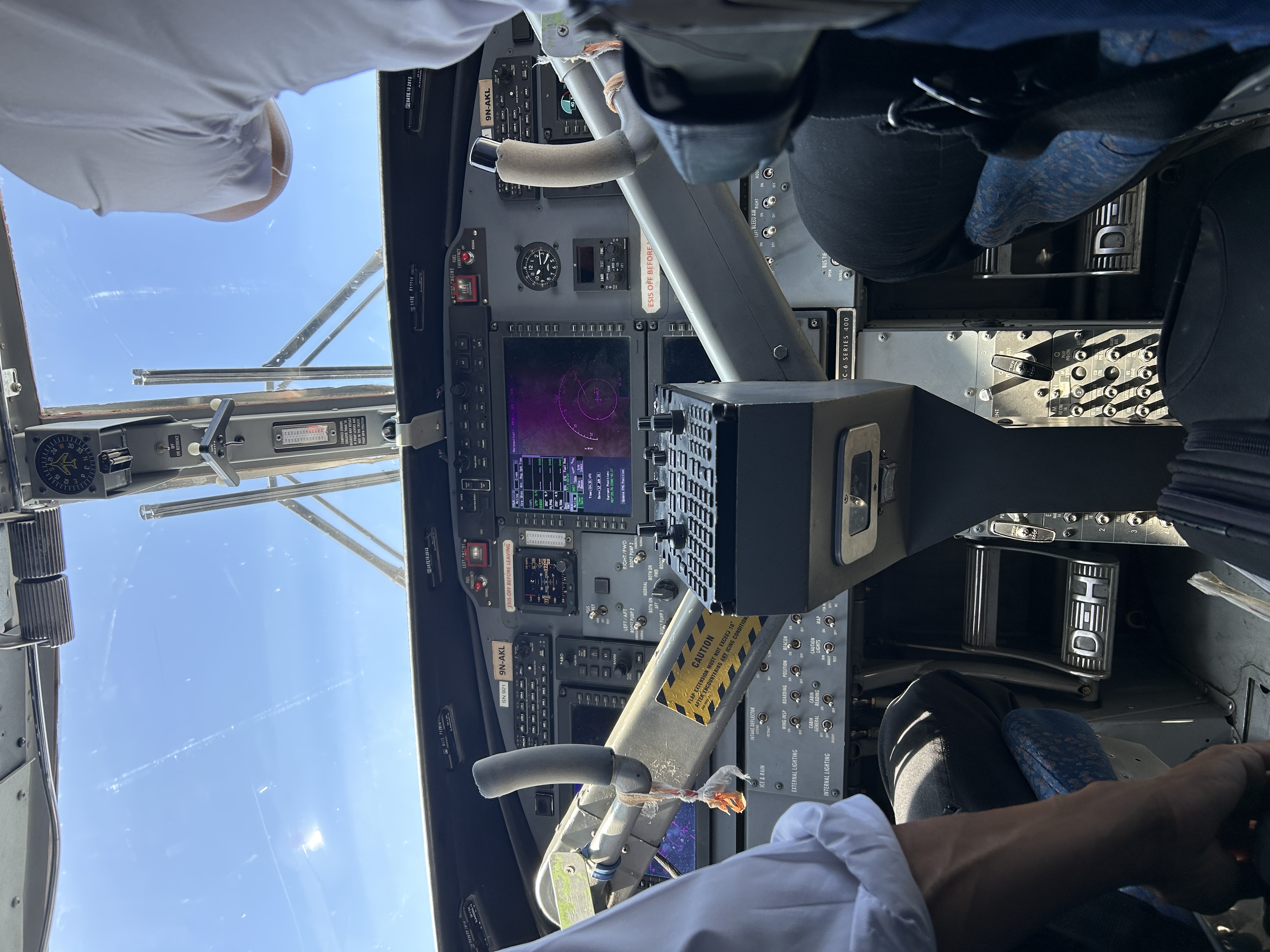
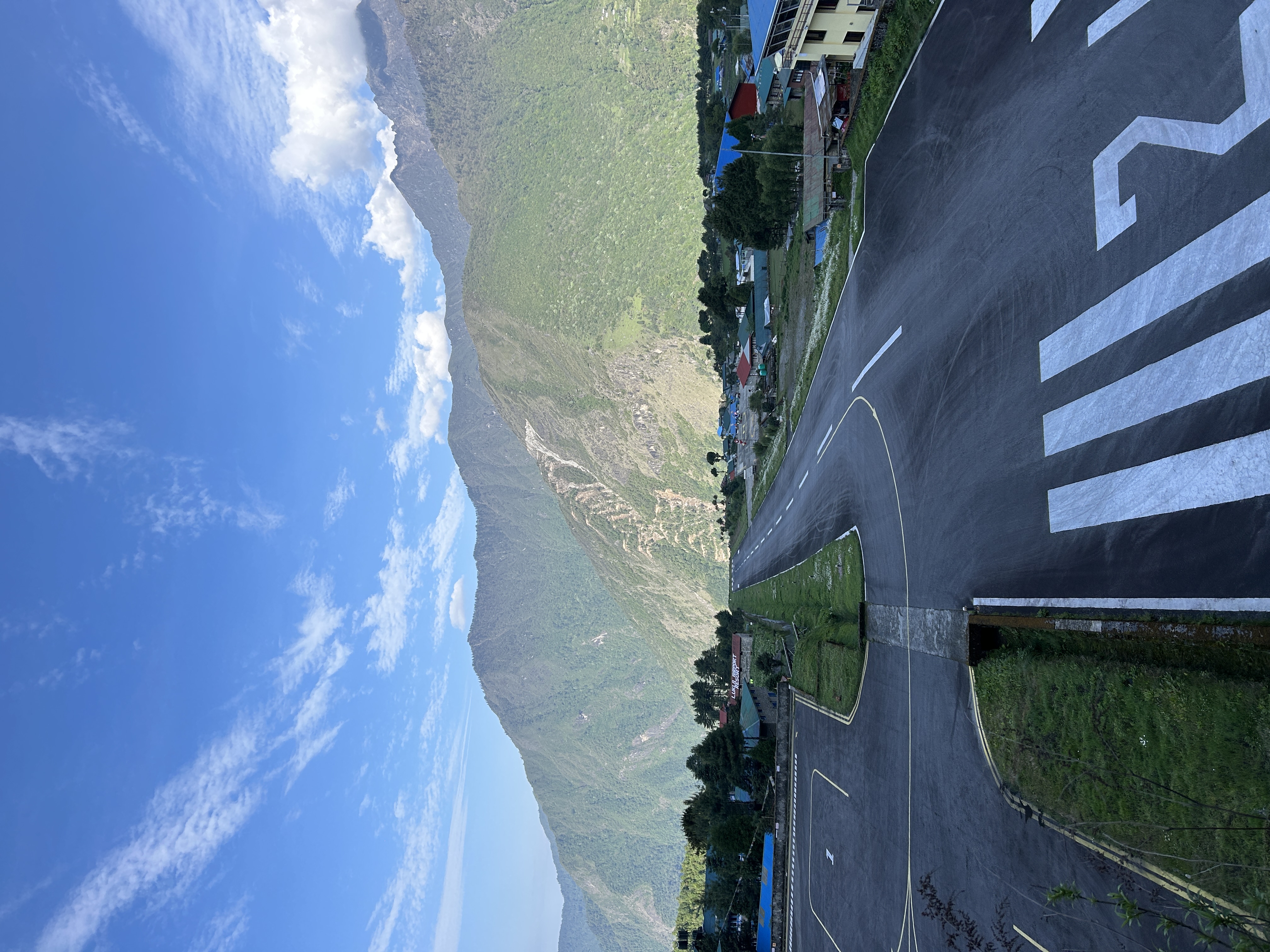
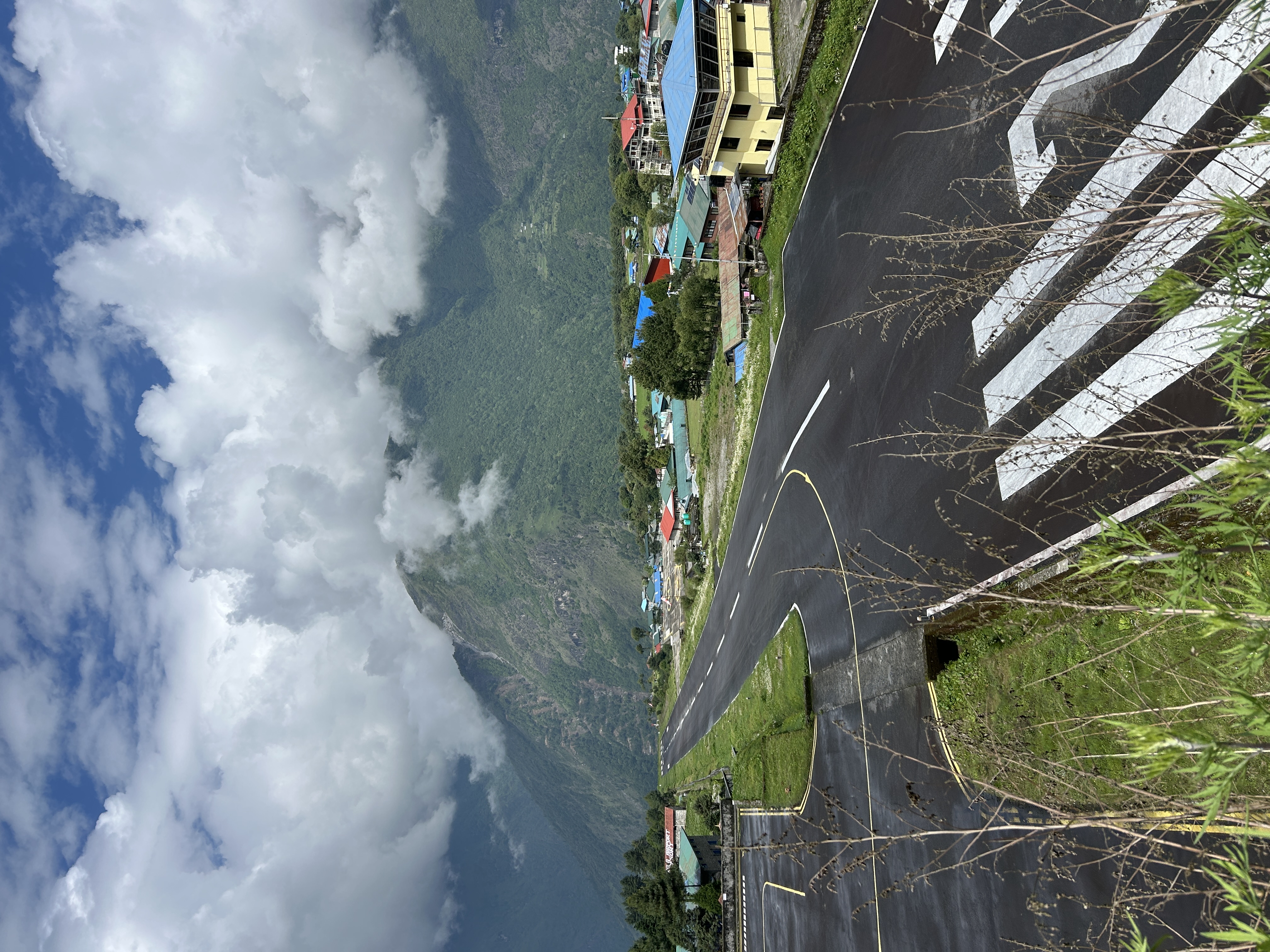
I knew the flight to Lukla might not go. Early June meant uncertain weather, and I had left room in my mind for a delay. Instead, the little plane took off. Every gust seemed to move it. Then the runway appeared in the mountains.
Sound in the player
02 / Lukla → Phakding
The cold air.
The first few steps.
At Lukla, the chill woke something up in me. I repacked my rucksack, sorted the first permits and started walking. There was no group to gather, no one else’s pace to follow. Just the trail out of town.
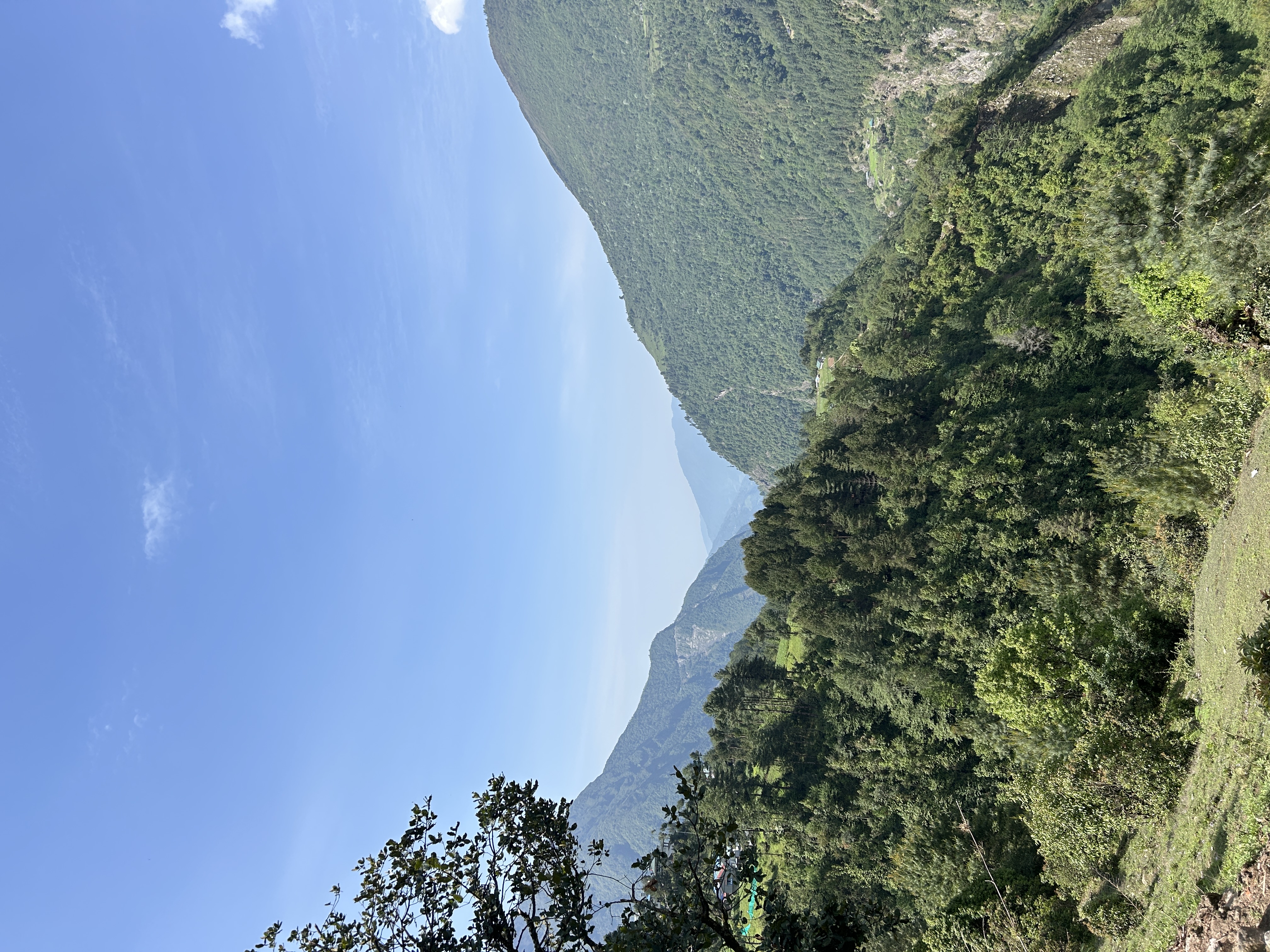
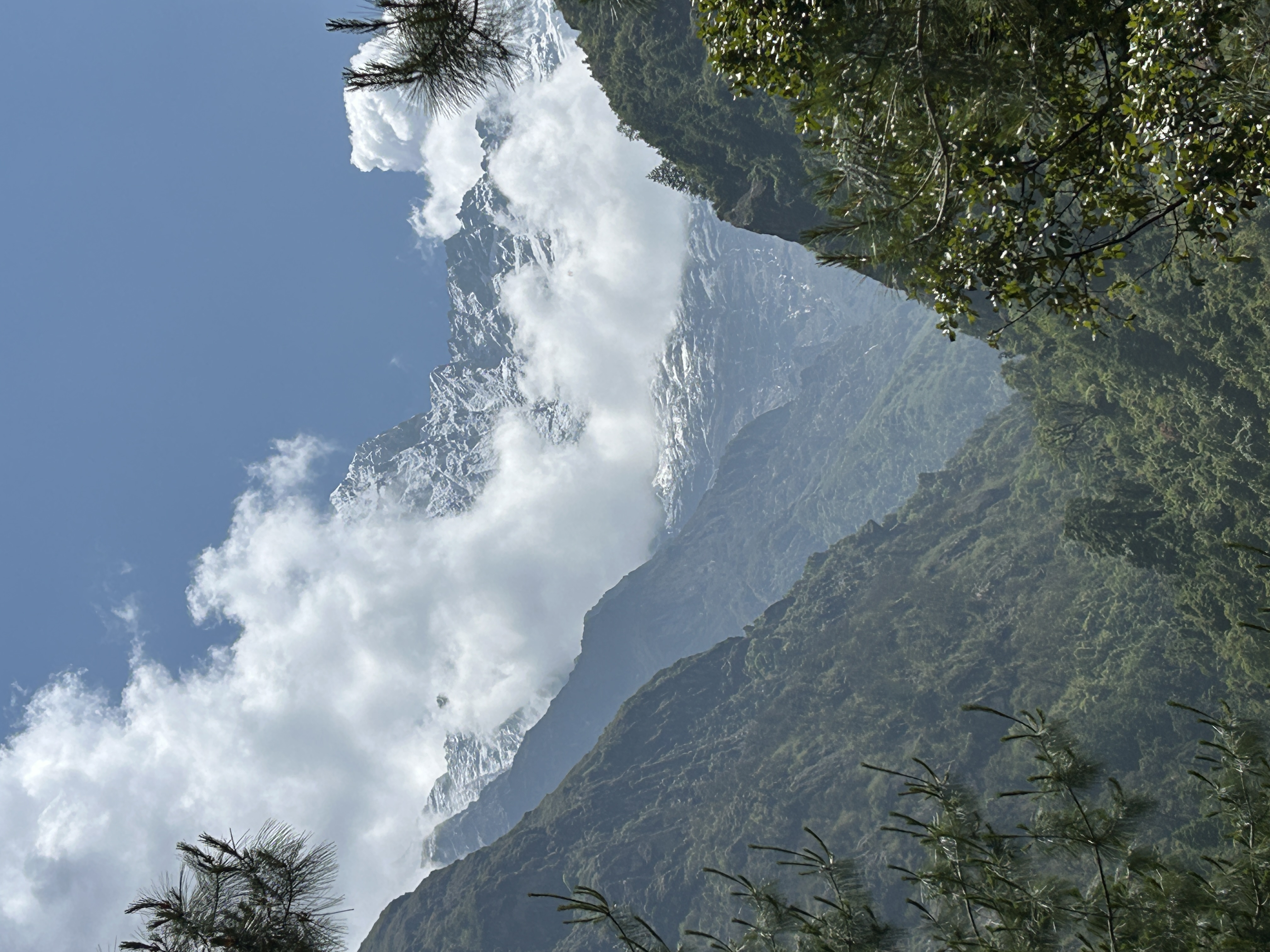
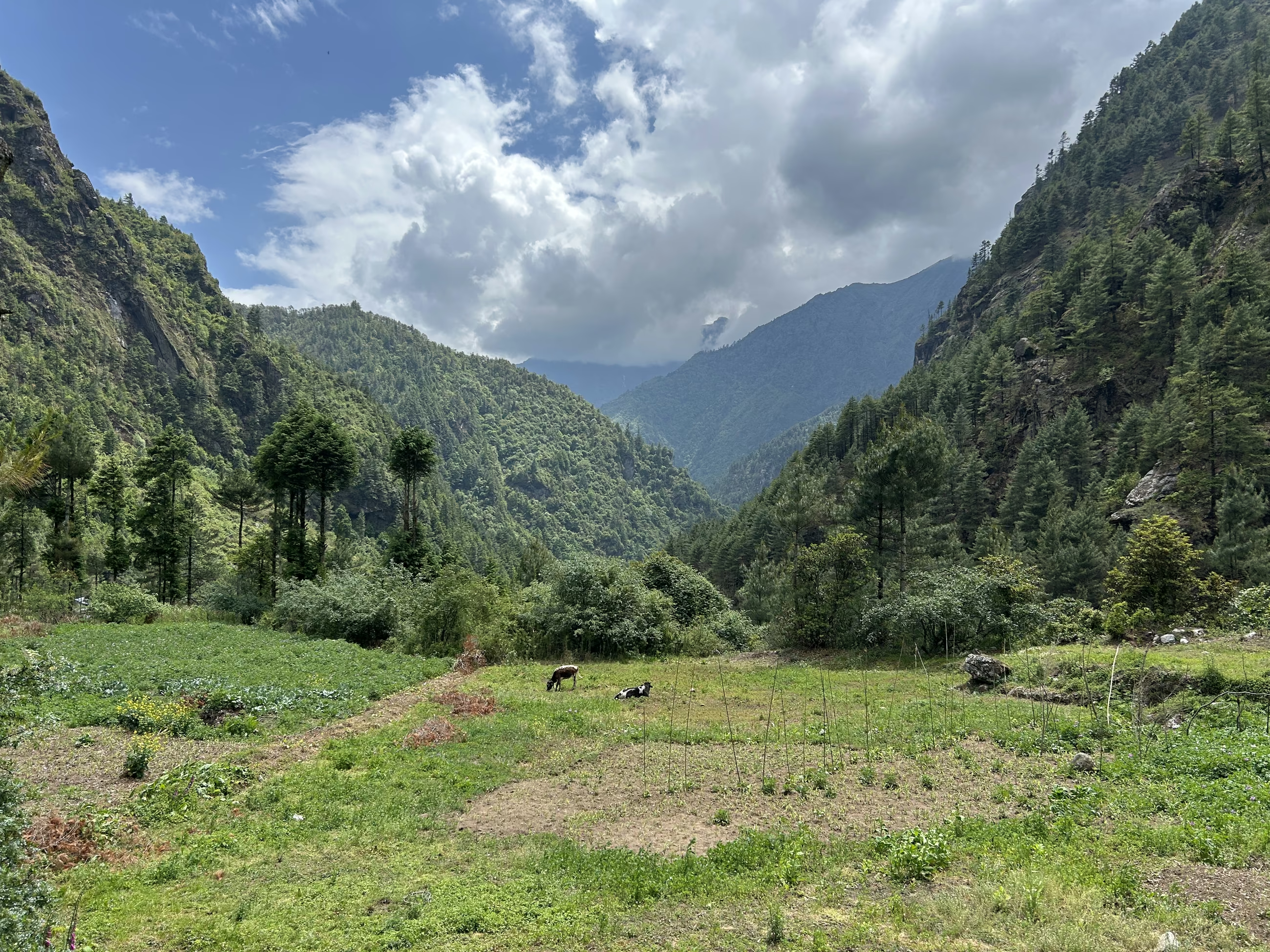
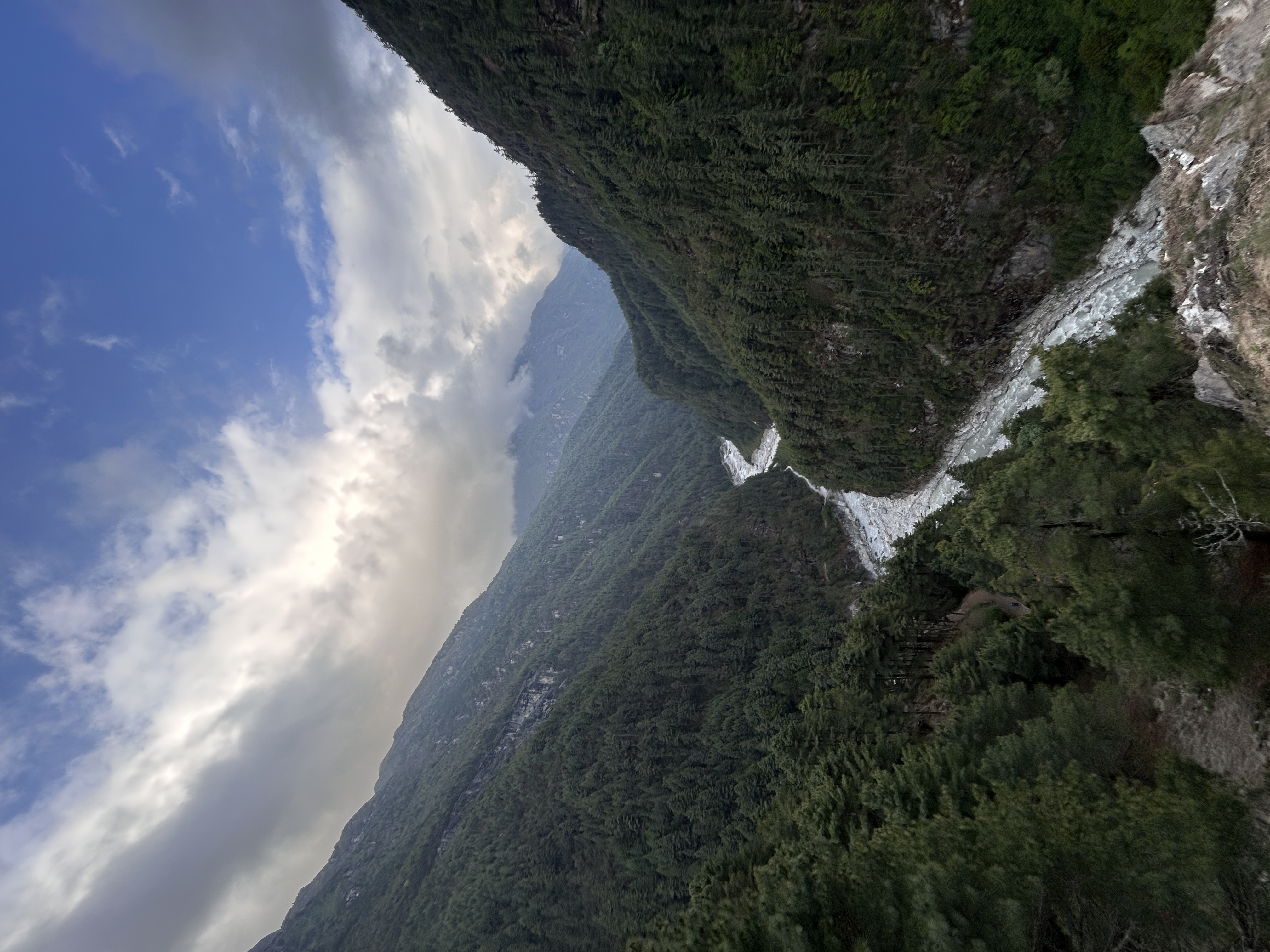
The valley was green, the bridges were new to me, and there were far fewer people than I had imagined on the Everest trail. My body was still finding its feet. I was sick and short of sleep, but the simple work of walking had begun.
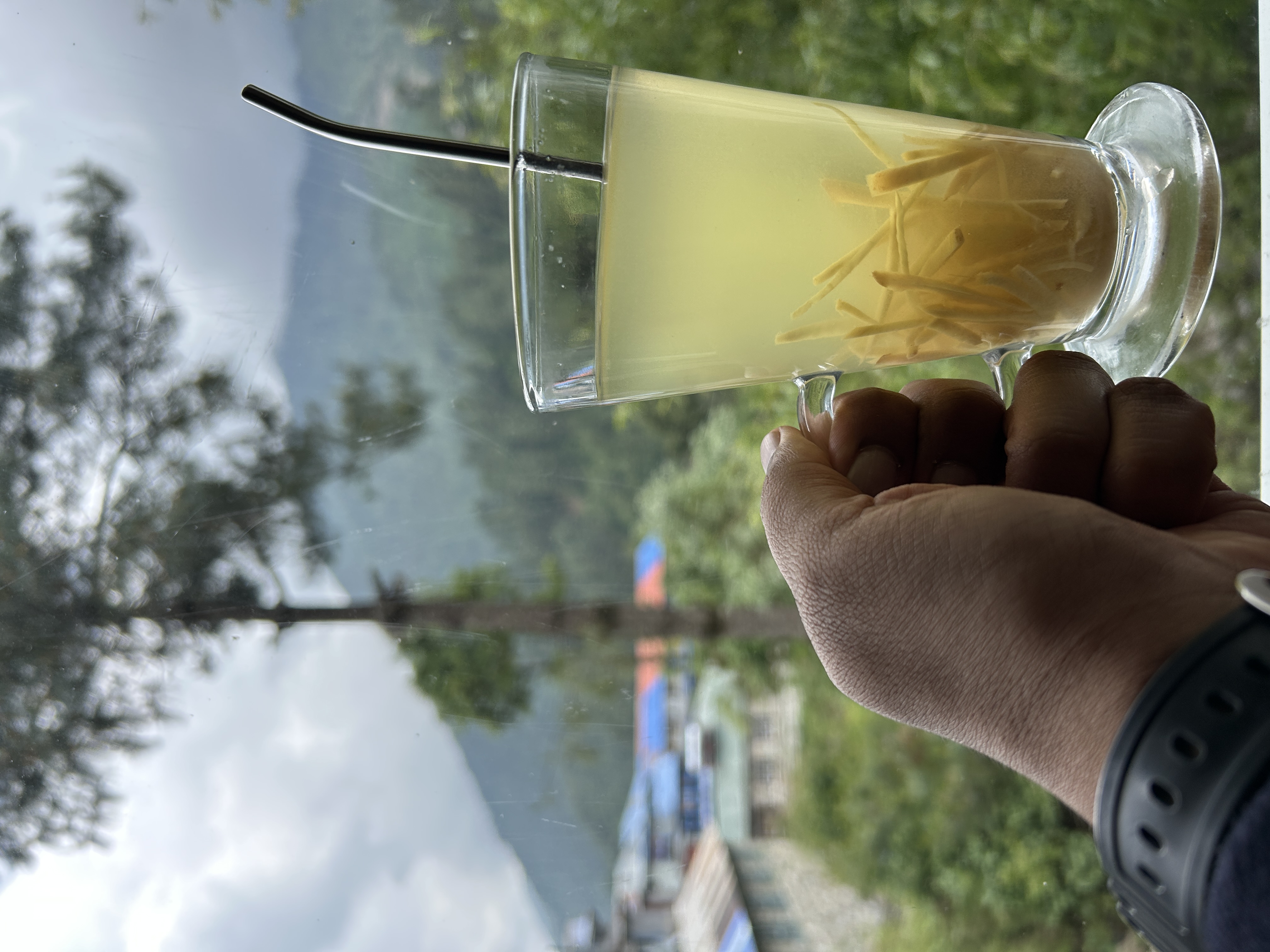
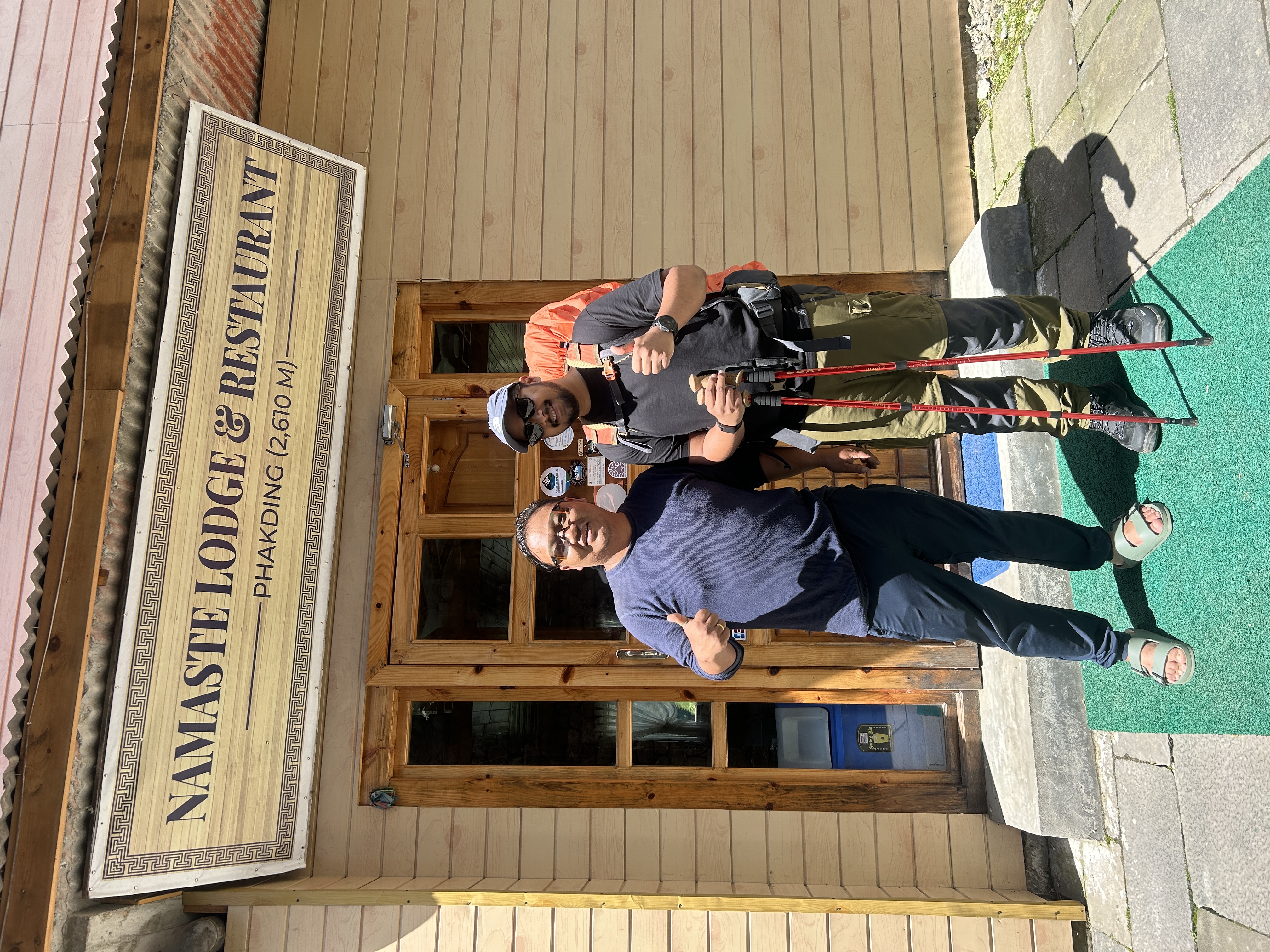
I stopped in Phakding for the night. A cup of hot ginger, lemon and honey felt extraordinary. A room, dinner, sleep. For the first time since leaving home, I could properly settle.
03 / Phakding → Namche Bazaar
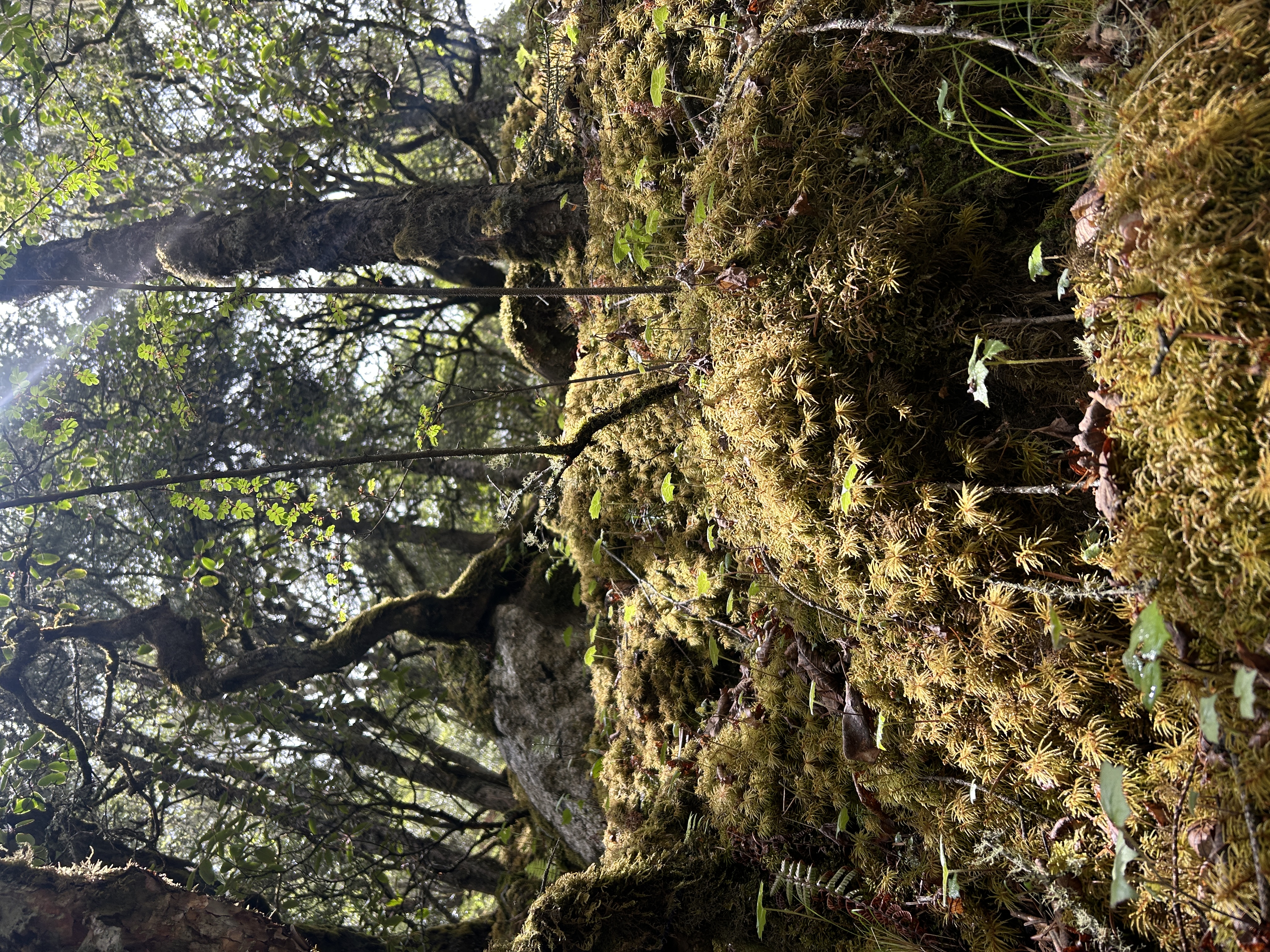
The forest went dark.
I kept finding the way.
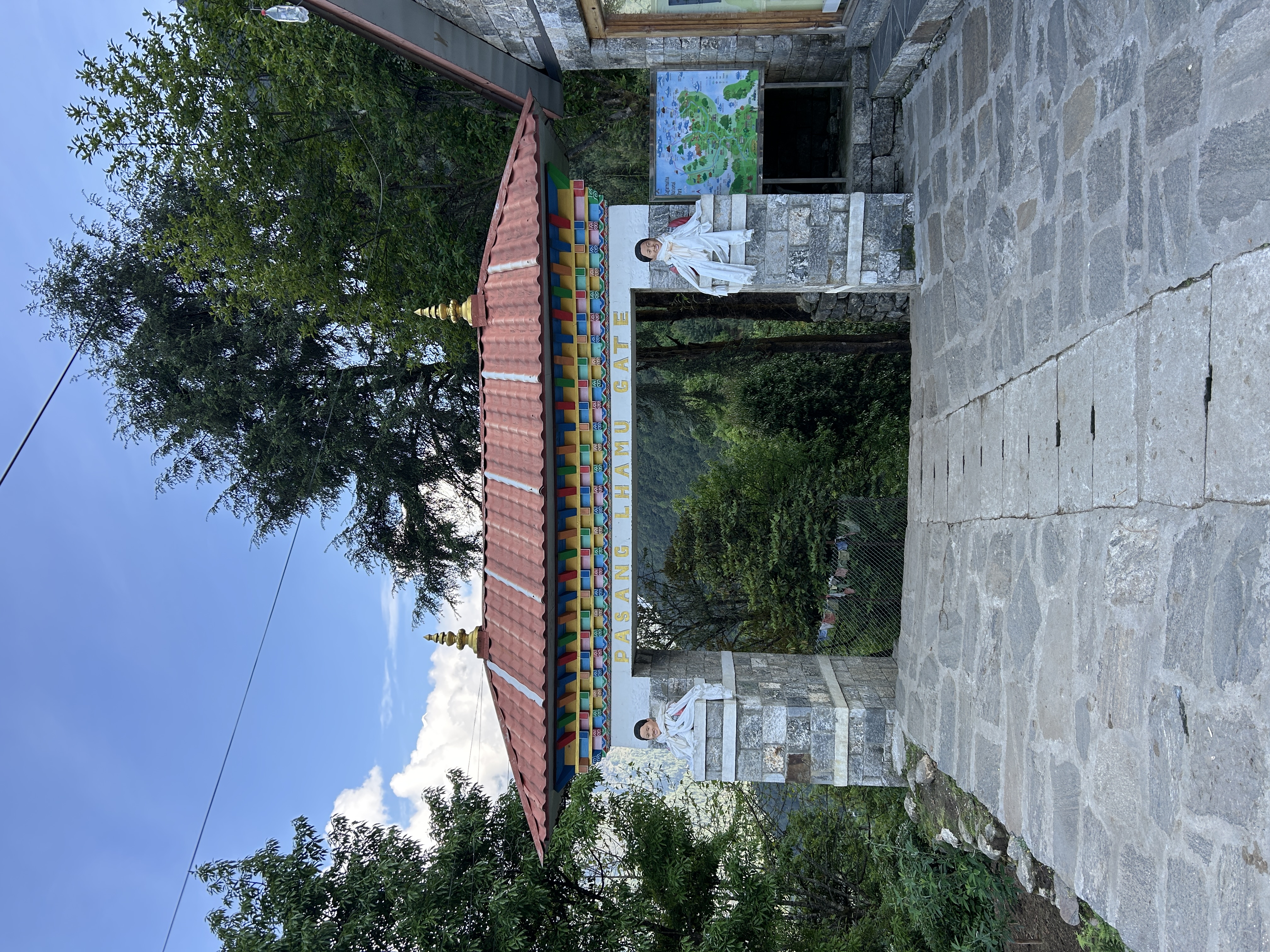
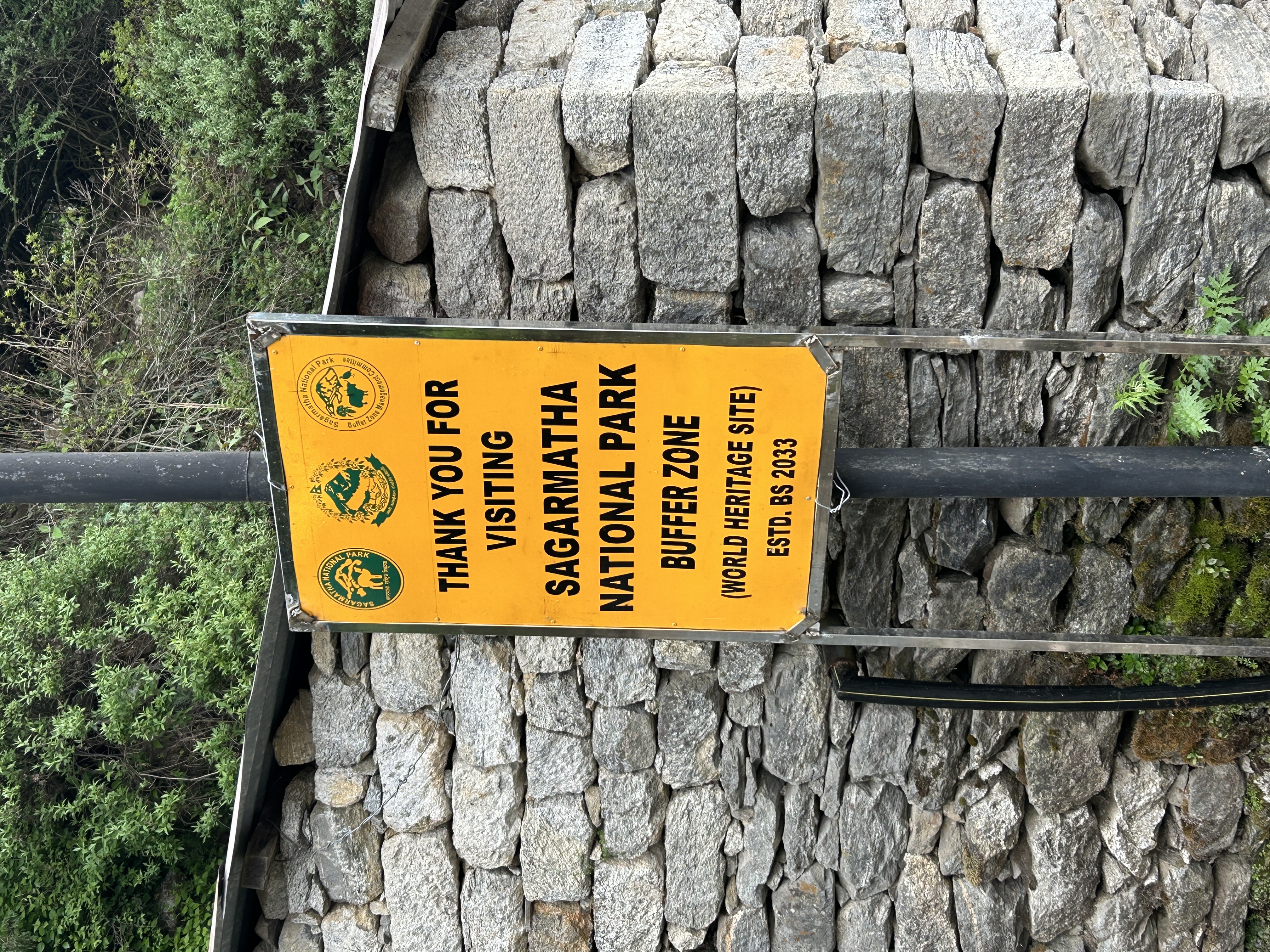
I left Phakding late, somewhere around ten or eleven. I had not yet learned the value of an early start here. There was a river to follow, permits to finish near the national park entrance, and the long climb into Namche still ahead.
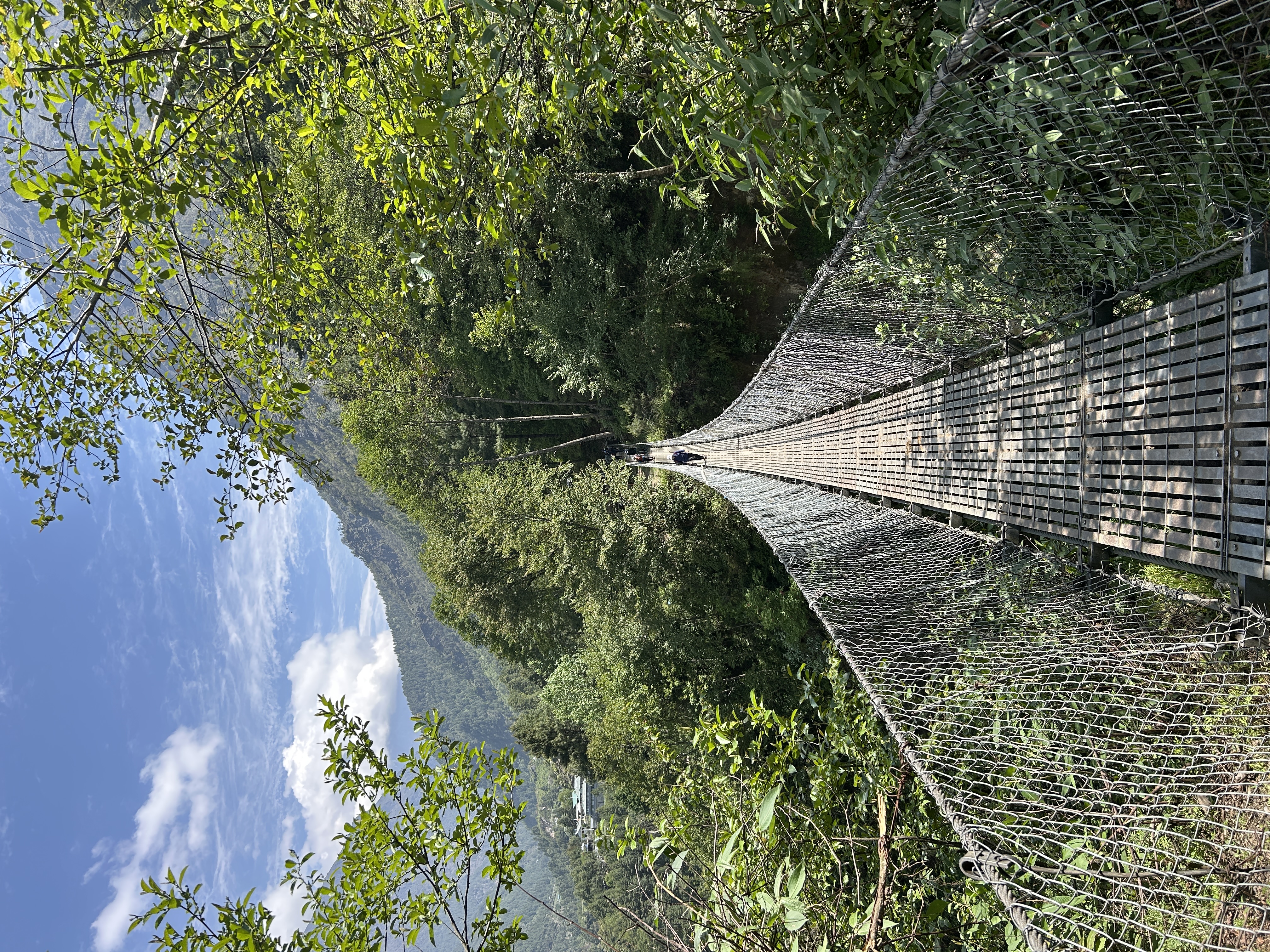
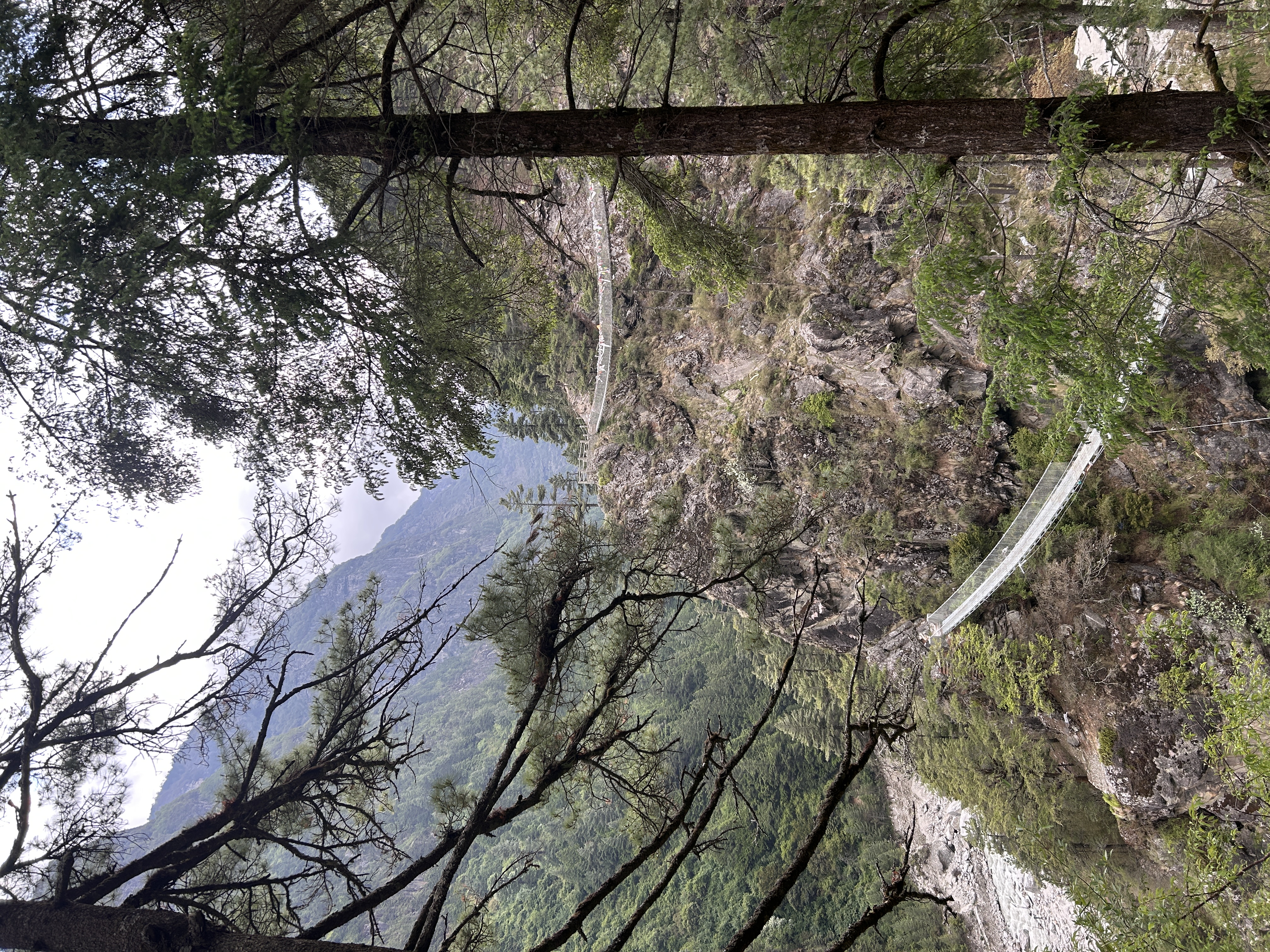
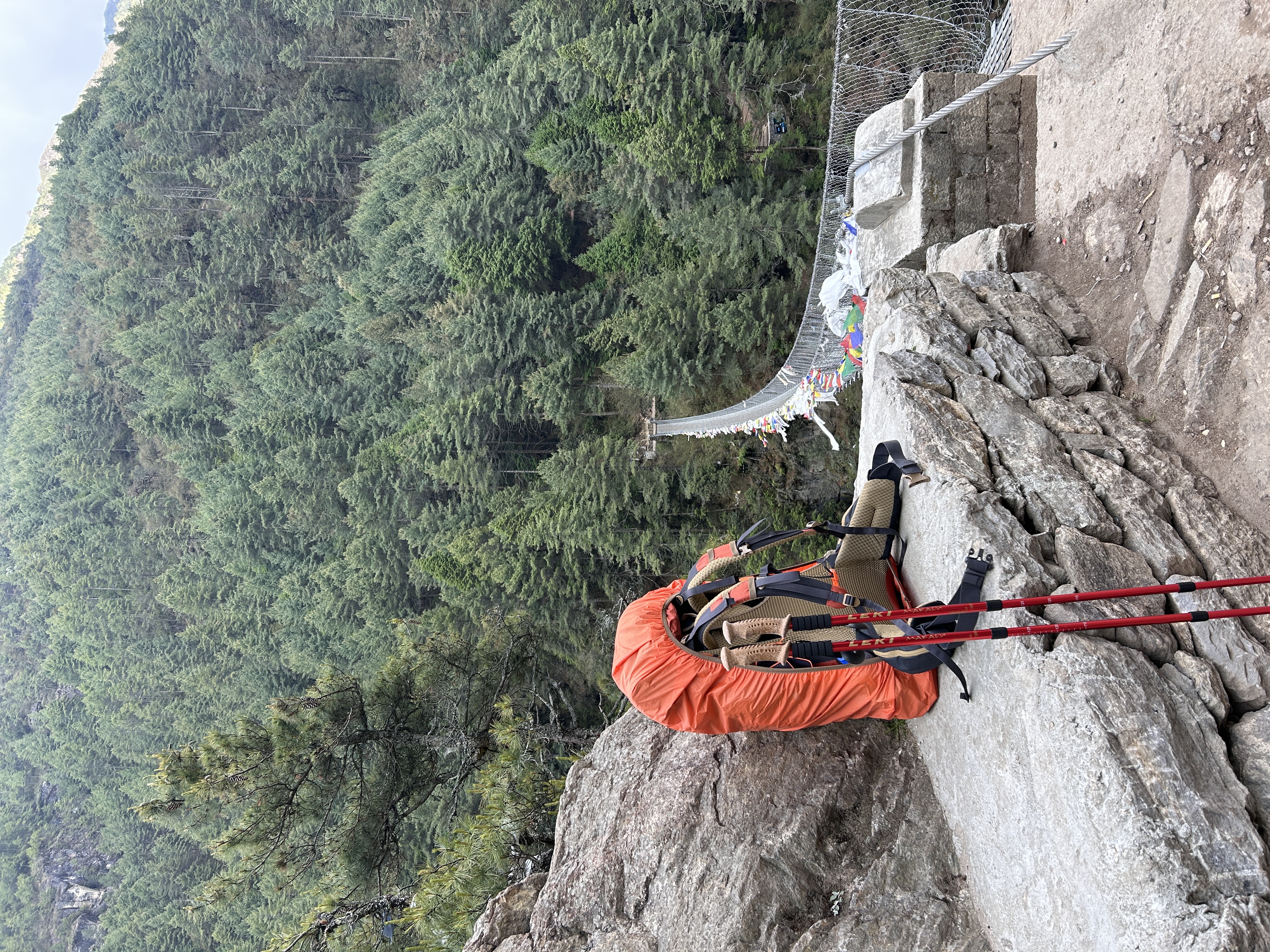
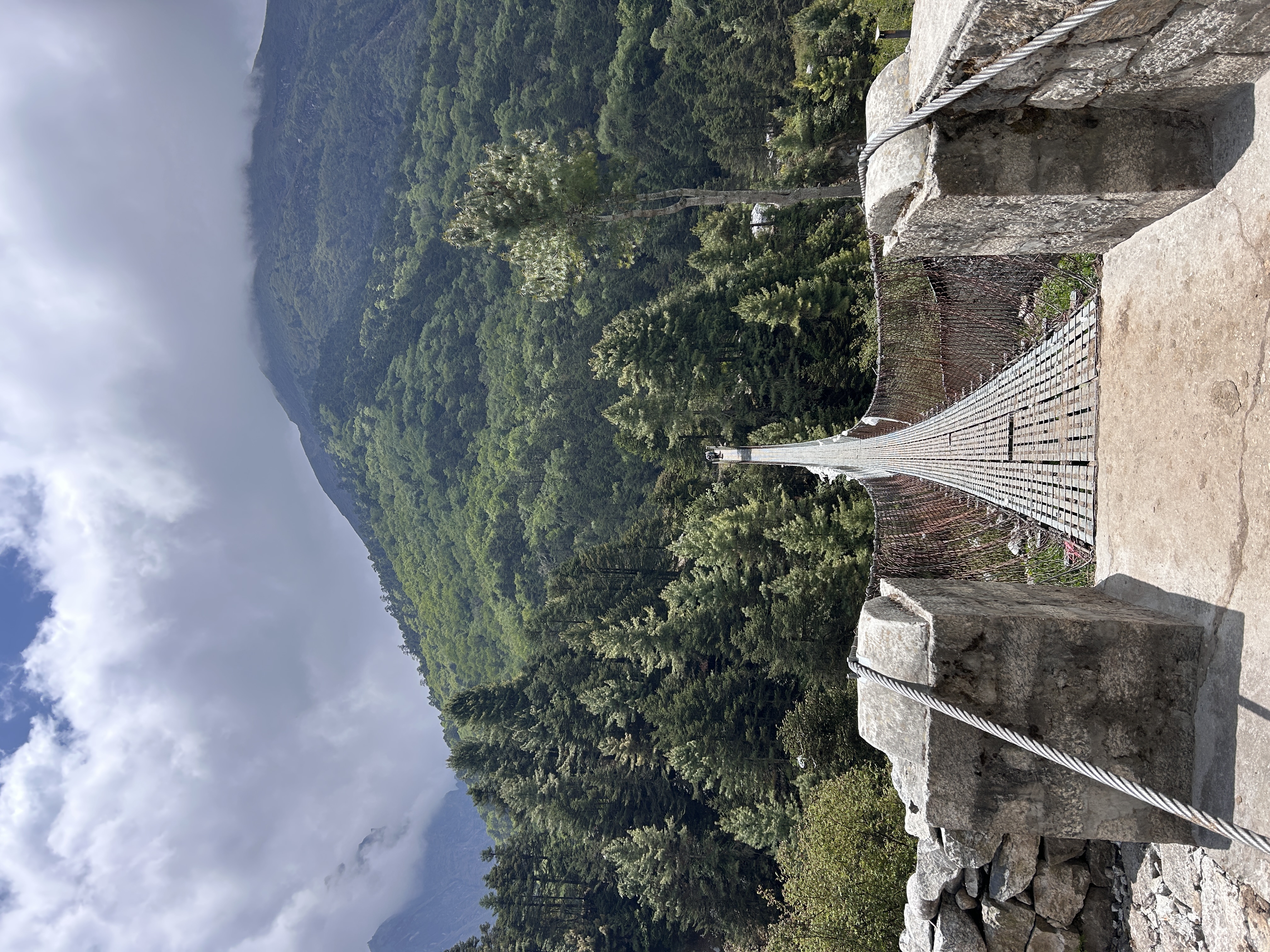
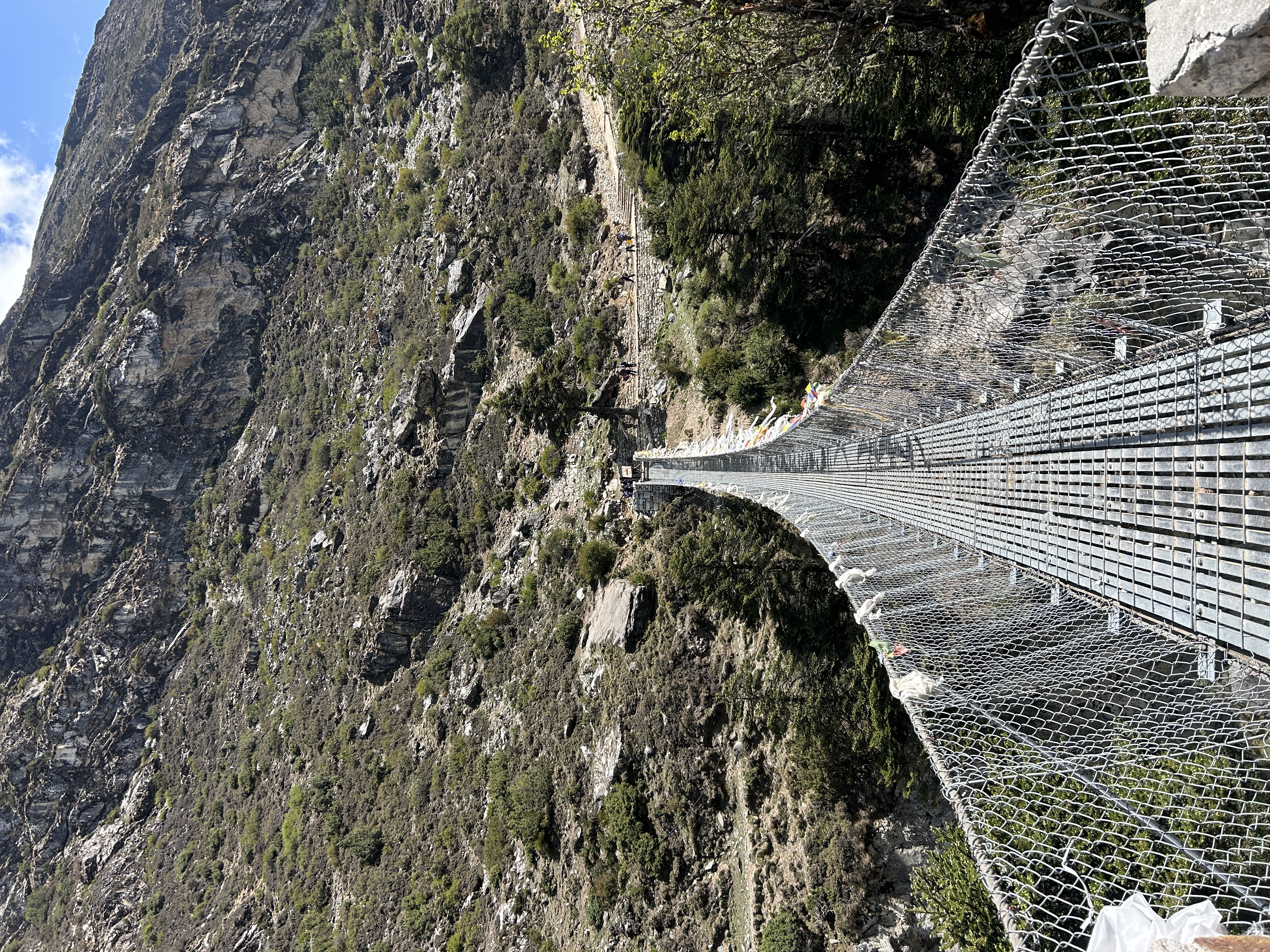
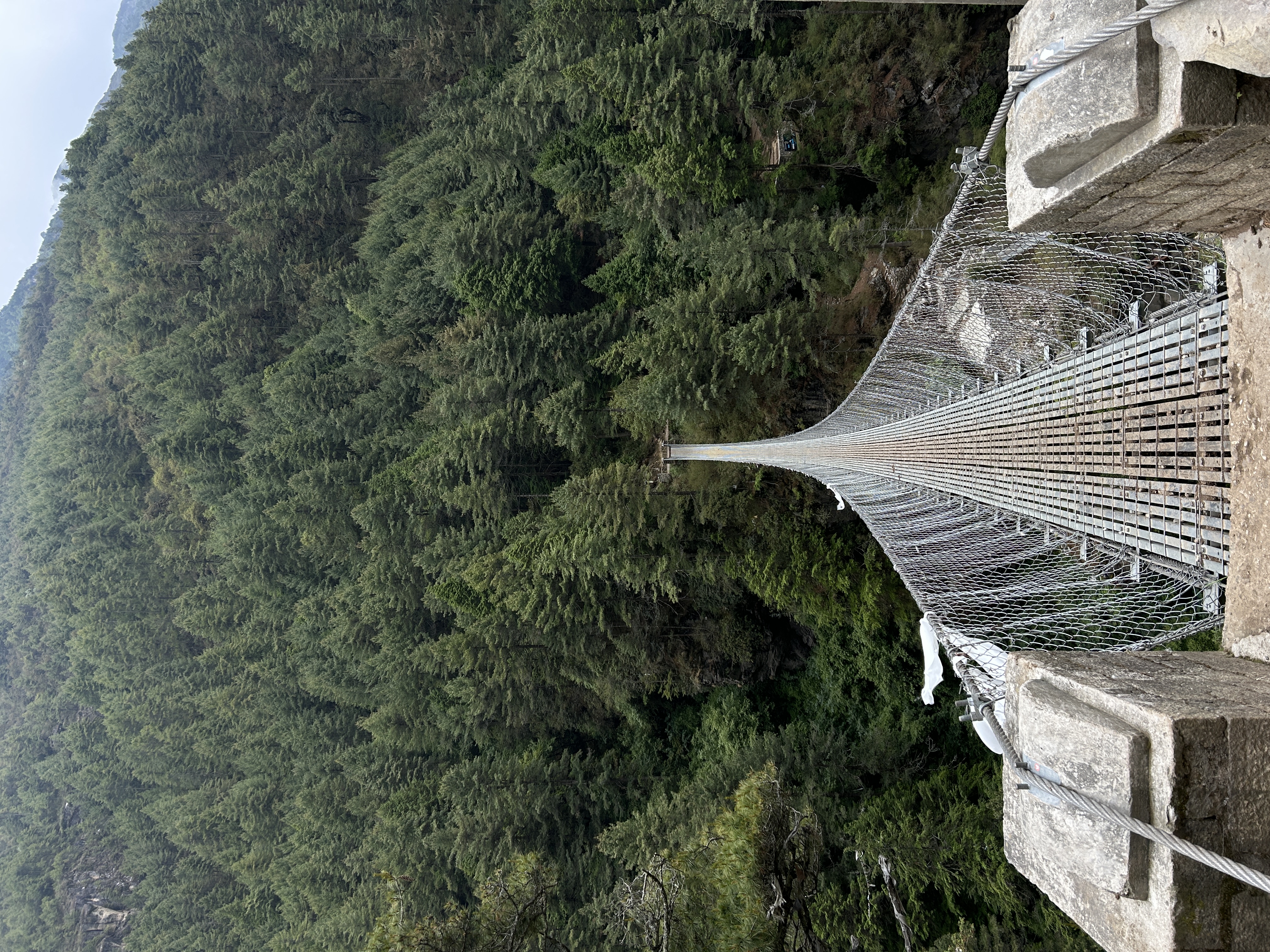
The suspension bridges stopped me in my tracks. The Hillary Bridge hung high in that enormous valley, and I crossed it looking everywhere. I remember seeing perhaps ten people over the whole day.
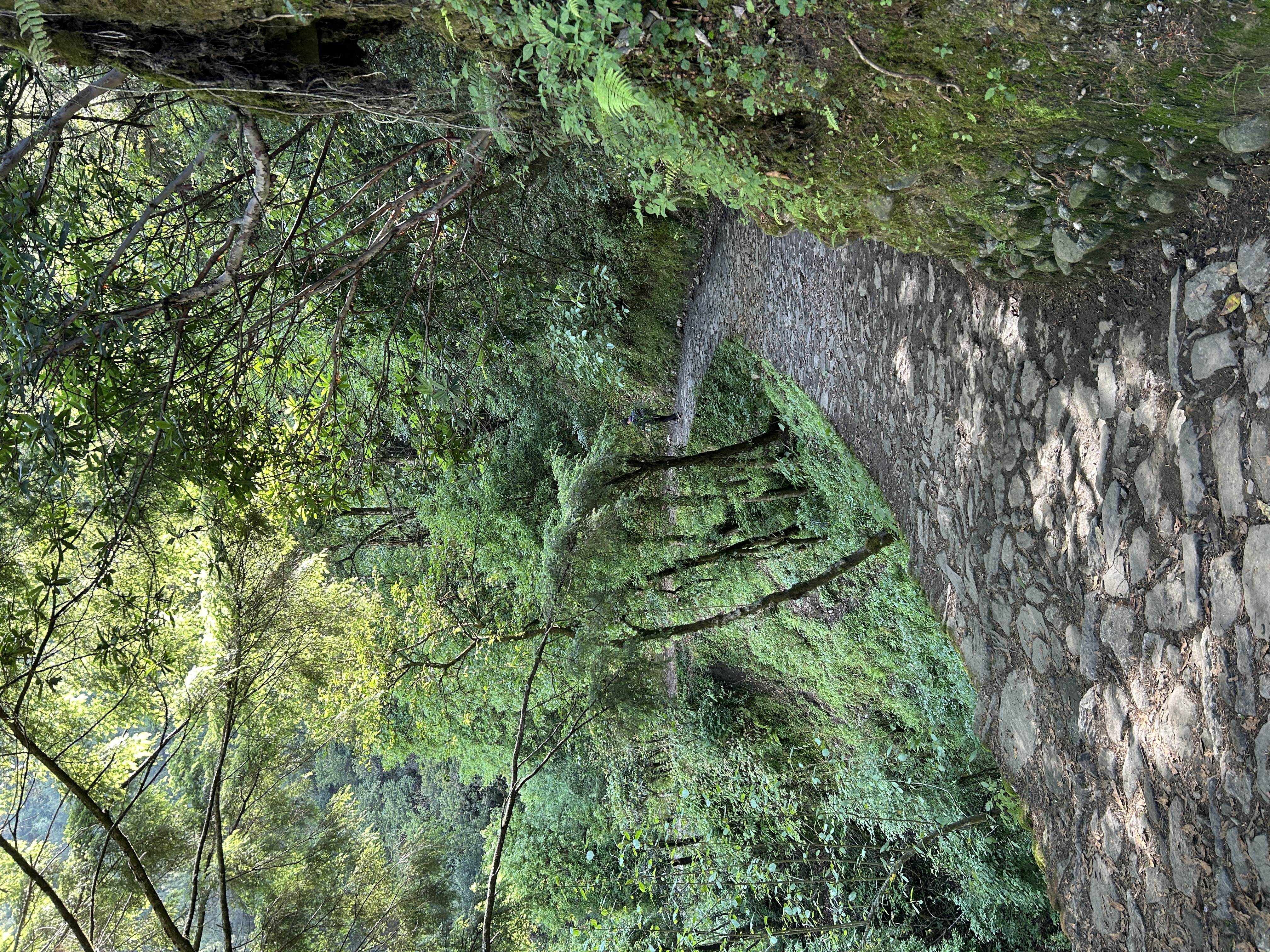
By about seven, the forest was dark. I was still climbing. My phone held the offline map; its little light picked out whatever was immediately in front of me. There were sounds I could not place. The next stretch of path was all I could be certain of.
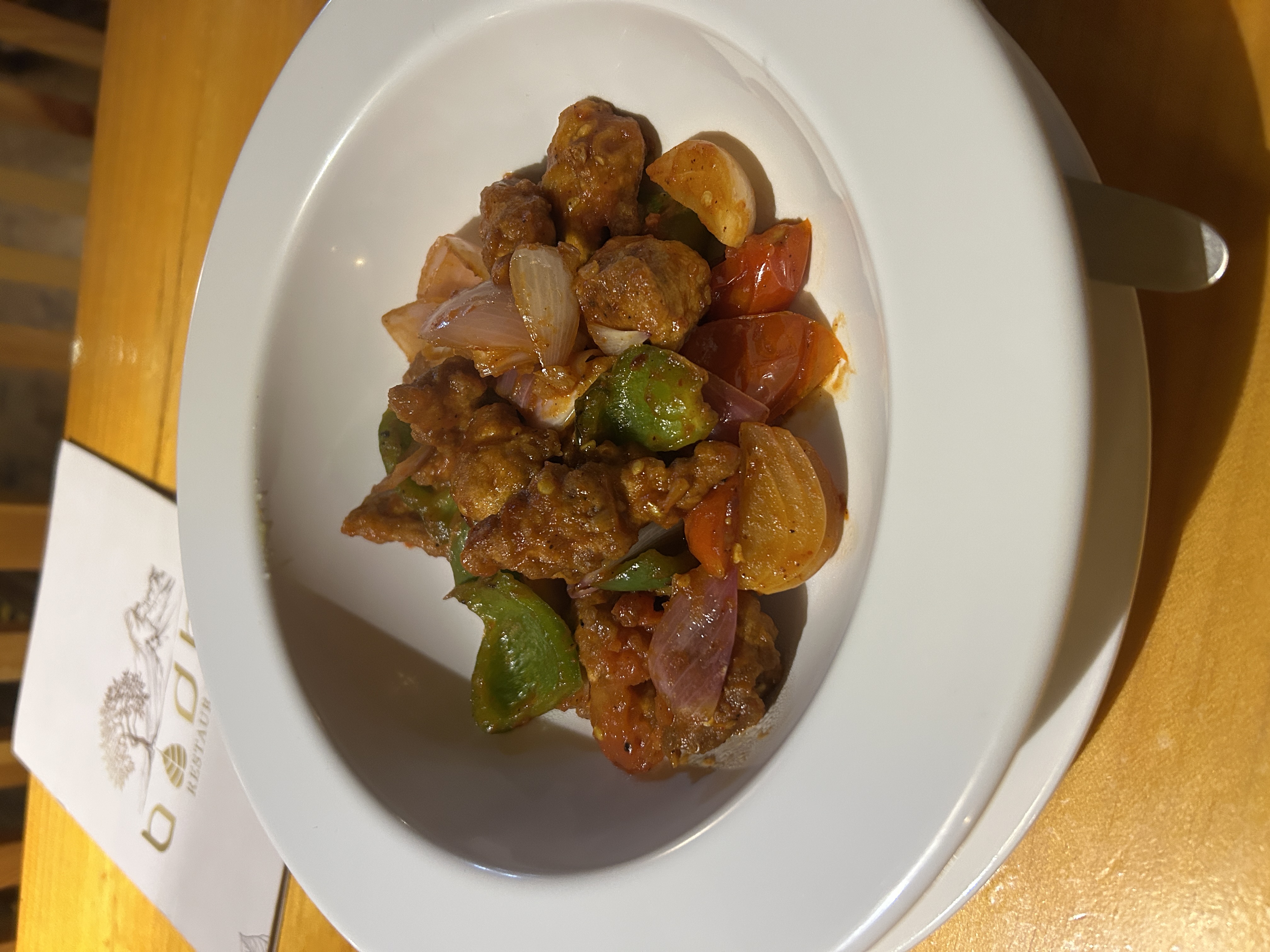
I reached Namche at around nine at night. After those hours under the trees, the first lights felt immense. Bodhi Namche had a room and a hot dinner. I ate, and finally slept.
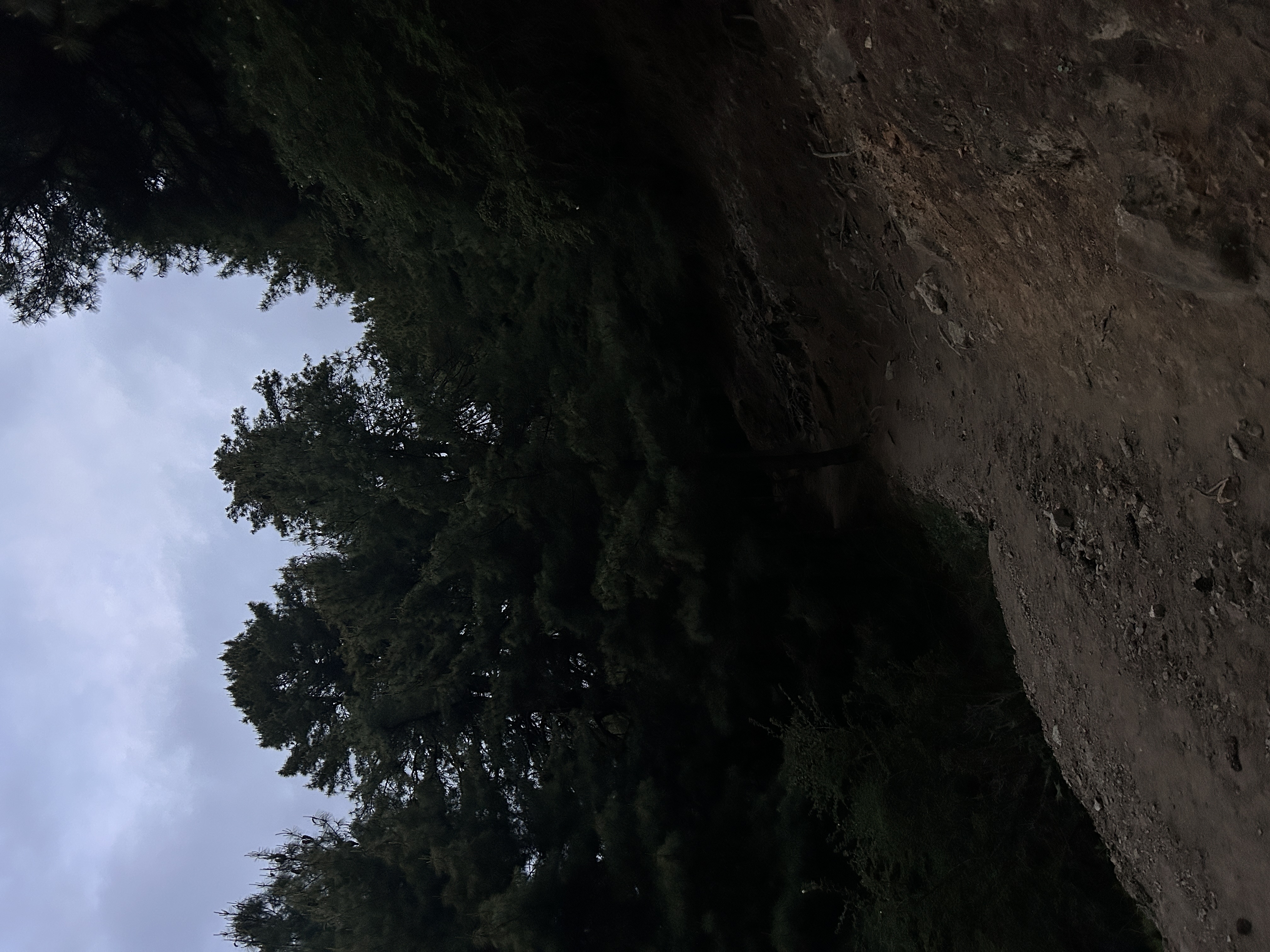
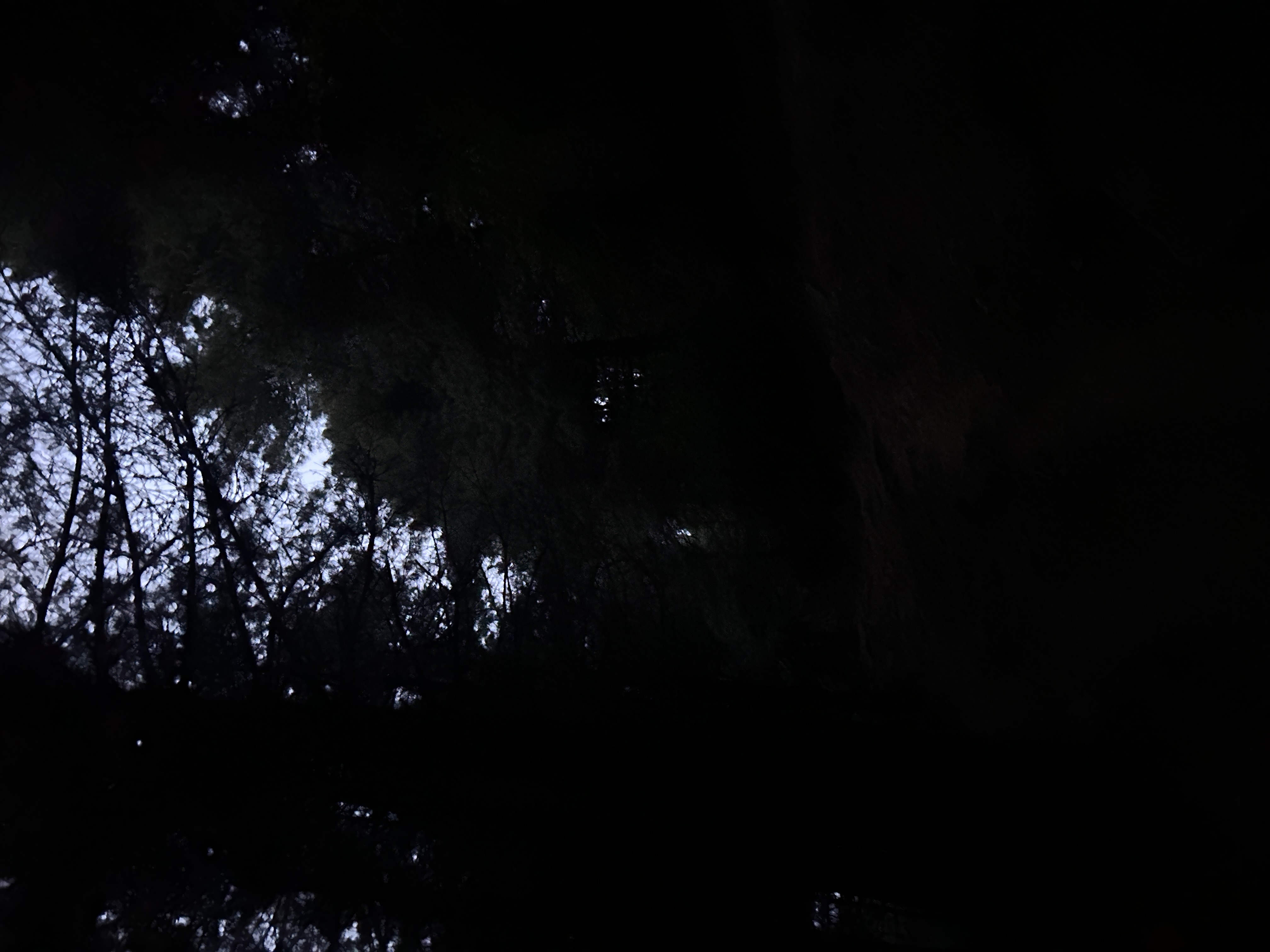
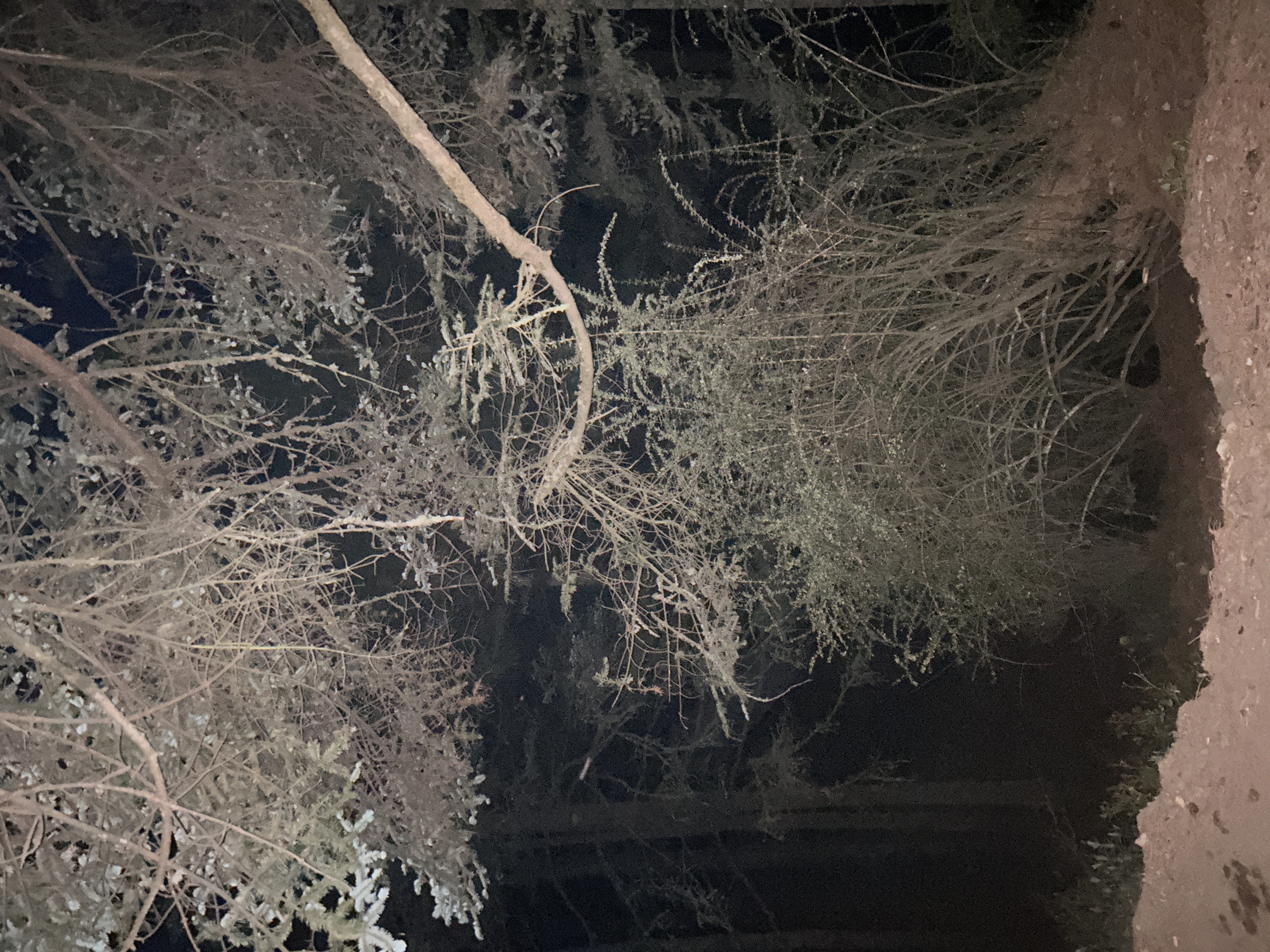
~7 pm / The forest goes dark.
~9 pm / Namche, at last.
04 / Namche → Everest View Hotel → Khumjung
A little less weight.
A little more room.
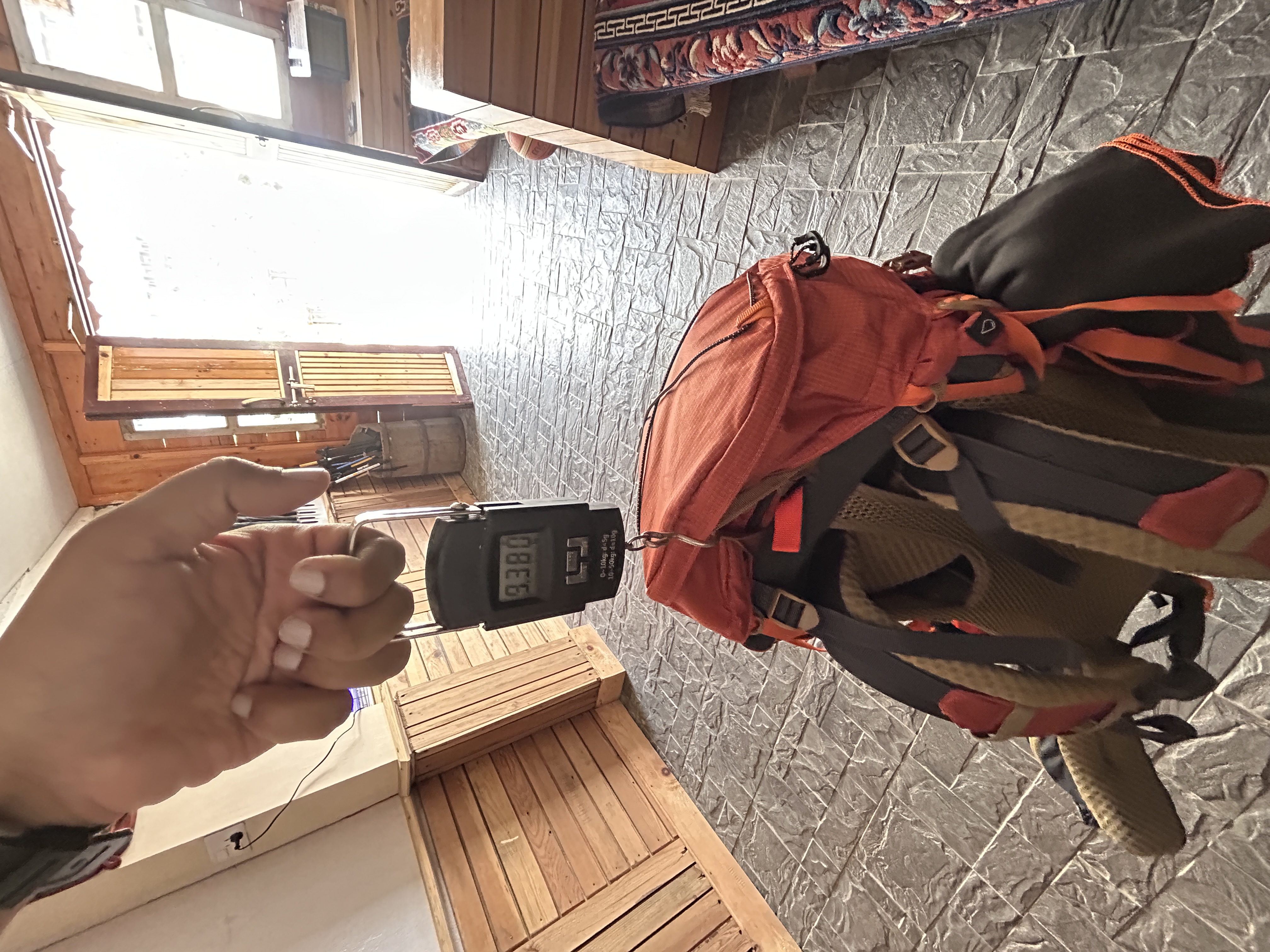
I meant to rest in Namche. By late morning I felt a little better, and decided to move towards Khumjung for the night. First, I left some luggage at the hotel, with a promise to collect it on the way back. The difference on my shoulders was immediate.
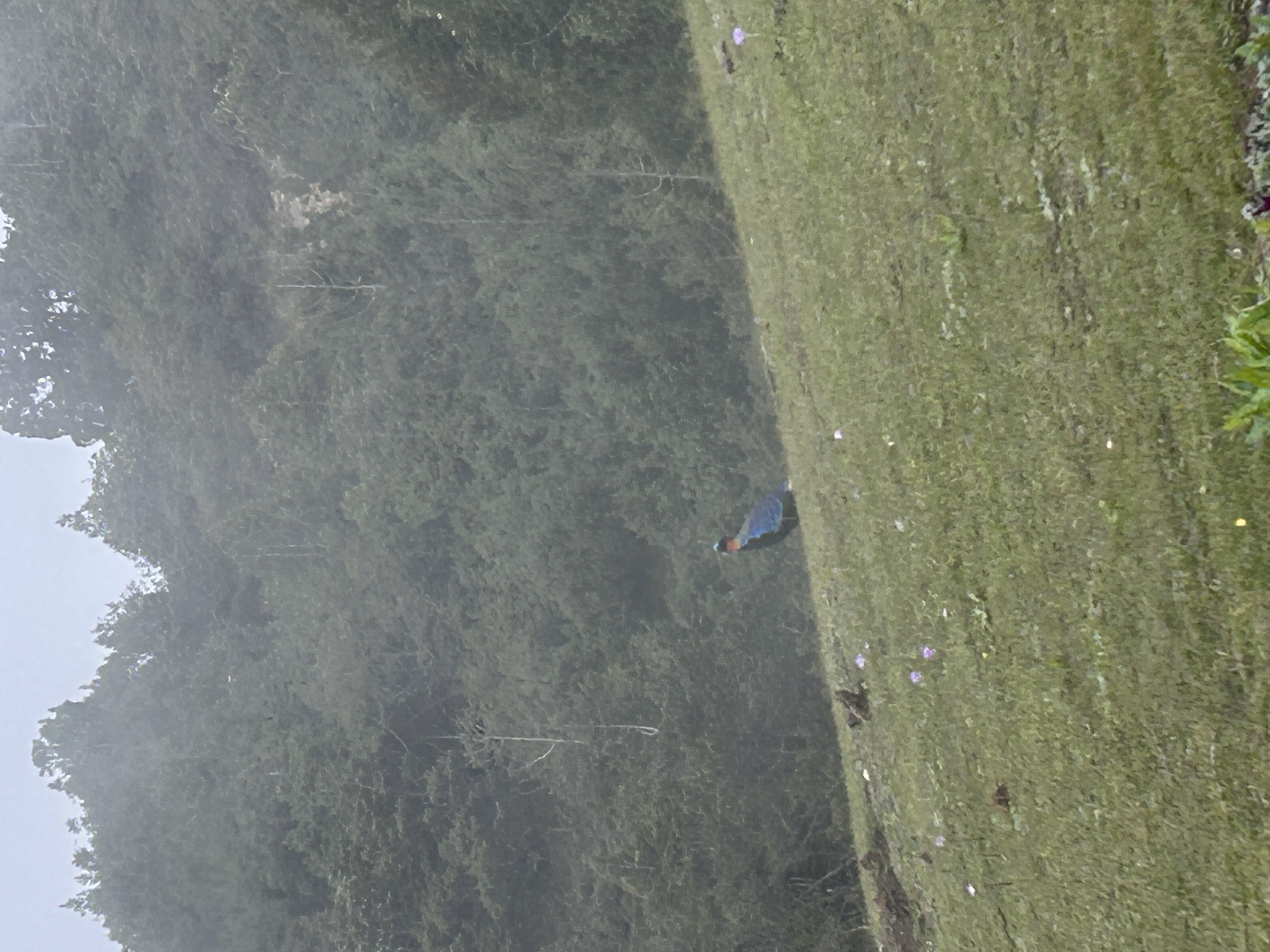
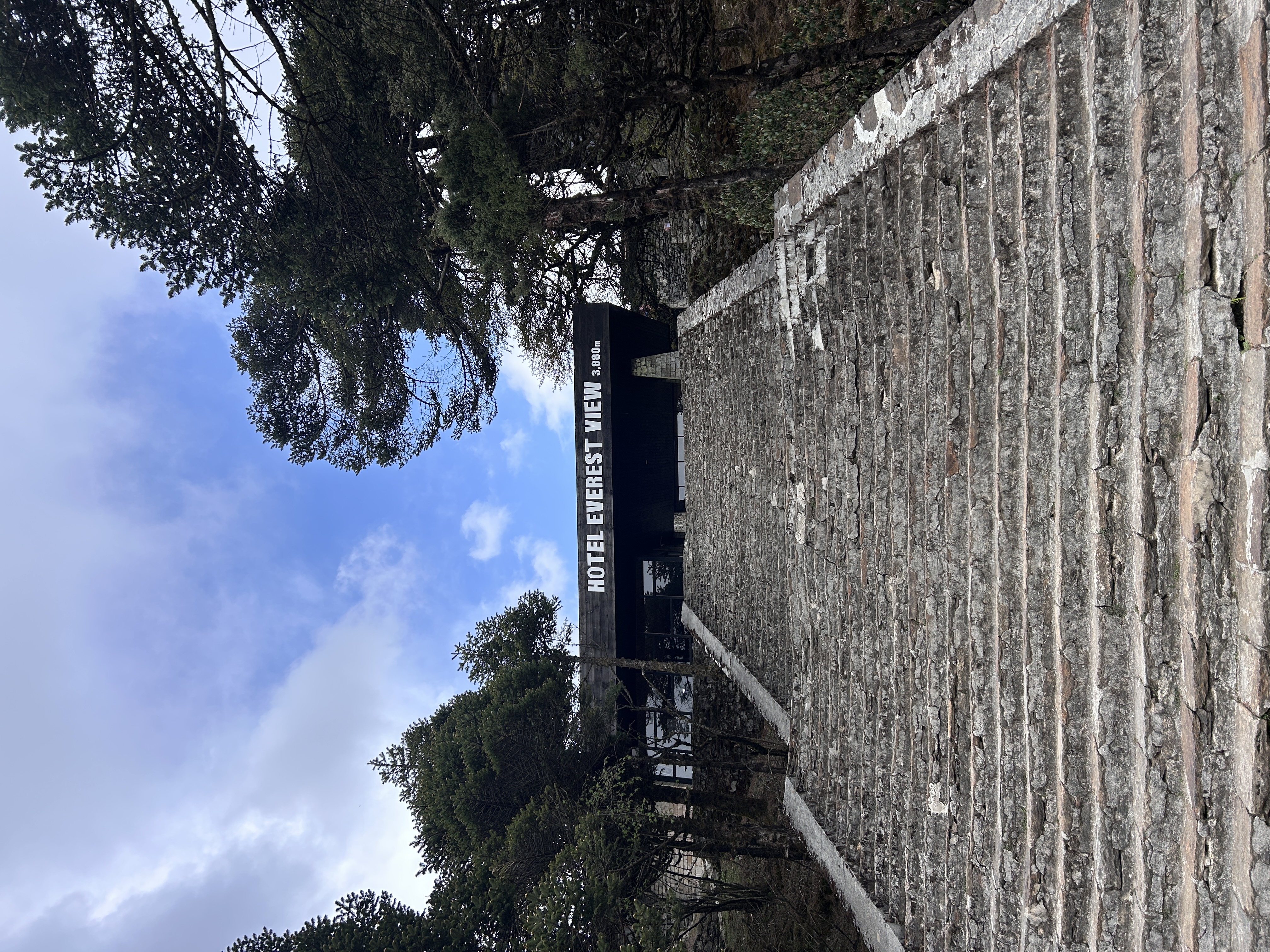
I walked past Everest View Hotel and stopped for tea. Late in the afternoon, the clouds opened a little. Somewhere along the way I saw a male Himalayan monal for the first time: a small flash of improbable colour on the hillside.
Khumjung was quiet. I found a place to stay and let the day end there. This was becoming the rhythm of the journey: walk, find a bed, eat something warm, begin again.
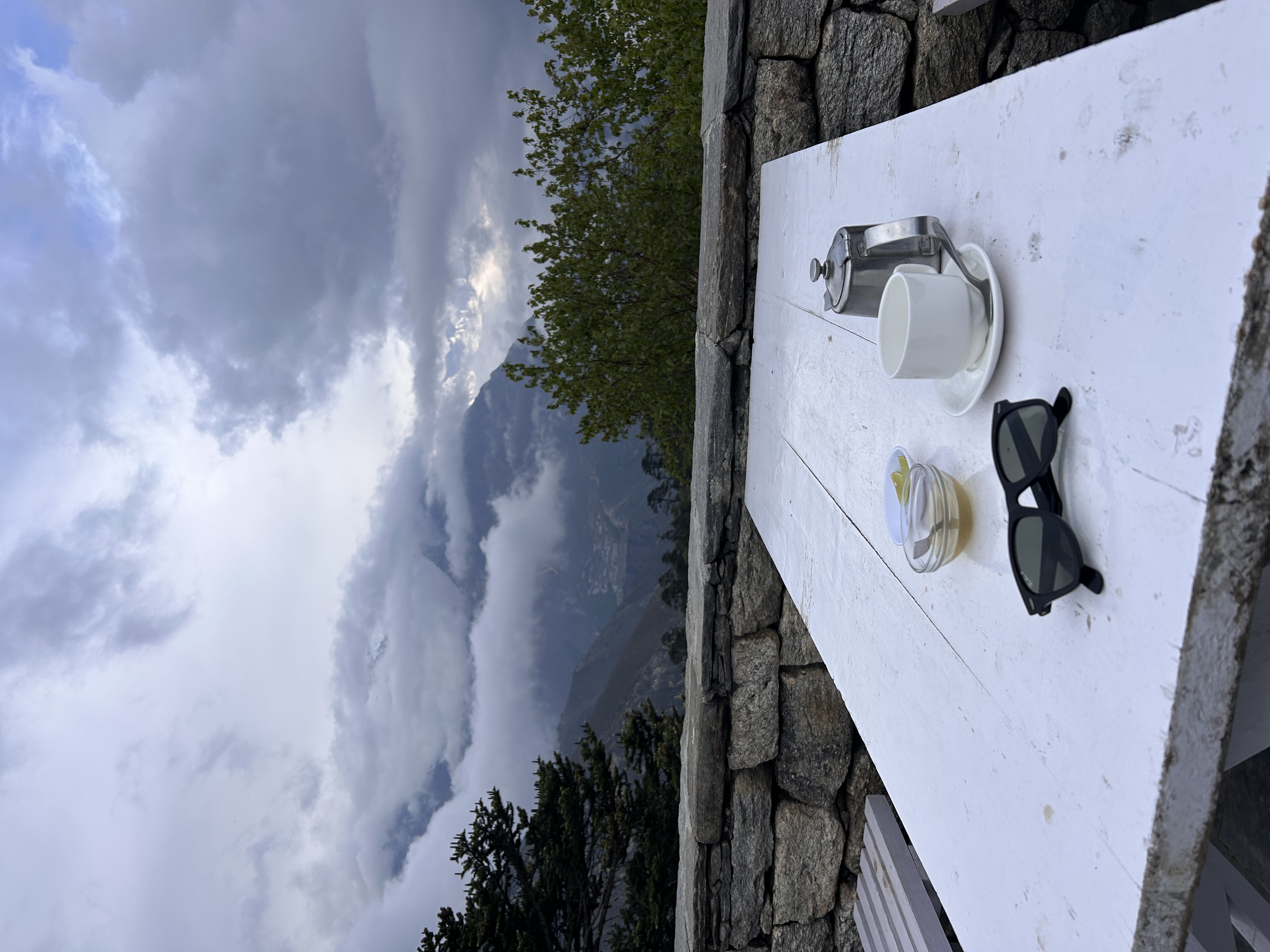
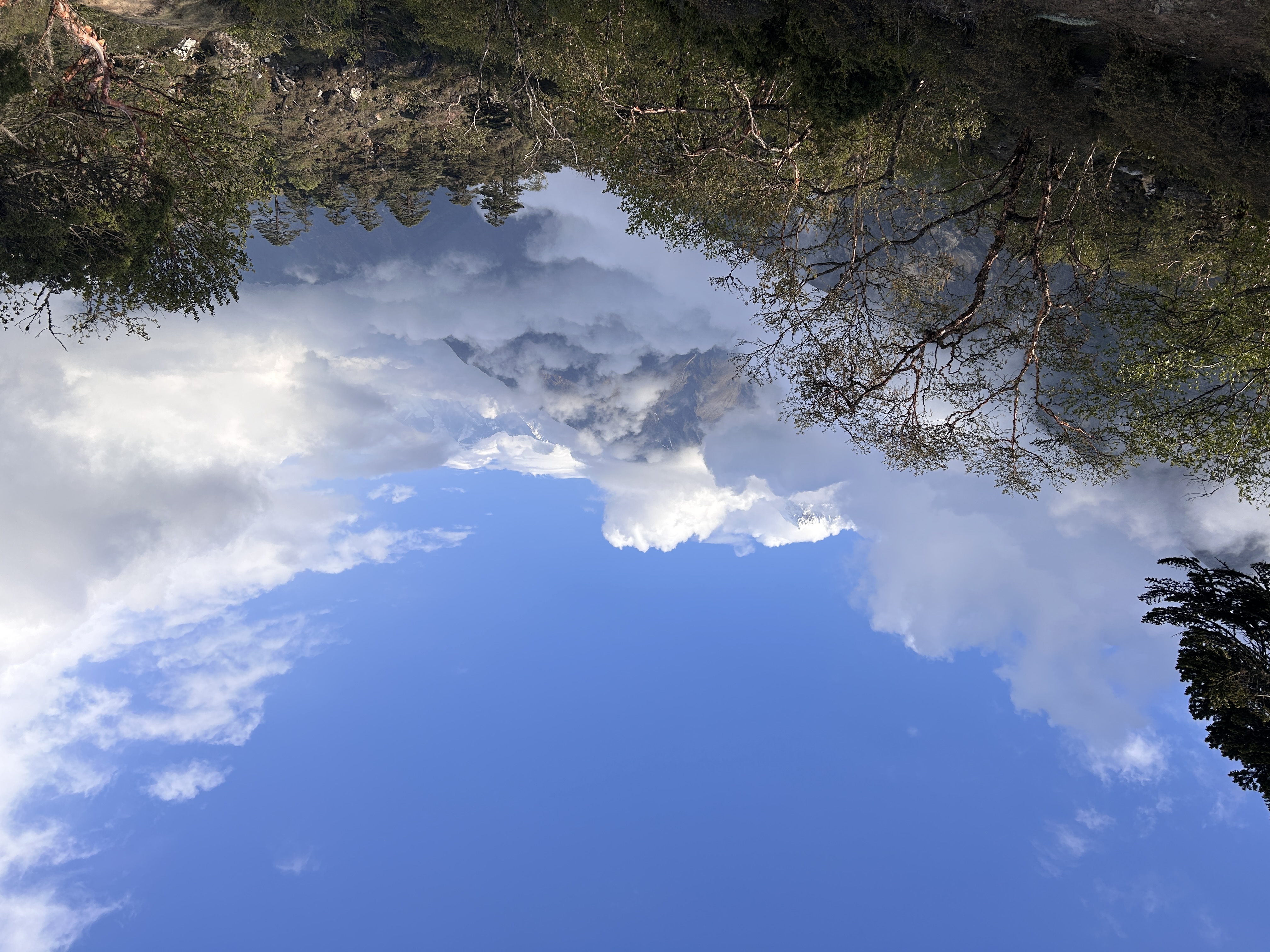
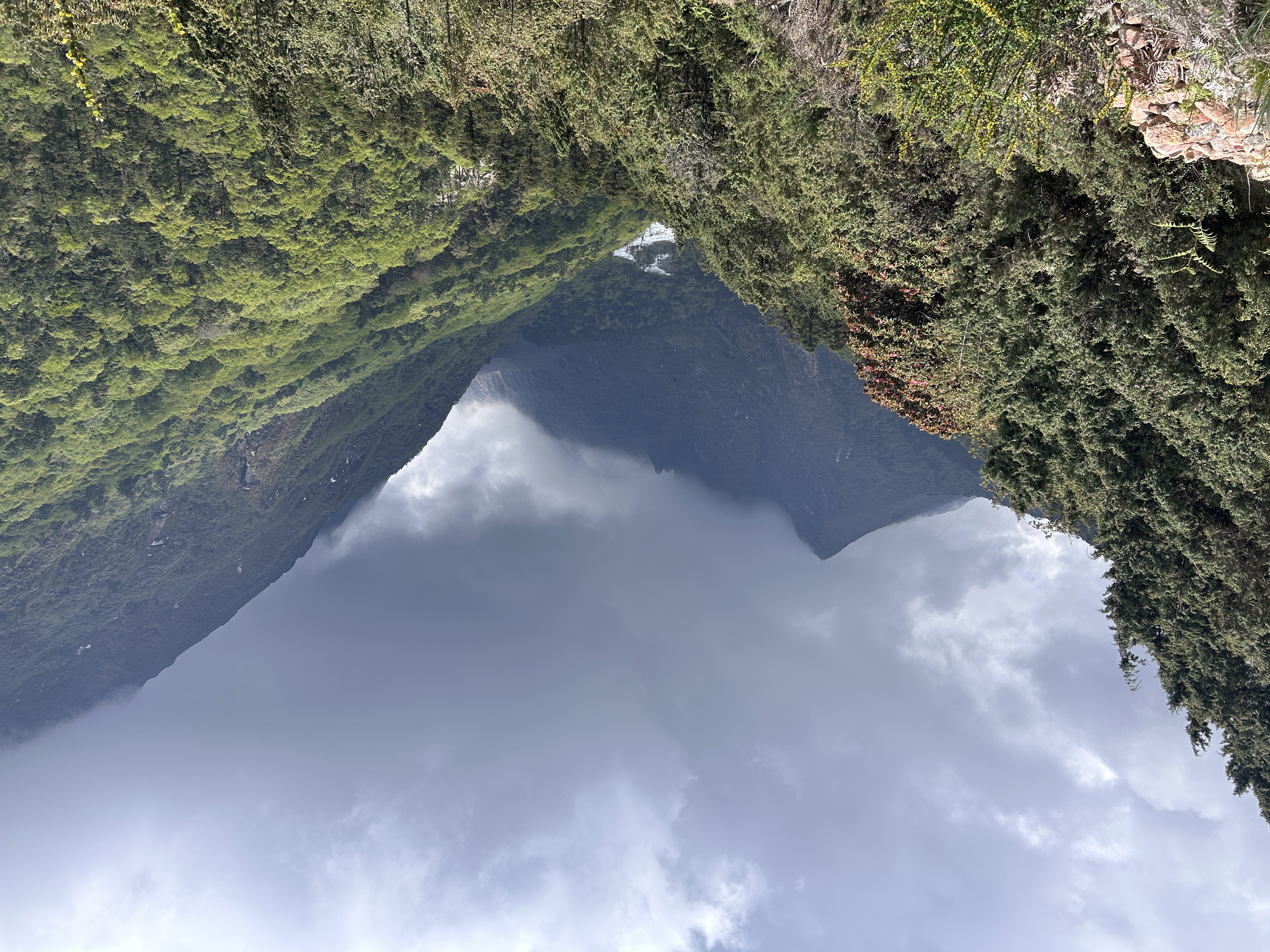
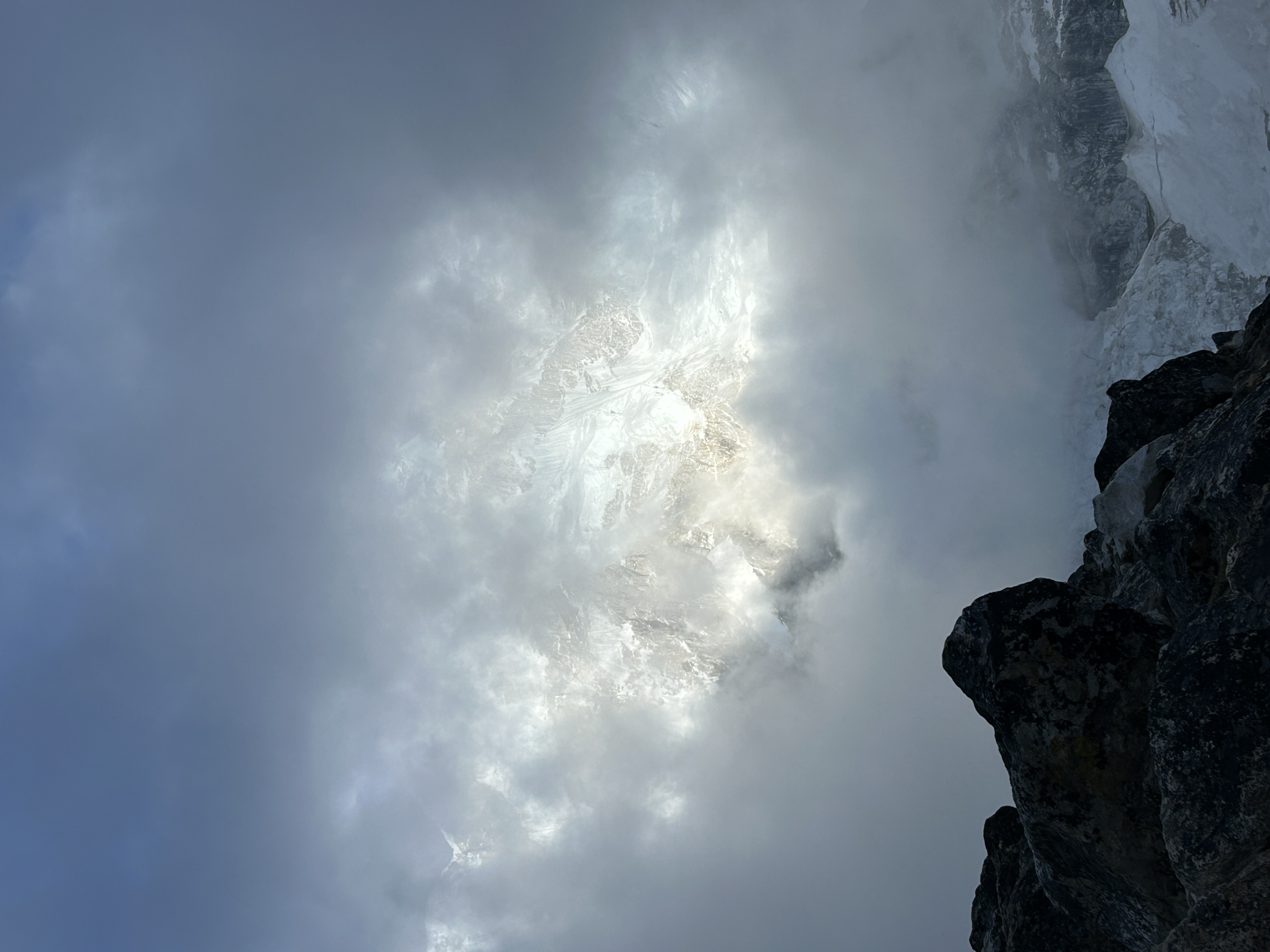
I kept looking through the cloud. Every opening felt like a gift.
05 / Khumjung → Tengboche
Down into the valley.
Up into the quiet.
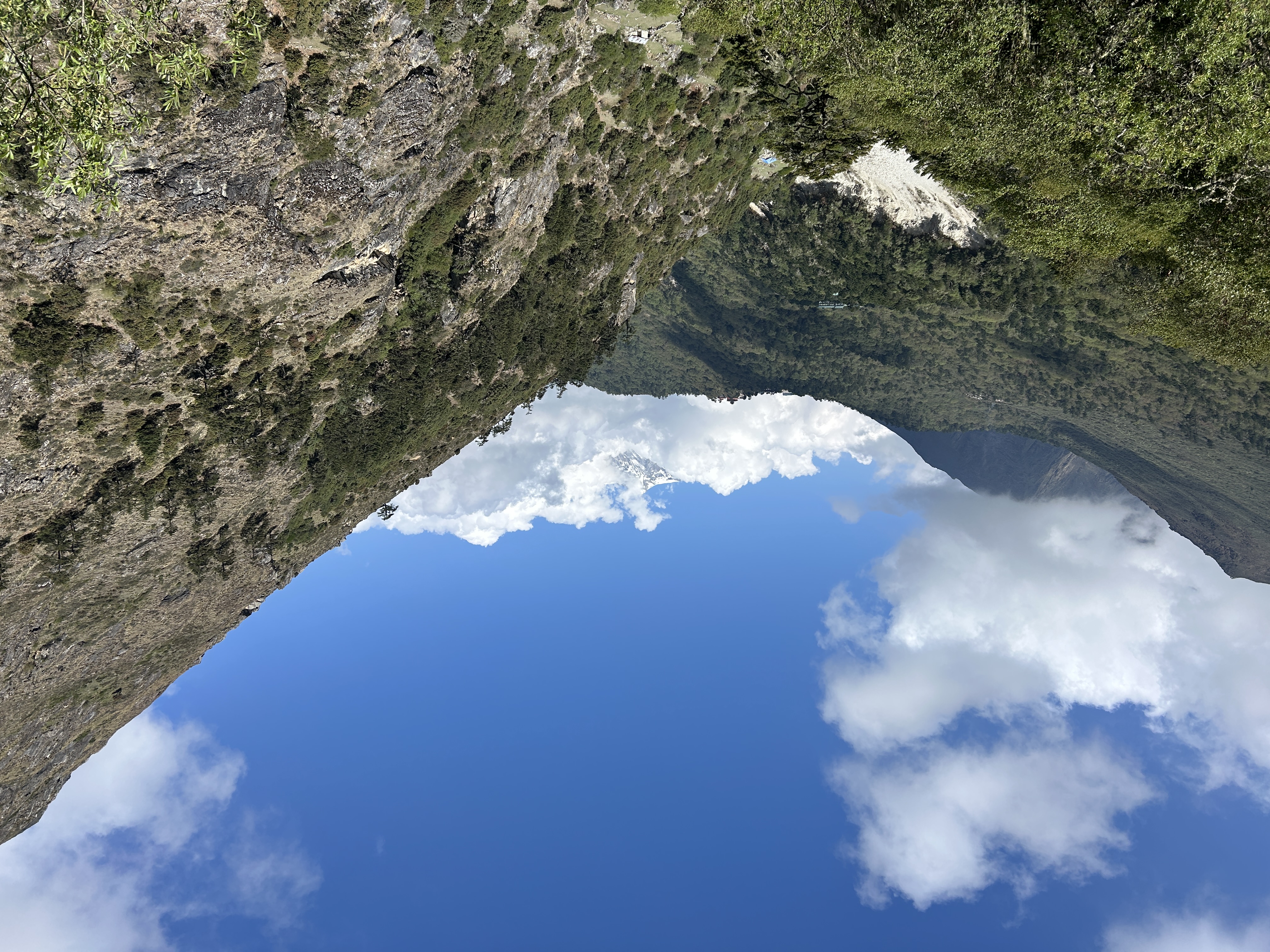
I woke to blue skies and mountains around Khumjung. Then came a steep descent, and an uphill that took much more out of me than the morning had suggested. Tengboche arrived one slow stretch at a time.
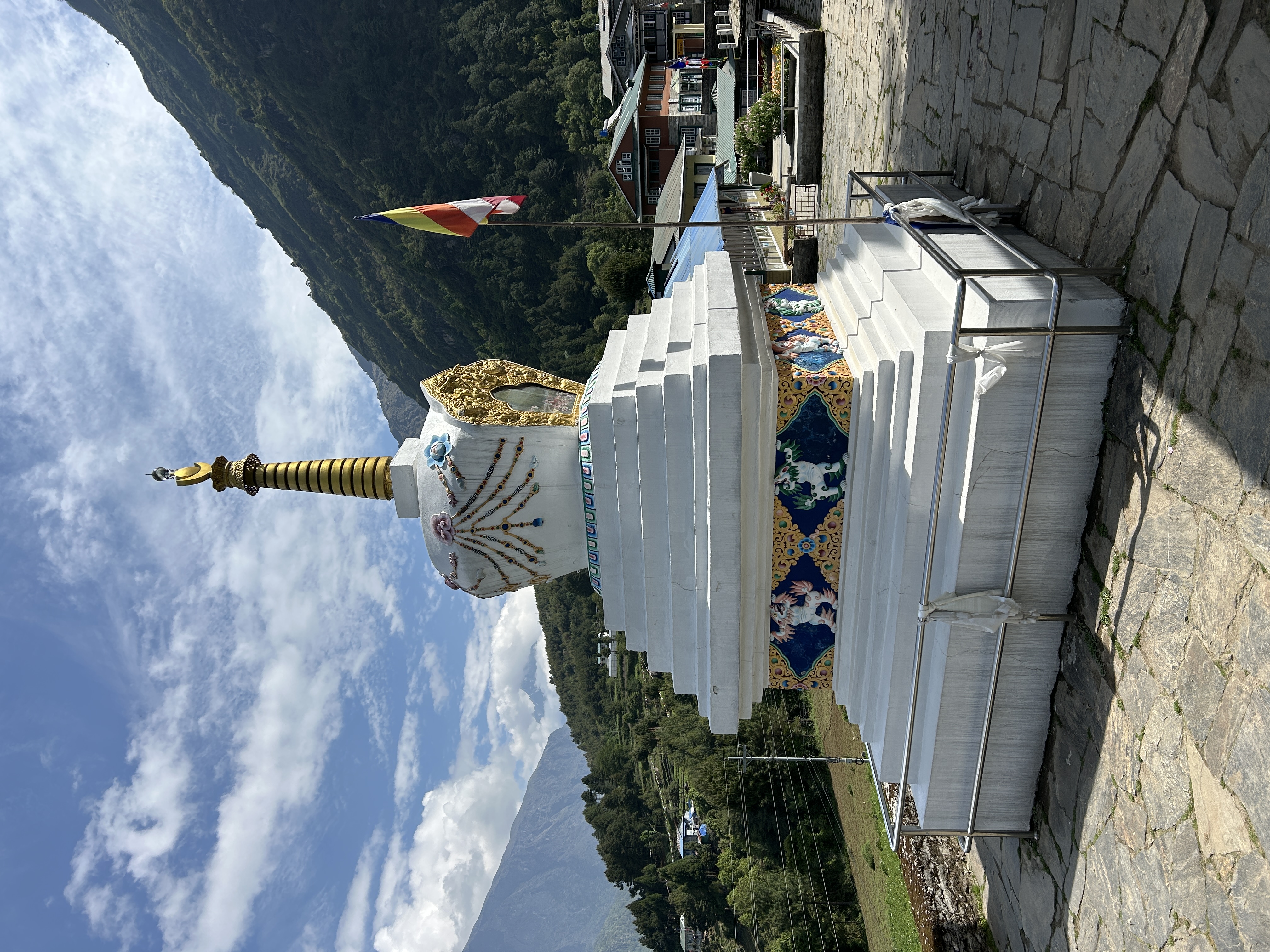
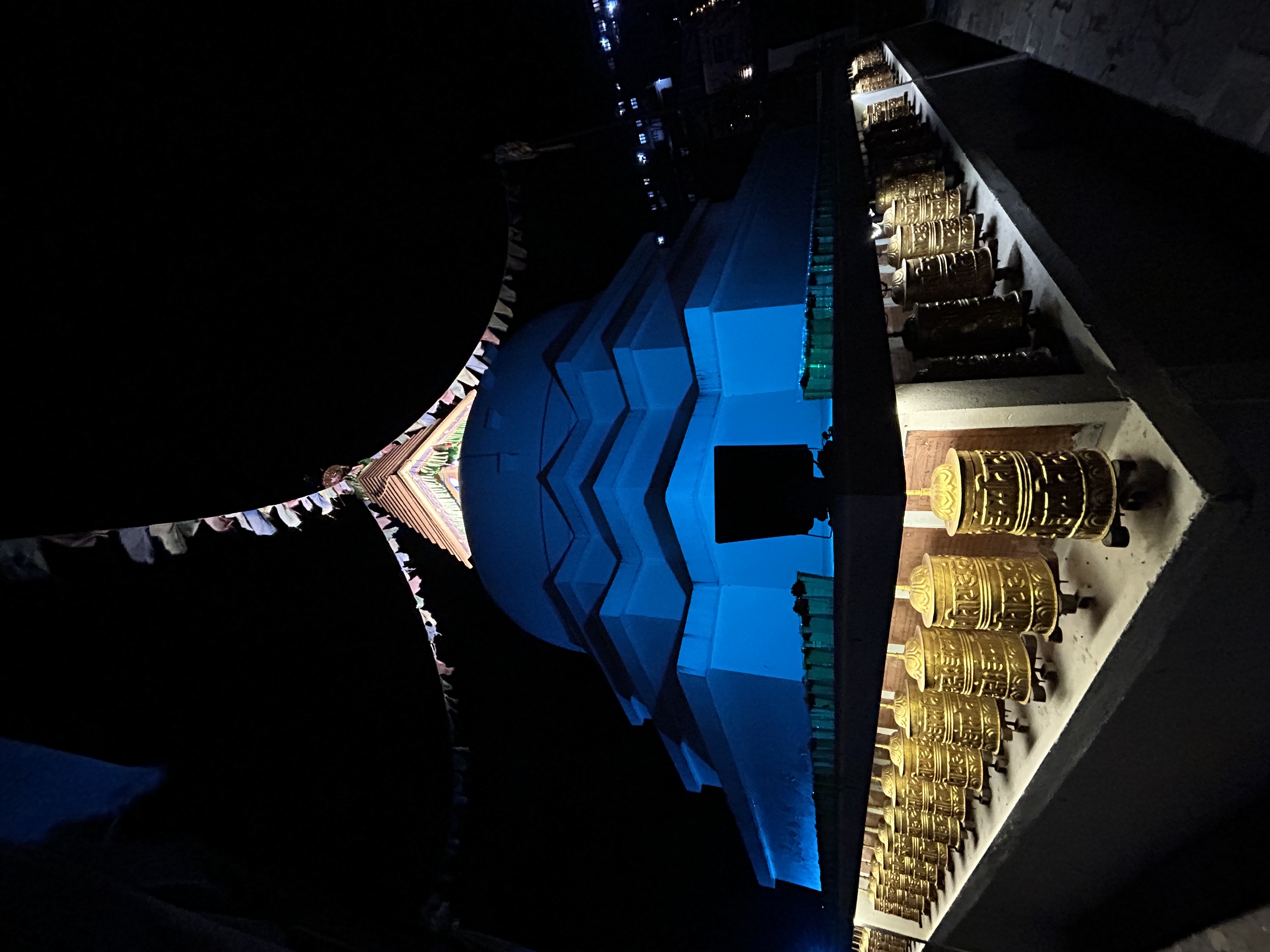
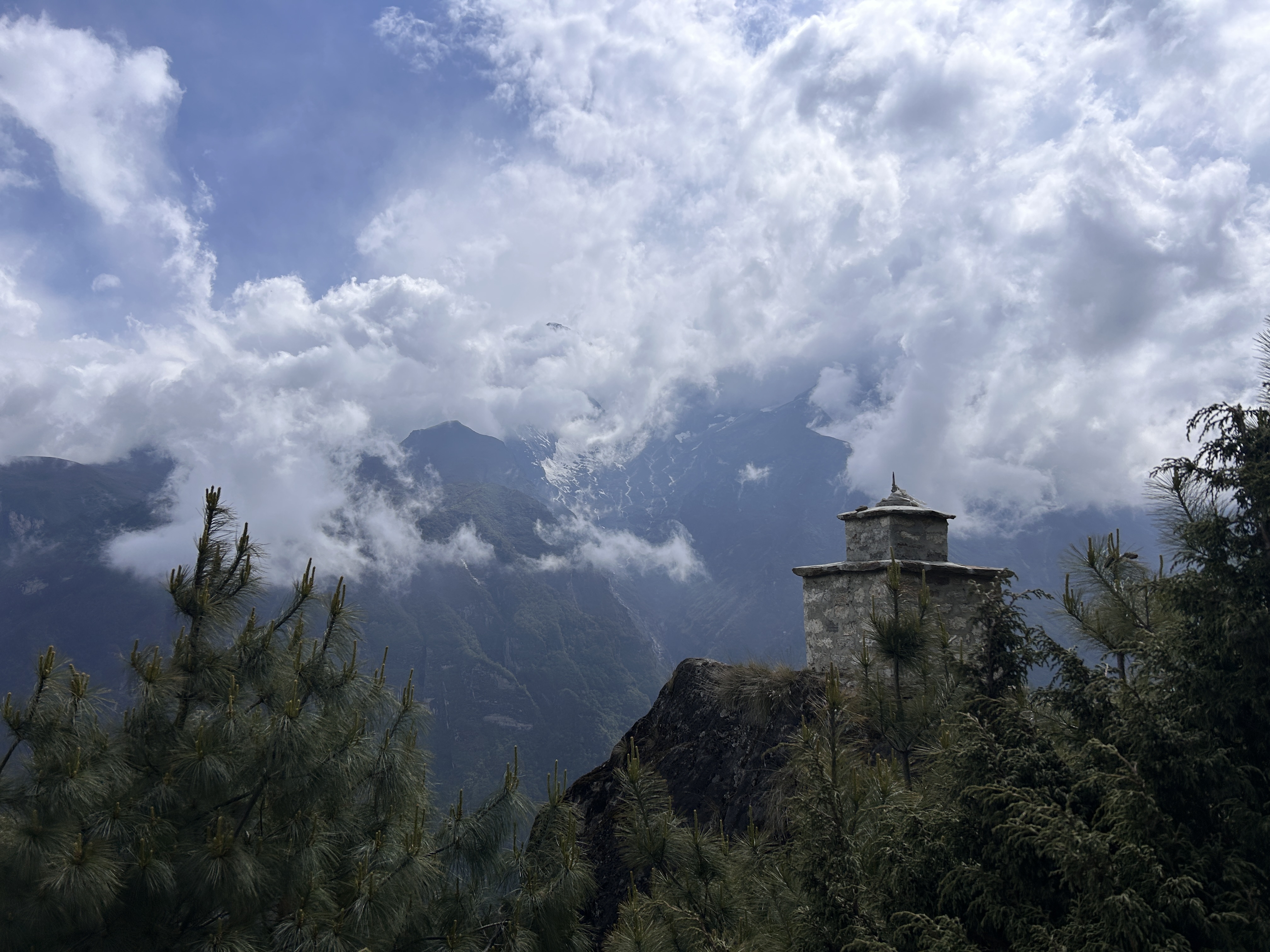
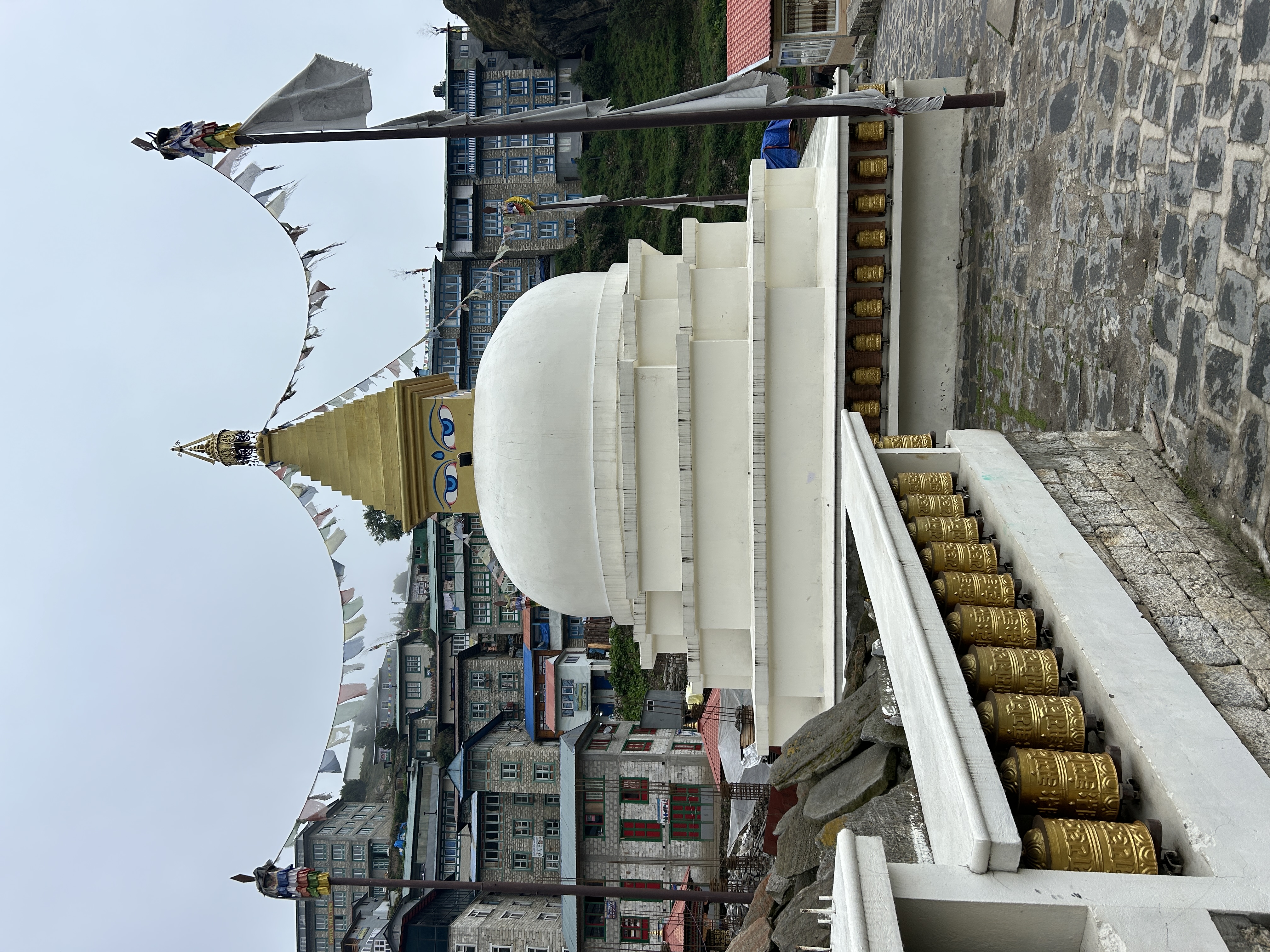
After checking in, I went to the monastery. Inside, I was alone. I took no photographs there; the pictures are from outside. I stayed for a while in that calm, with nothing to do except be there.
The day had been hard on my legs. The quiet at the end of it reached somewhere else.
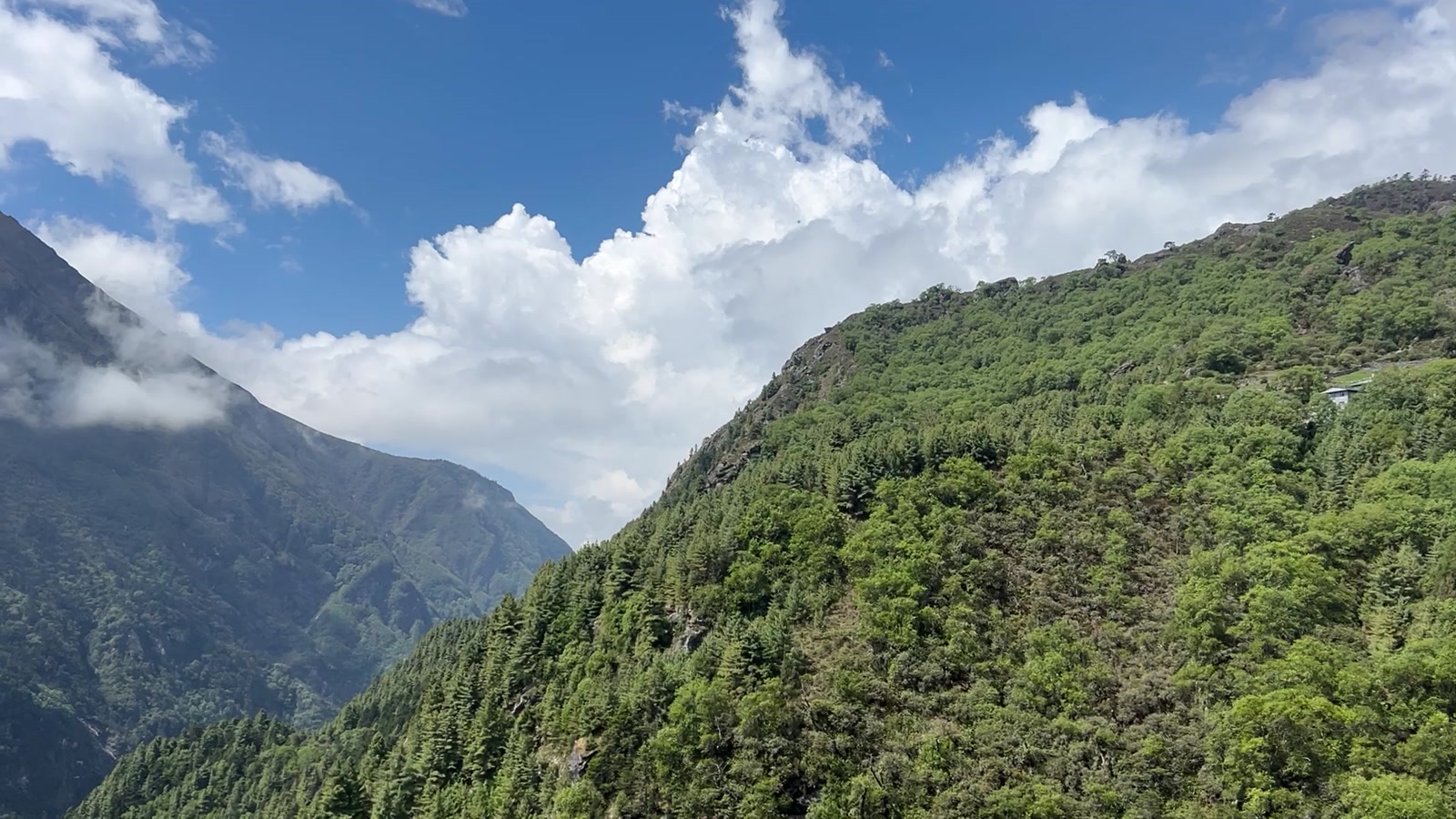
Sound in the player
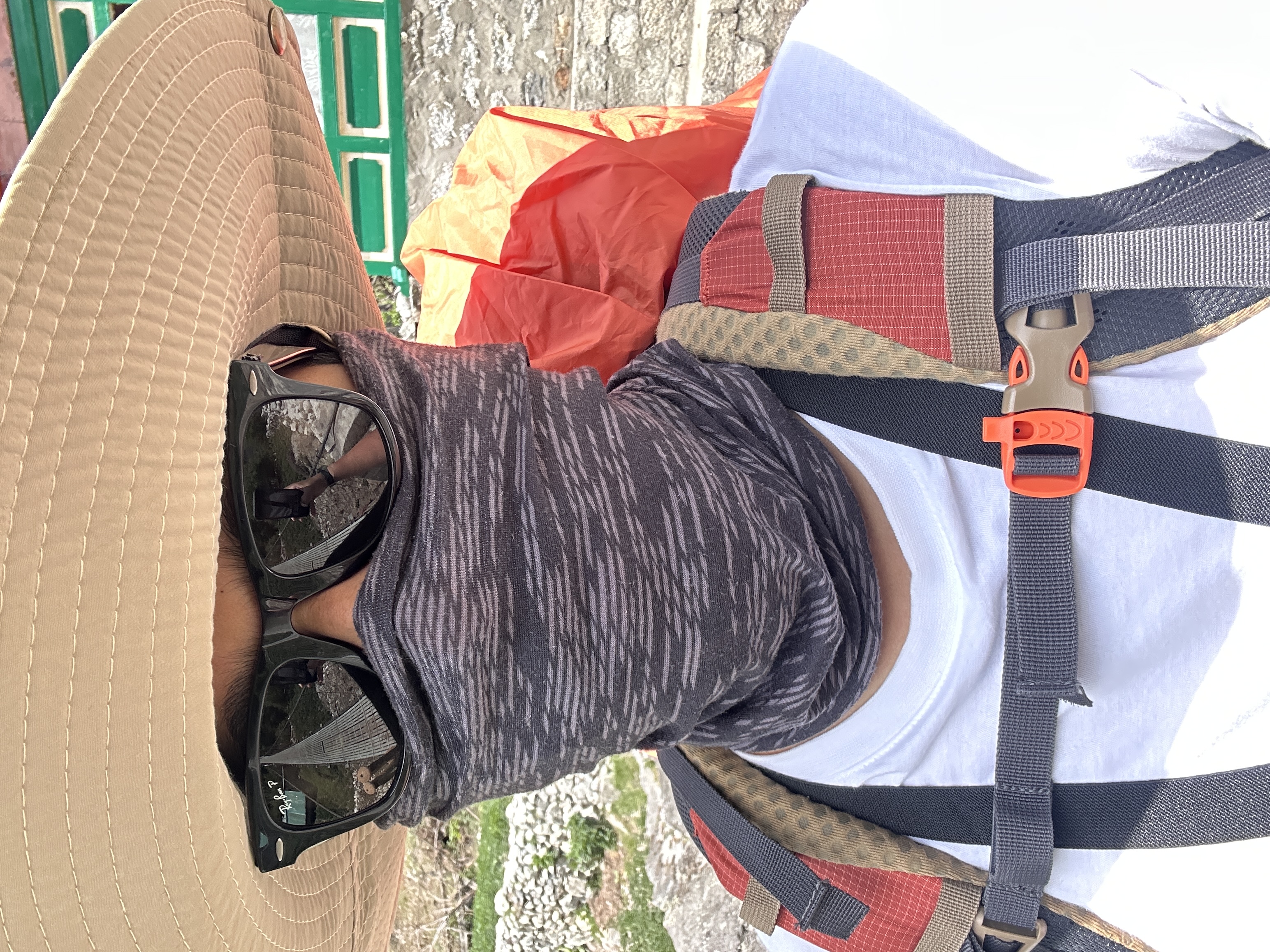
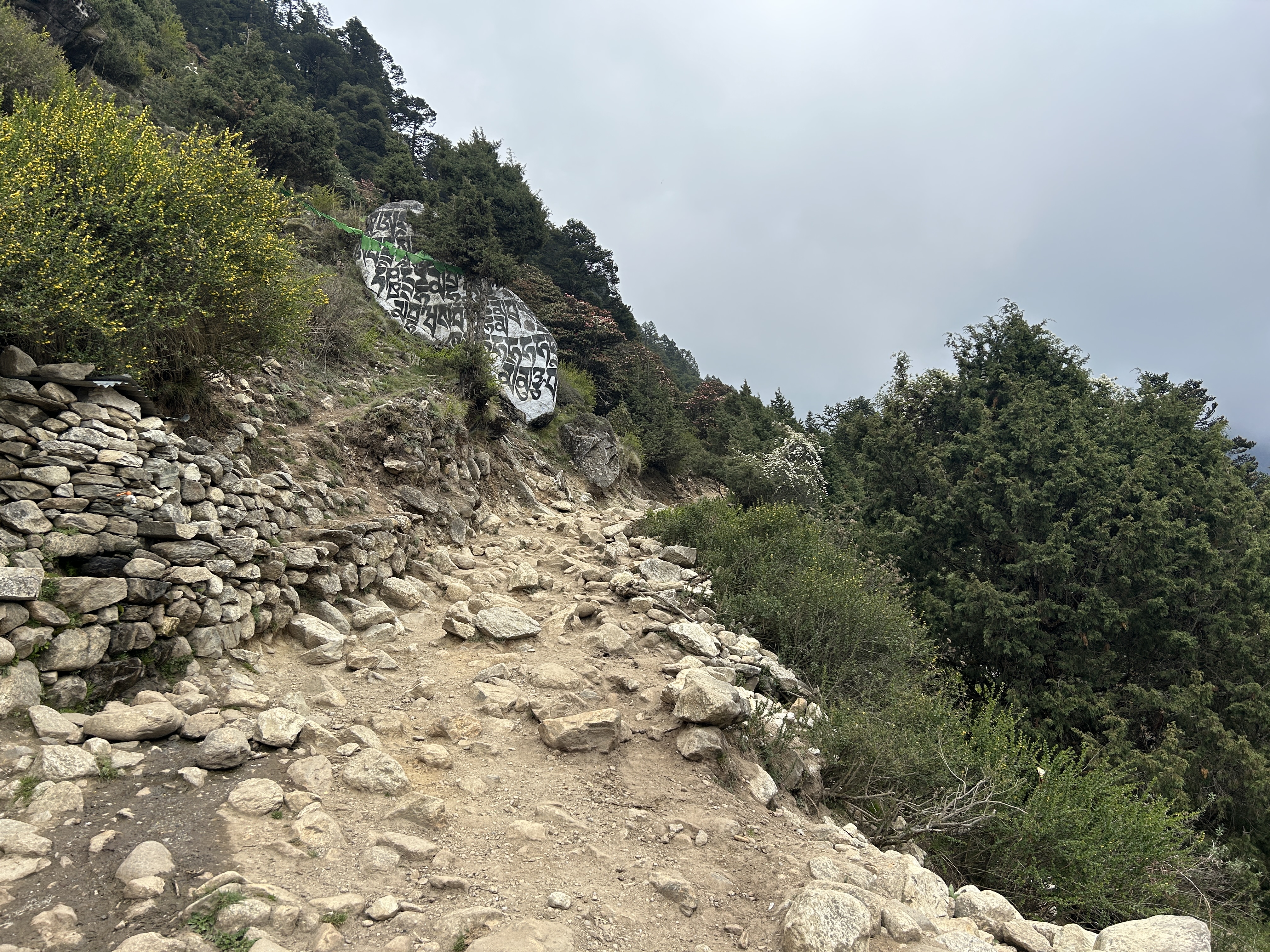
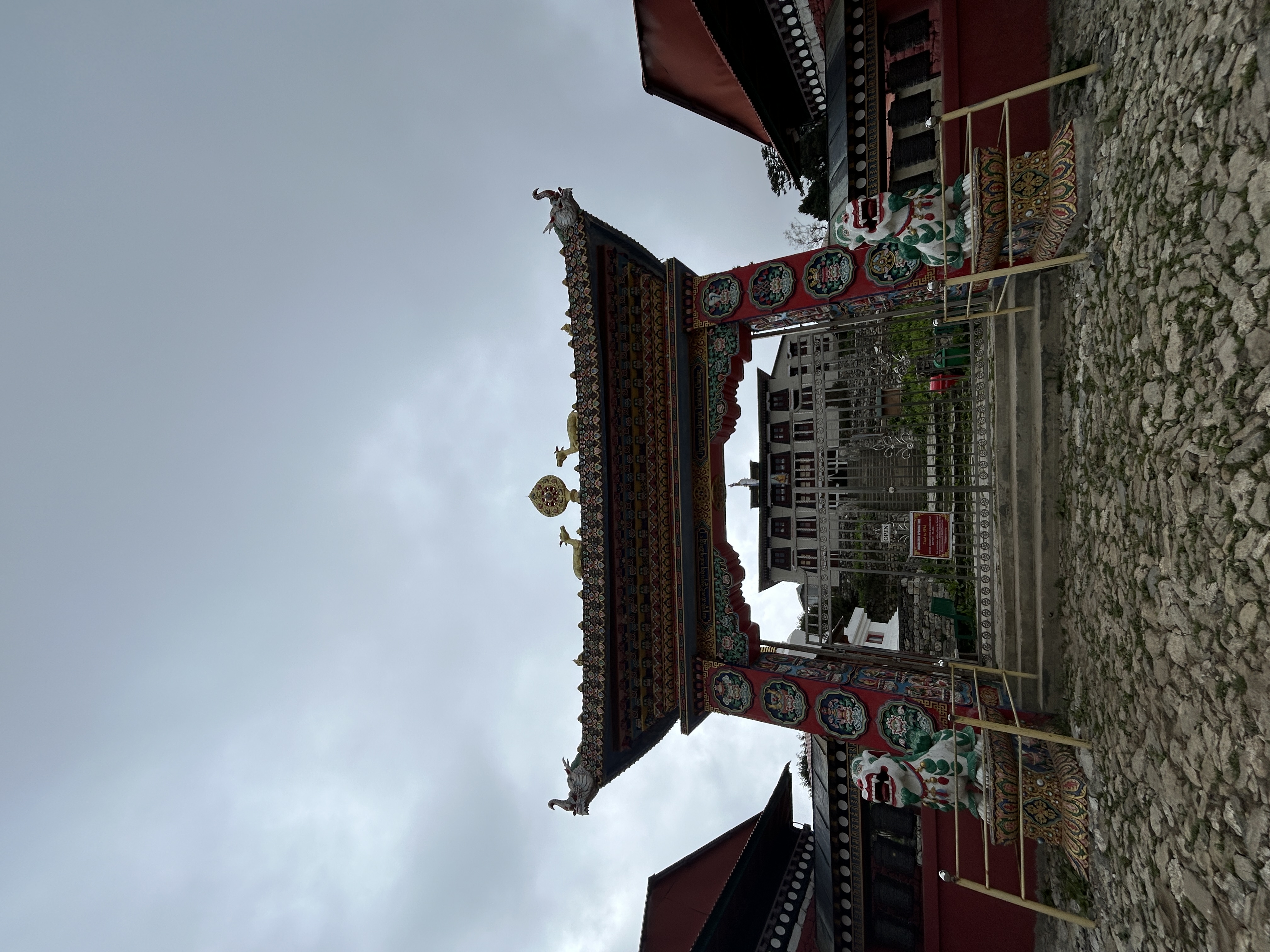
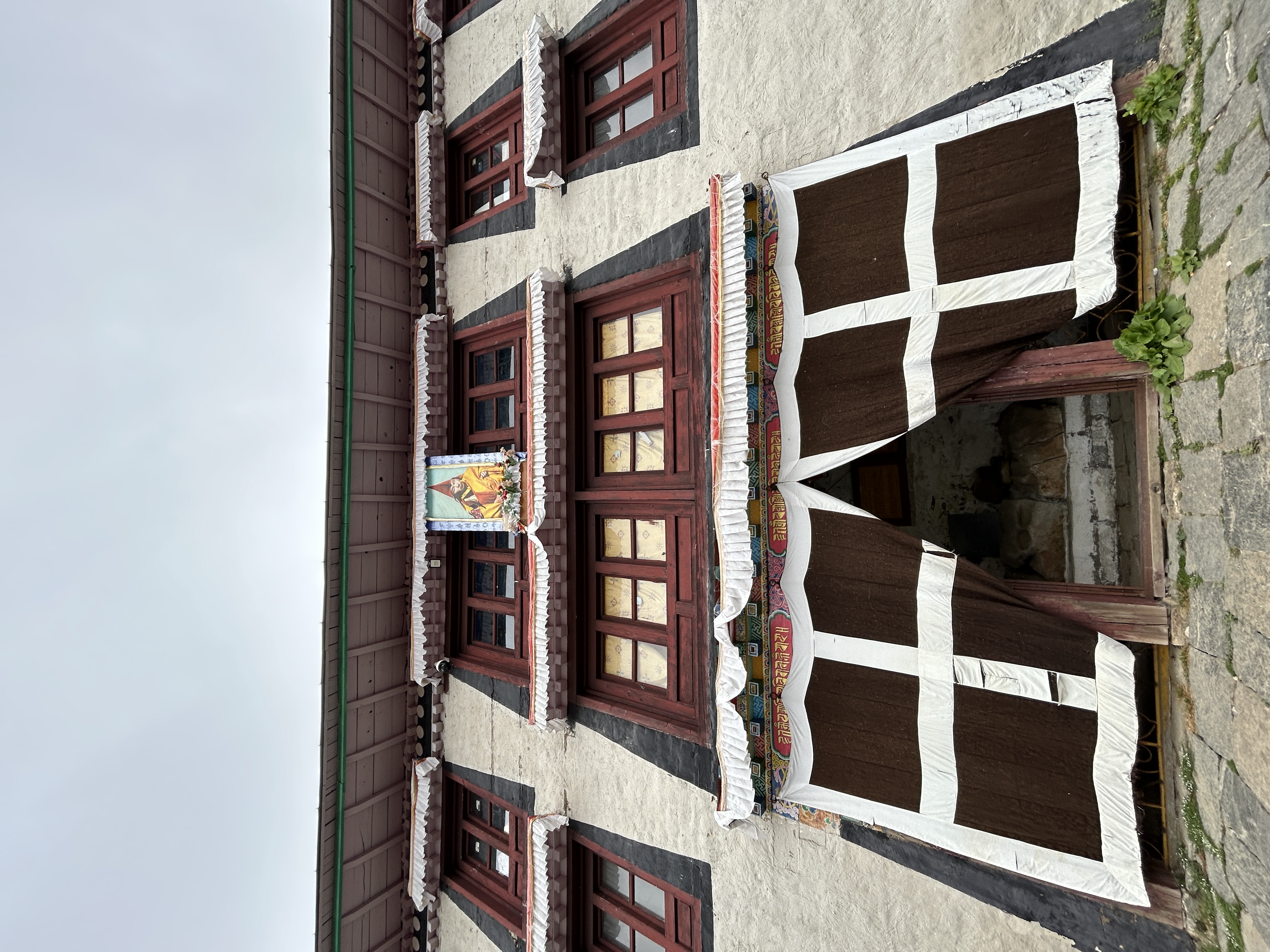
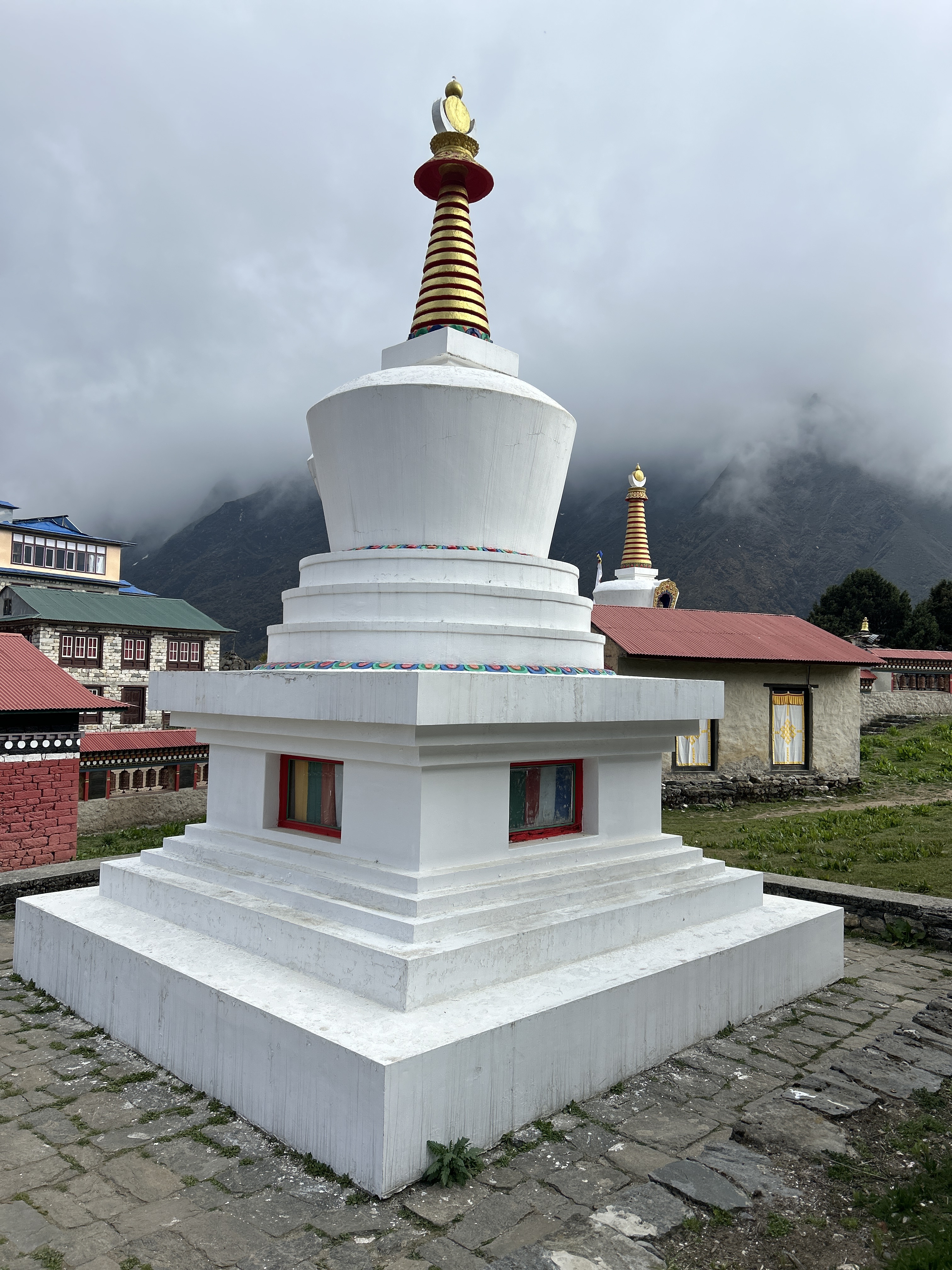
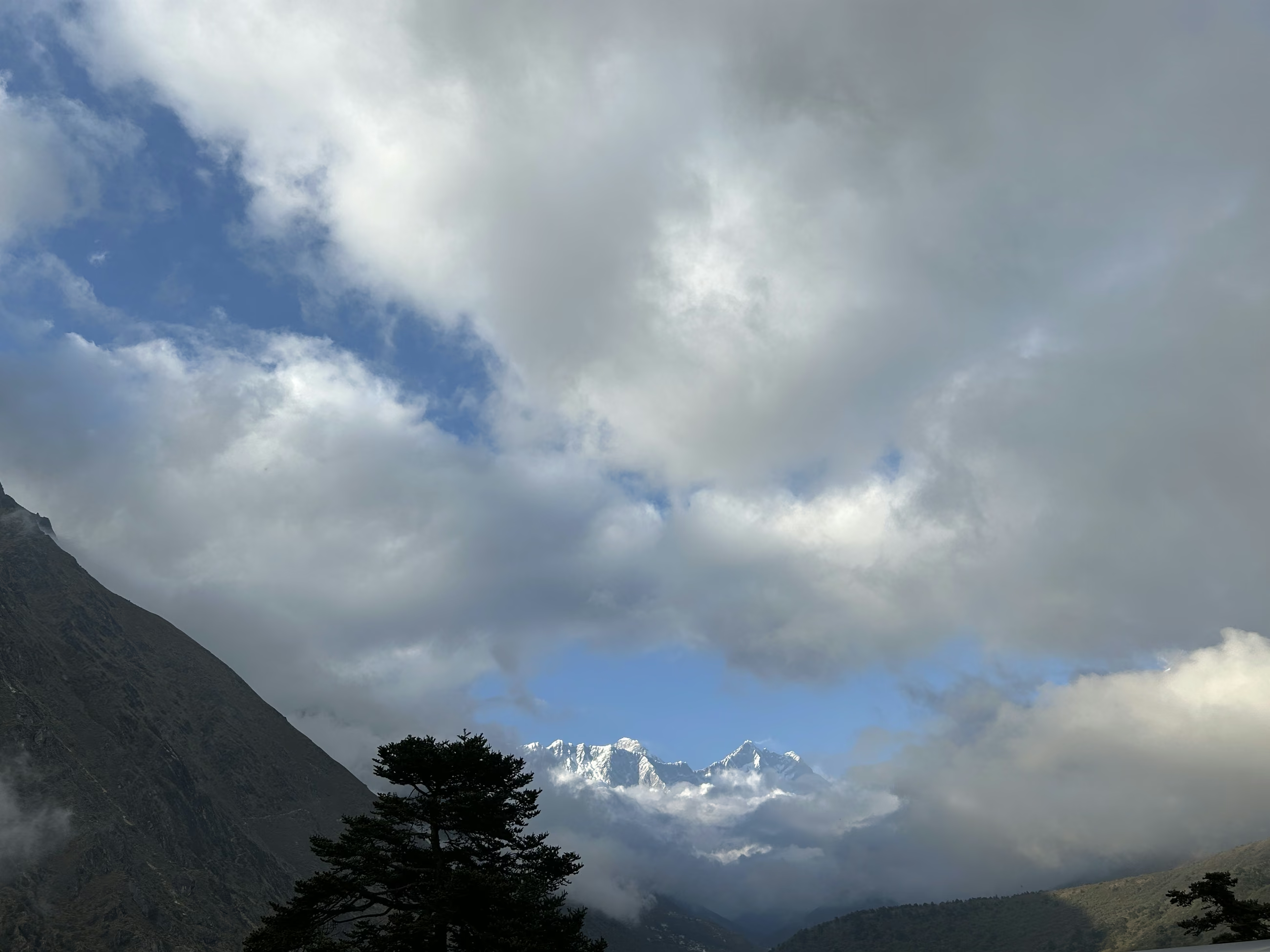
Outside Tengboche monastery. Inside, I put the camera away and stayed a while.
06 / Tengboche → Dingboche
The trees thinned.
So did my pace.
My walking had started to come together. I was moving better, finding a pace that felt my own. Then, somewhere beyond four thousand metres, everything slowed again. Each small climb asked for more.
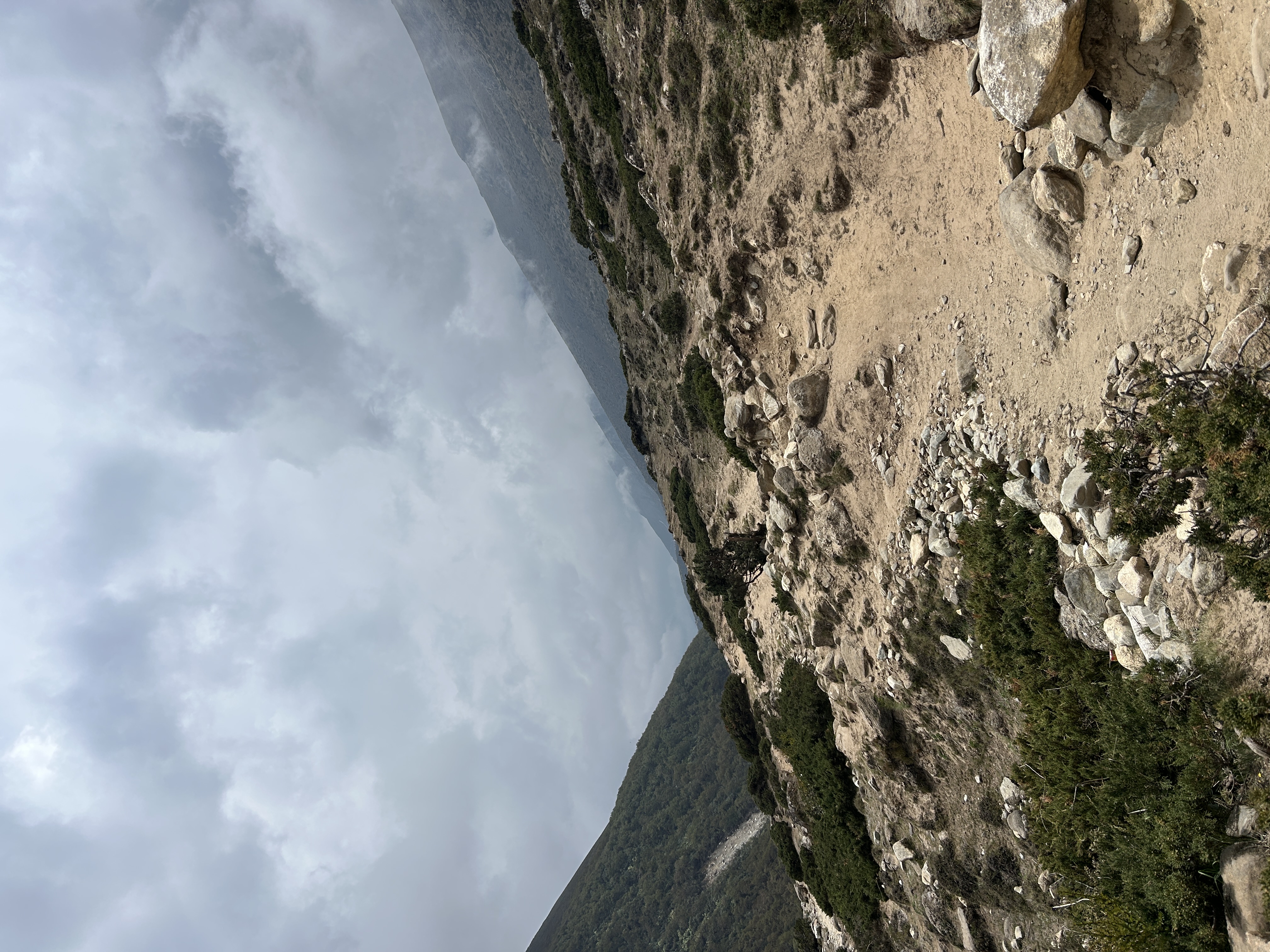
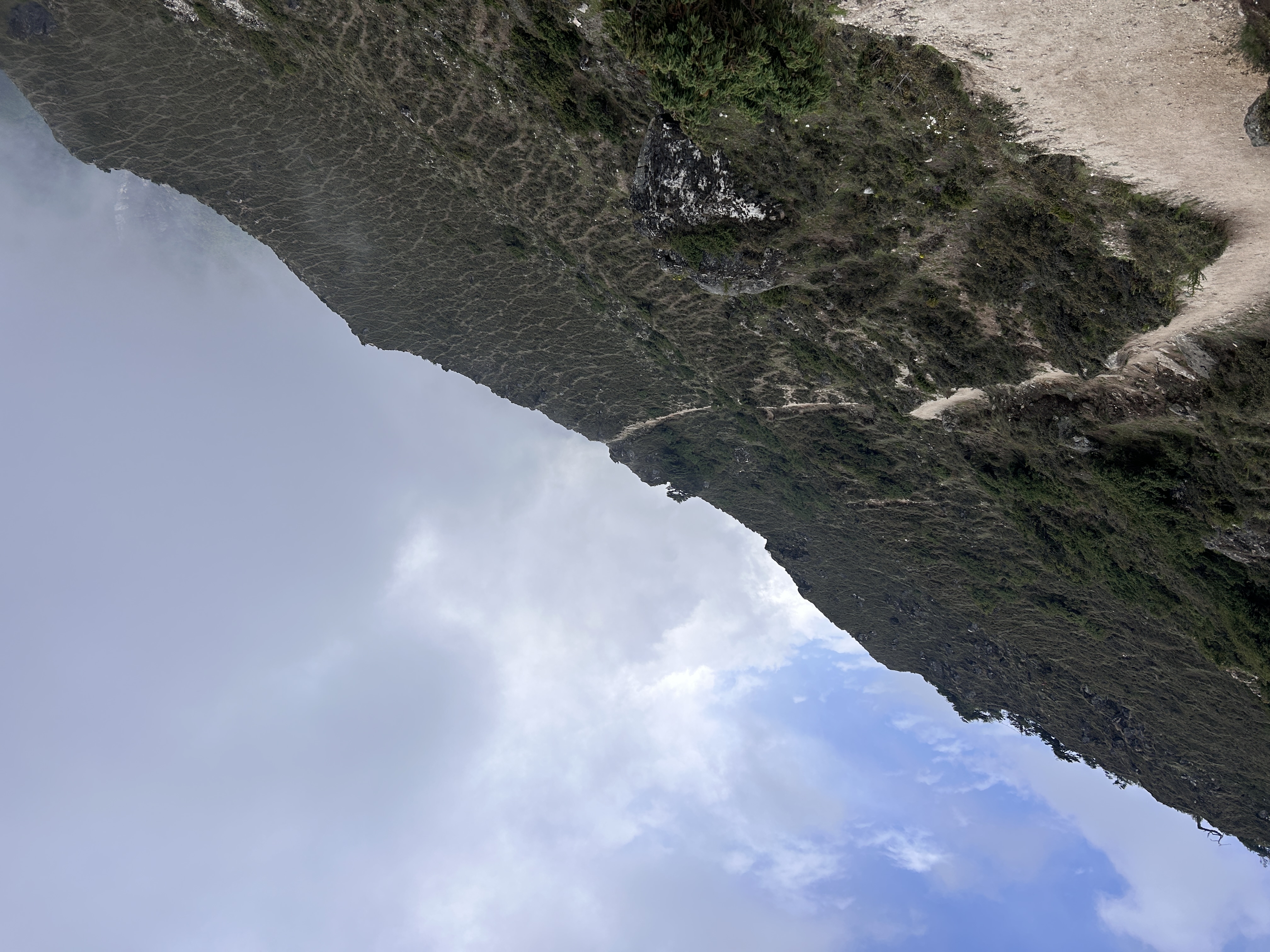
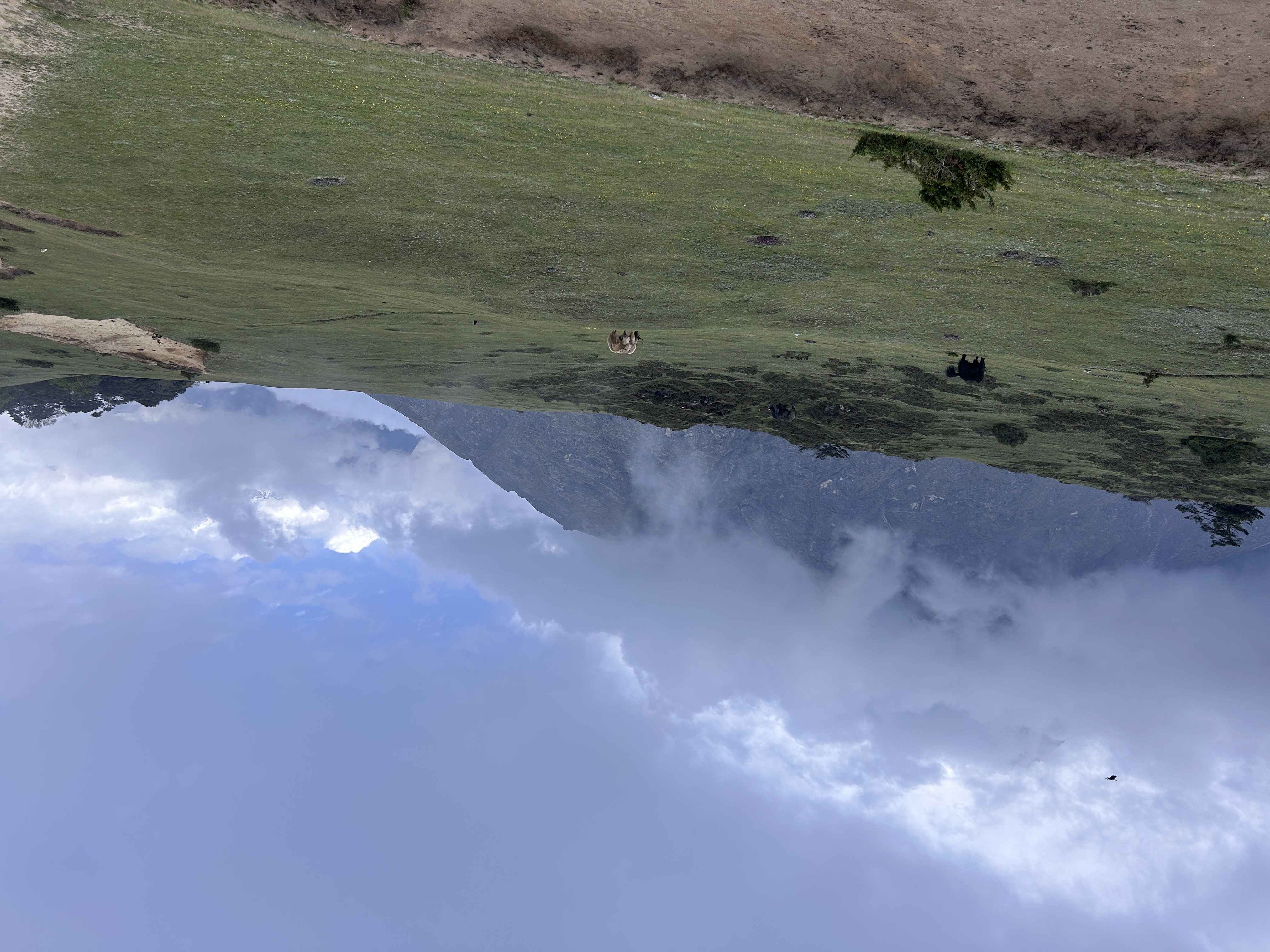
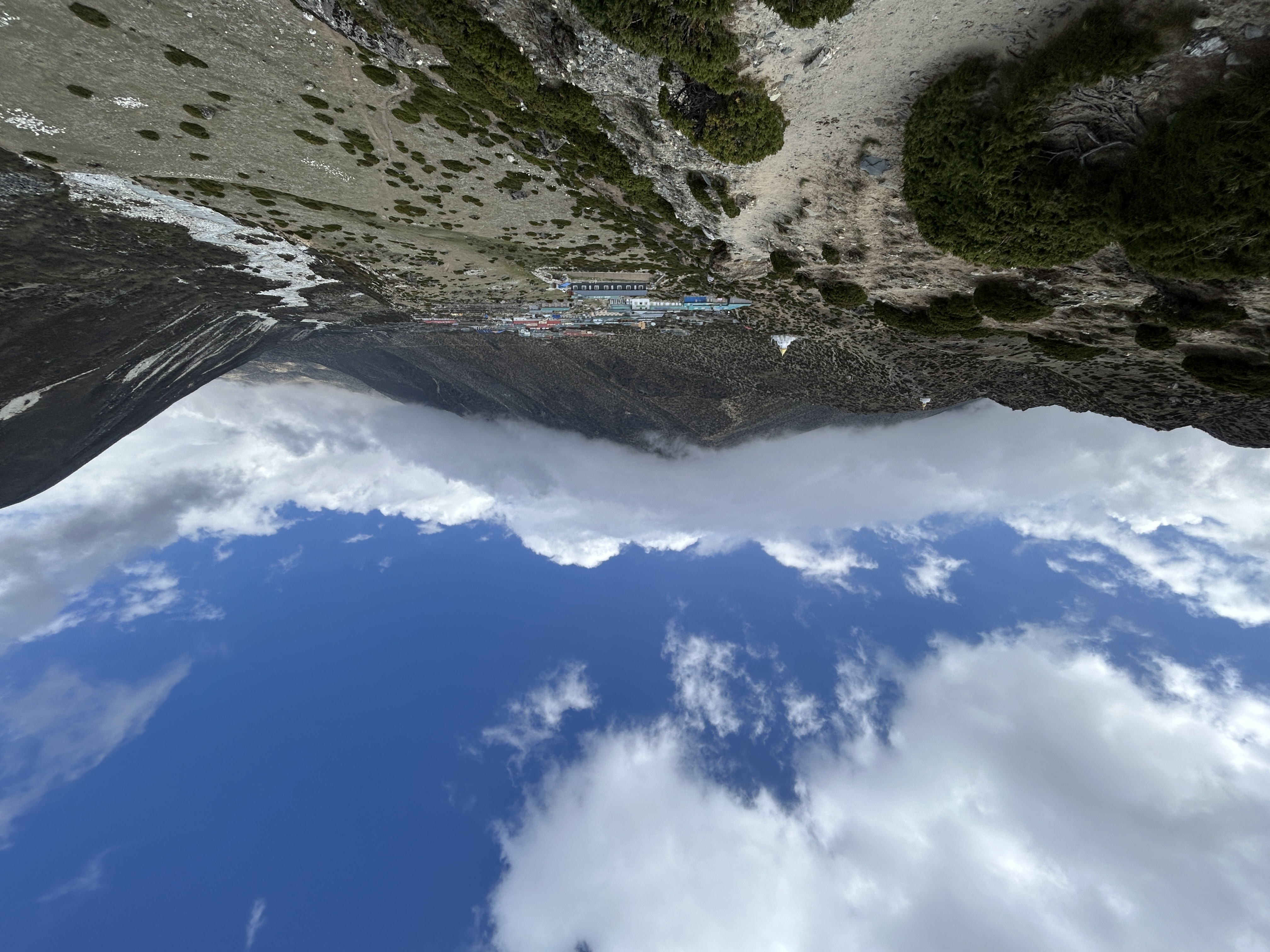
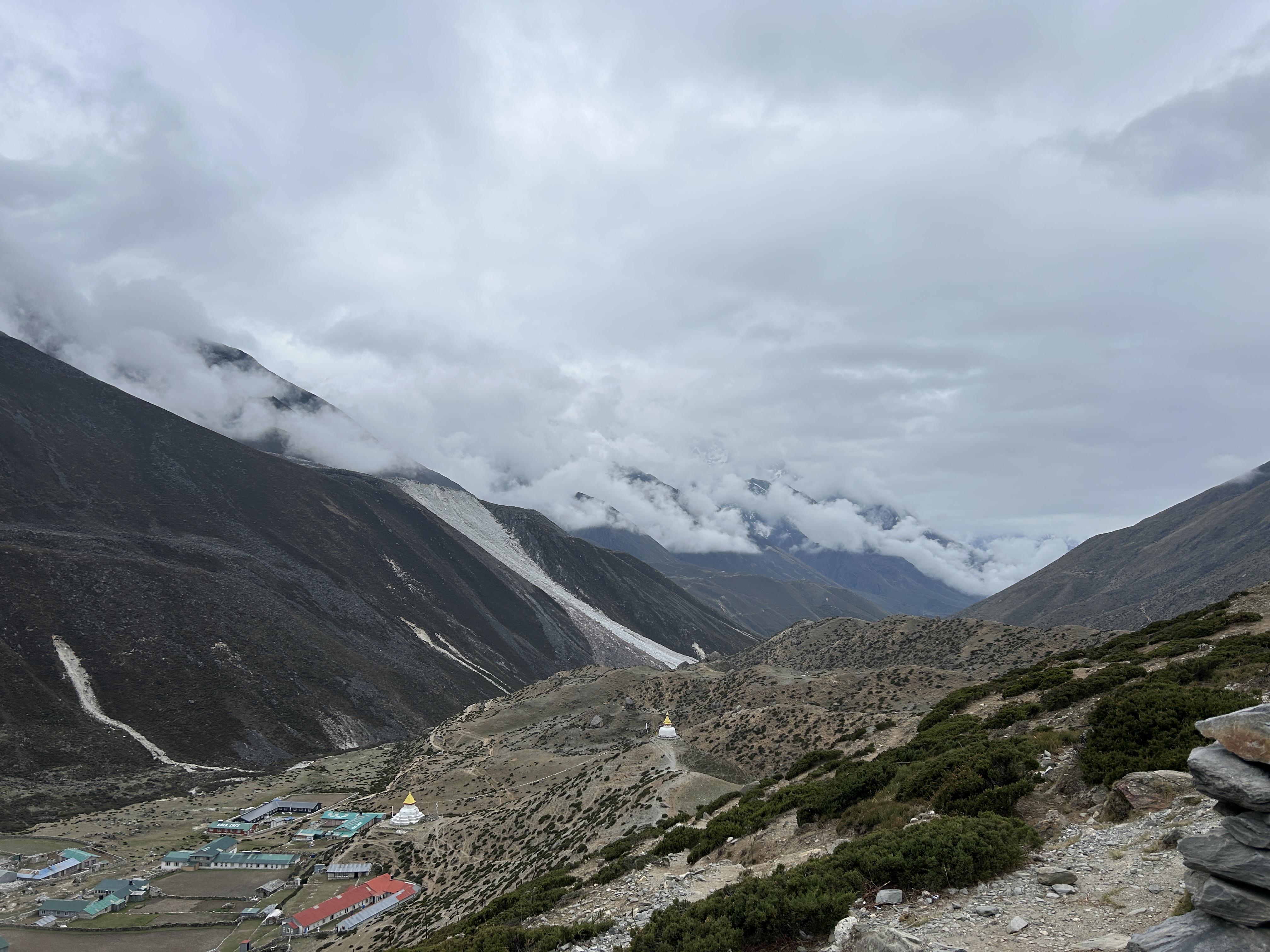
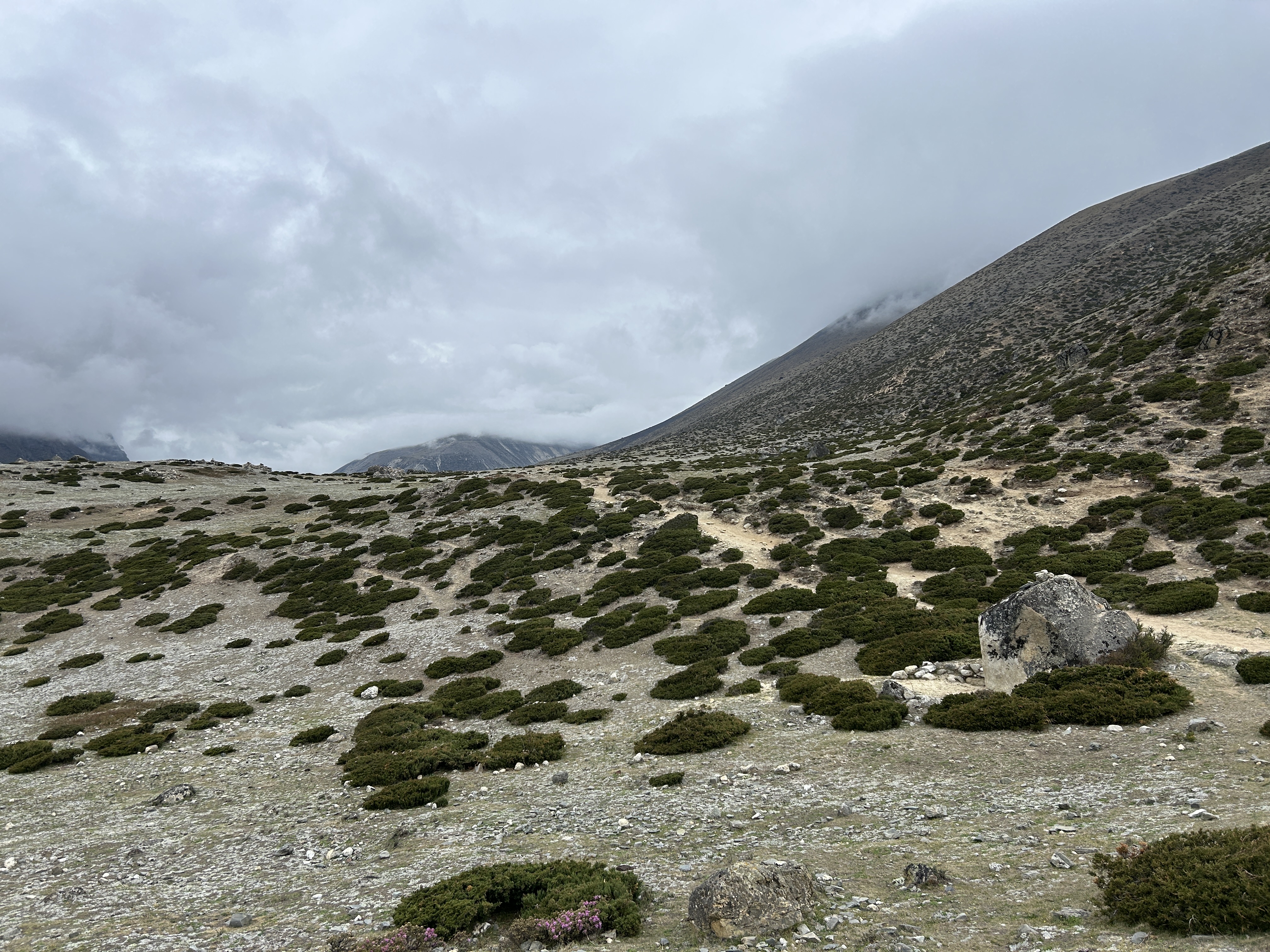
The landscape changed with it. The forests fell behind; shrubs, stone and open ground took over. I reached Dingboche around half past three or four, glad to arrive with daylight still left.
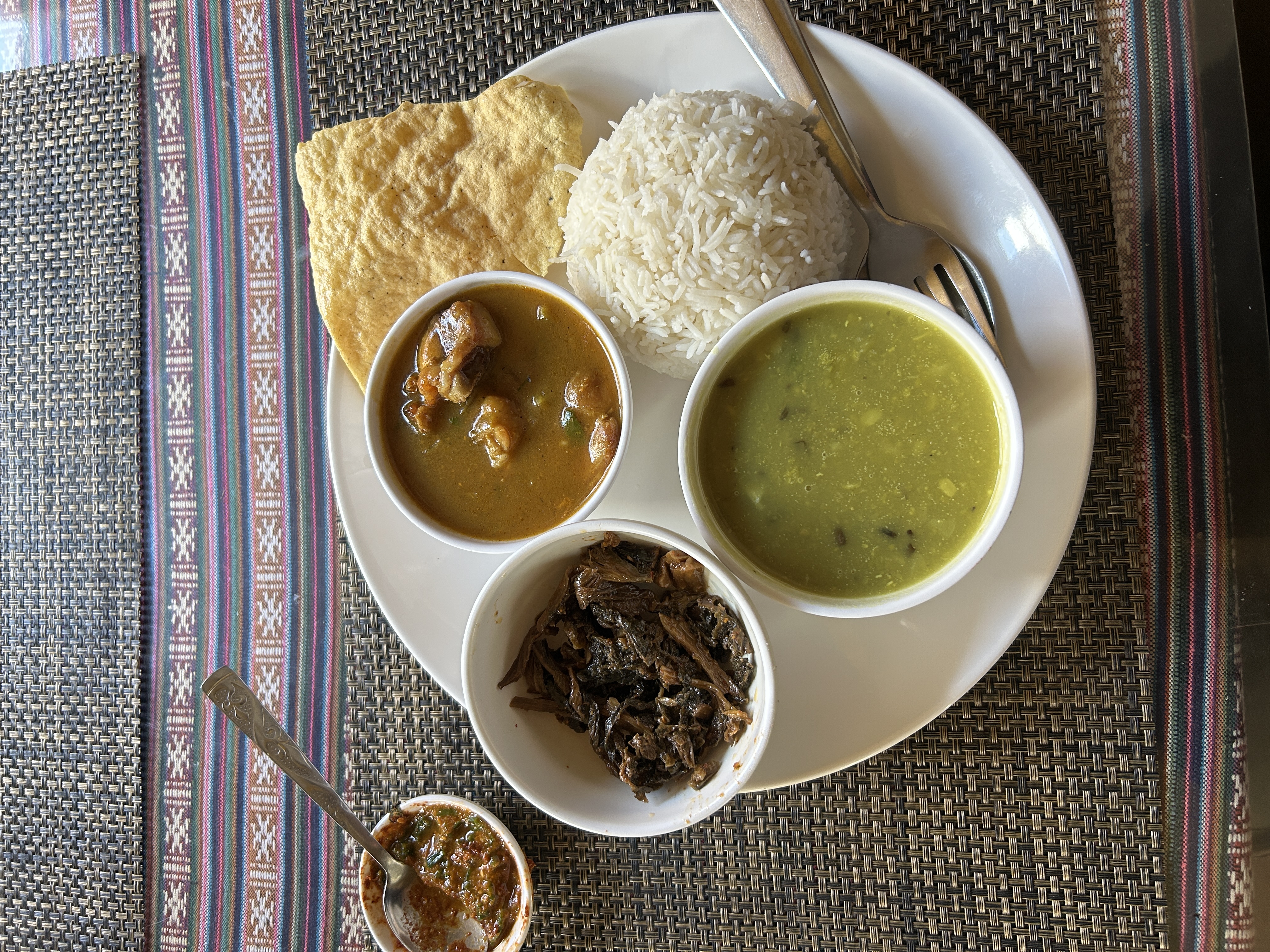
I stayed two nights. My cold was easing, but I was tired. A day in the village gave me time to rest and acclimatise: cafés, good food, conversations with people I had just met. The village was unusually quiet. Staying put felt like part of the walk.
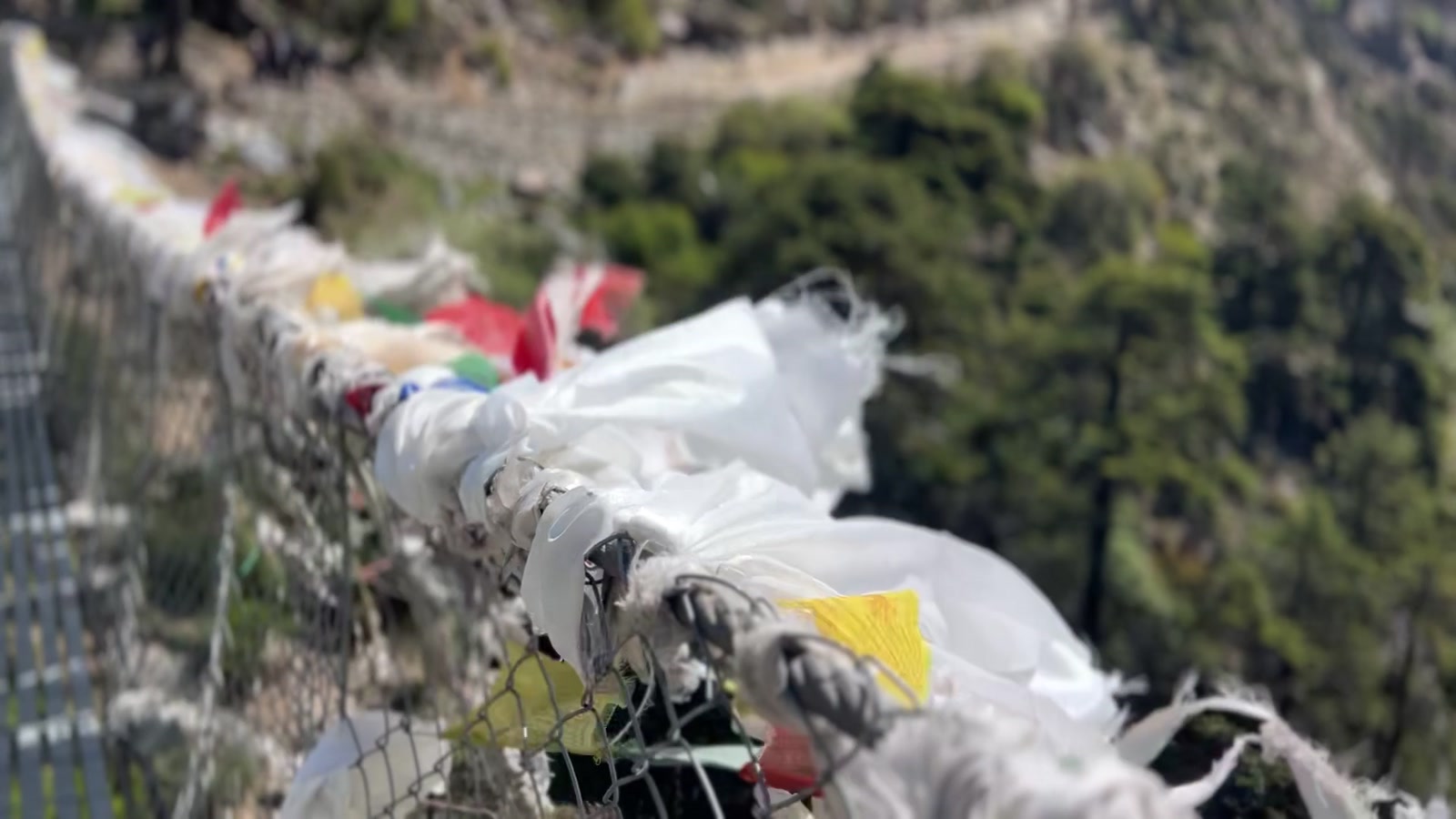
Sound in the player
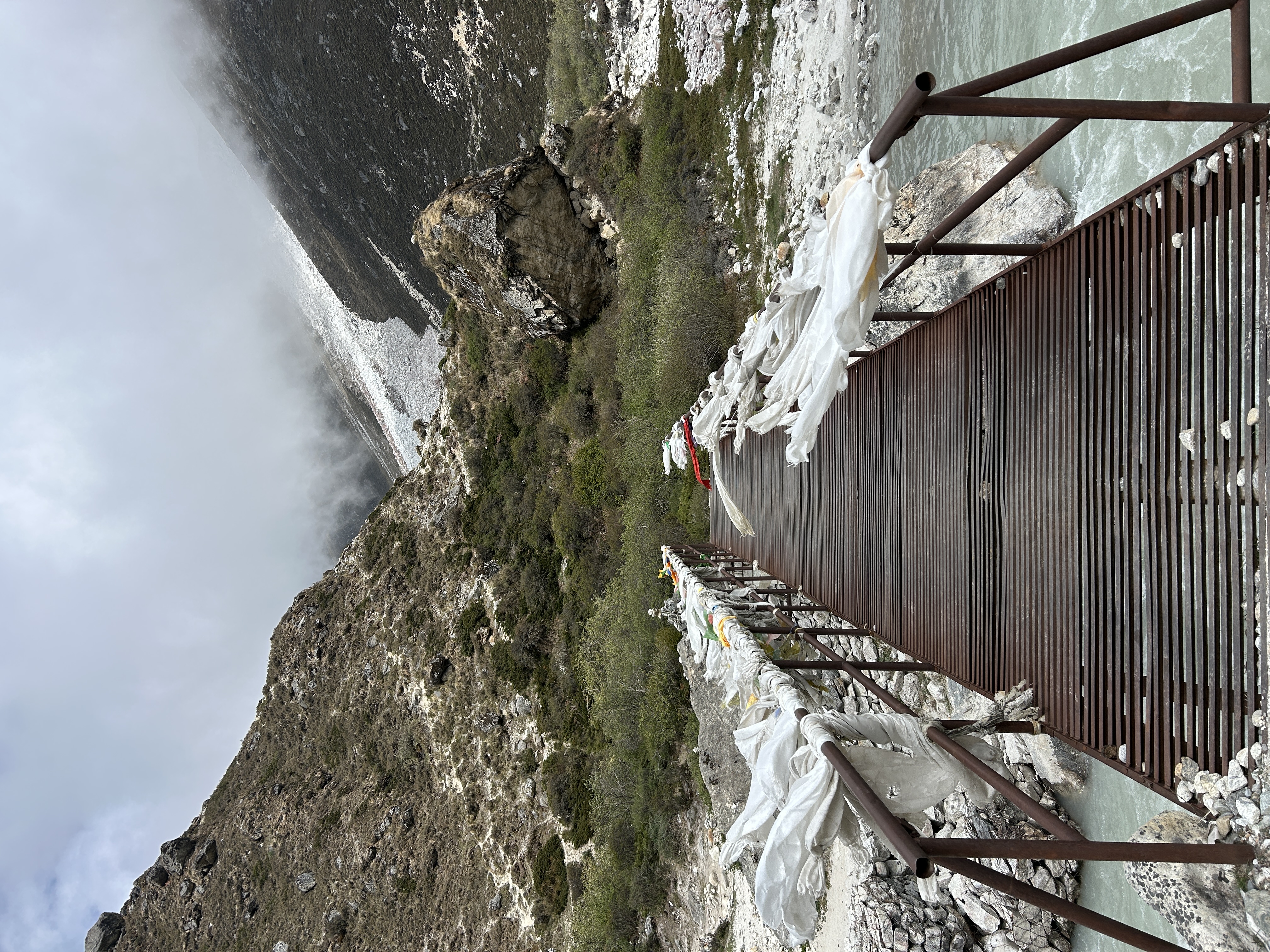
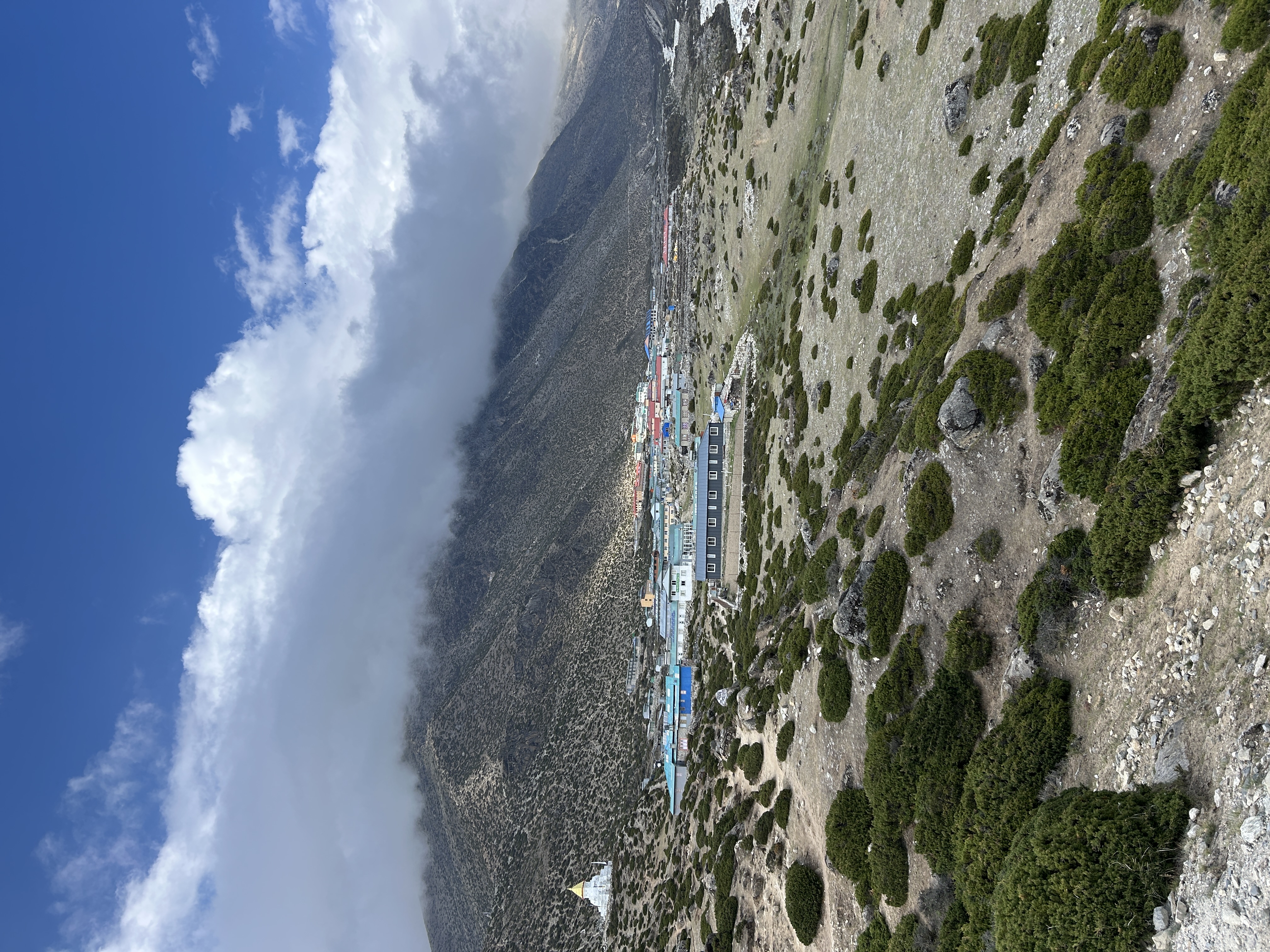
Two nights.
Room to recover.
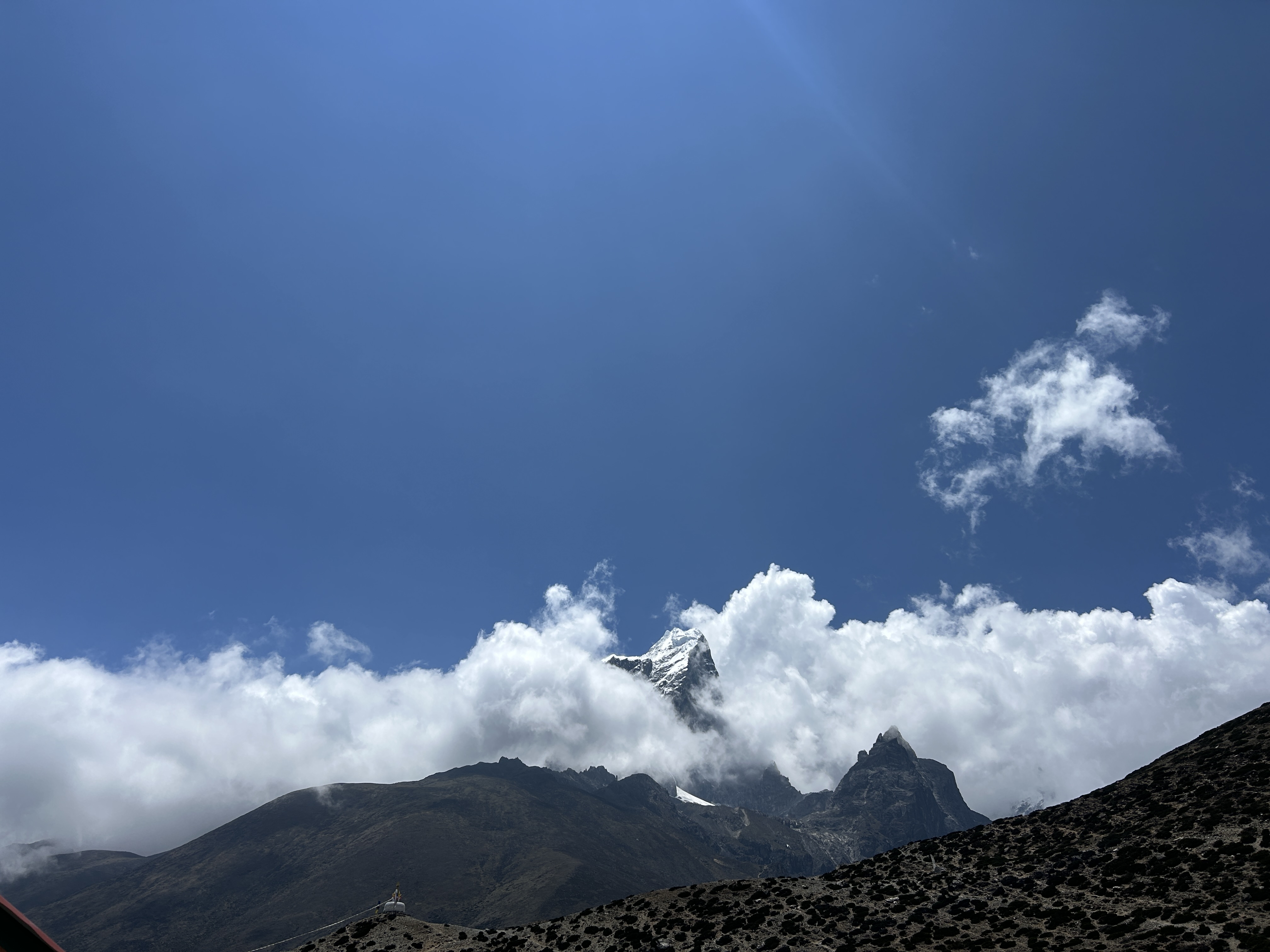
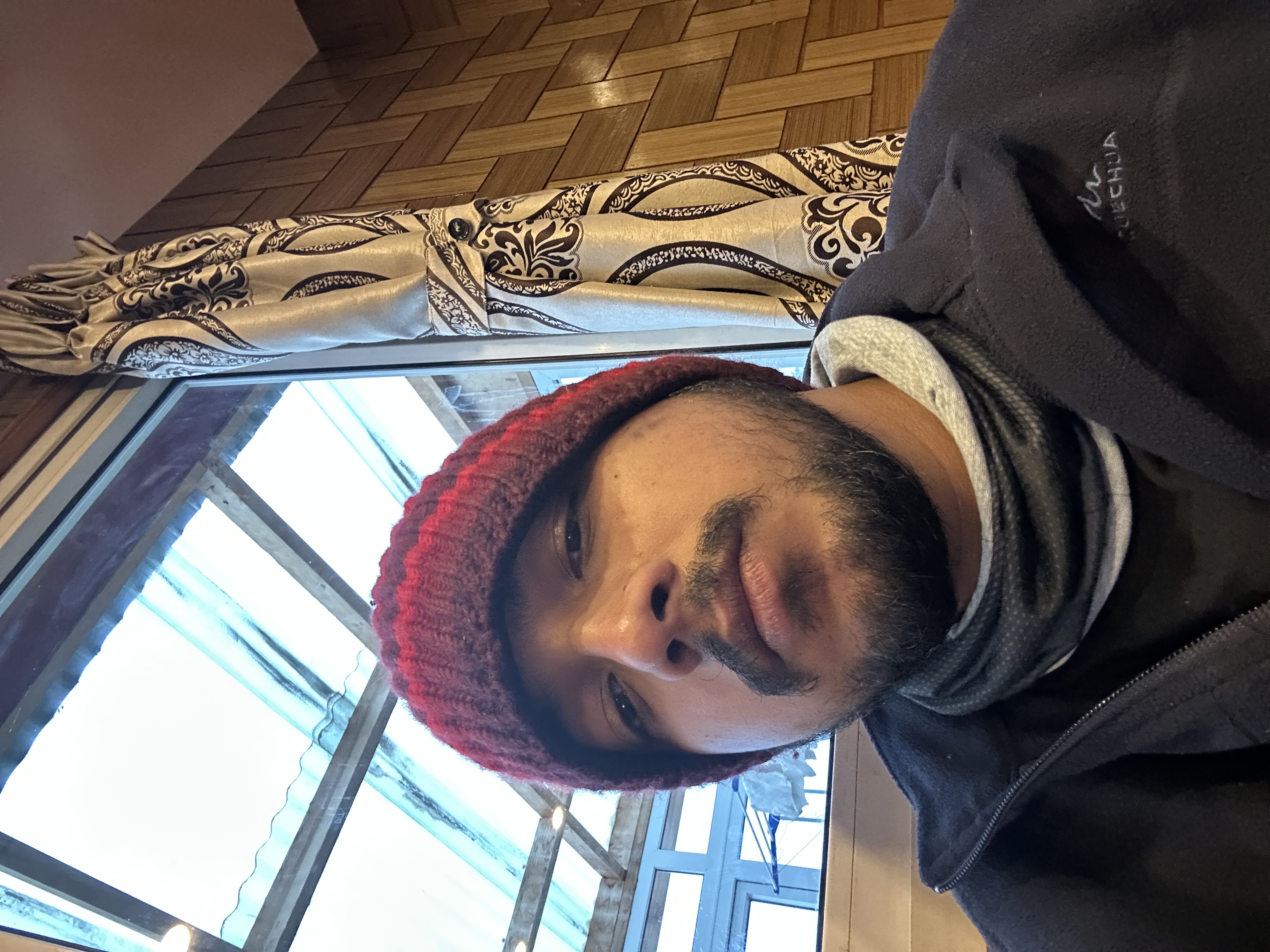
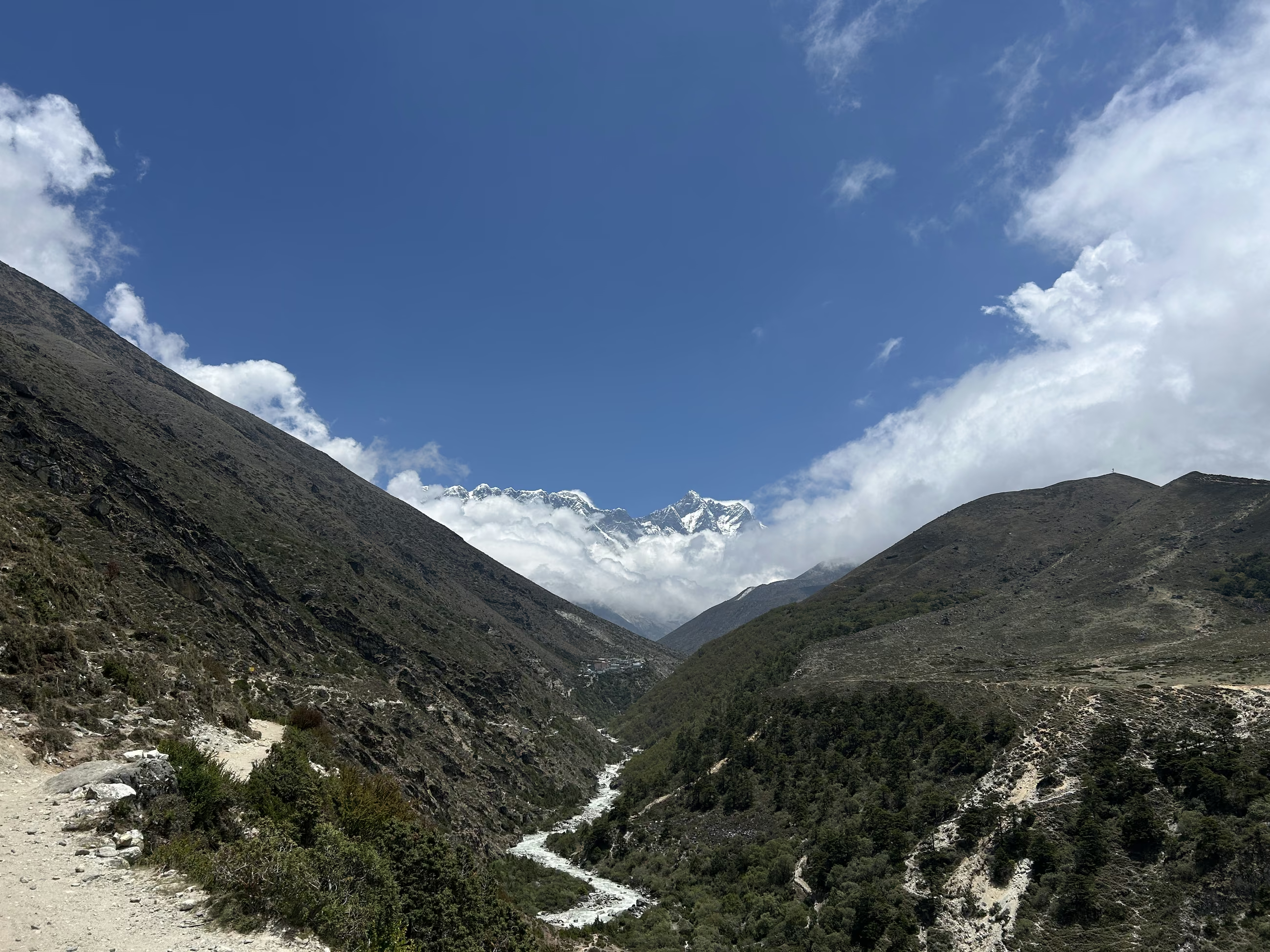
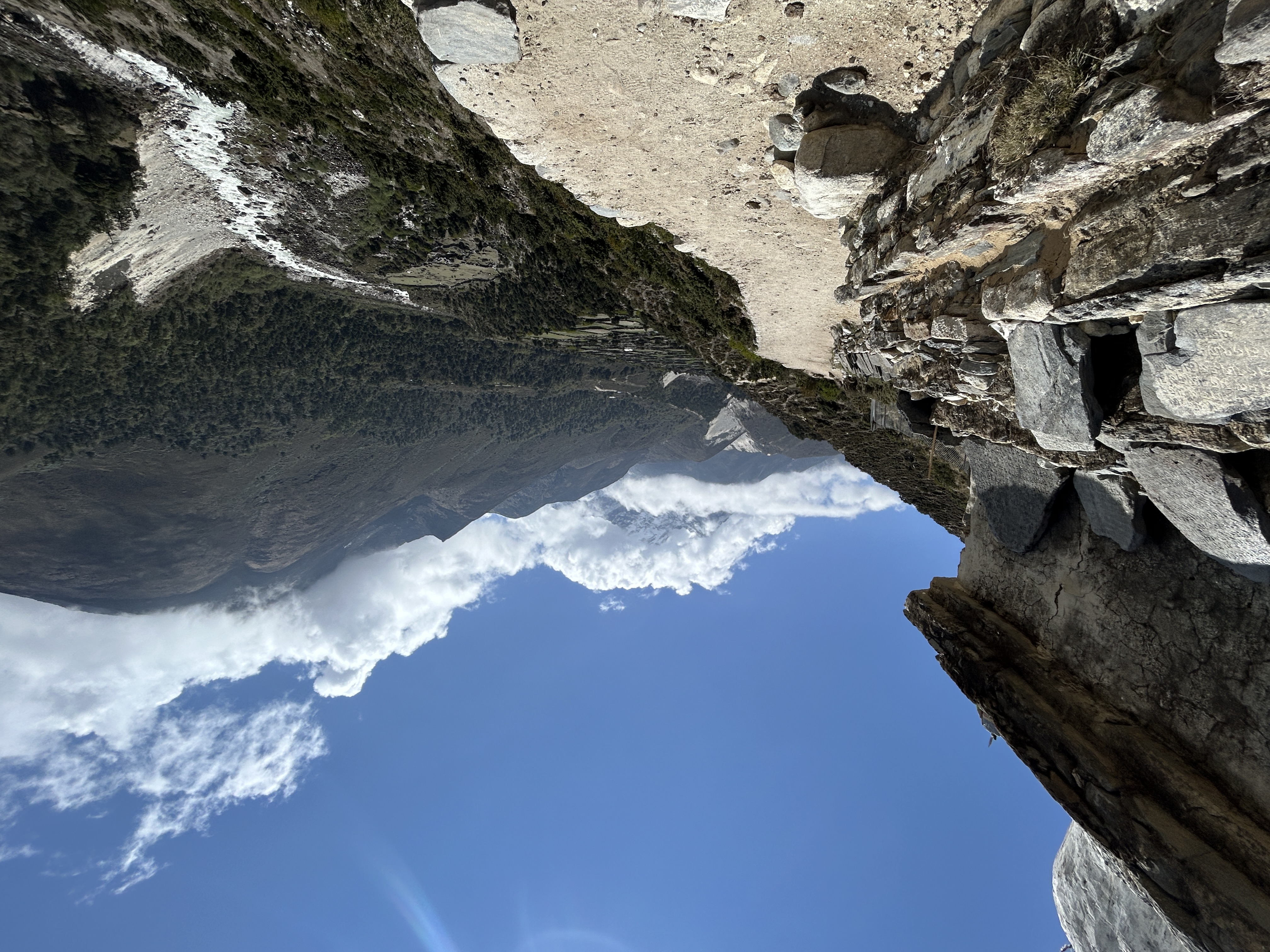
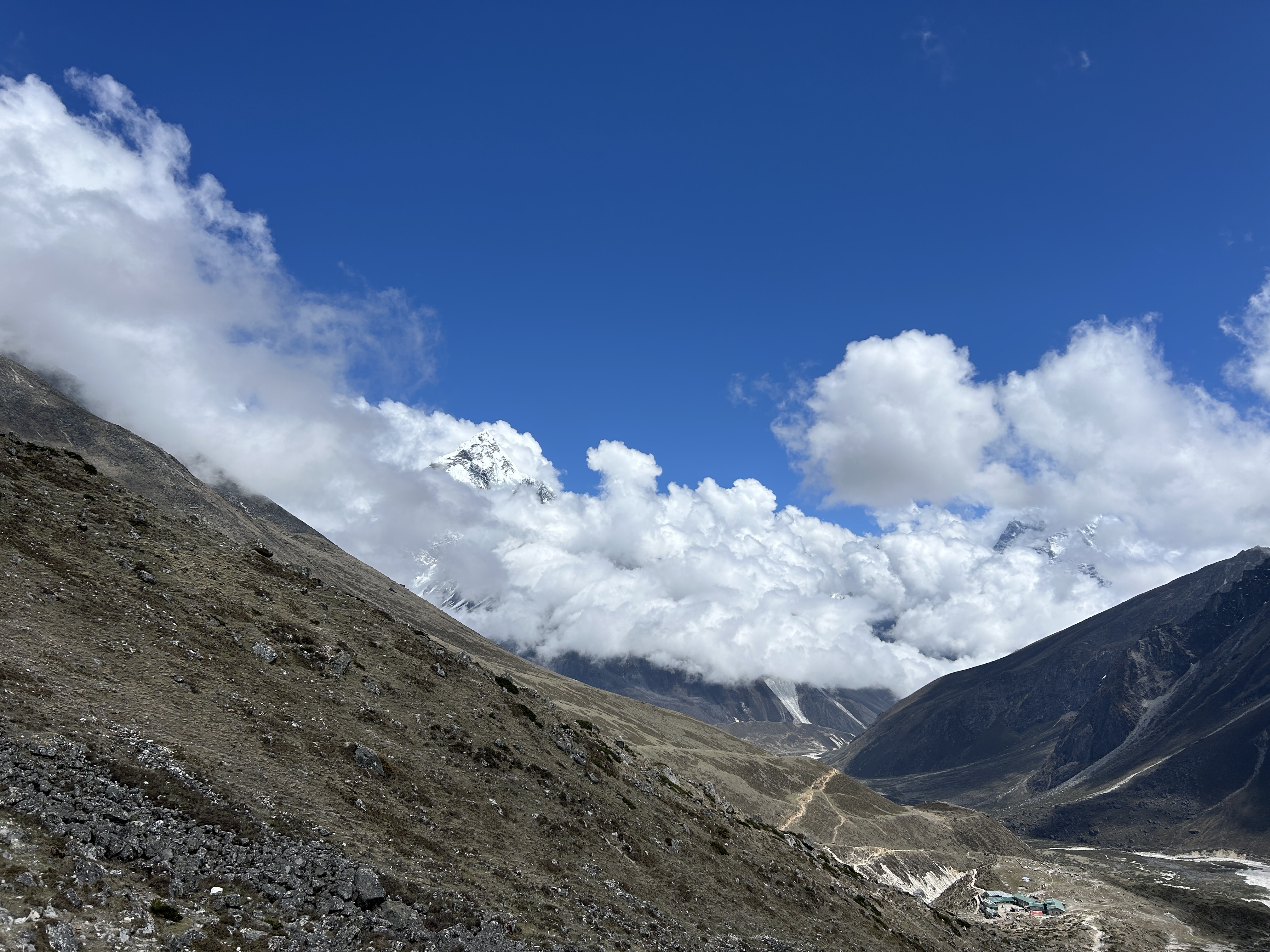
Higher now. Fewer trees, more space, a slower breath.
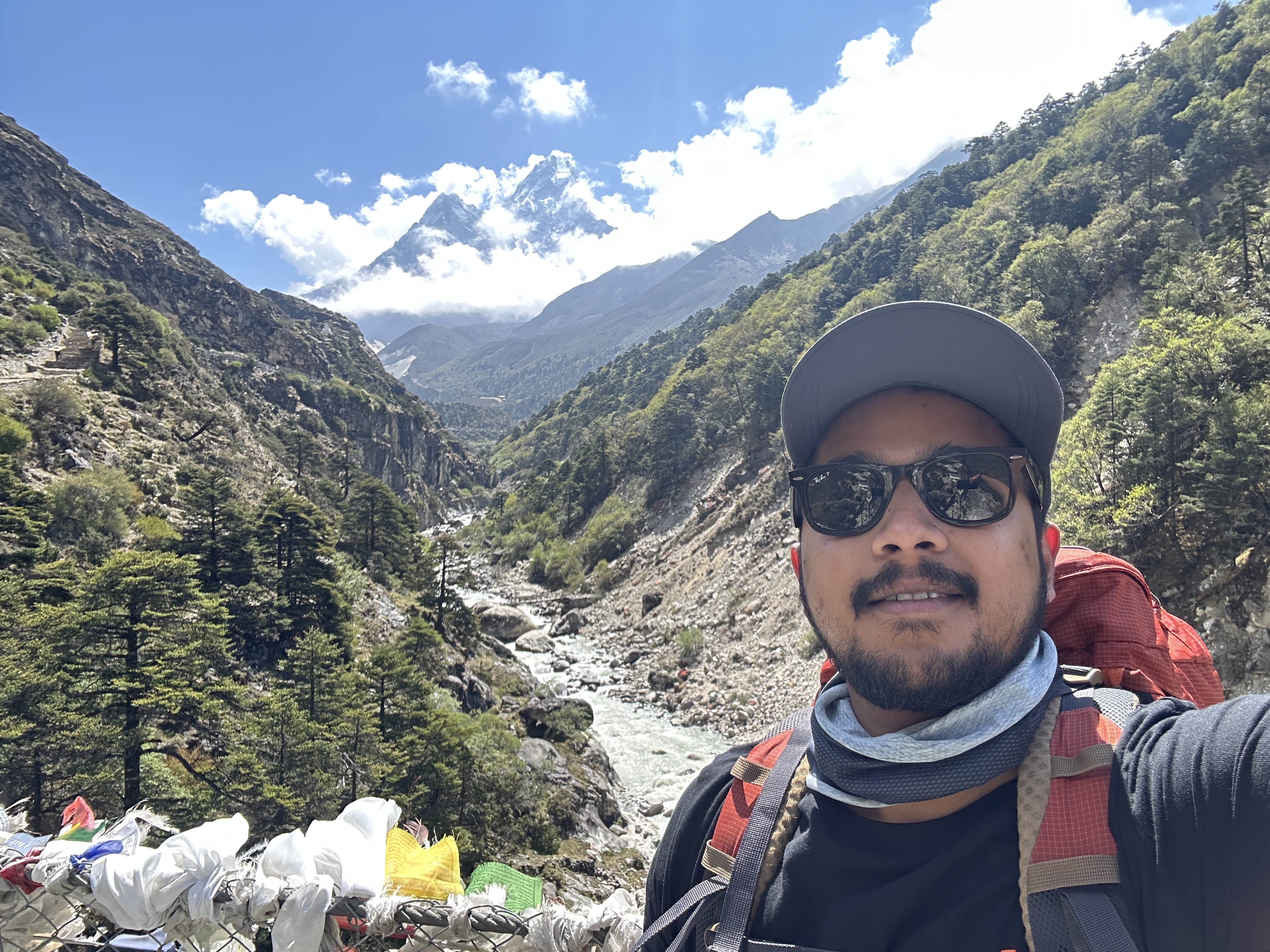
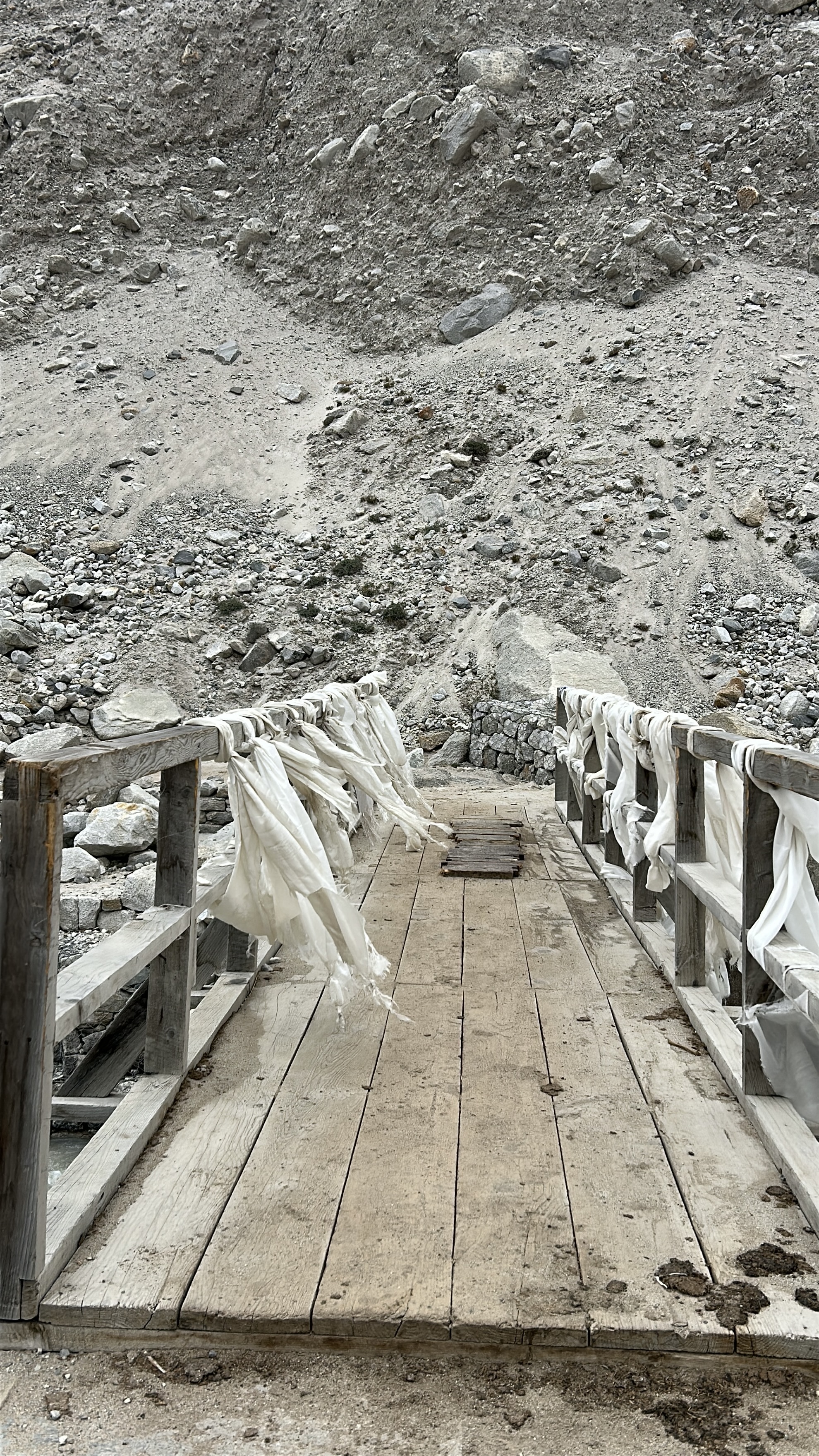
Another bridge, another brief pause above the water.
07 / Dingboche → Thukla memorials → Lobuche
One step.
Then another.
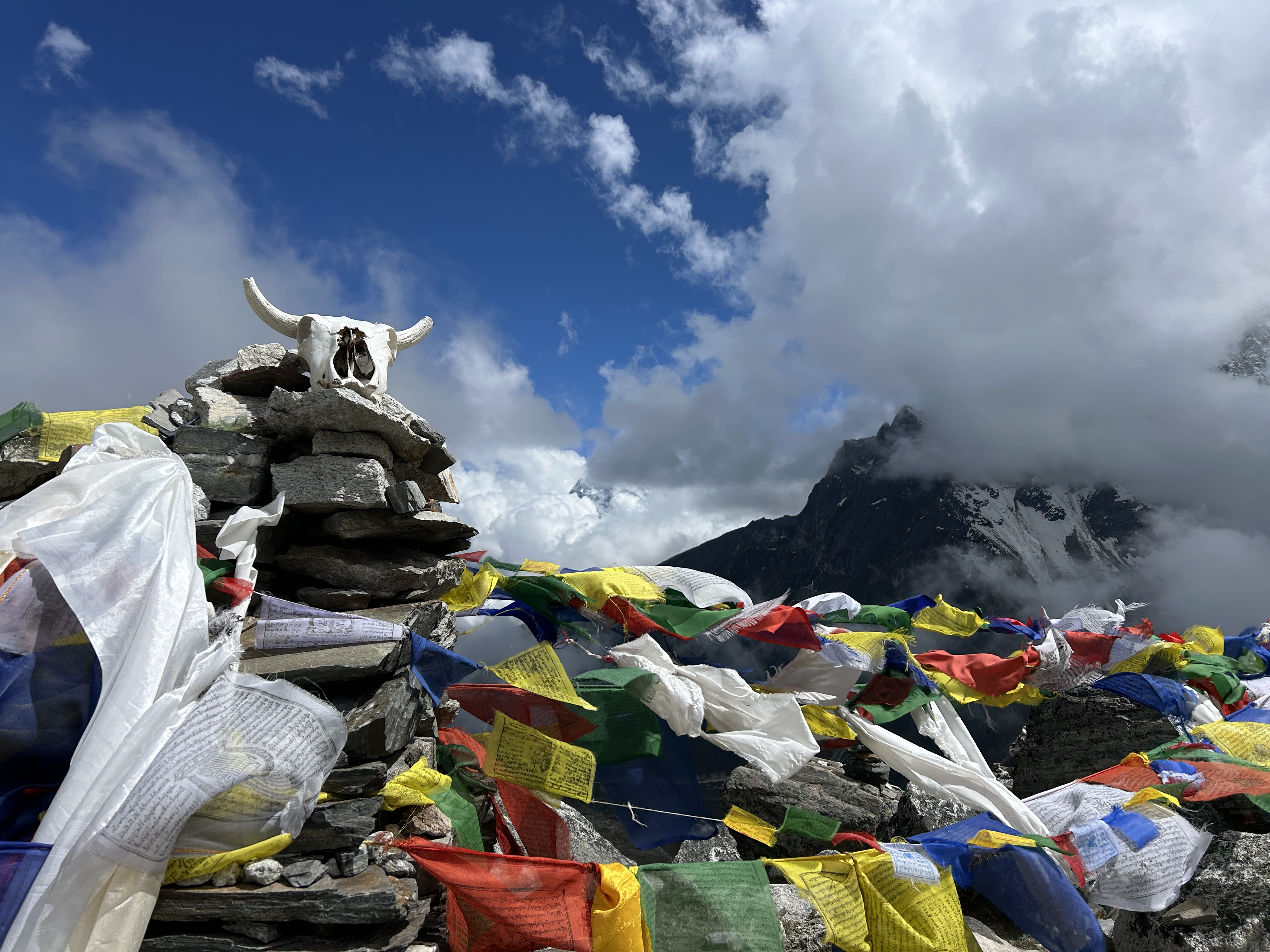
Above Thukla, the climb to the memorials was hard. I took it slowly. The cairns and prayer flags held other people’s stories, and I passed through with a different kind of attention.
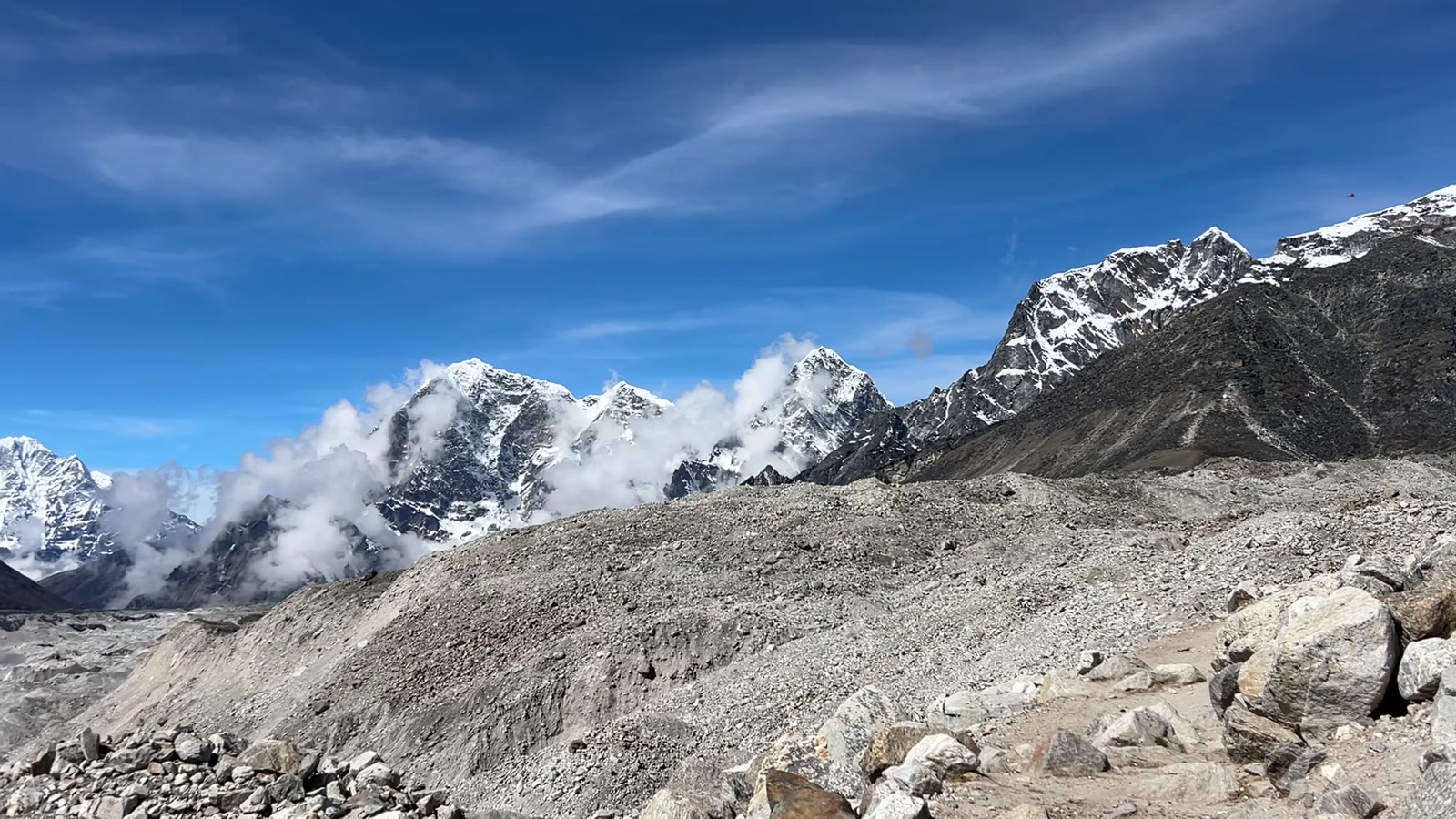
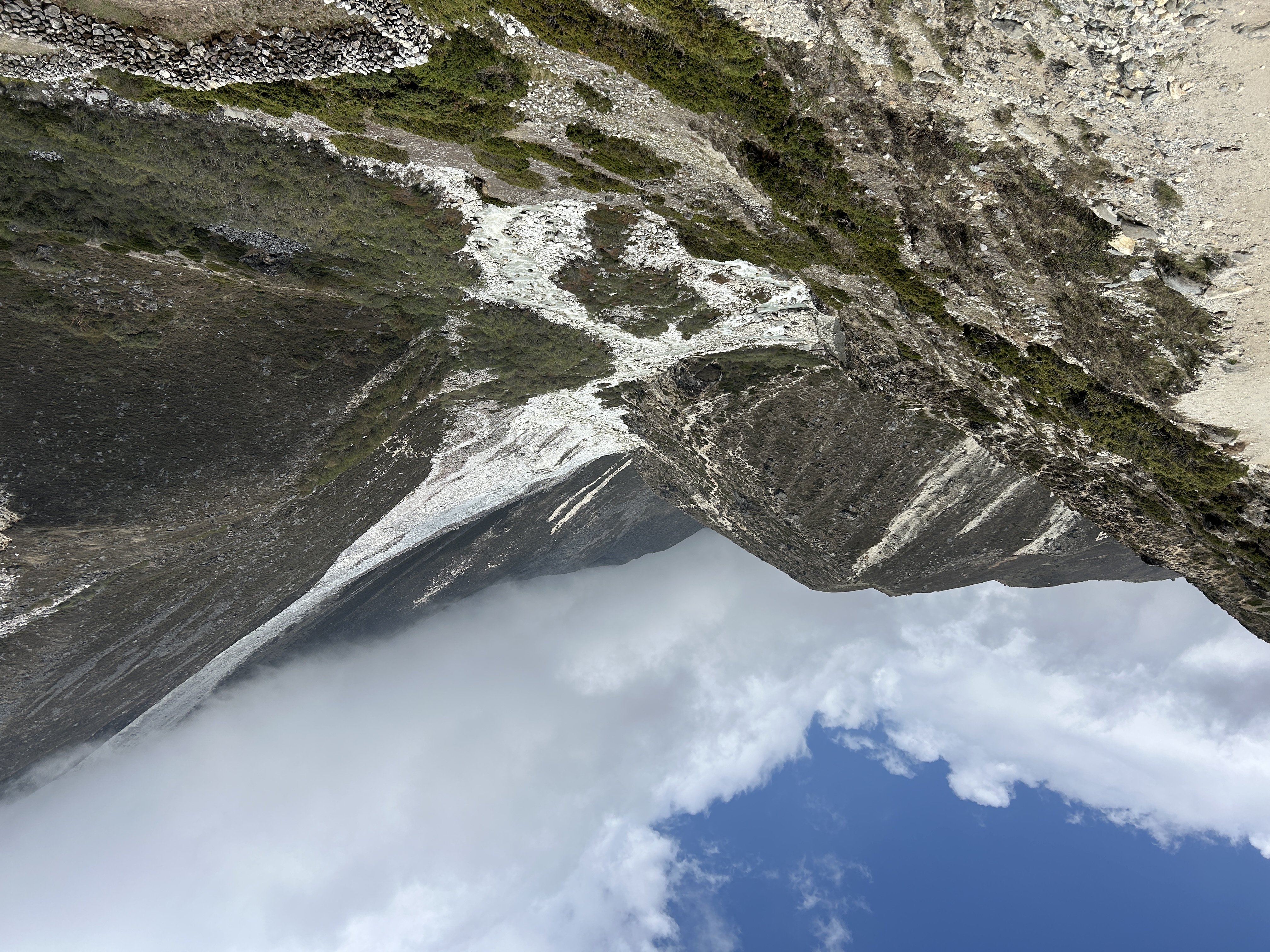
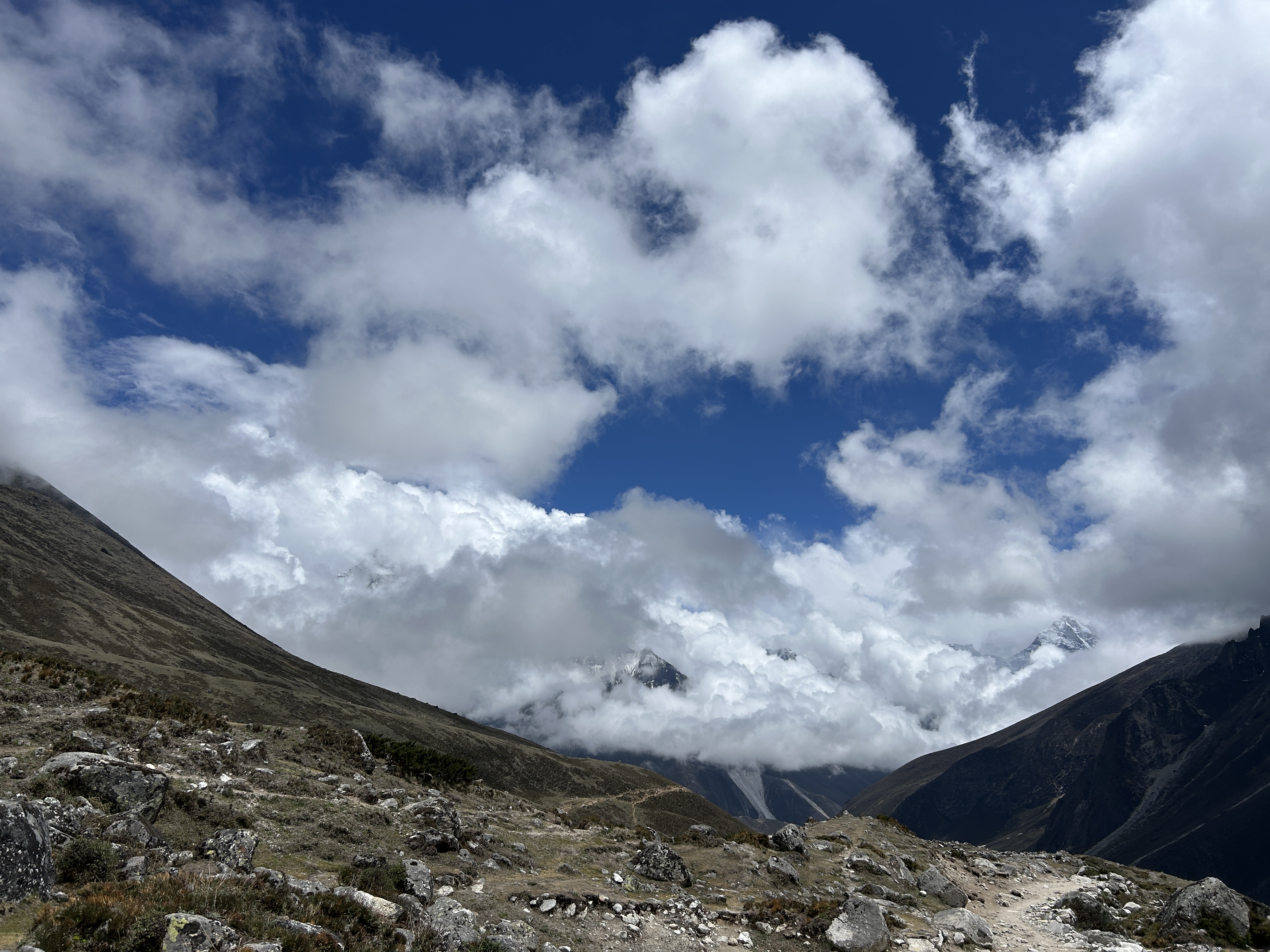
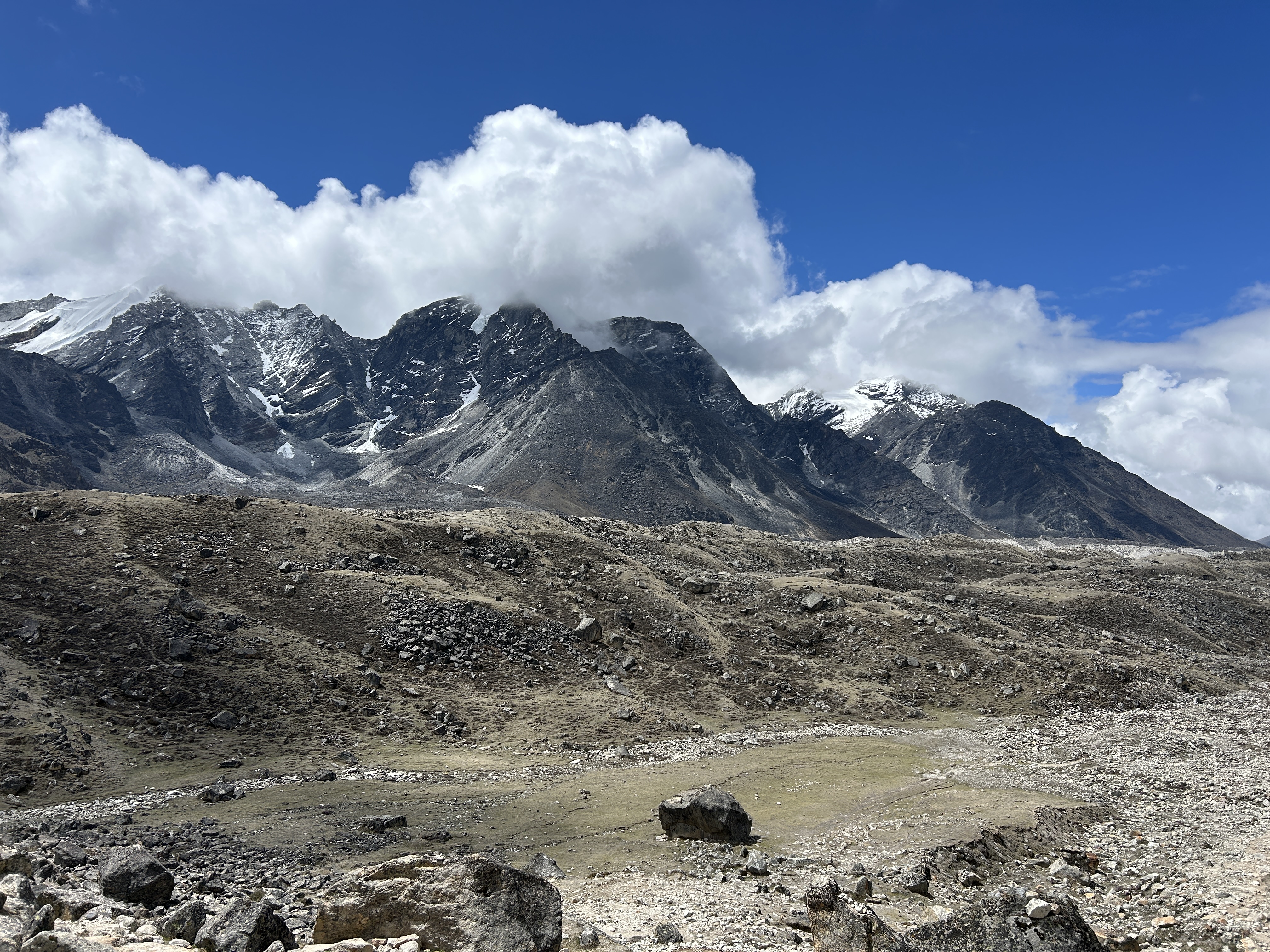
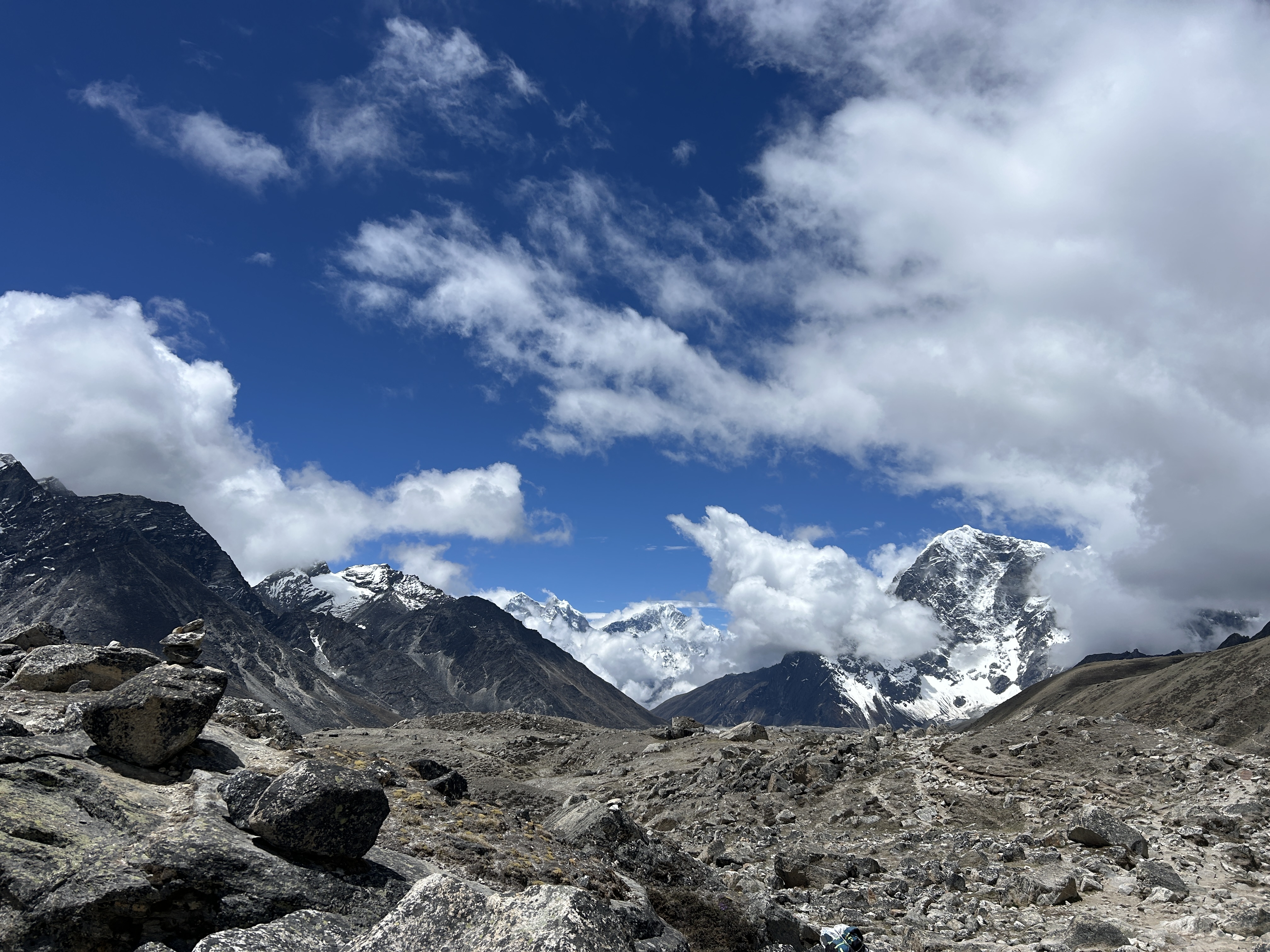
Beyond them, the valley was becoming a world of rock. Cloud kept taking away the great views I had imagined. There were openings, fragments of snow and enormous faces, but never quite the whole picture.
I reached Lobuche tired and cold. I had come a long way from the green valley below Lukla. There was still further to go.
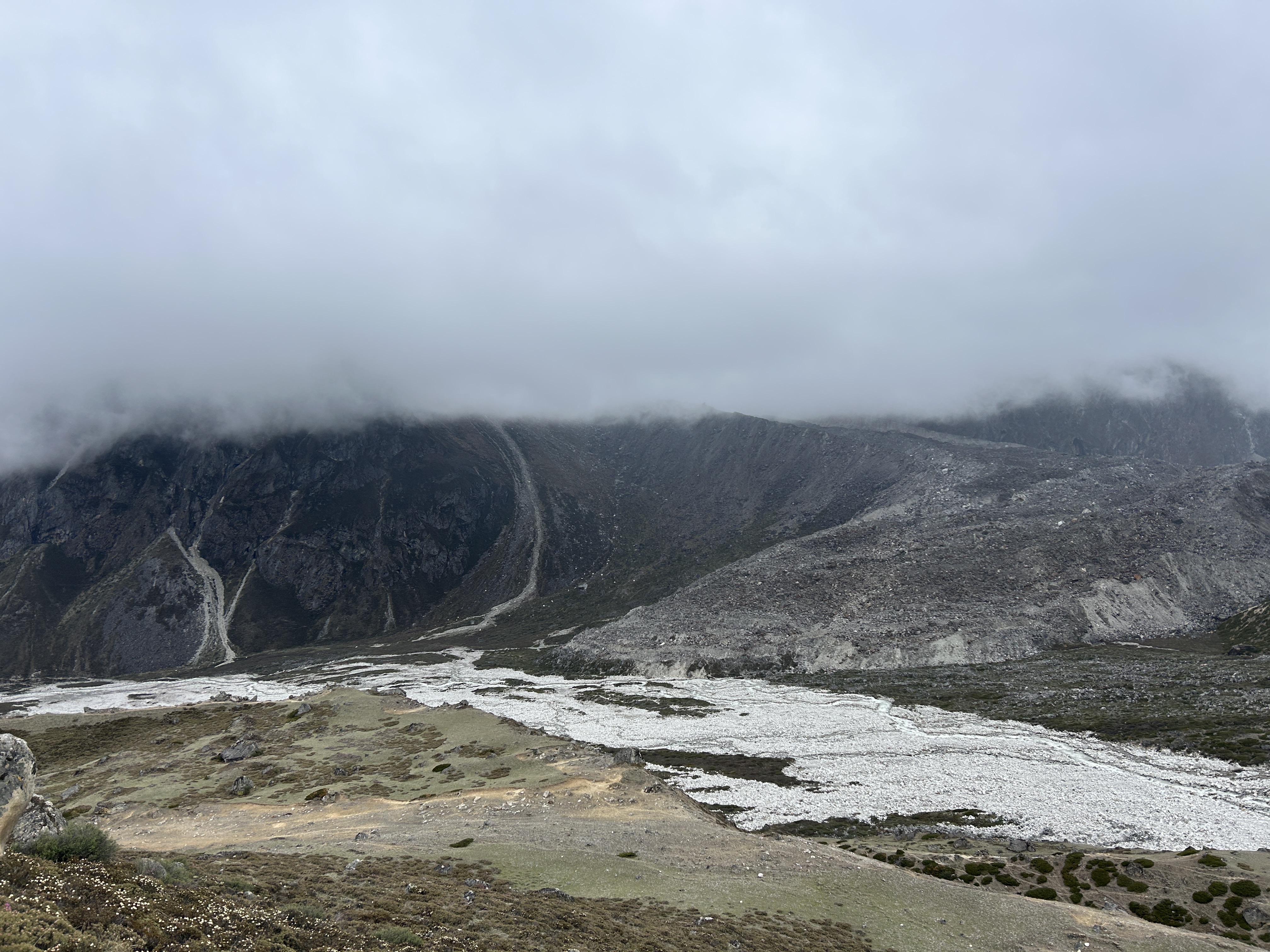
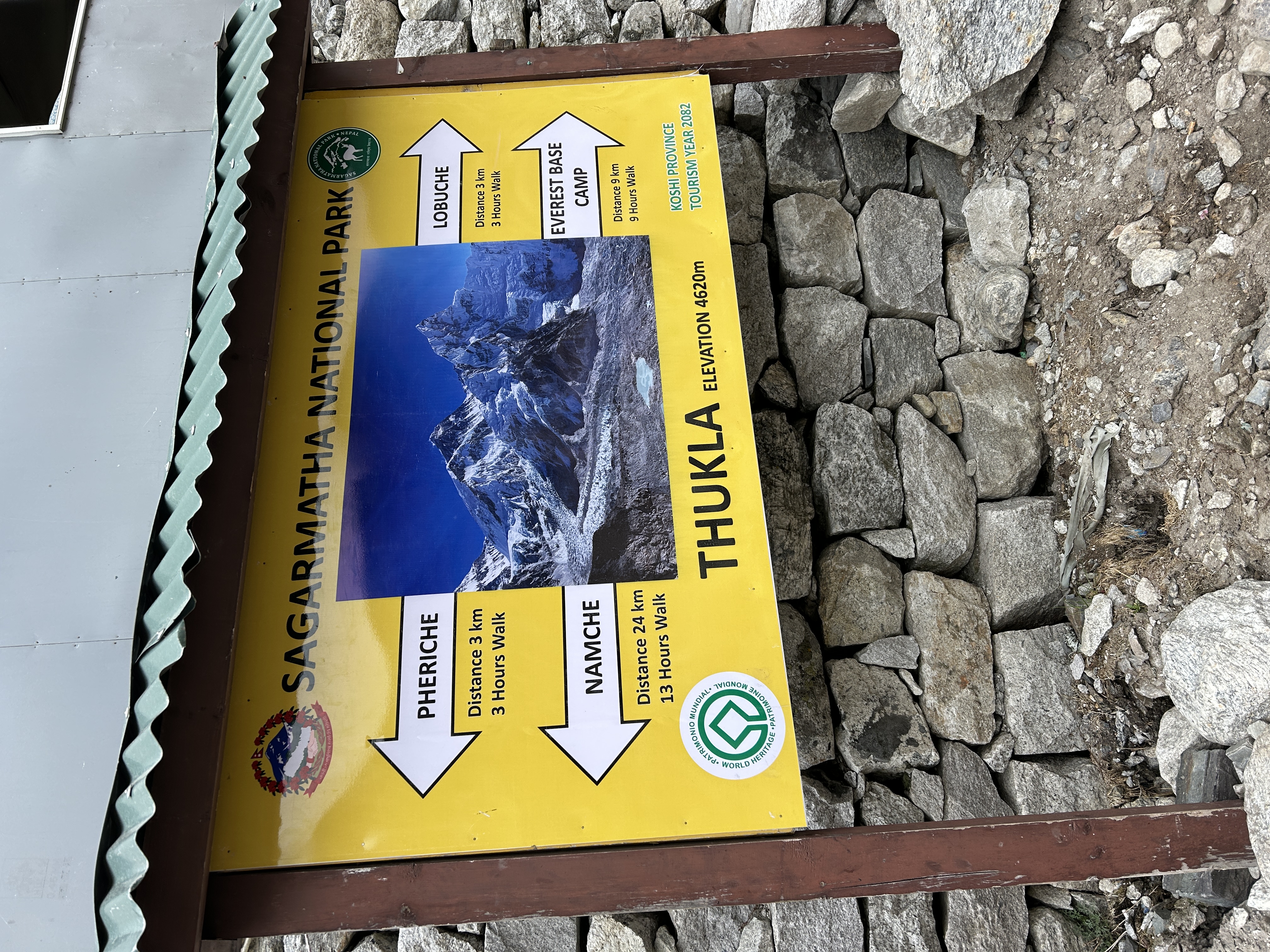
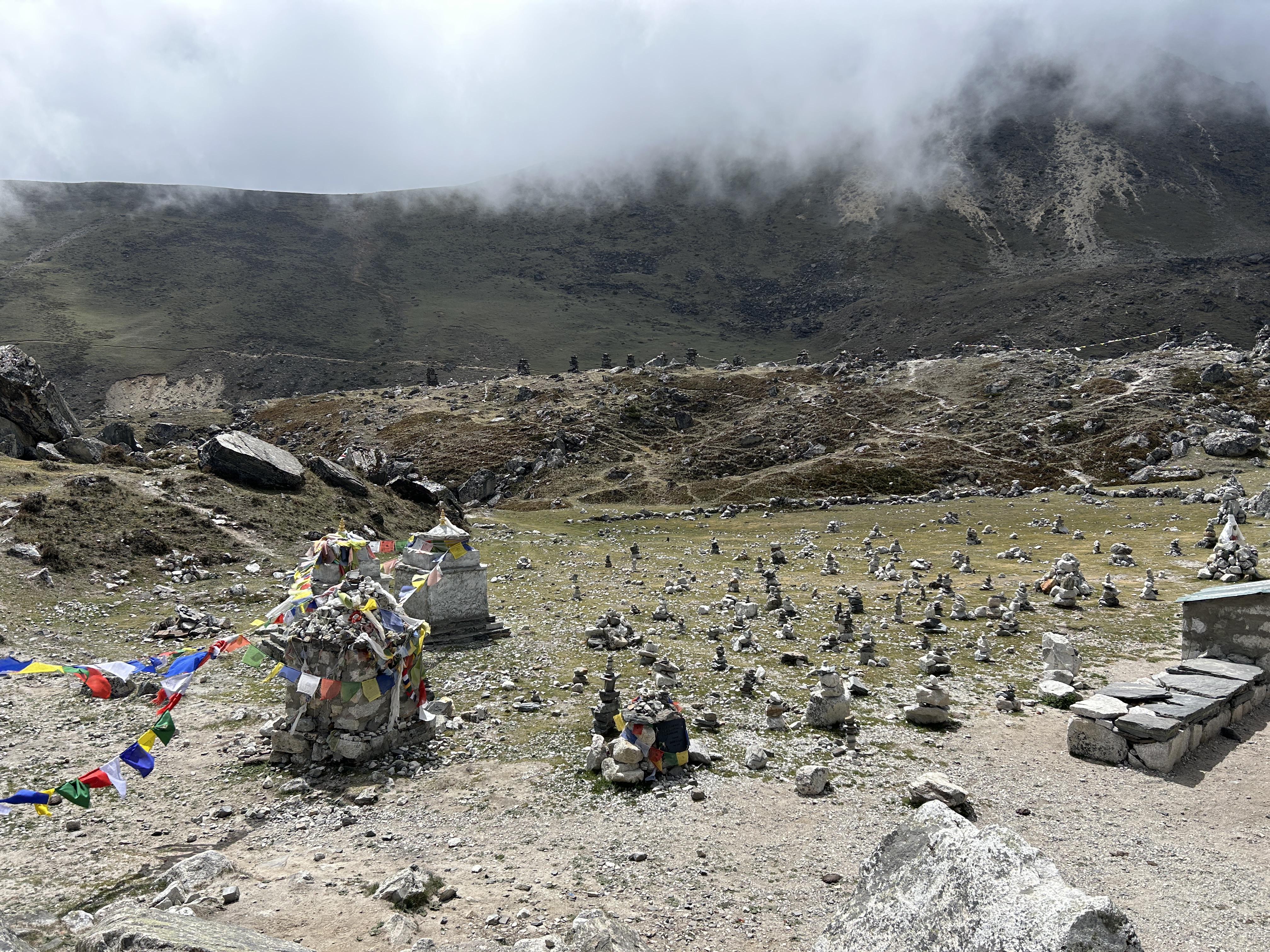
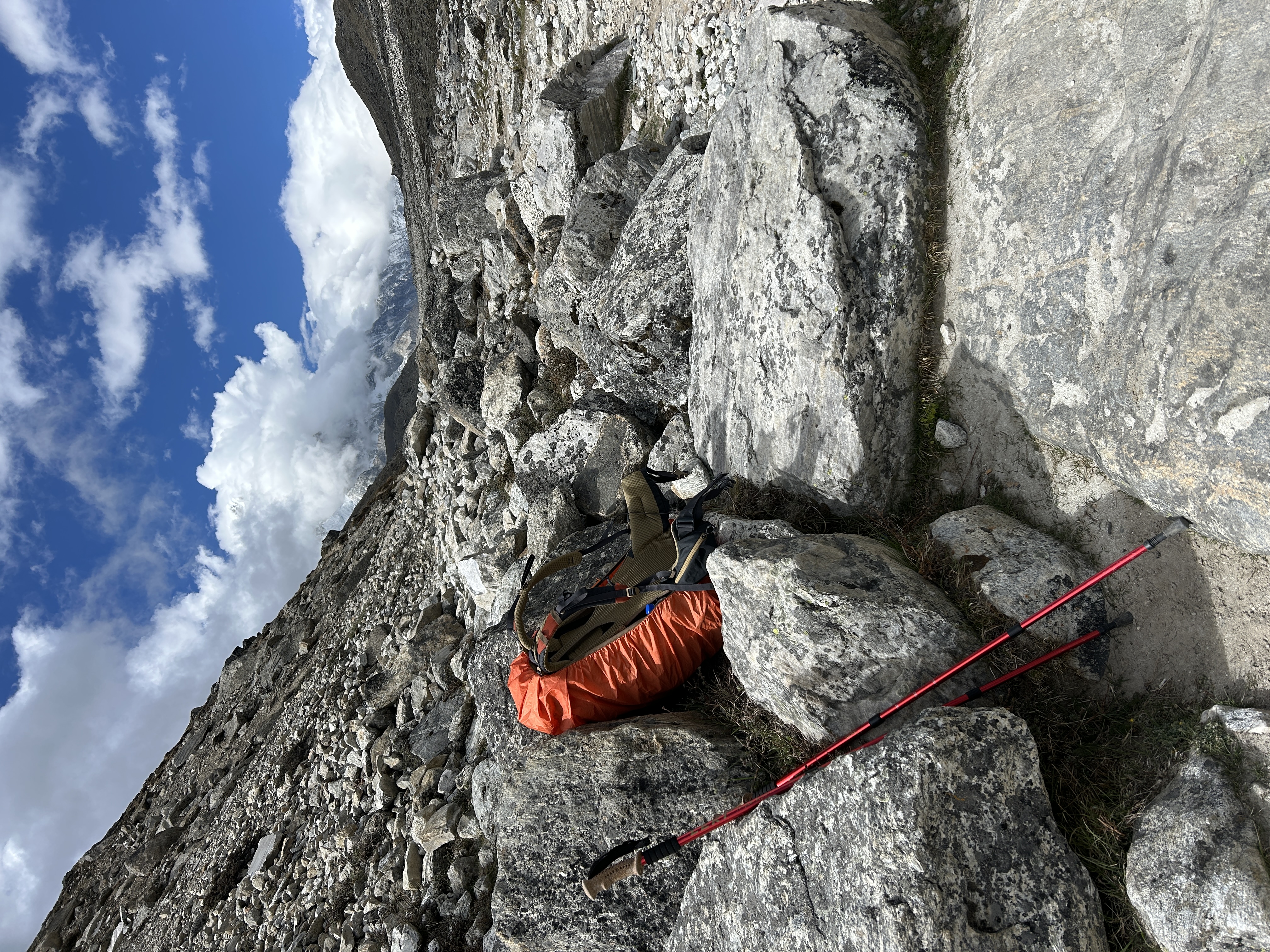
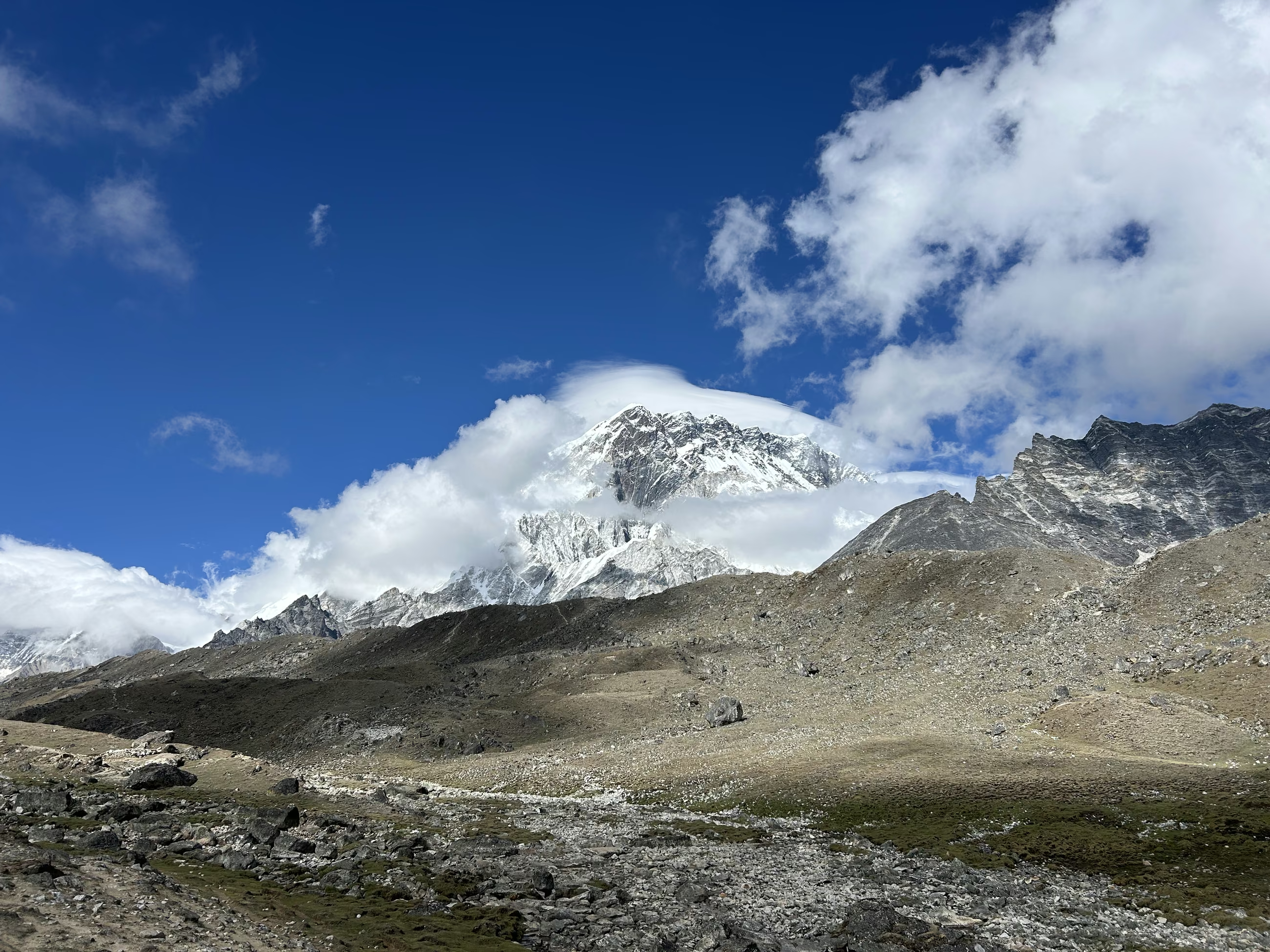
Above Thukla, I walked more quietly among the memorials.
08 / Lobuche → Gorakshep
I had never seen
anything on this scale.
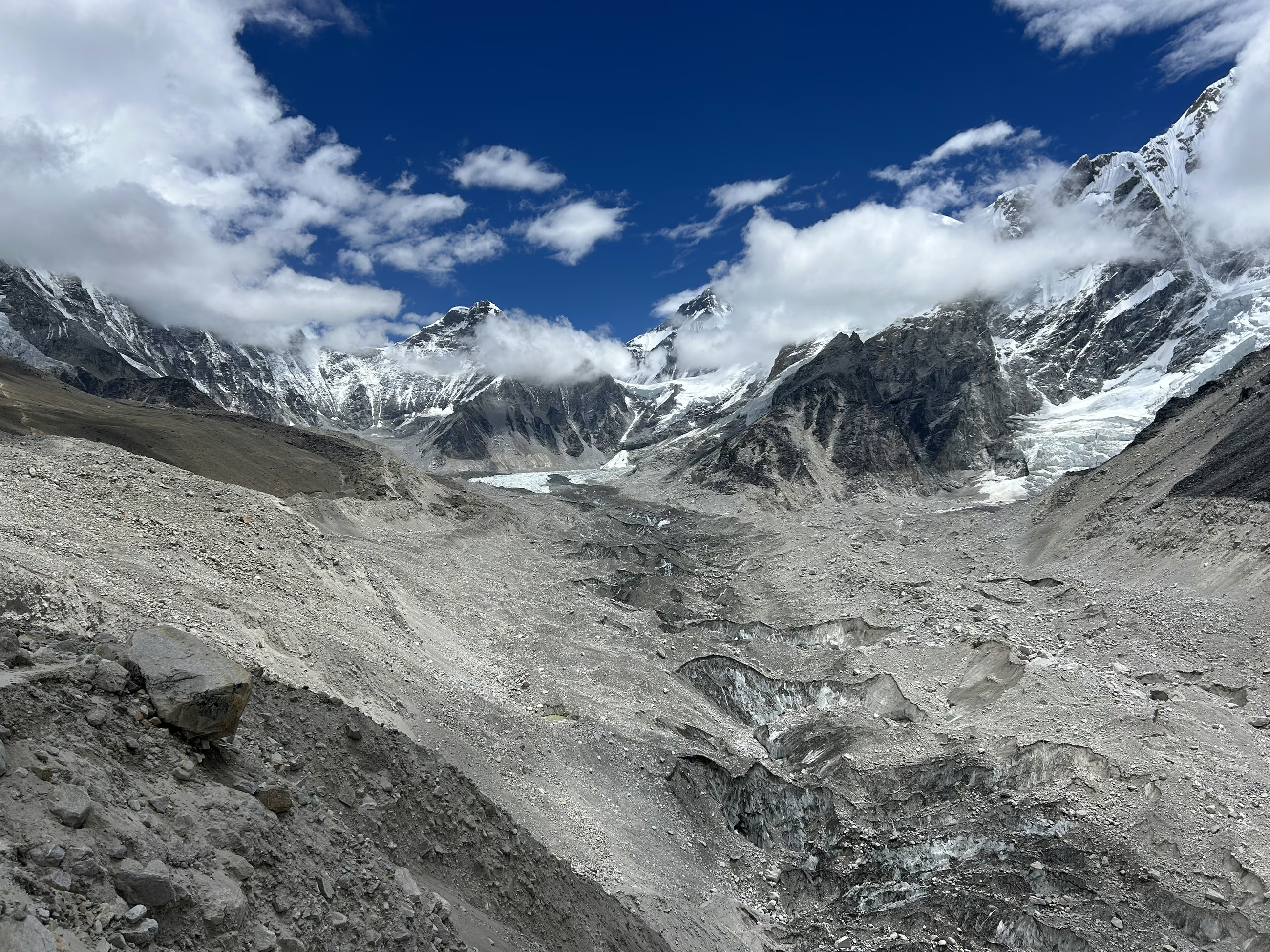
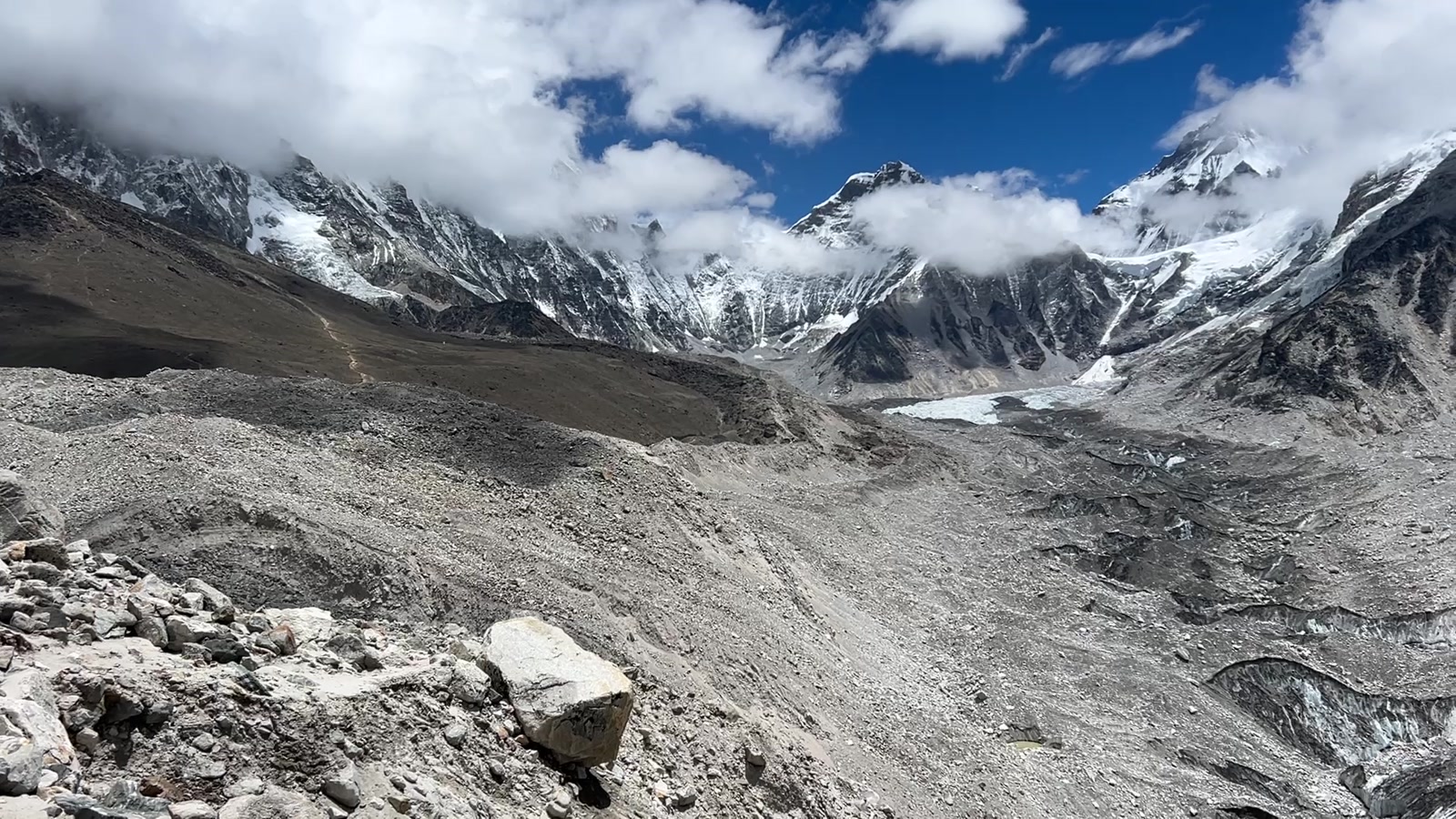
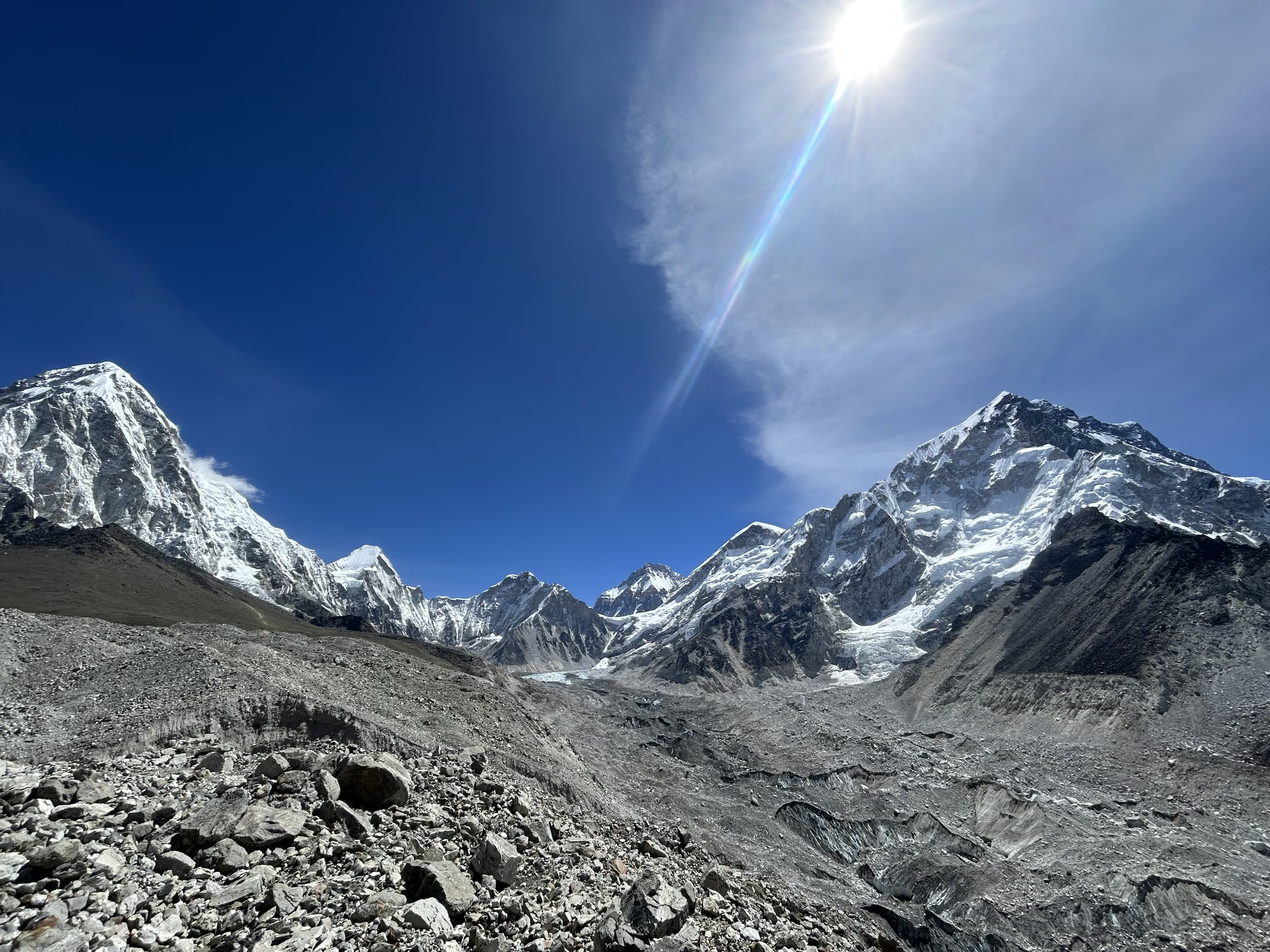
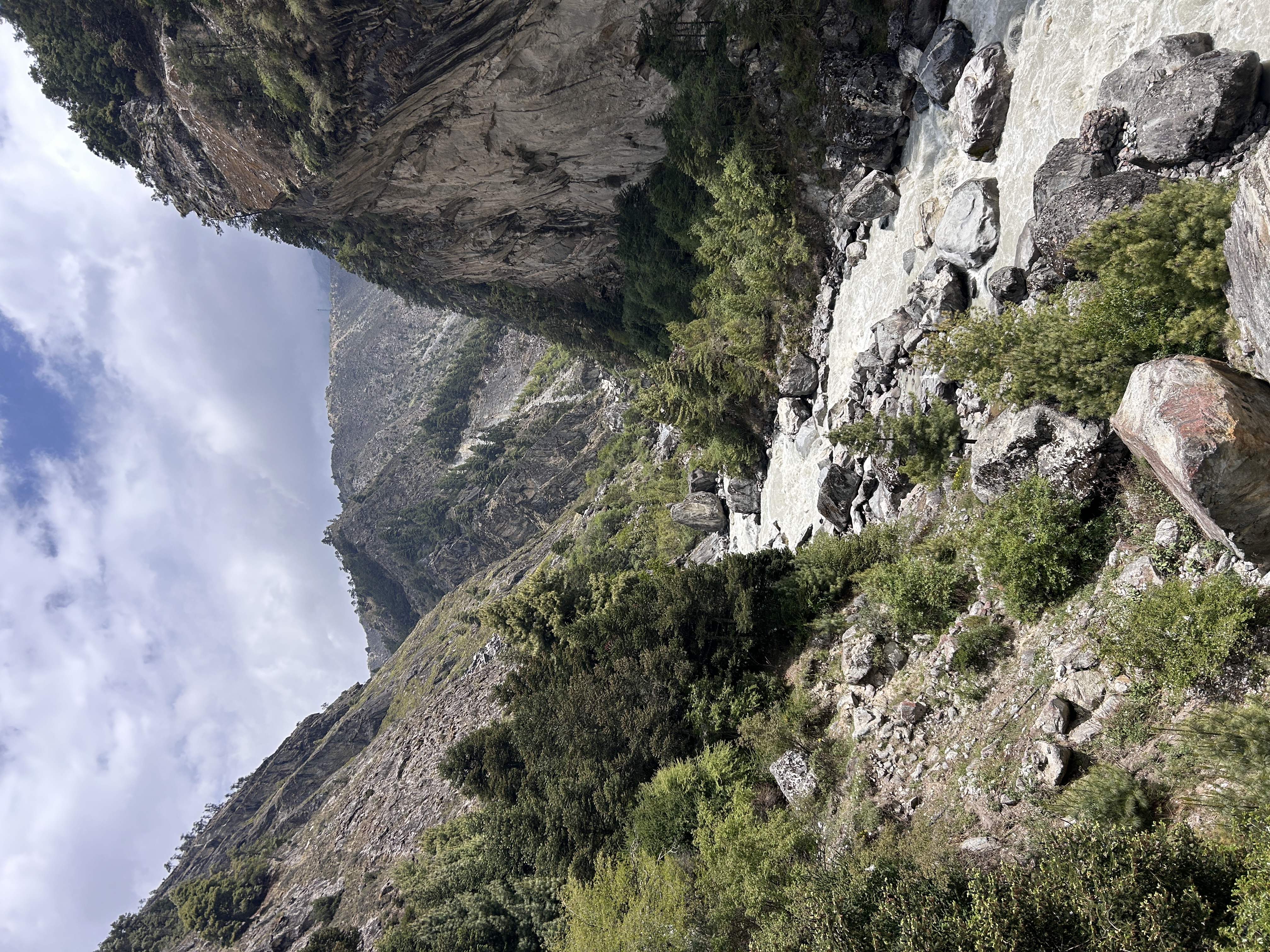
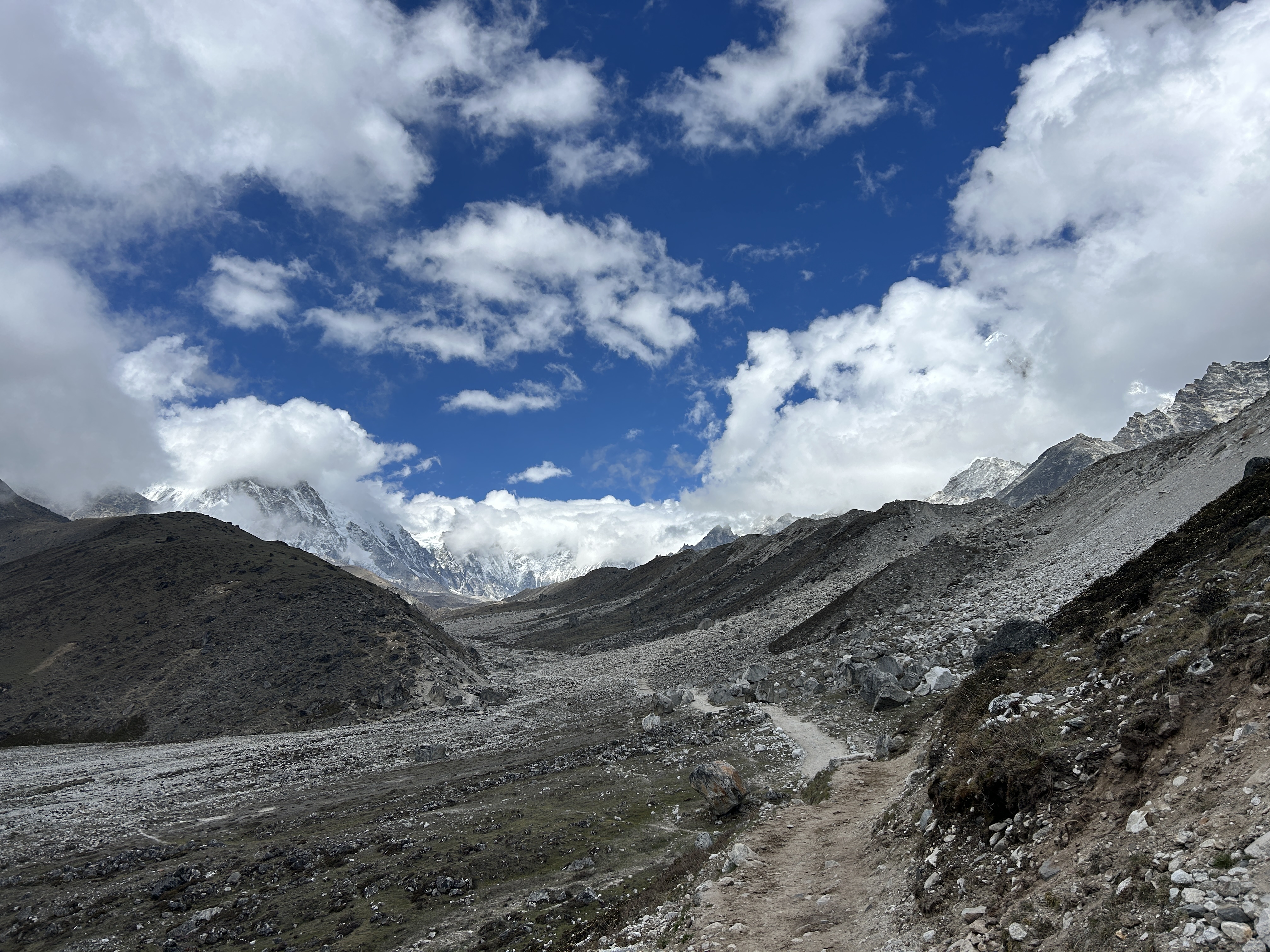
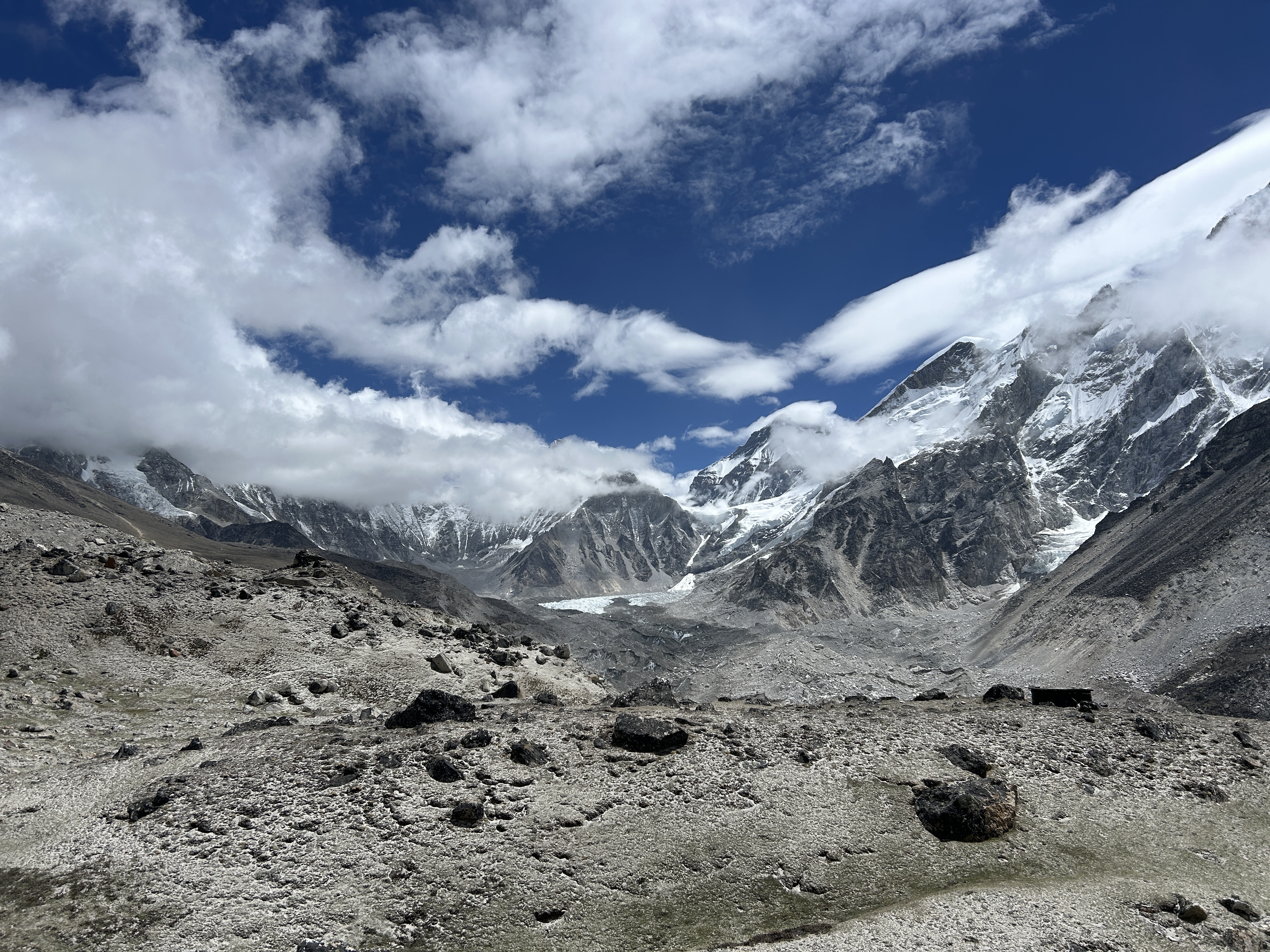
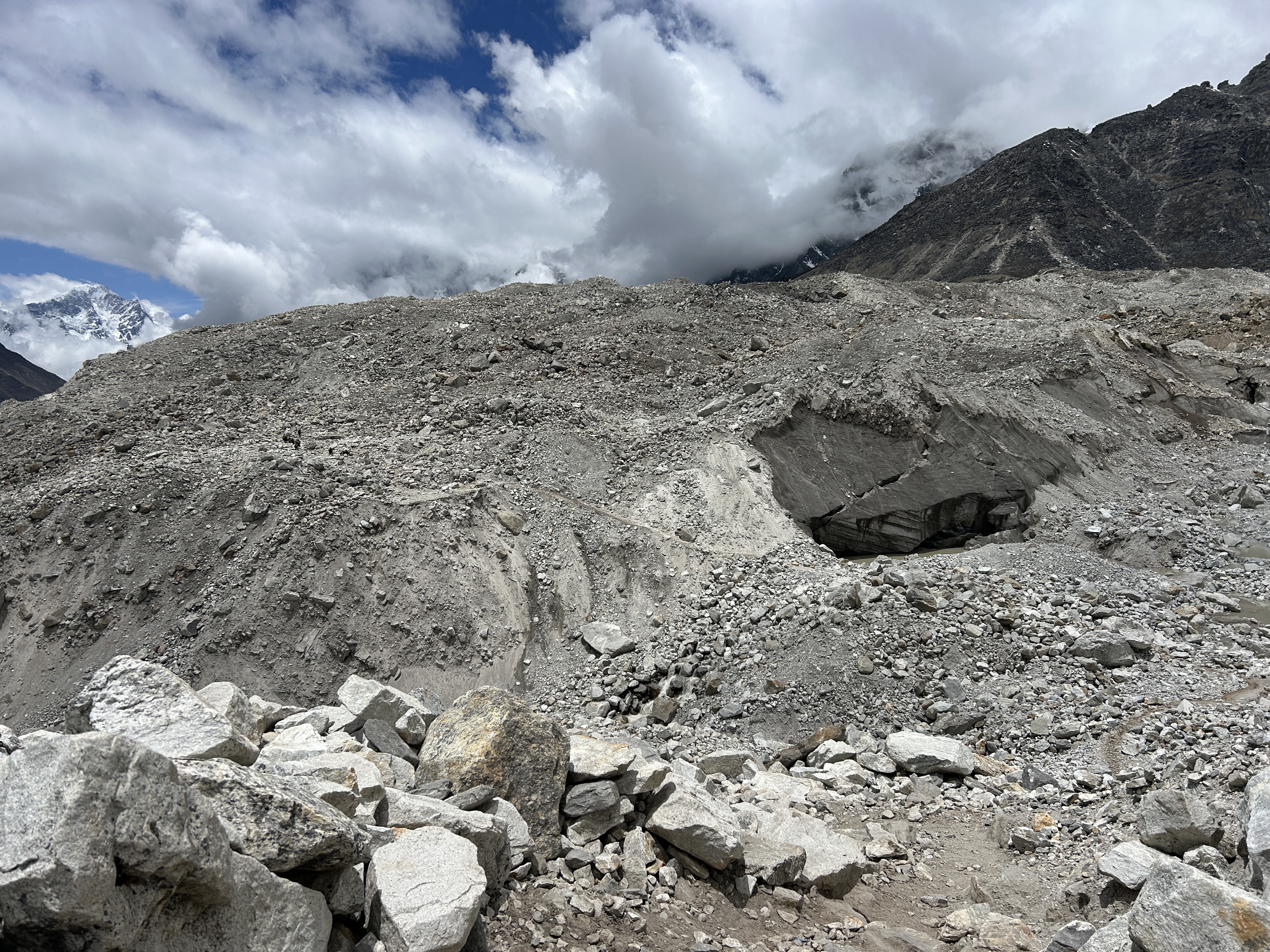
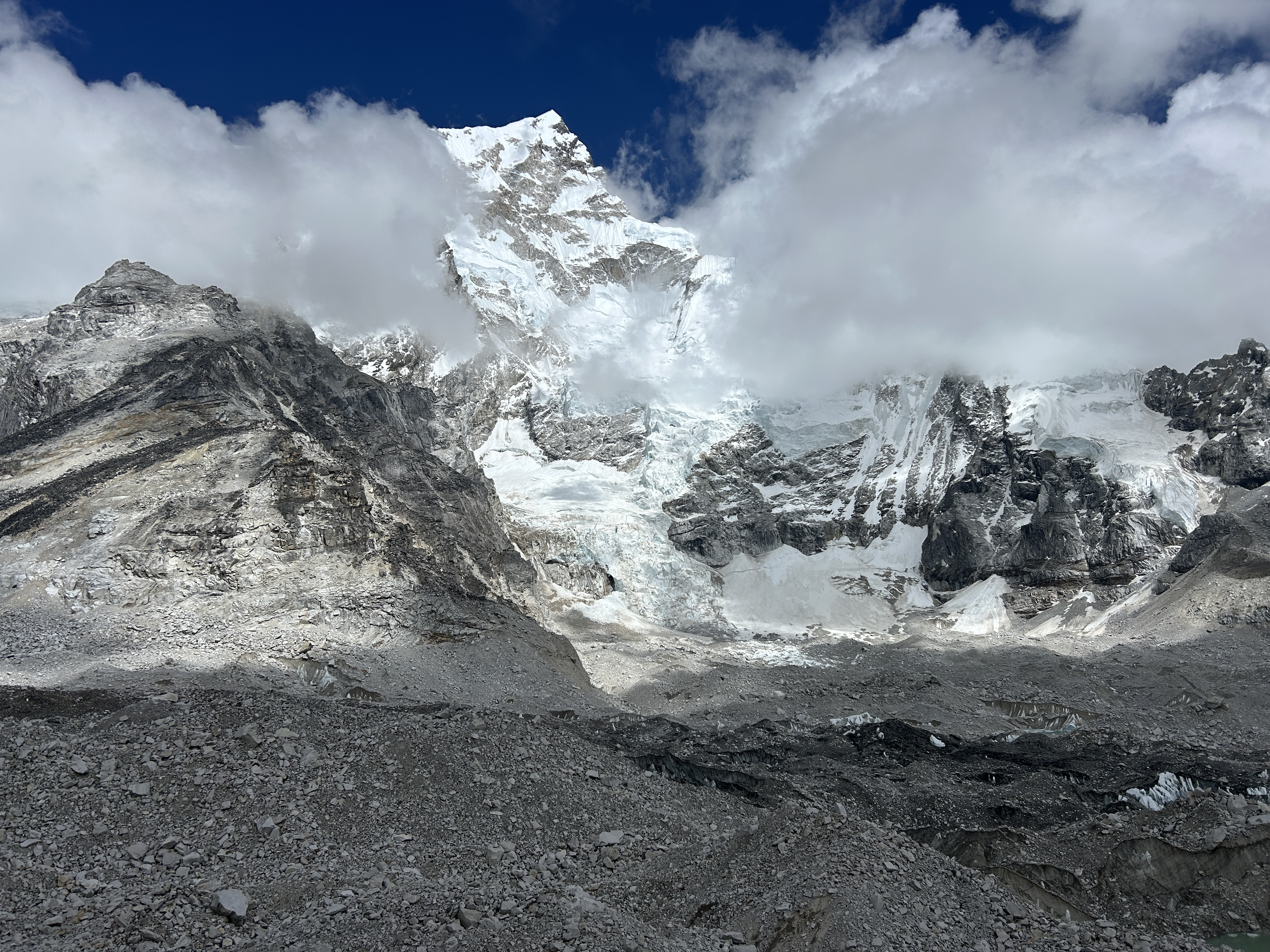
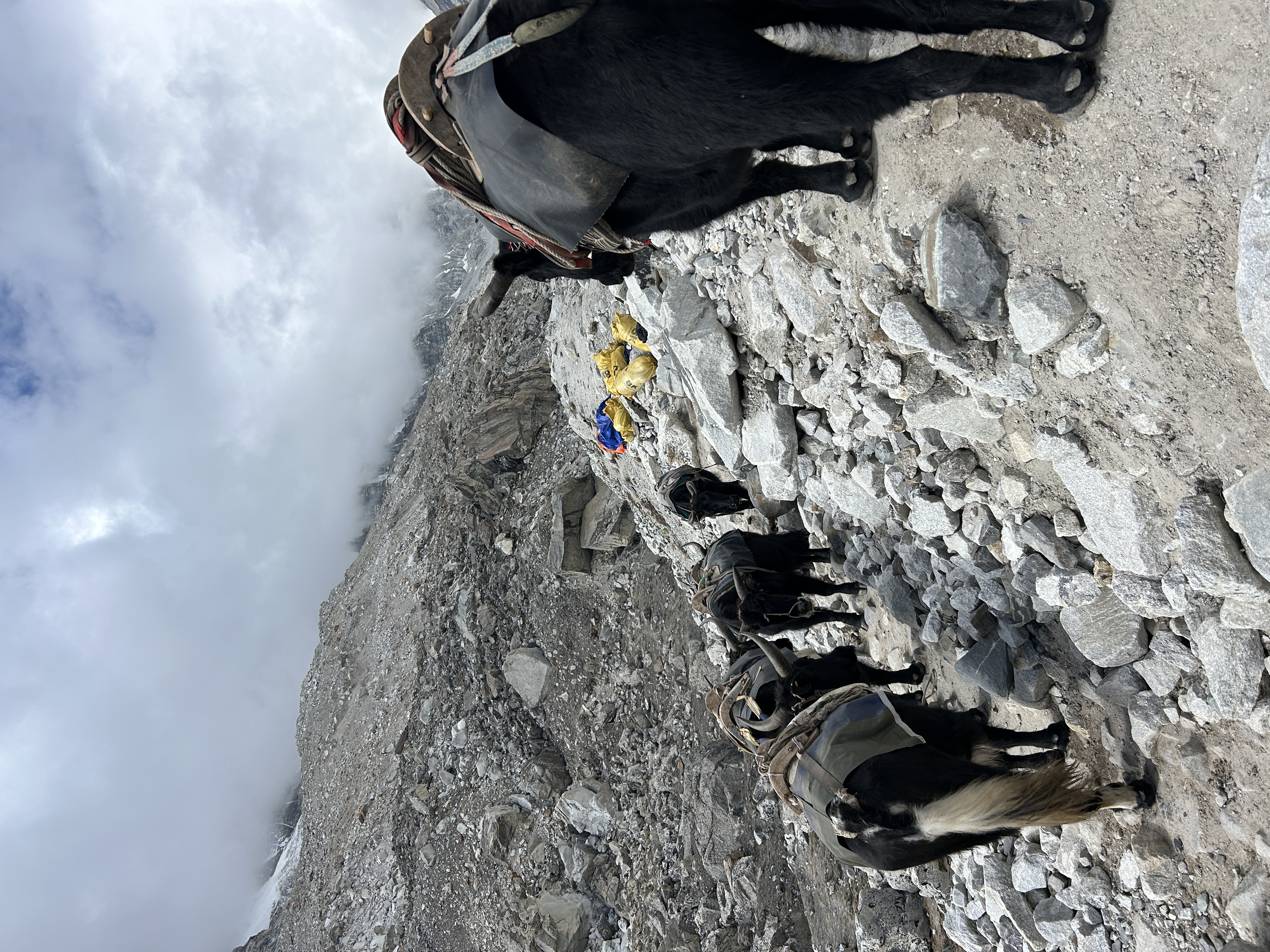
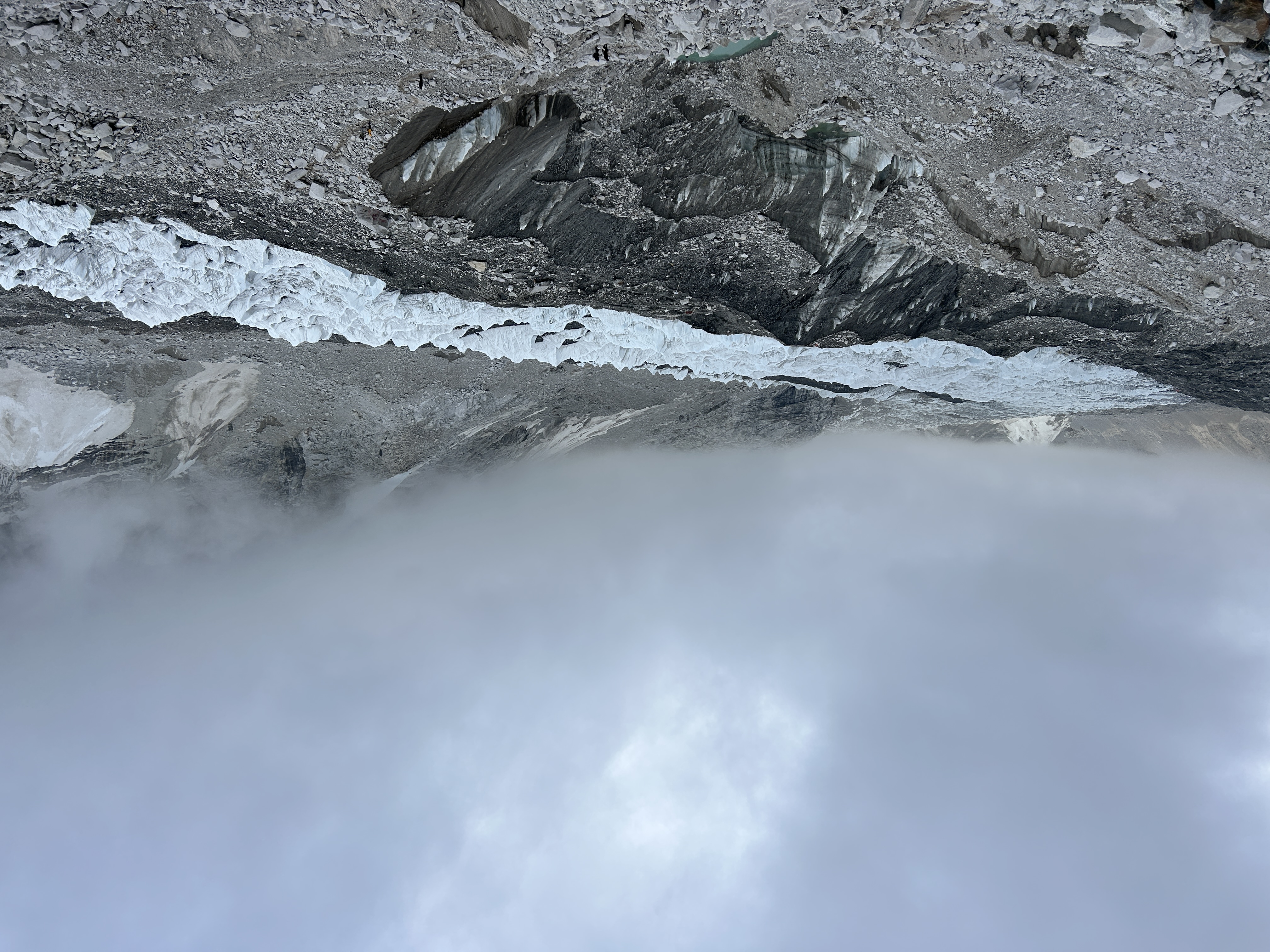
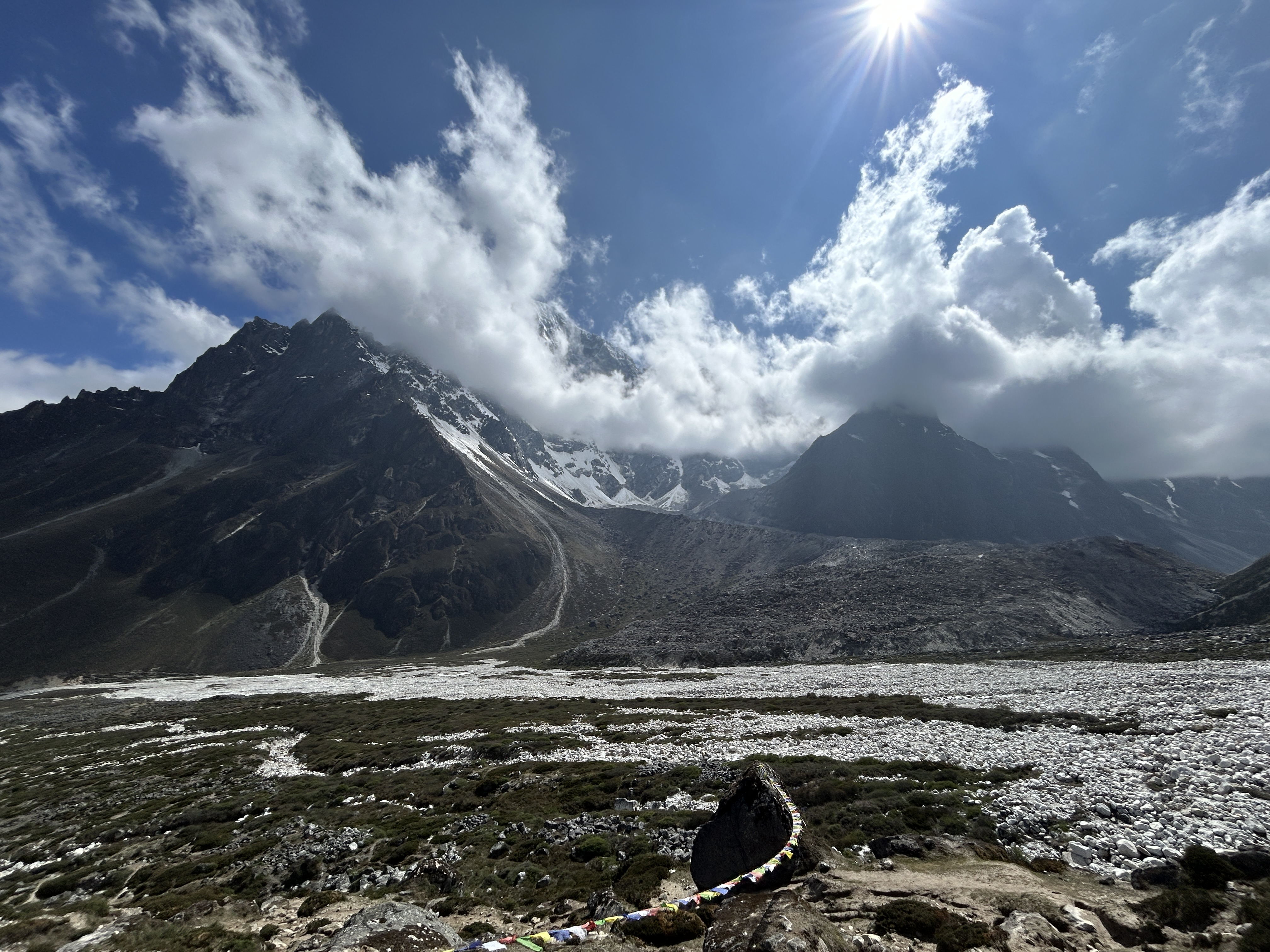
The Khumbu Glacier changed everything. Until then, a glacier had been something I knew from pictures. Now I was walking beside this immense body of ice, rubble, ridges and pale water. The scale was difficult to take in.
The trail was rough and loose. I remember hearing rocks fall nearby, and being very conscious of where I put each foot. At some points the ground felt as though it was shifting beneath me. I kept moving carefully along the moraine.
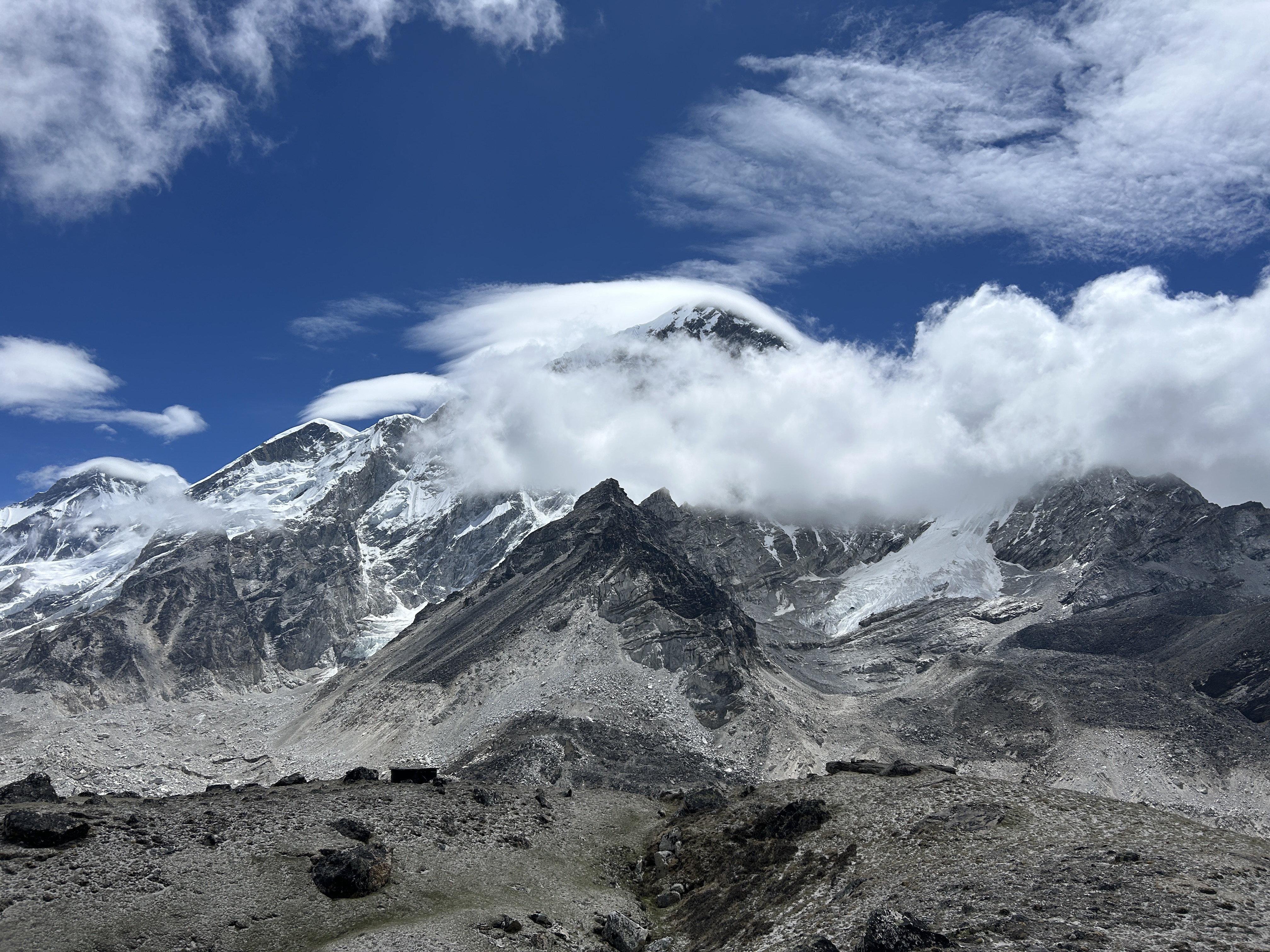
Then I saw the white ice stretching down from the Everest side. Against all that grey debris, it looked almost unreal. The great mountains were still playing hide and seek, but this alone had already exceeded anything I had imagined.
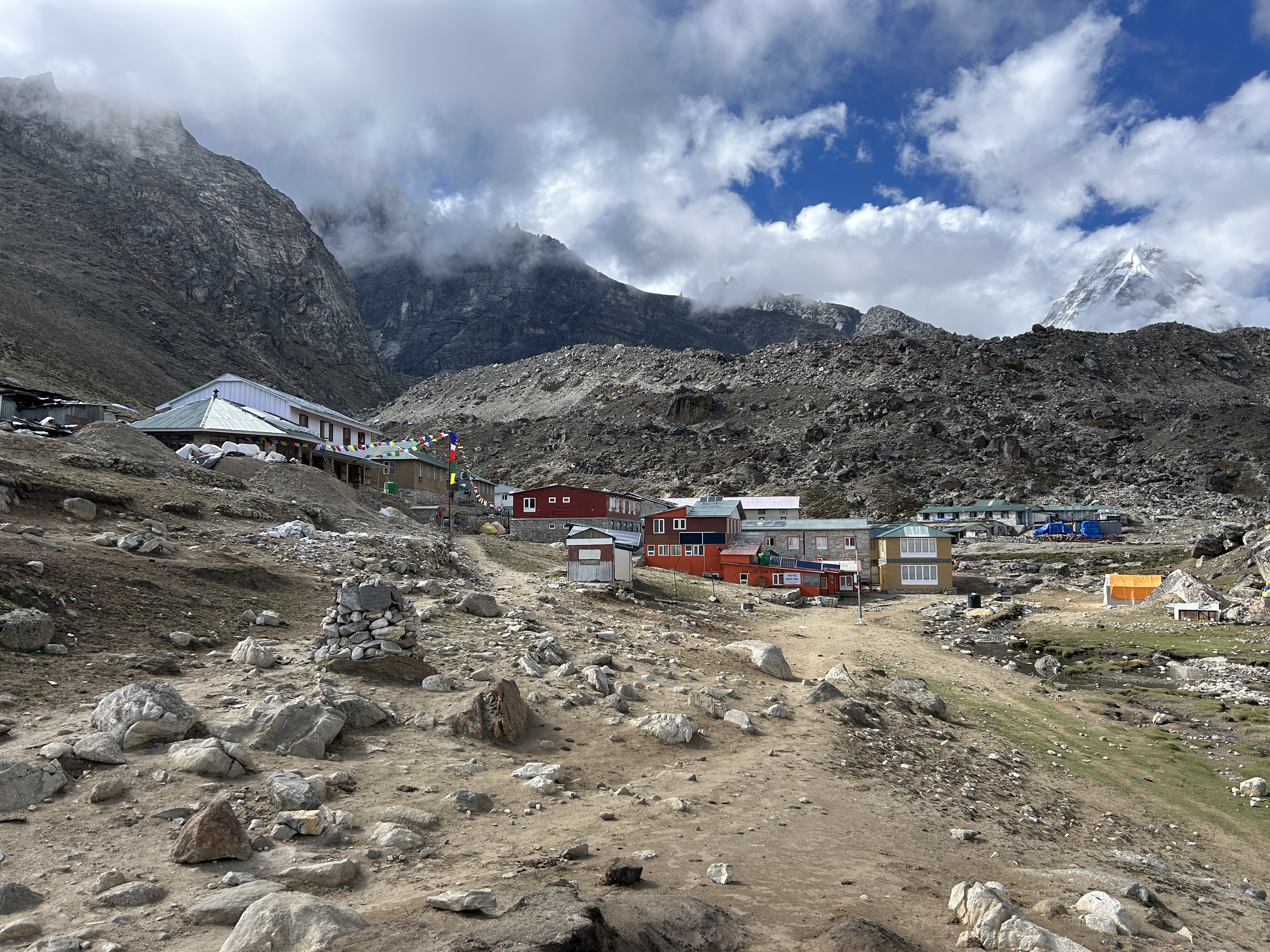
I reached Gorakshep, found a teahouse, dropped my bags and set off again. Everest Base Camp was next.
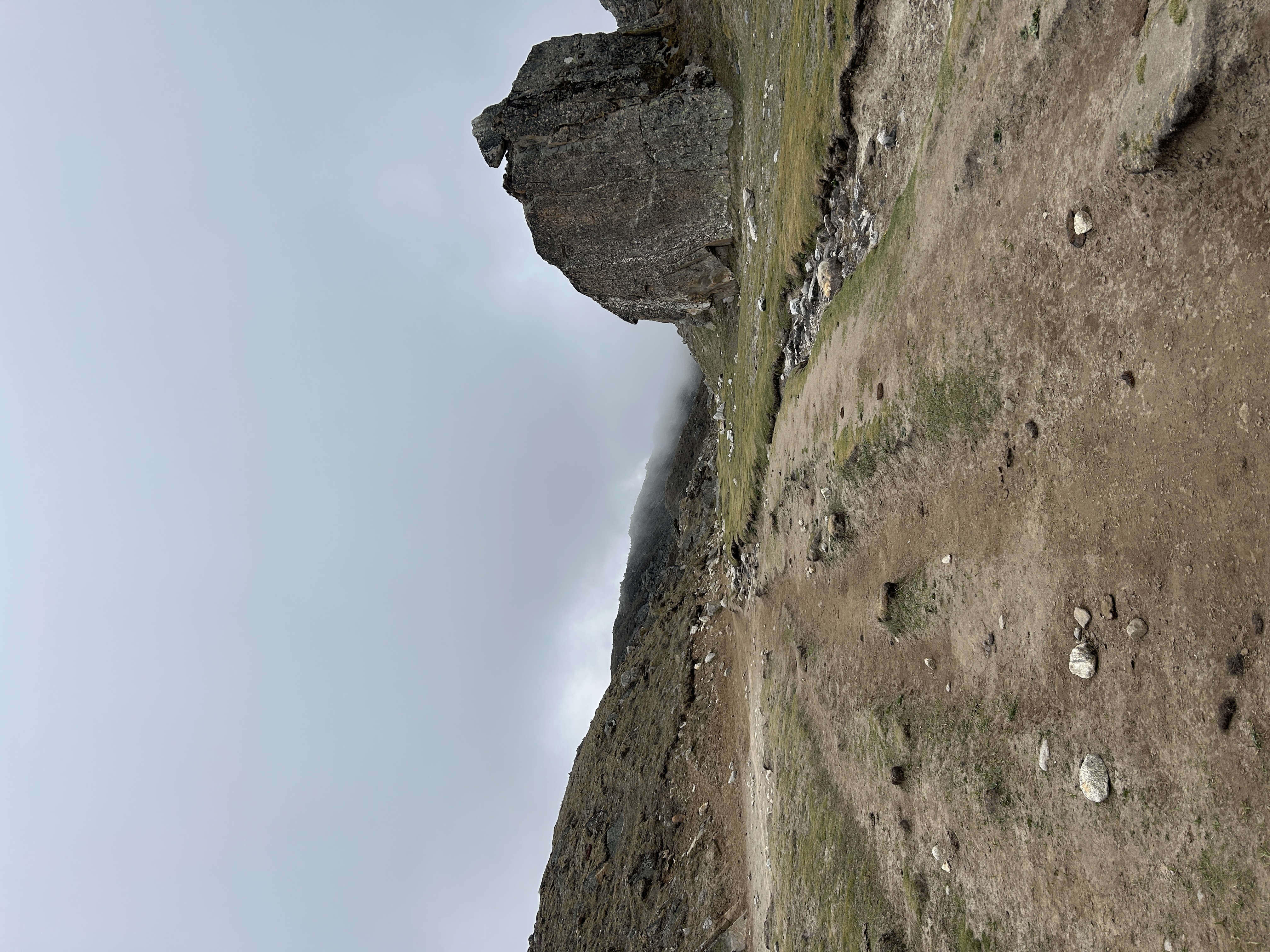
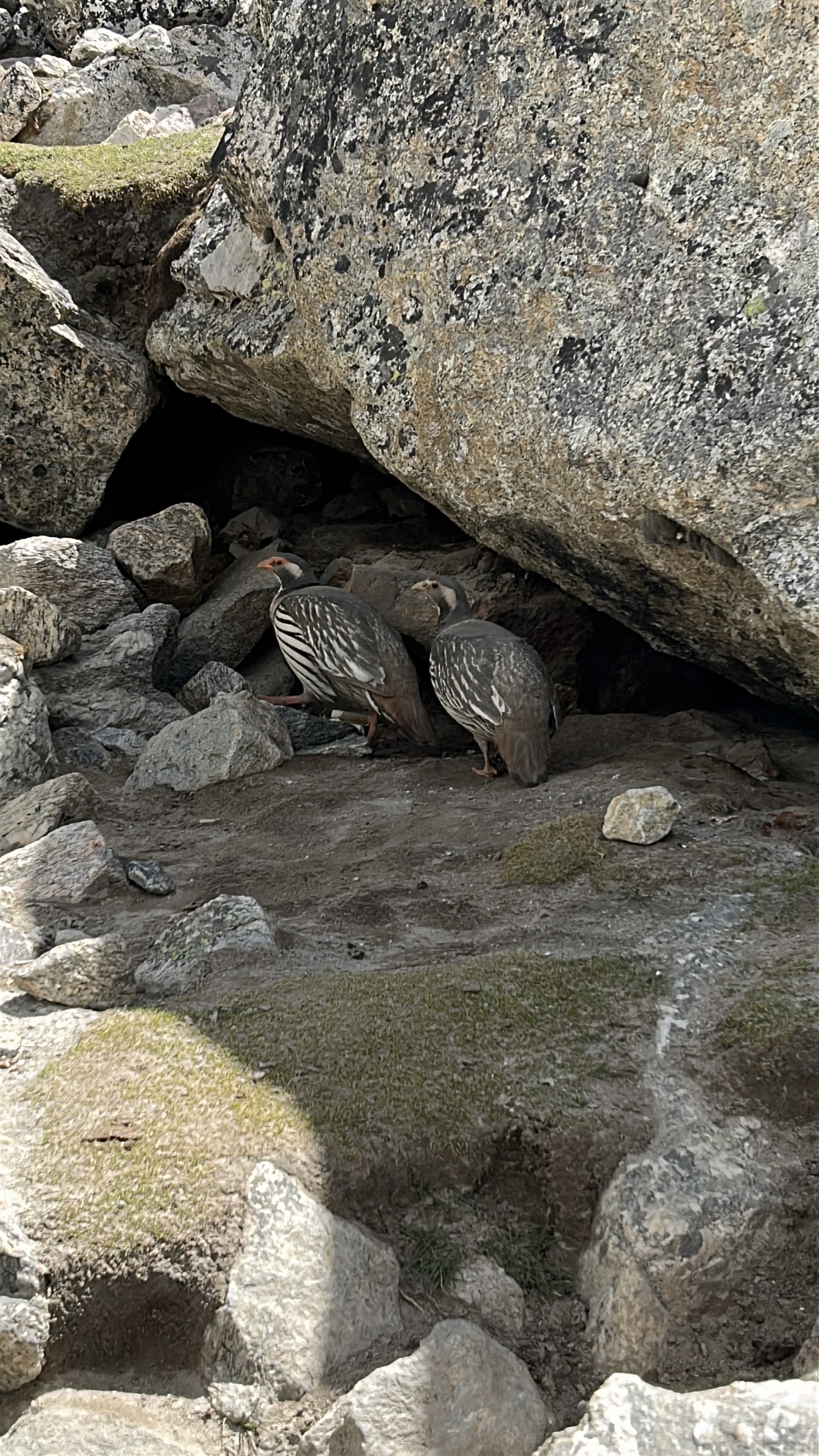
Sound in the player
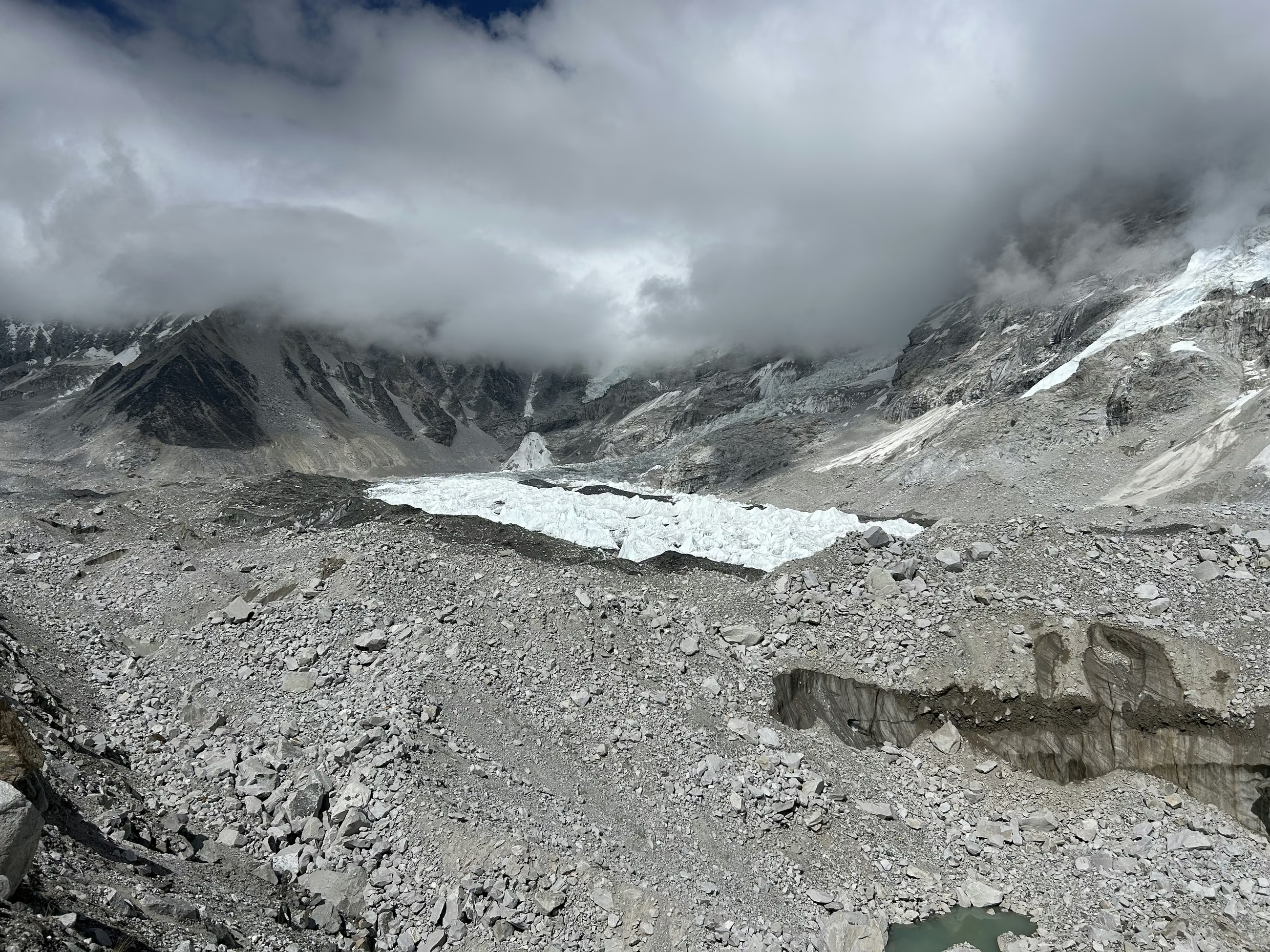
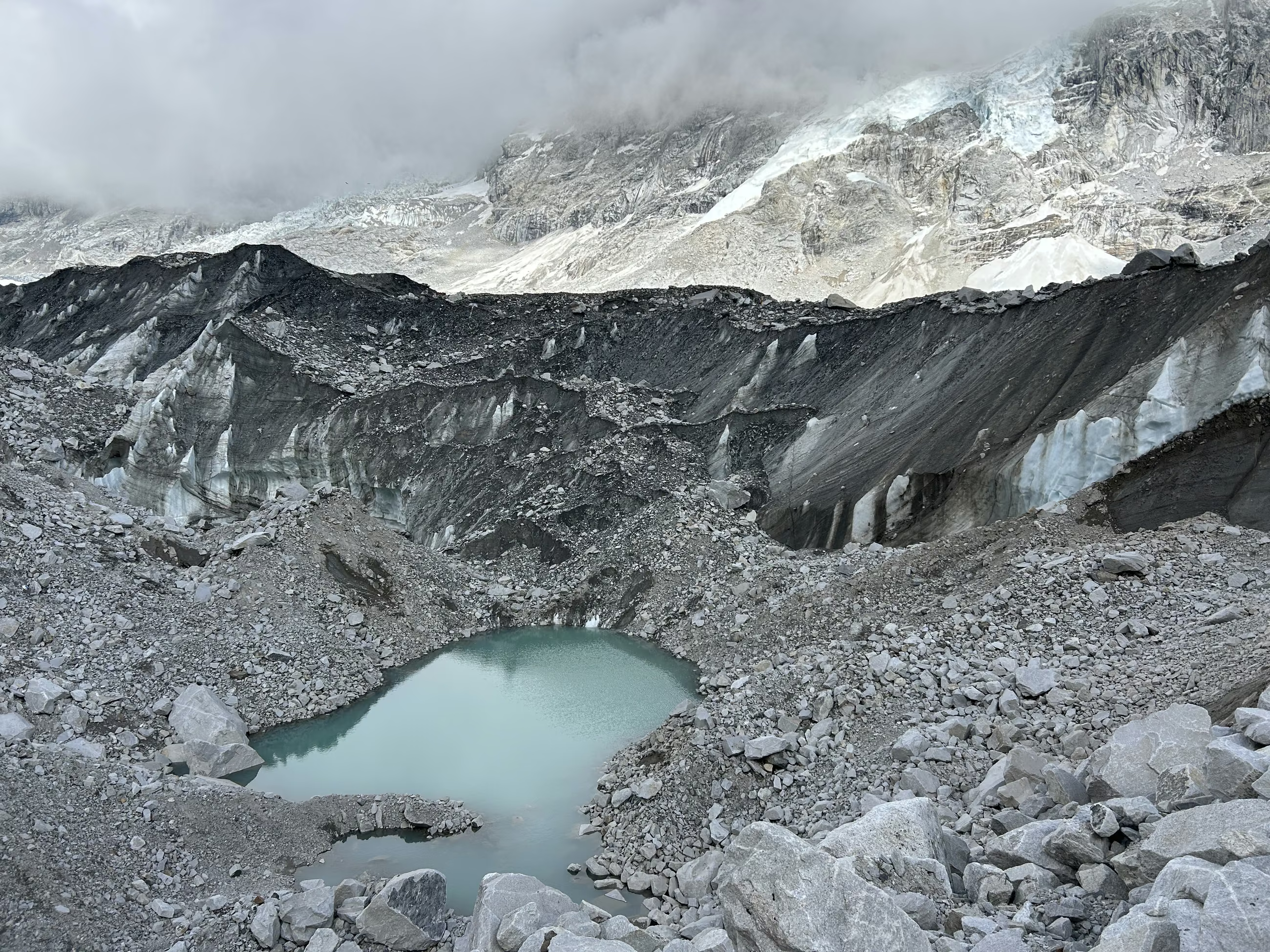
Beside the Khumbu Glacier, I kept finding reasons to stop and look.
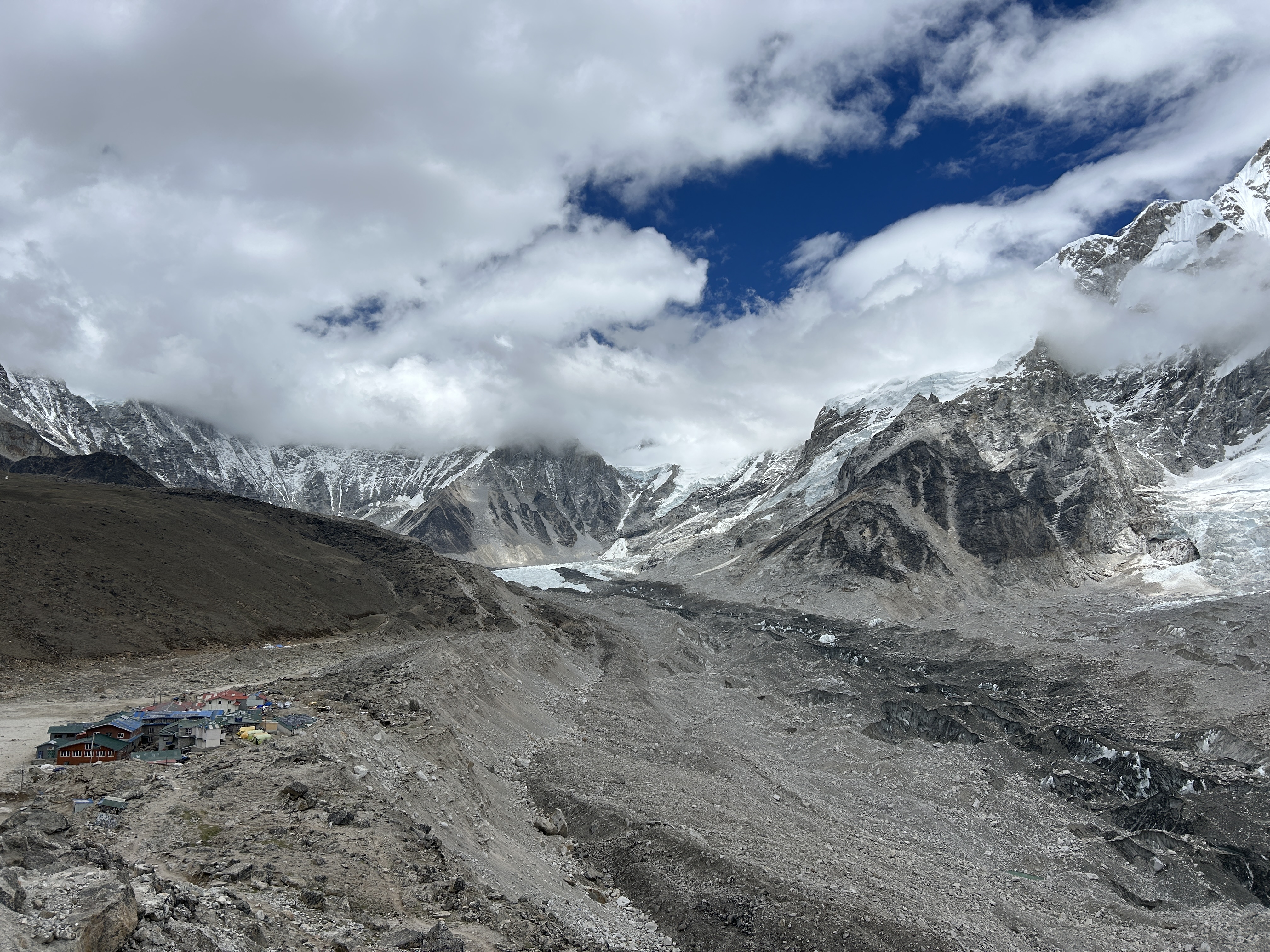
09 / Gorakshep → Everest Base Camp
All the way here.
Under my own steam.
The clouds were thickening as I walked towards base camp. Part of me was preparing for the disappointment of getting this far without seeing the big peaks clearly. But the glacier and the icefall were there beside me, immense and complicated, and I could hardly look away.
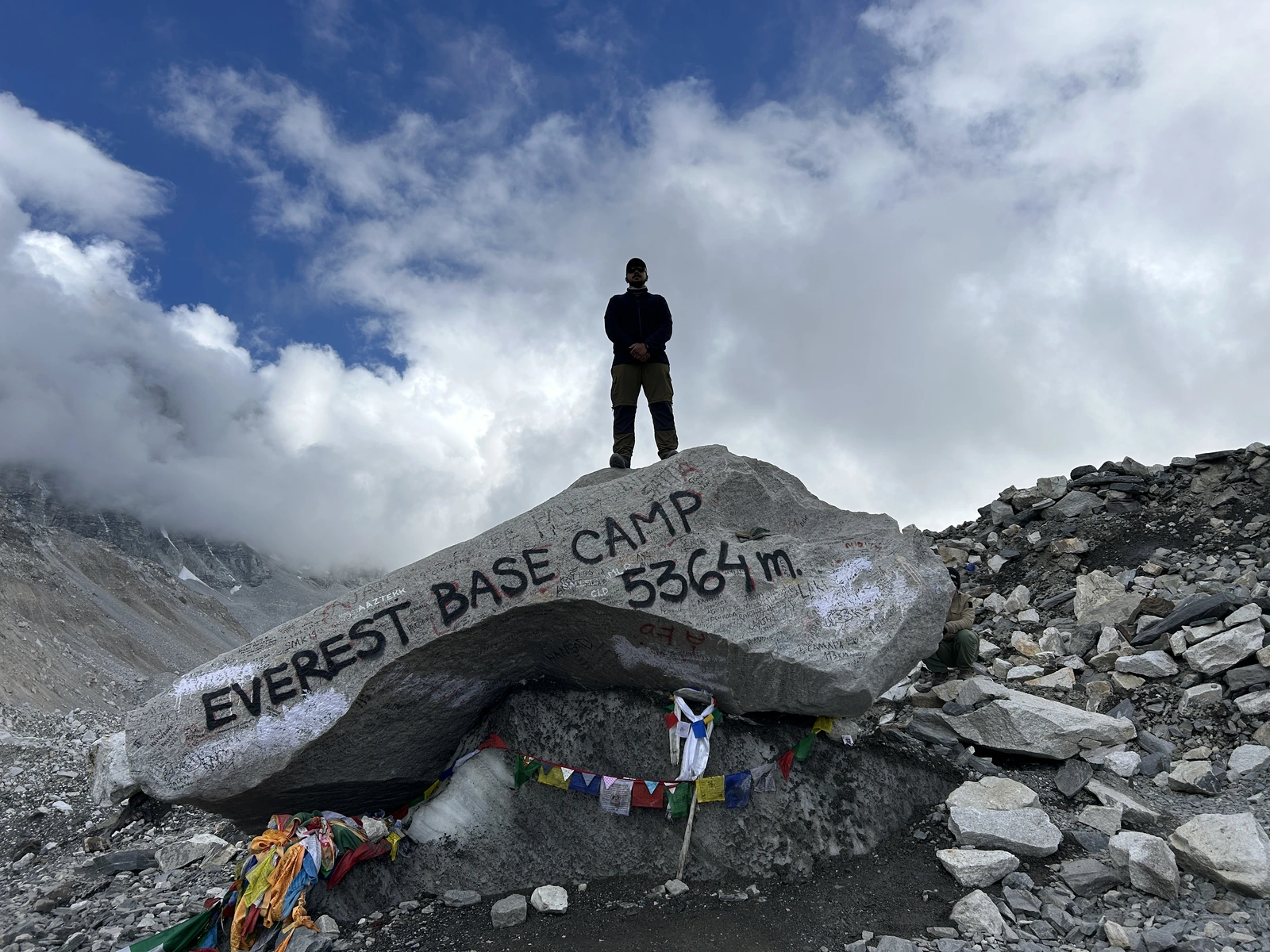
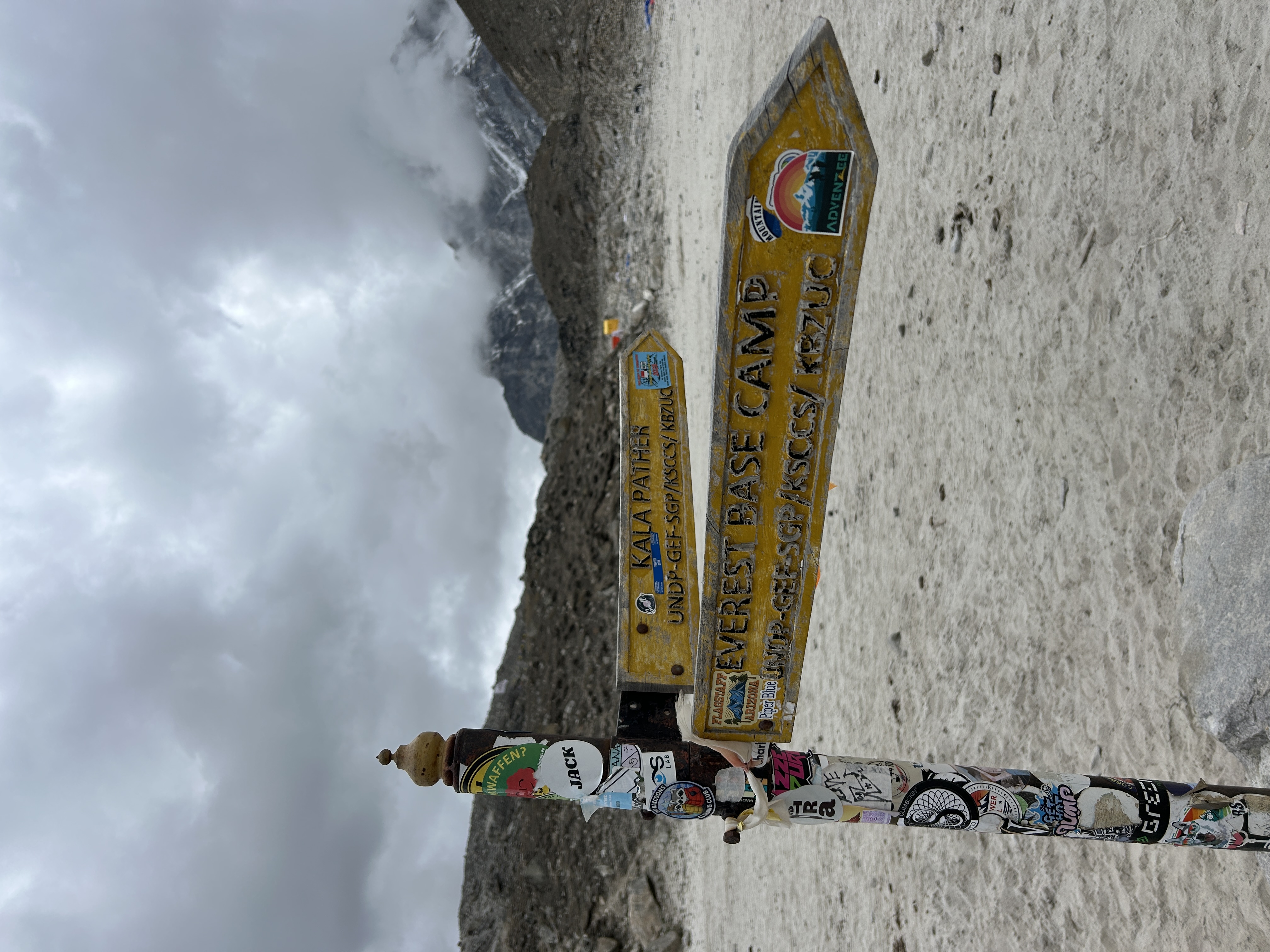
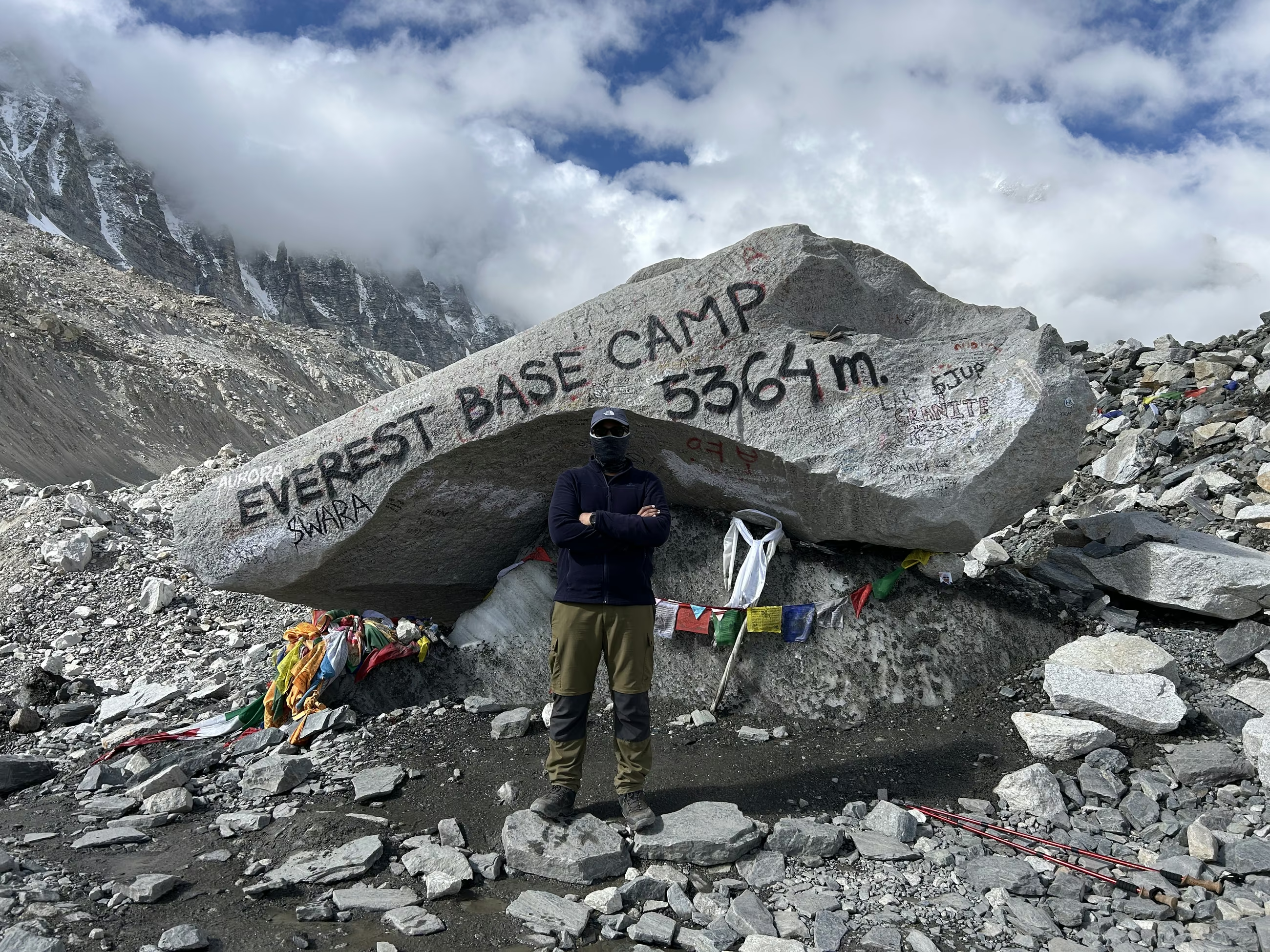
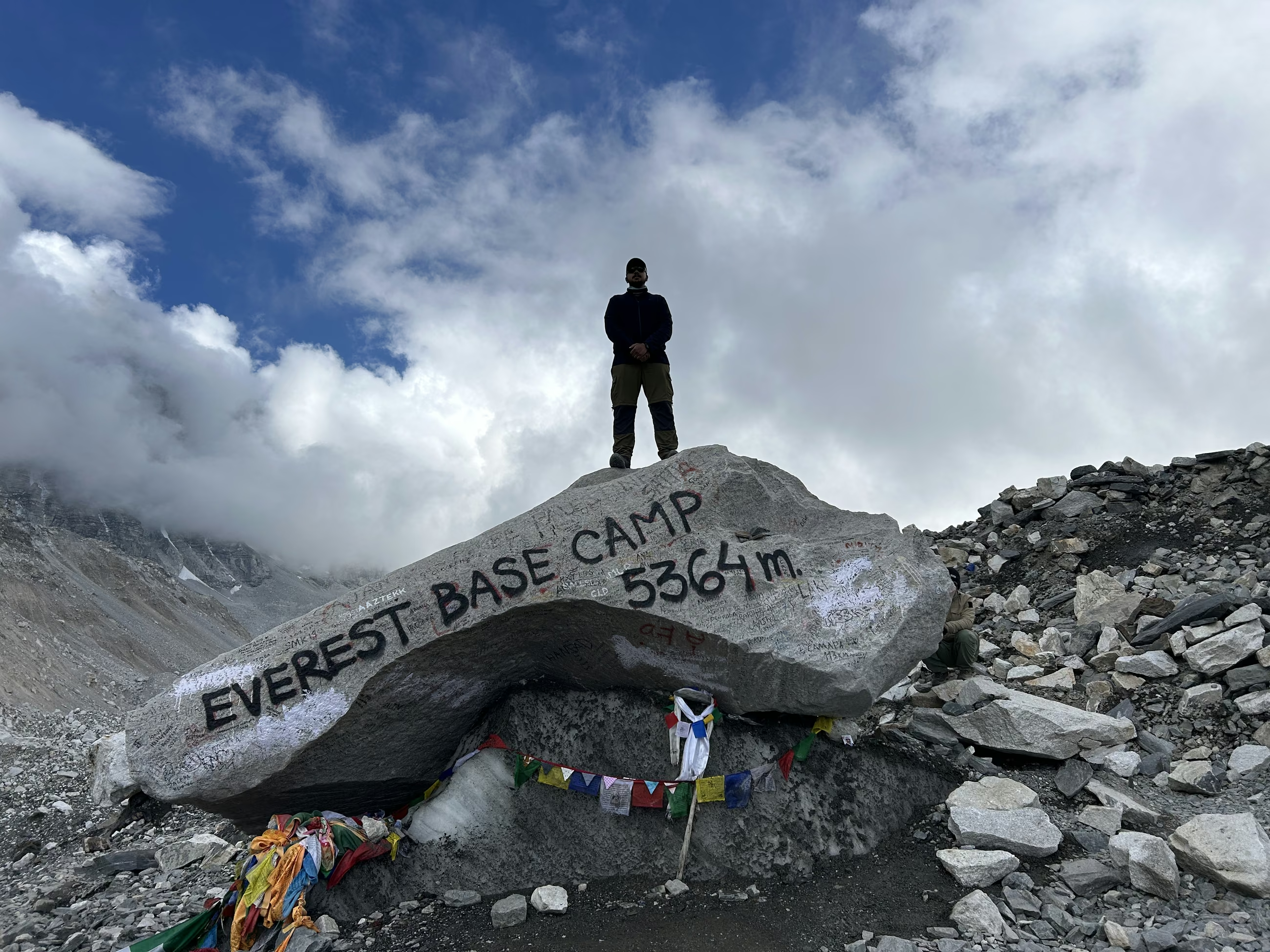
It was bitterly cold. The approach across the rough glacial landscape demanded my attention. Then I reached the painted rock. I climbed onto it, looked around, and the missing view stopped mattering.
I had done this myself. Every booking, every bed for the night, every long climb, every decision to keep moving or stop. I stood there feeling the weight of all those small choices become one enormous moment.
I went back to Gorakshep ecstatic. The mountains could stay behind their clouds for now. I had a warm meal waiting, and a three o’clock alarm.
10 / Gorakshep → the slopes of Kala Patthar
I stopped short.
The morning kept going.
I was up at three, heading into the dark towards Kala Patthar. The cold was fierce, and the accumulated exhaustion was real. About seventy per cent of the way up, I decided that was far enough. I did not reach the summit.
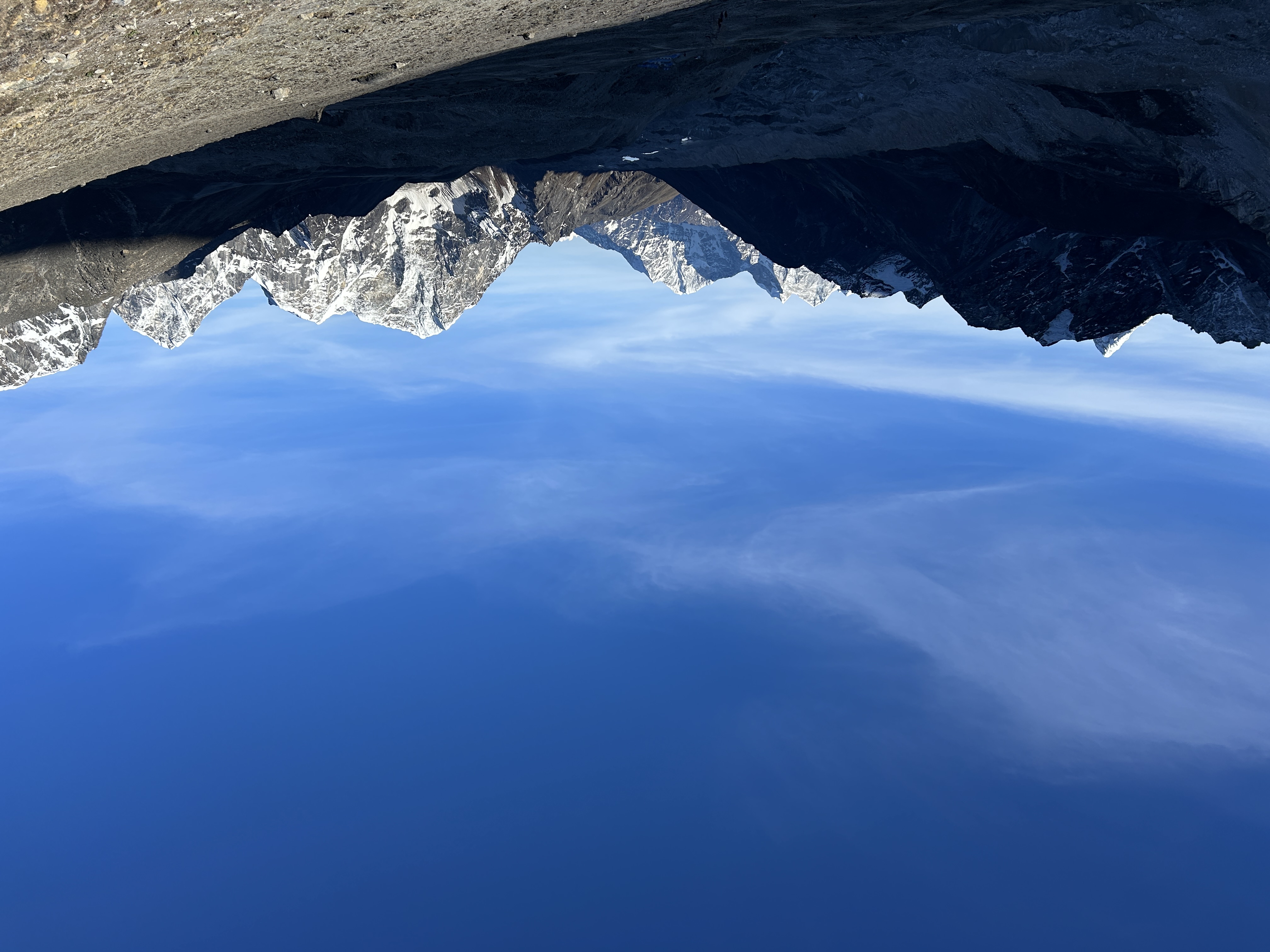
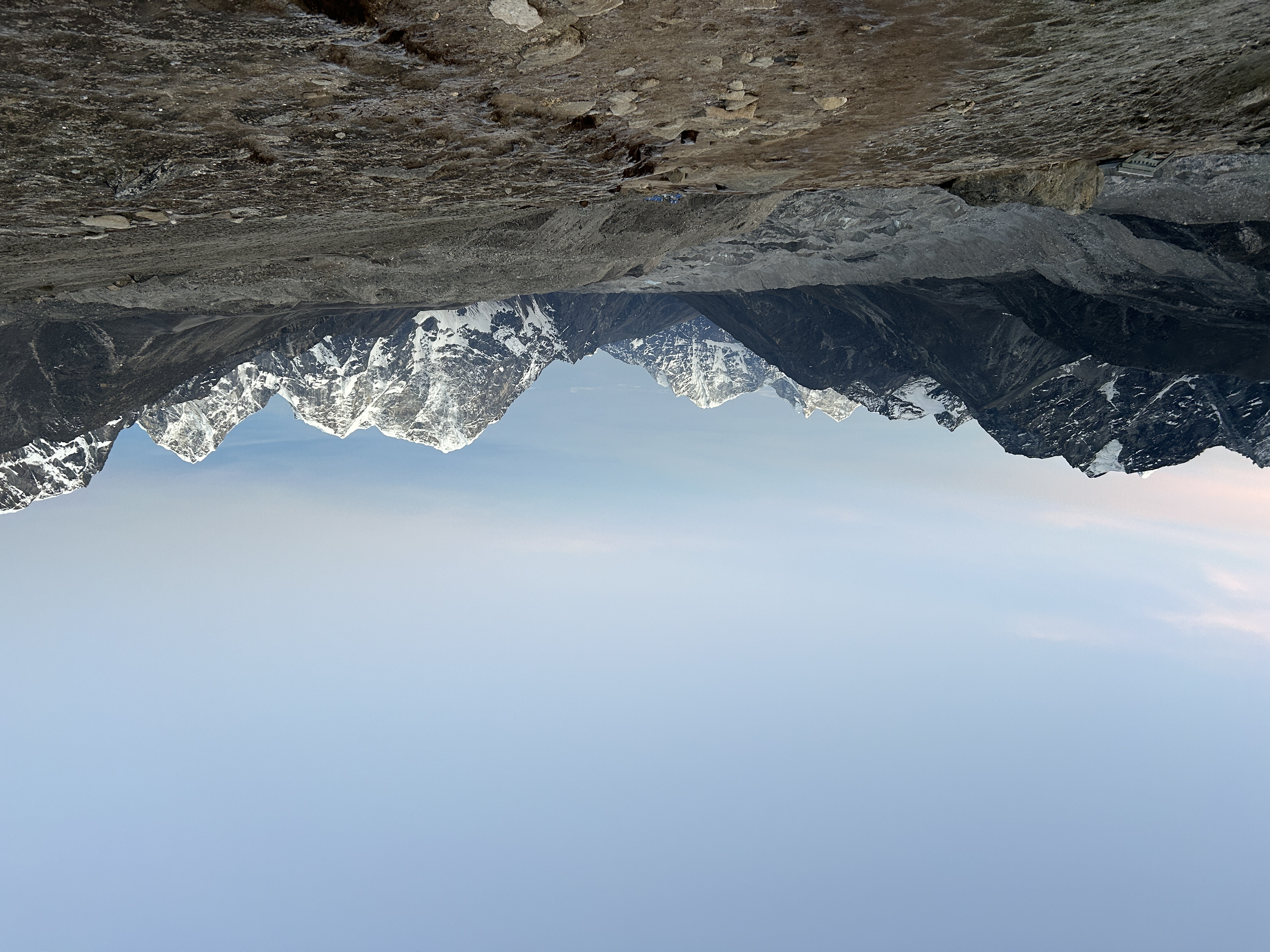
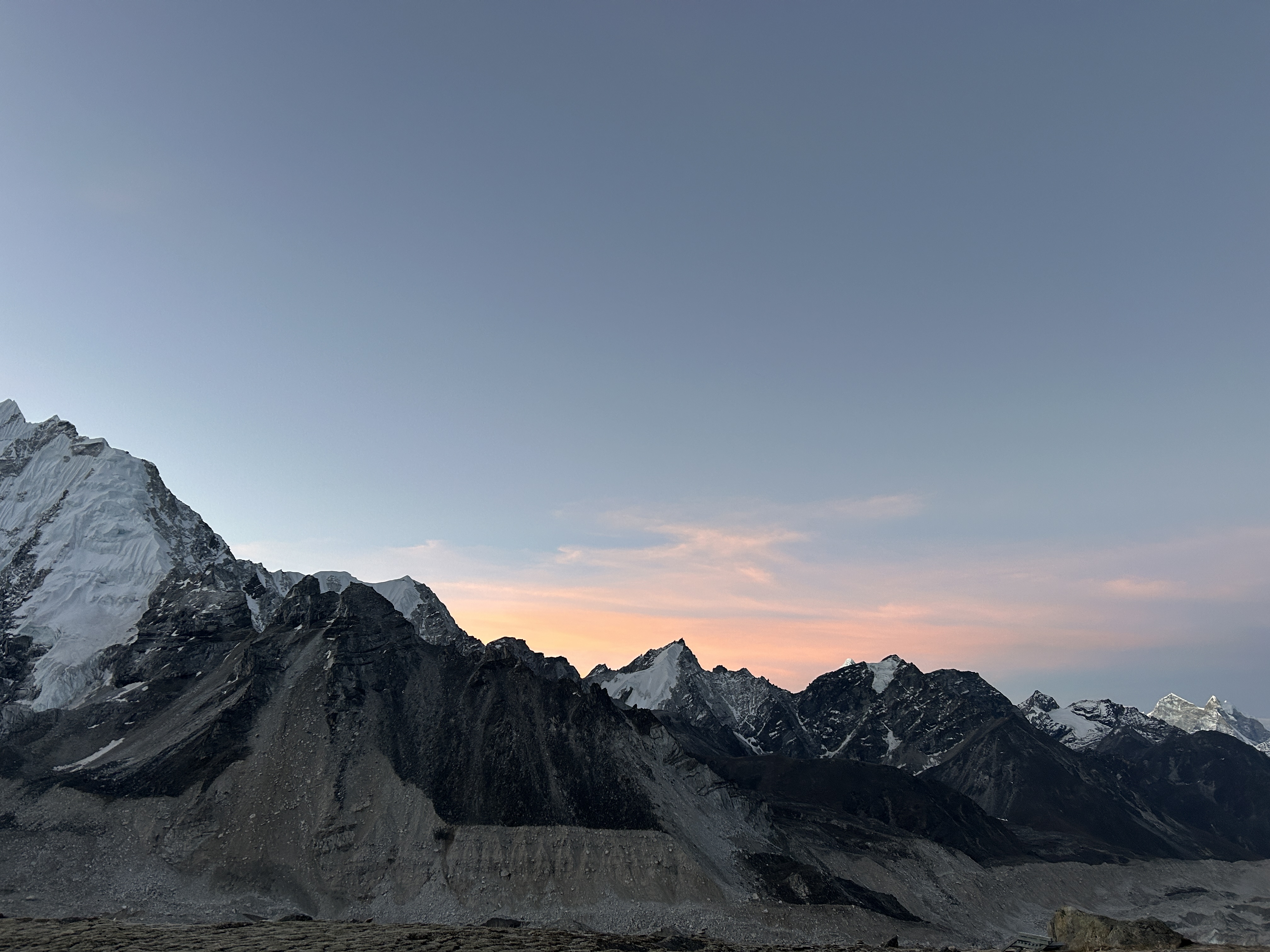
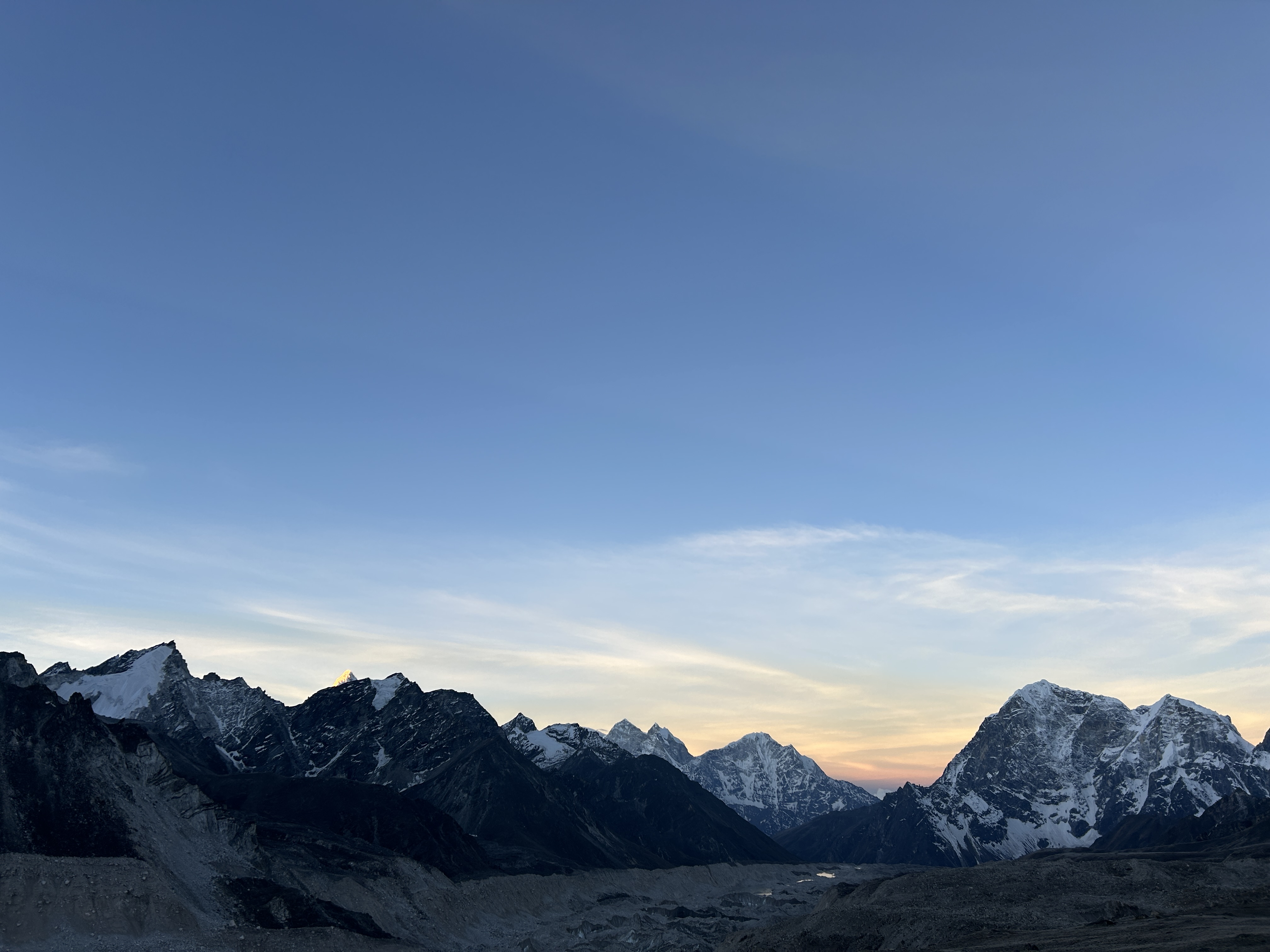
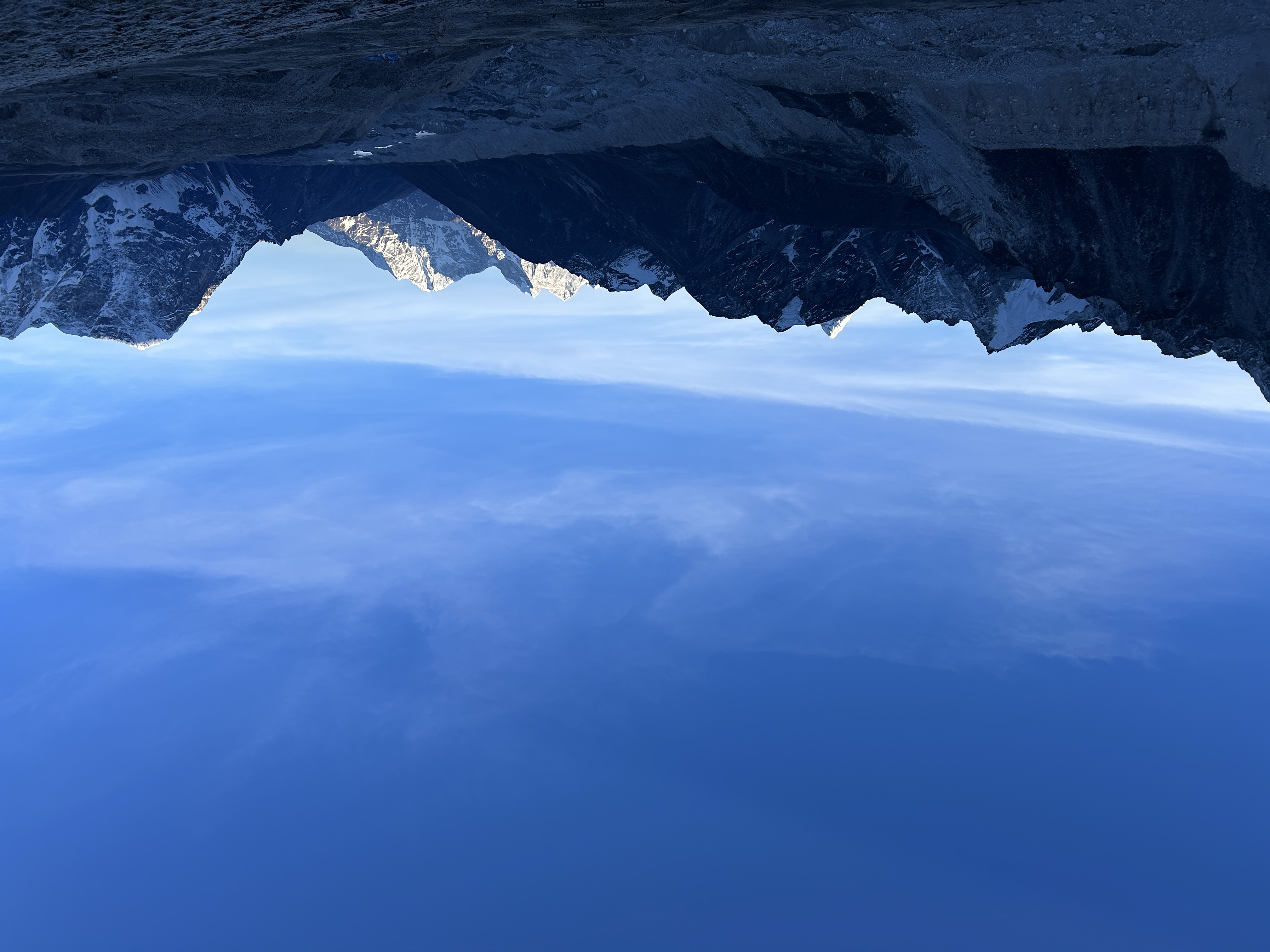
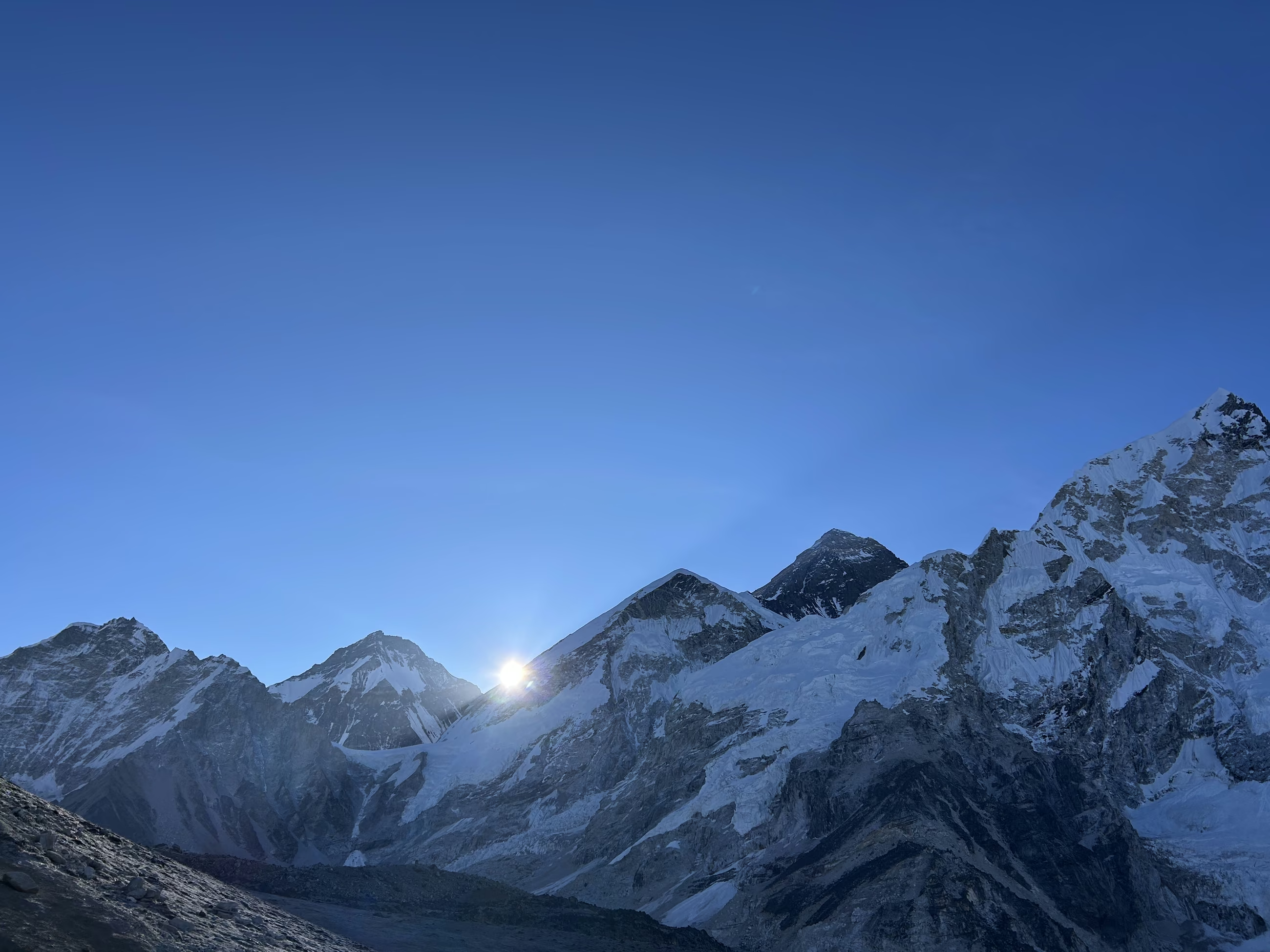
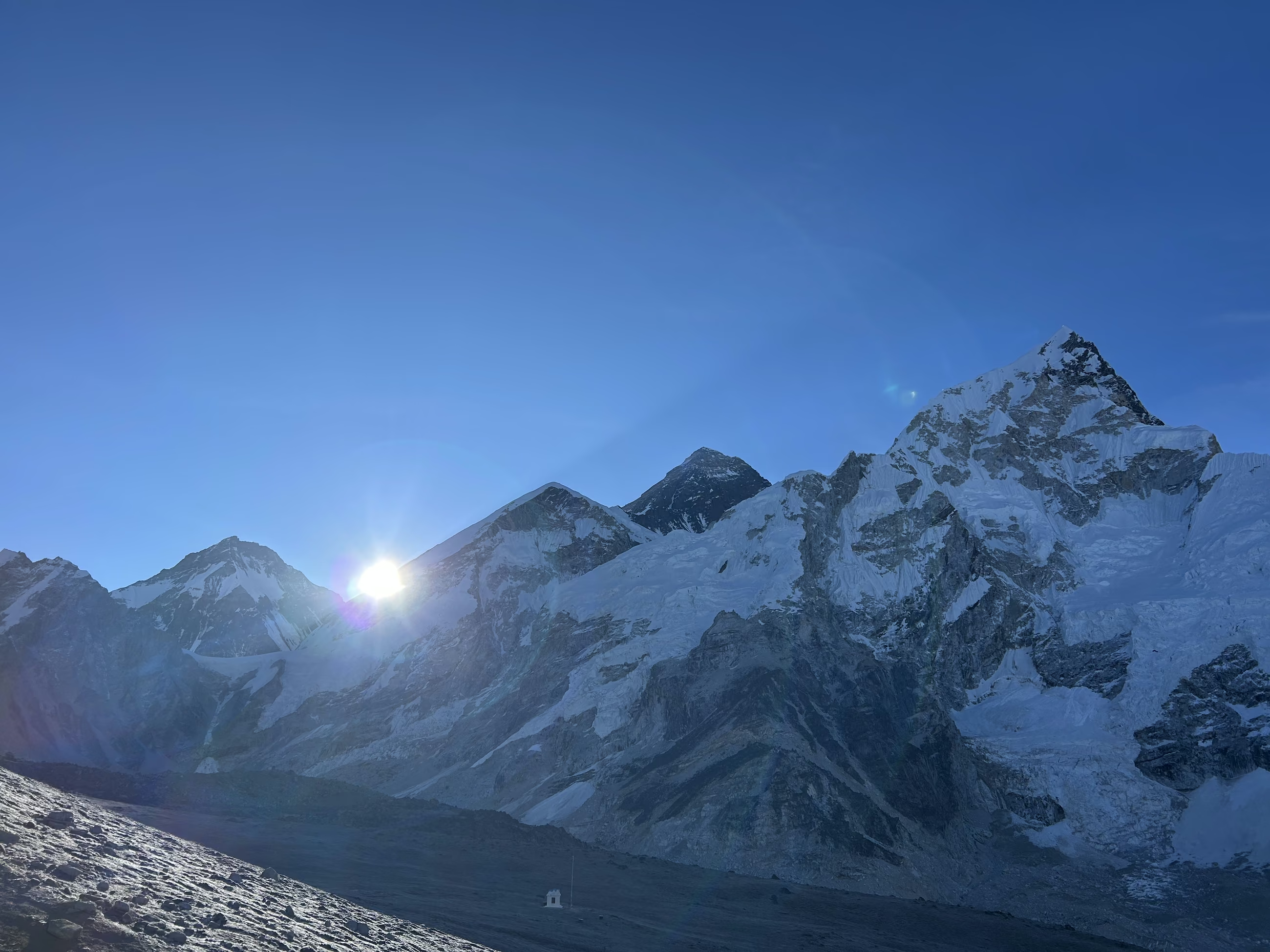
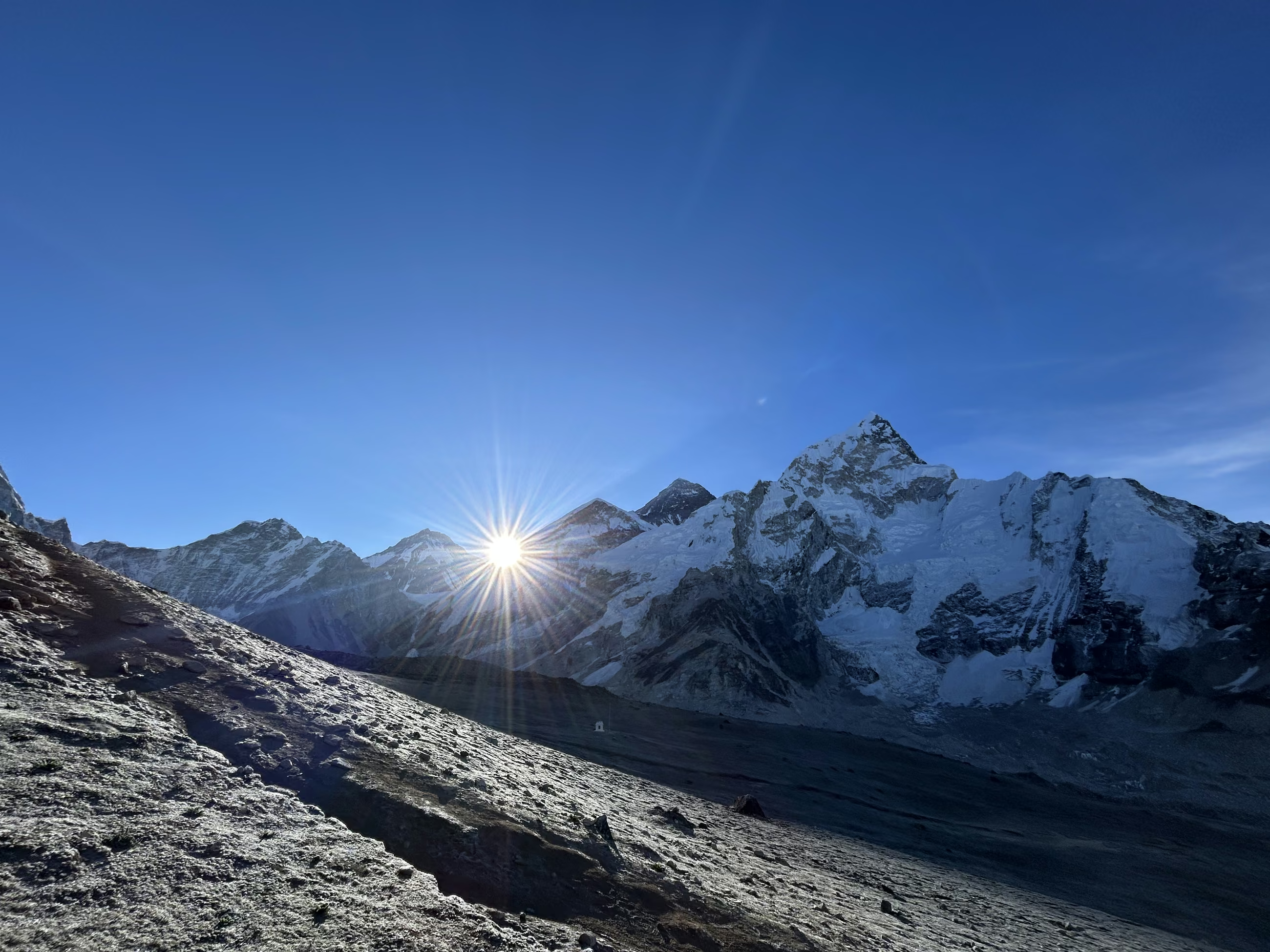
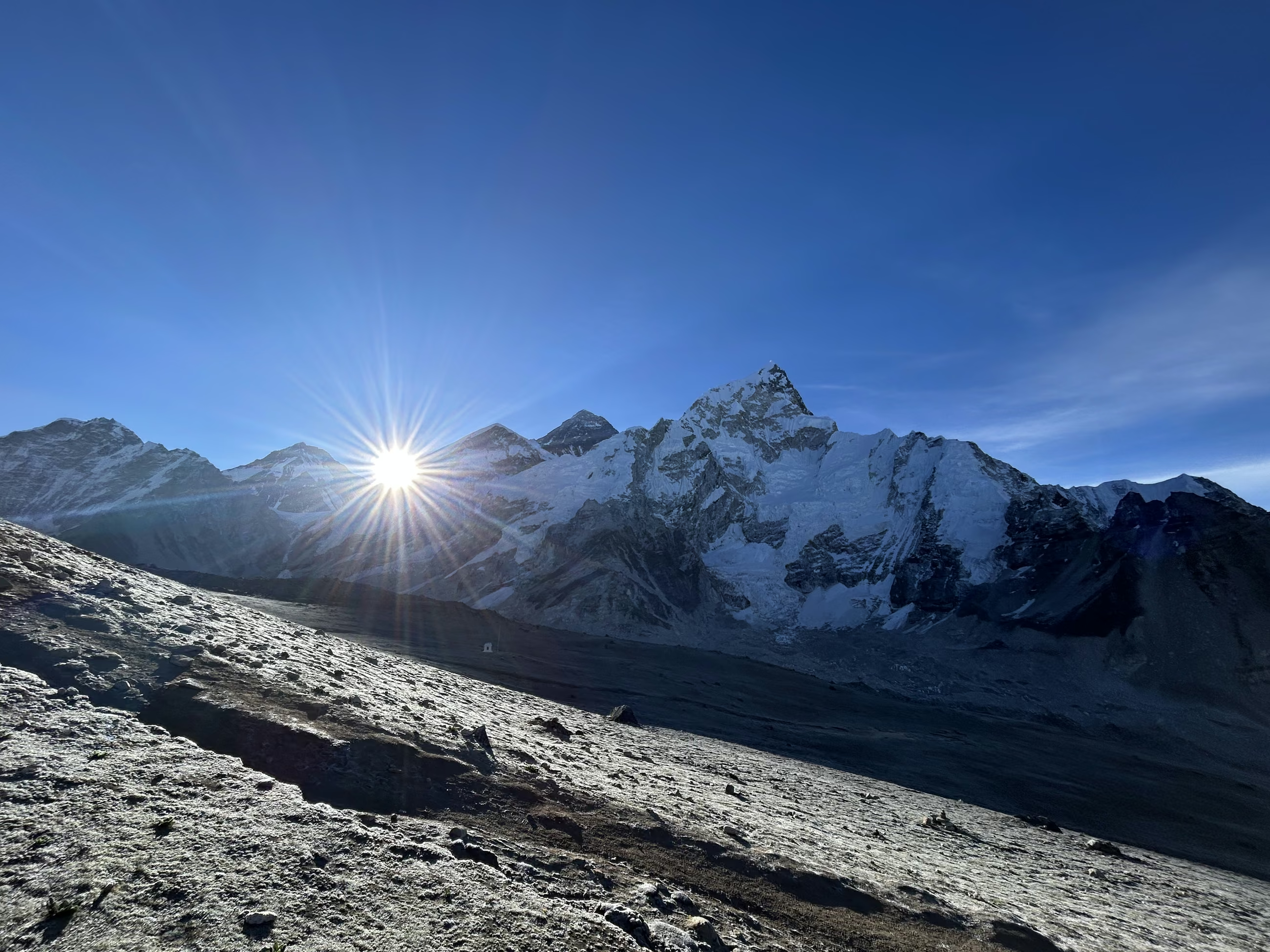
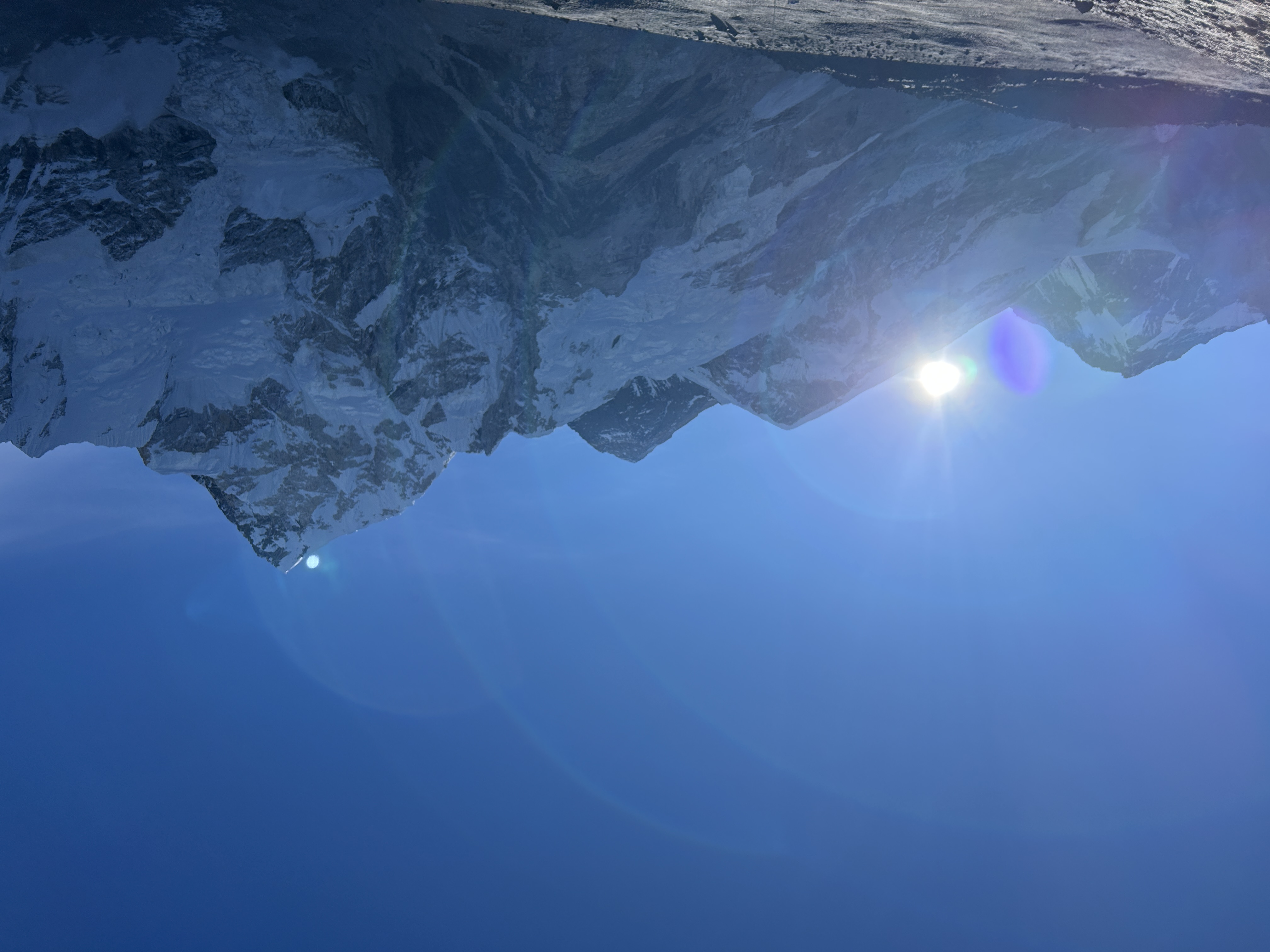
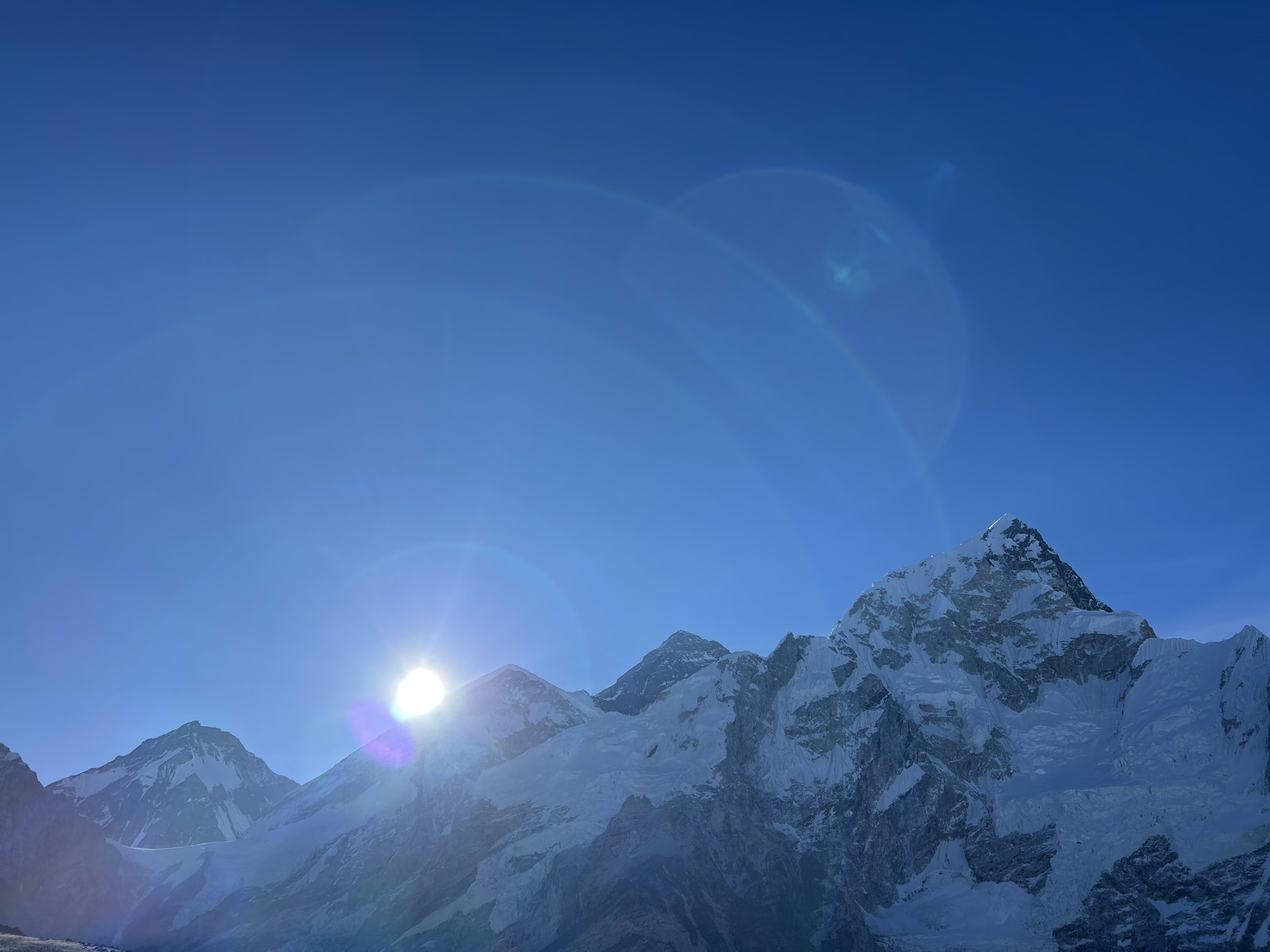
But the sky was clear. After all those days of clouds, I could finally see what had been around me. I found a place to stop and watched the light arrive.
It became the best sunrise of my life.
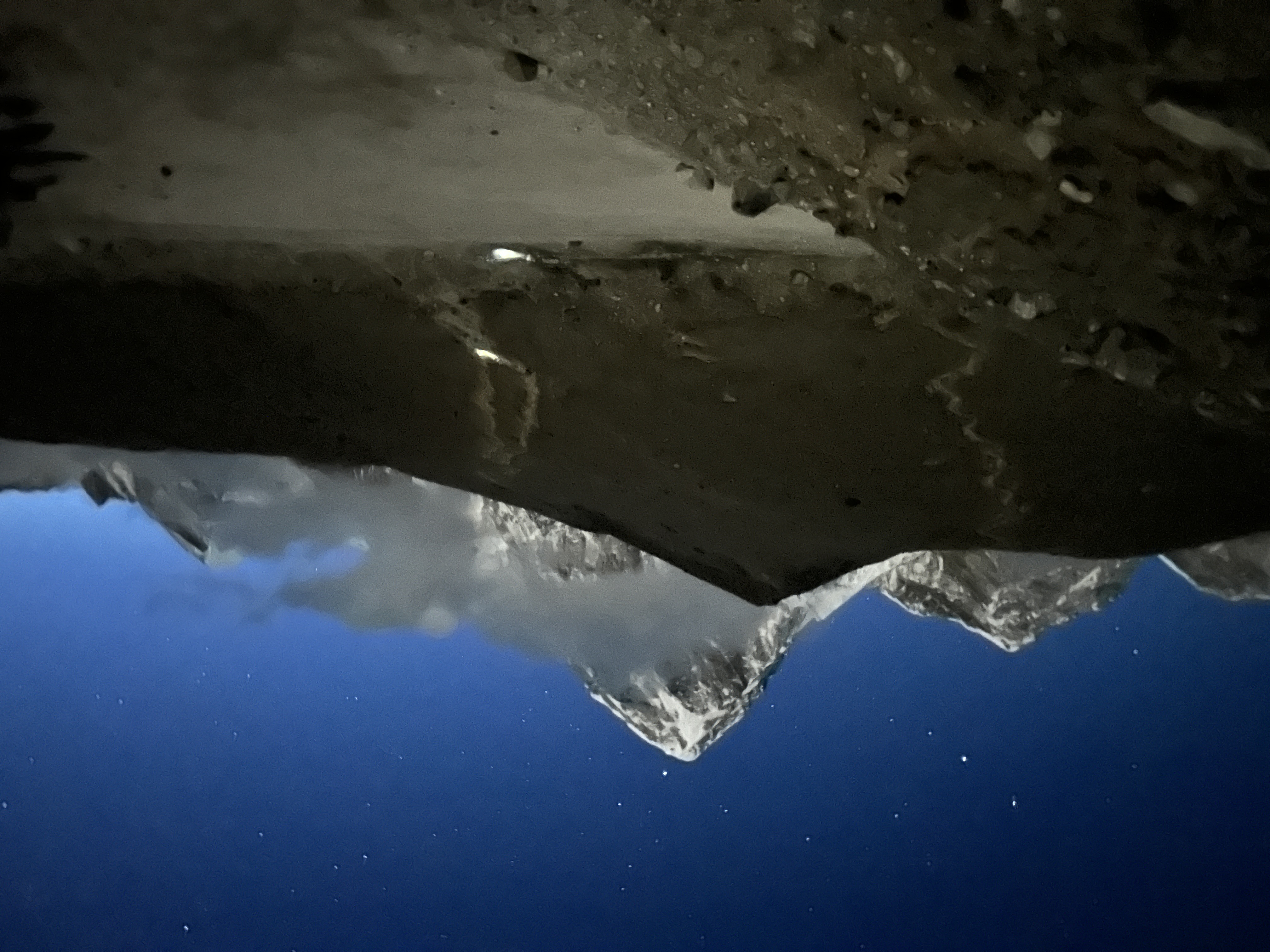
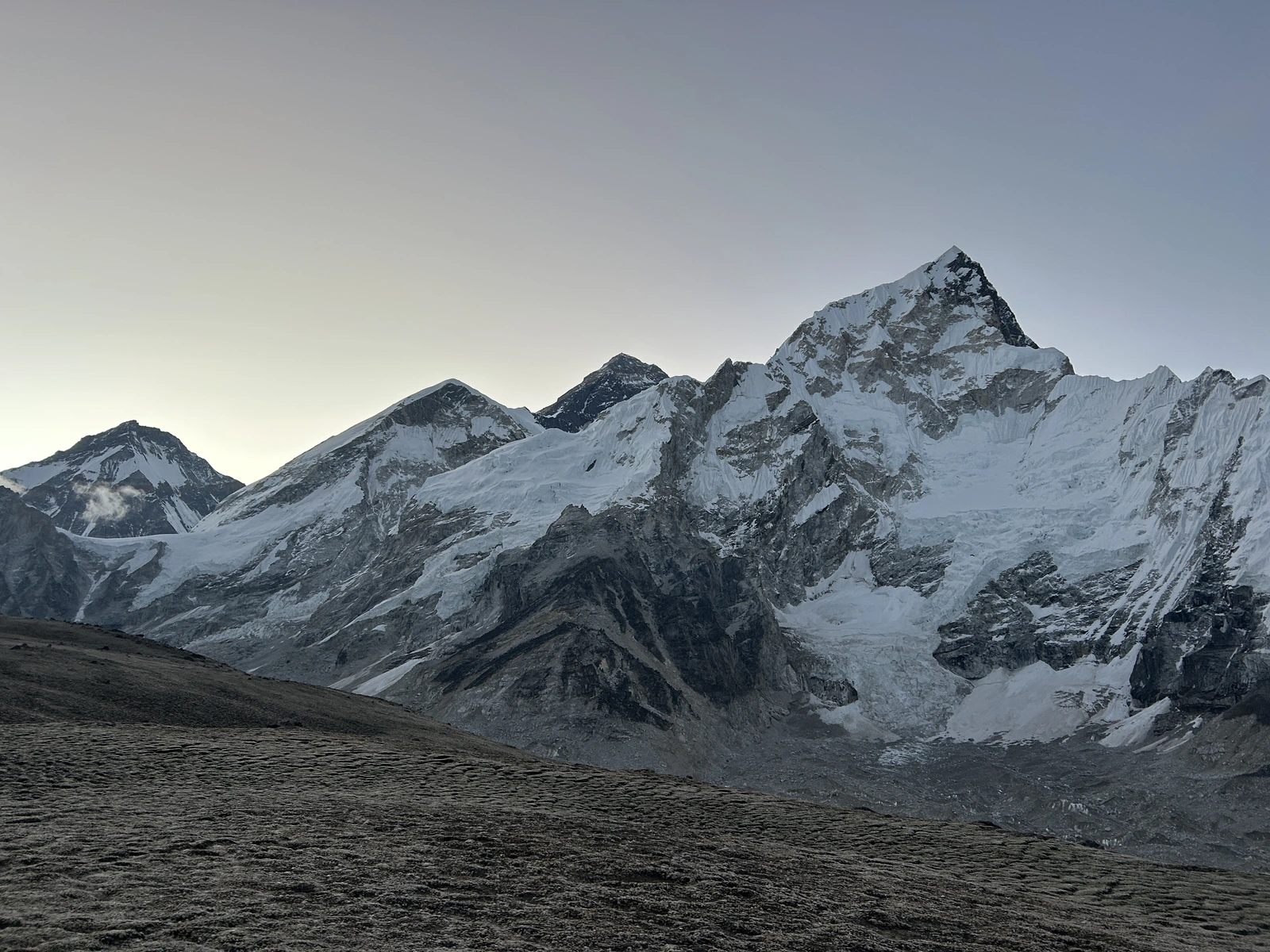
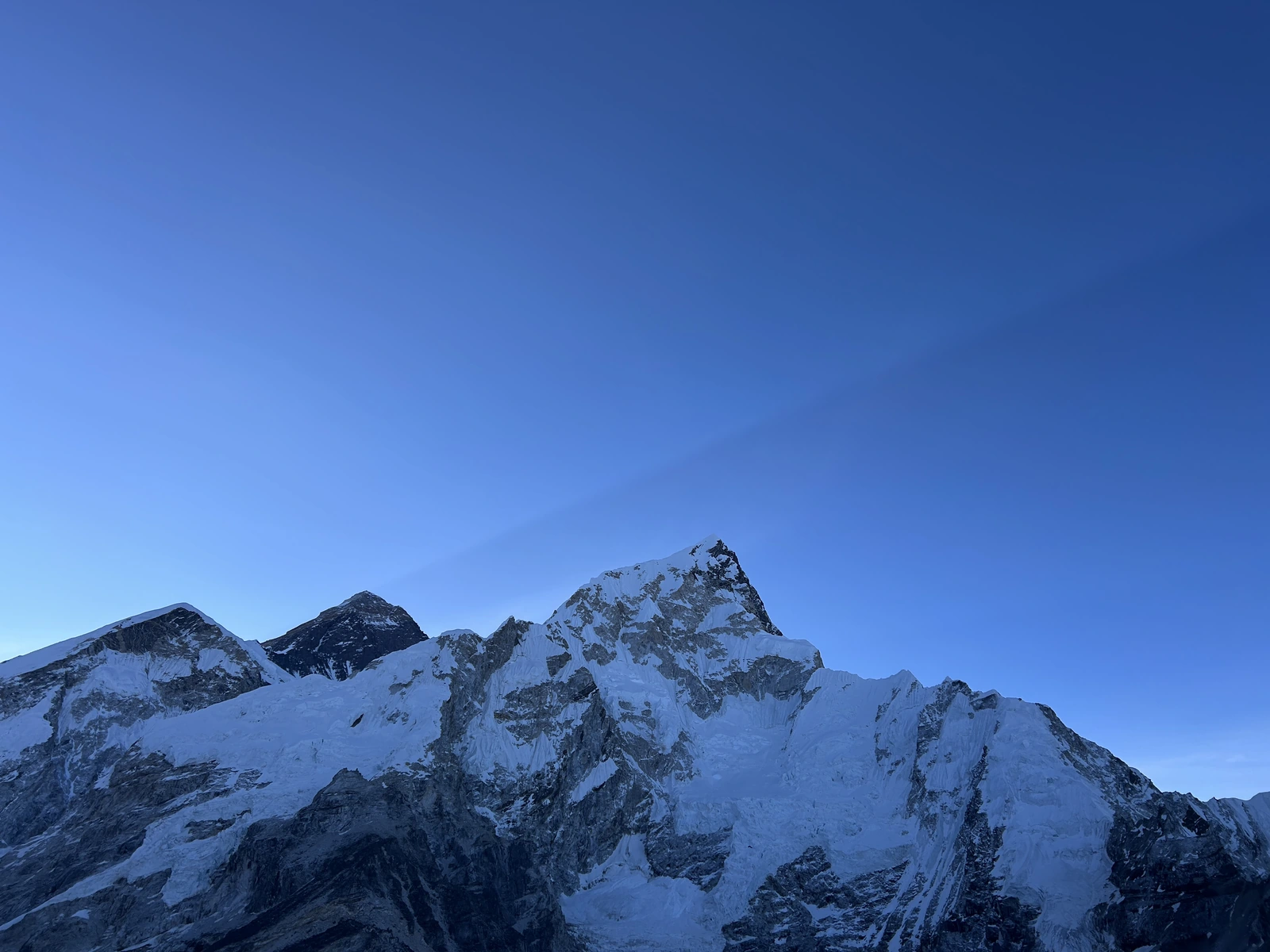
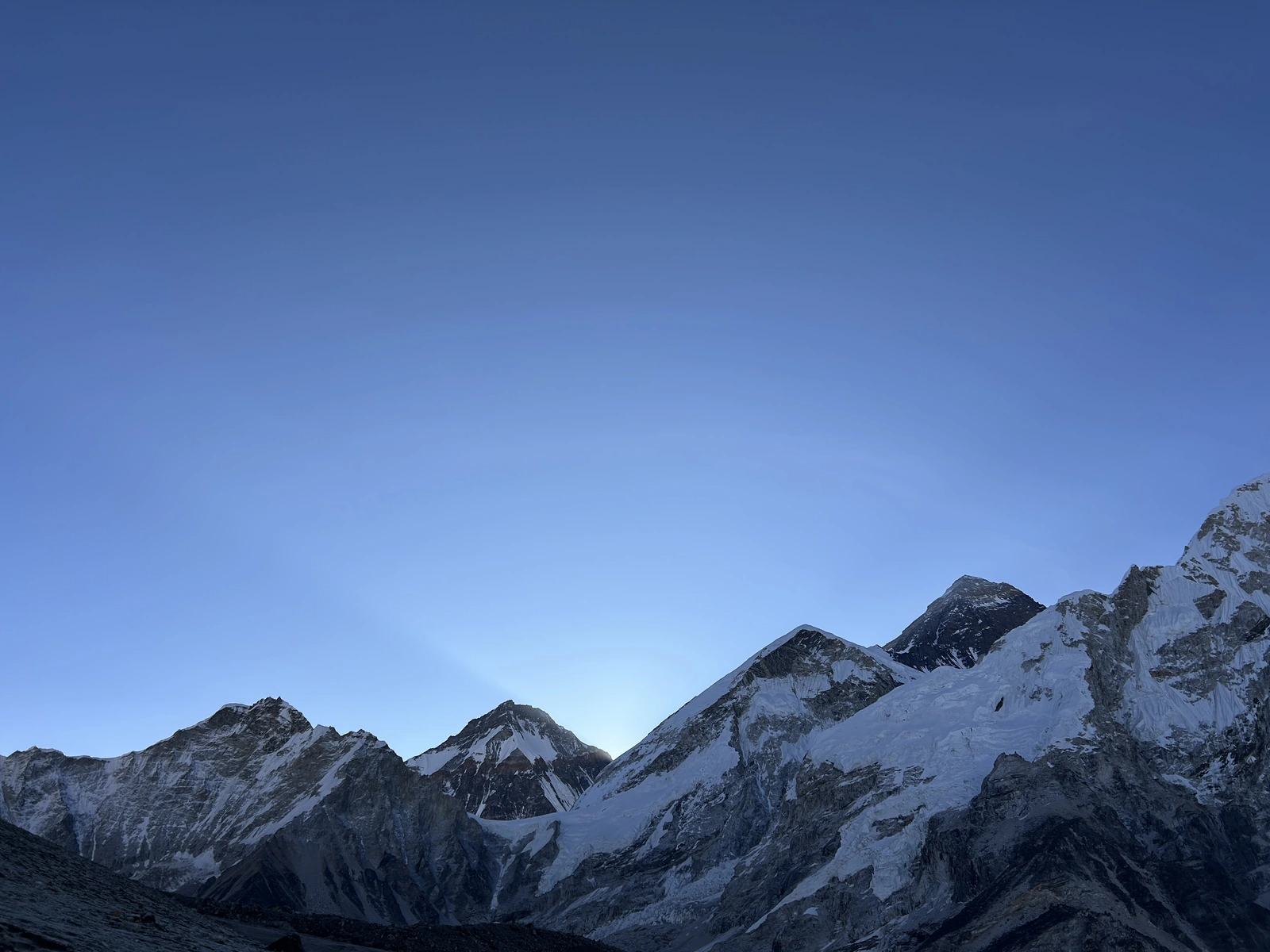
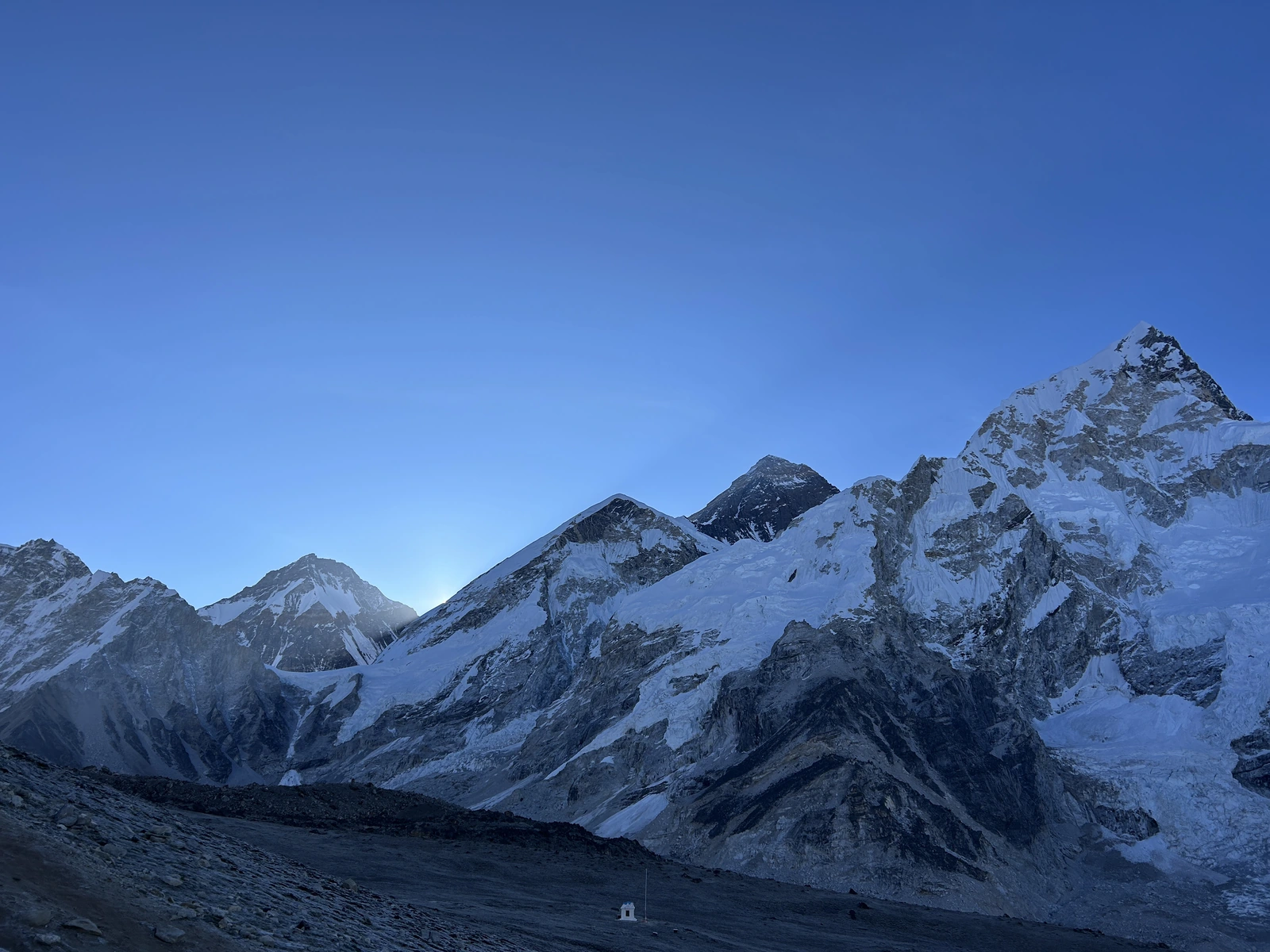
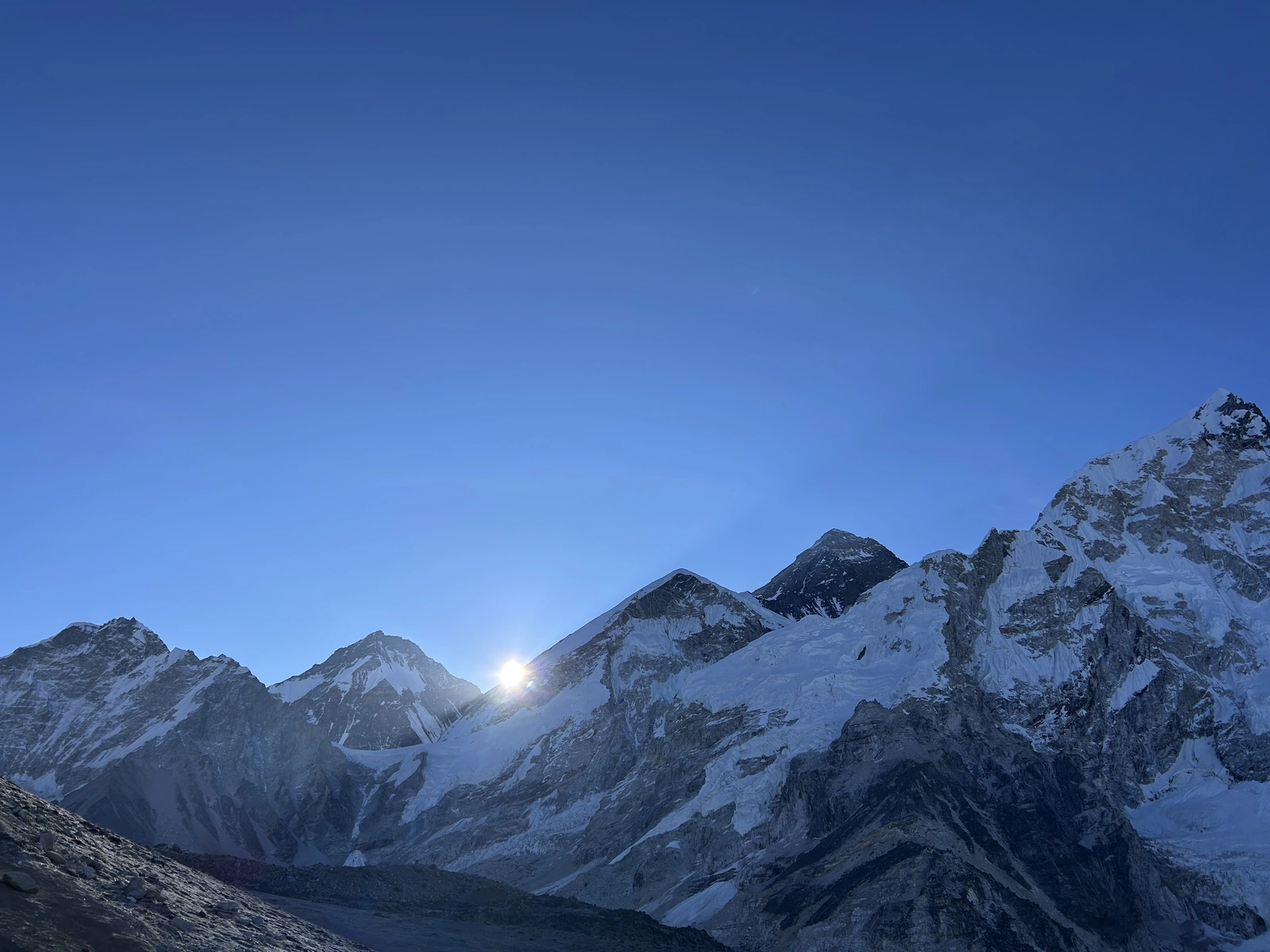
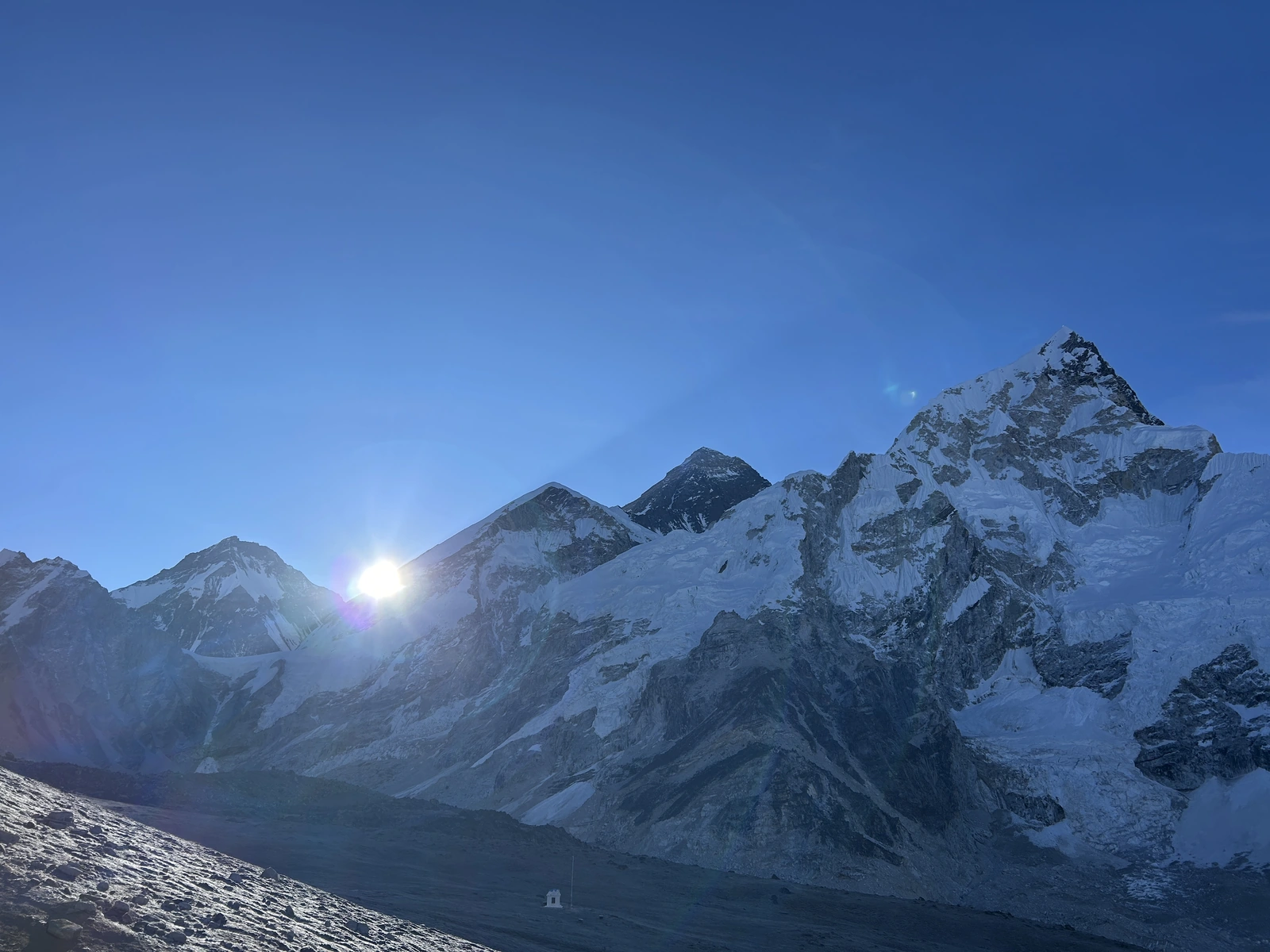
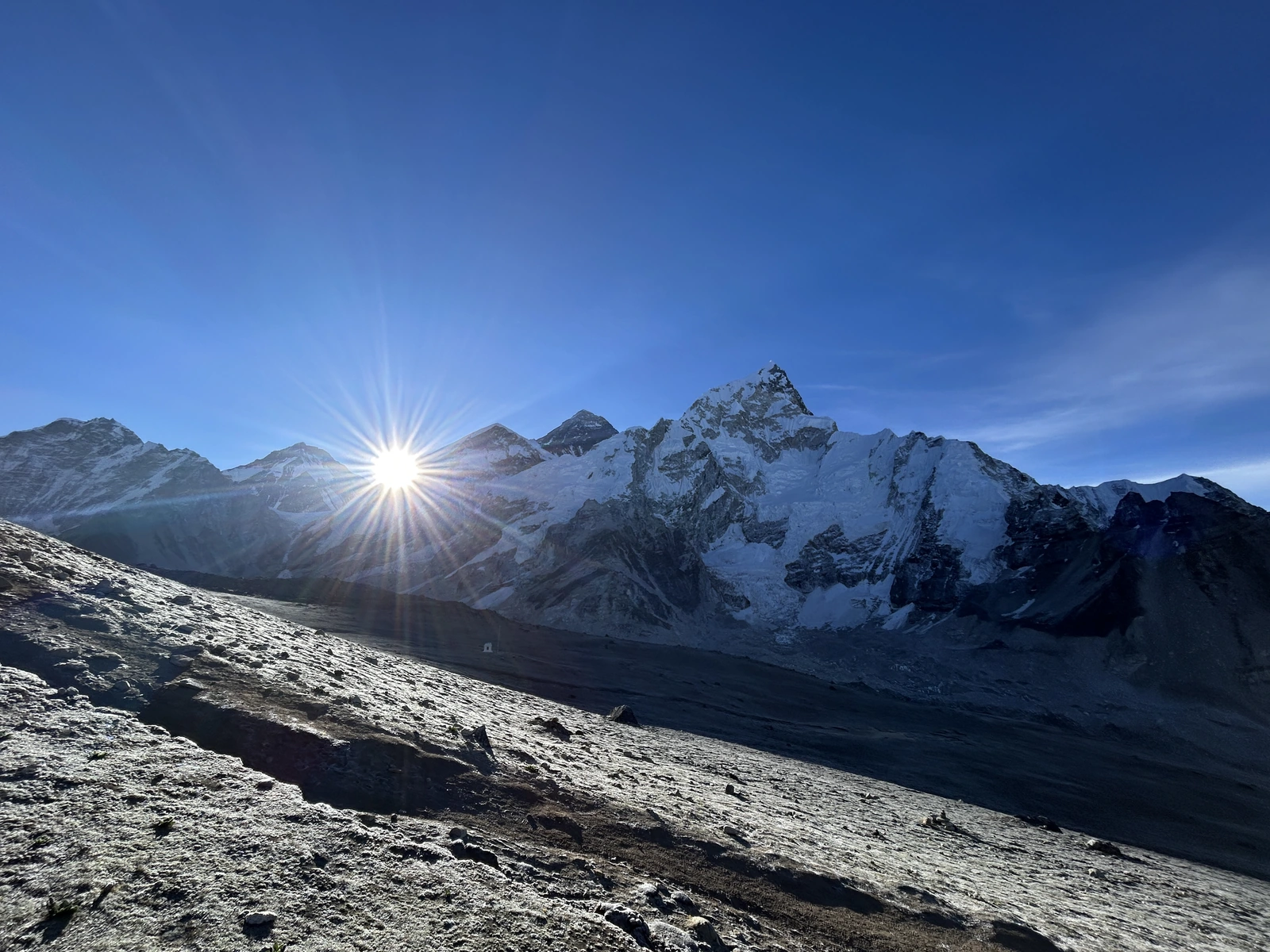
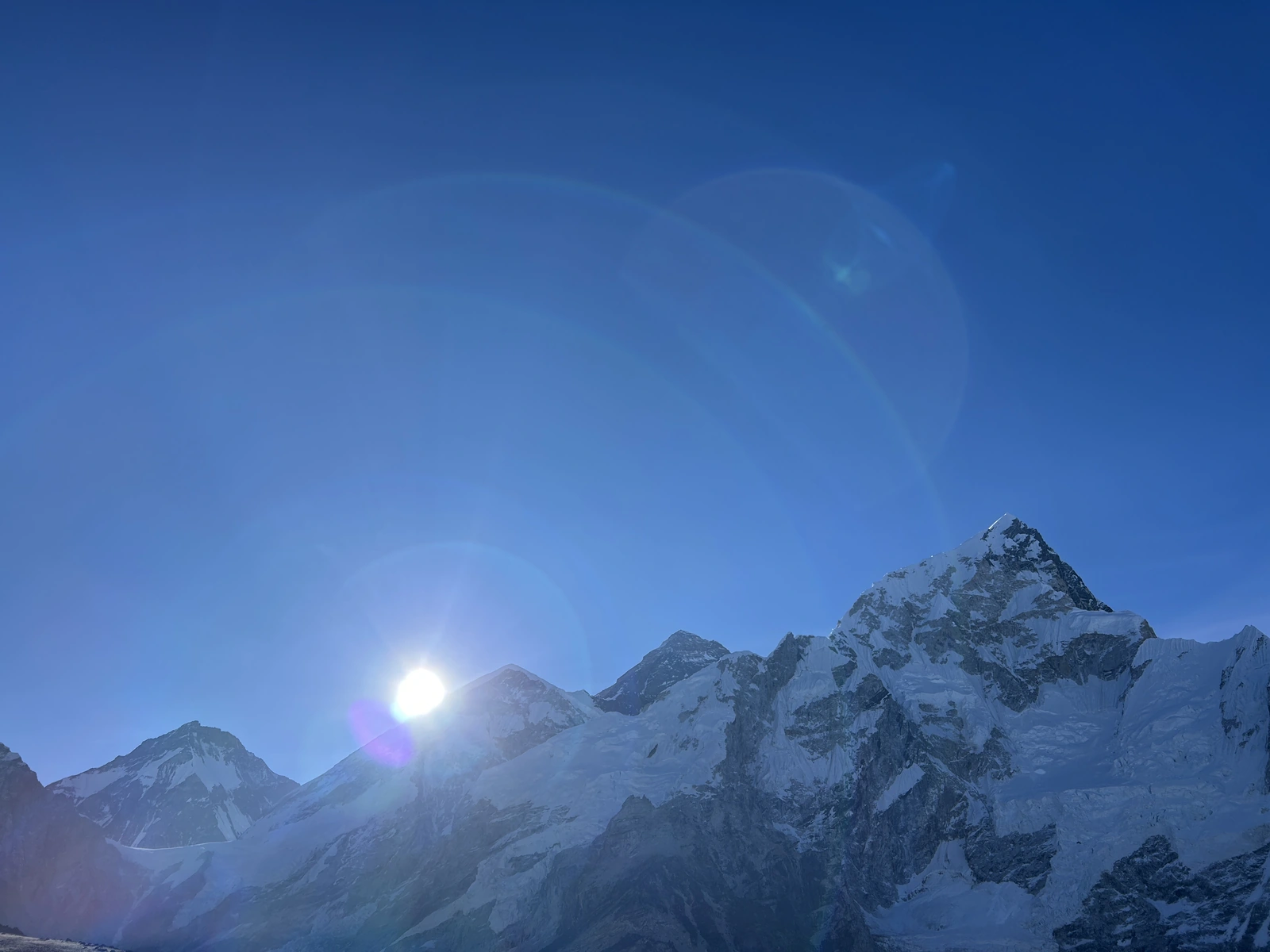
8 June 2026 / Above Gorakshep
And then,
the light.
Eight moments from the morning I stayed for.
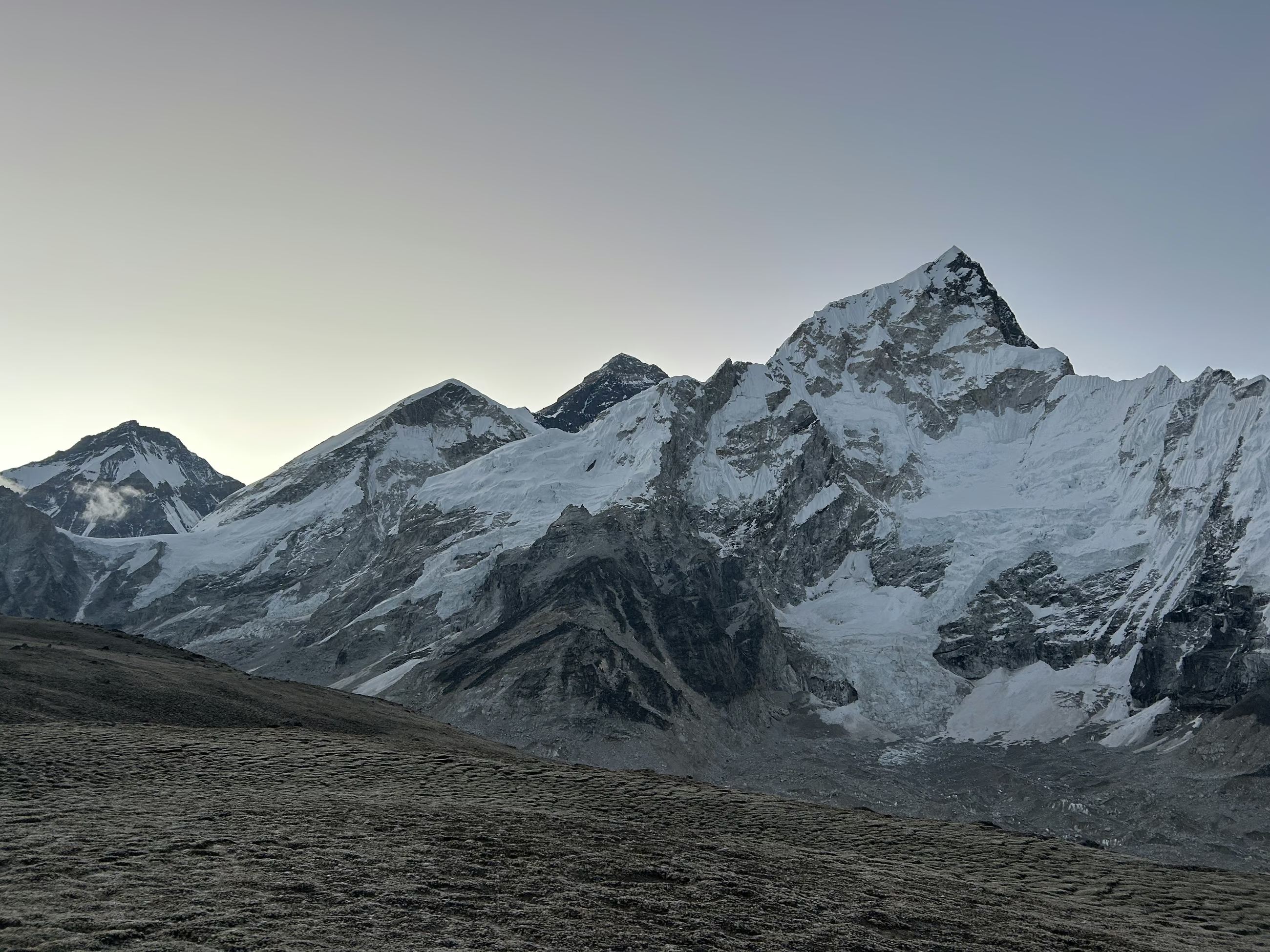
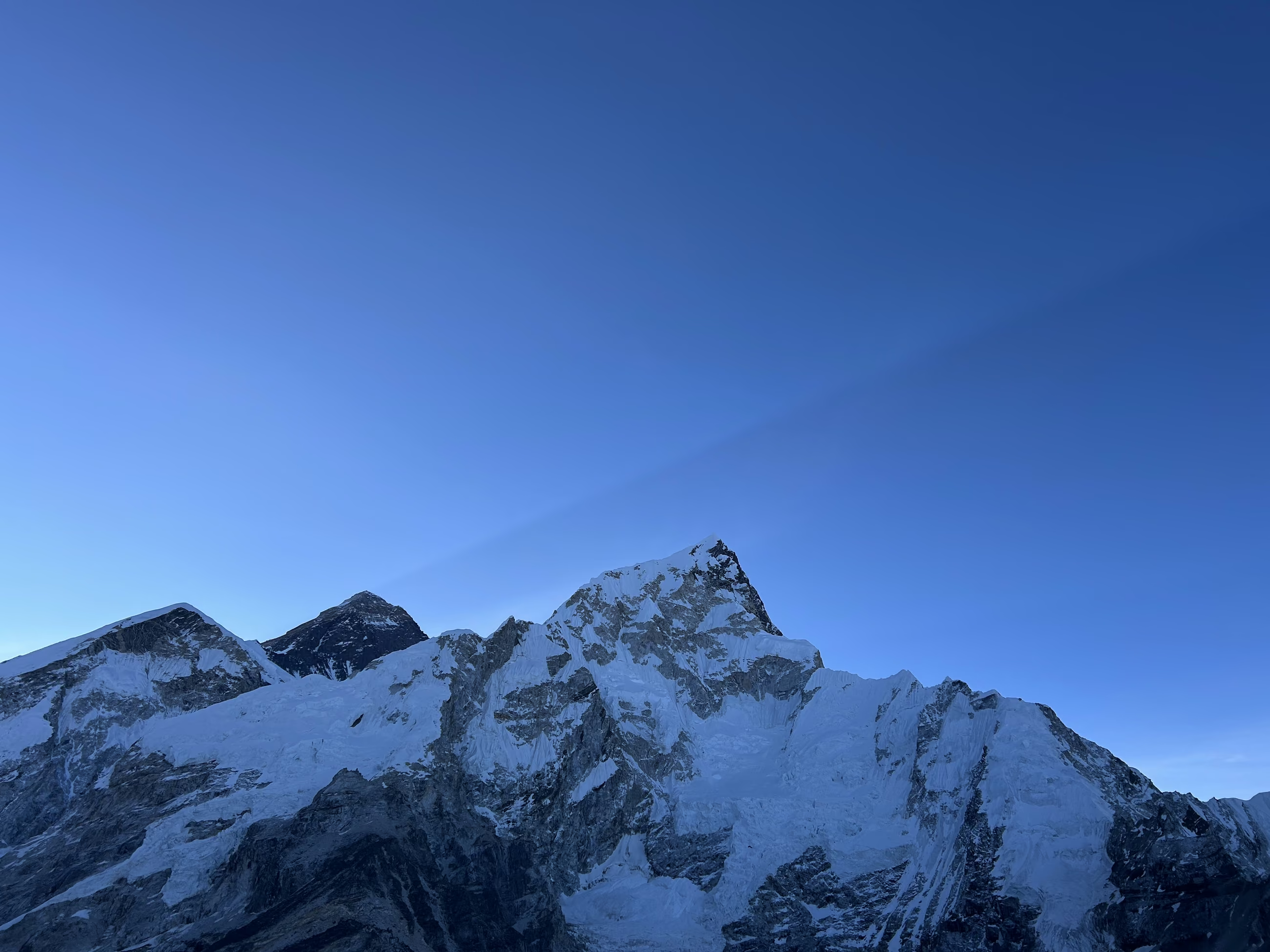
For days I had tried to see through the cloud. Now the whole wall was there in front of me.
See the full frame ↗︎11 / Kala Patthar slopes / 8 June 2026
There was nowhere else
I wanted to be.
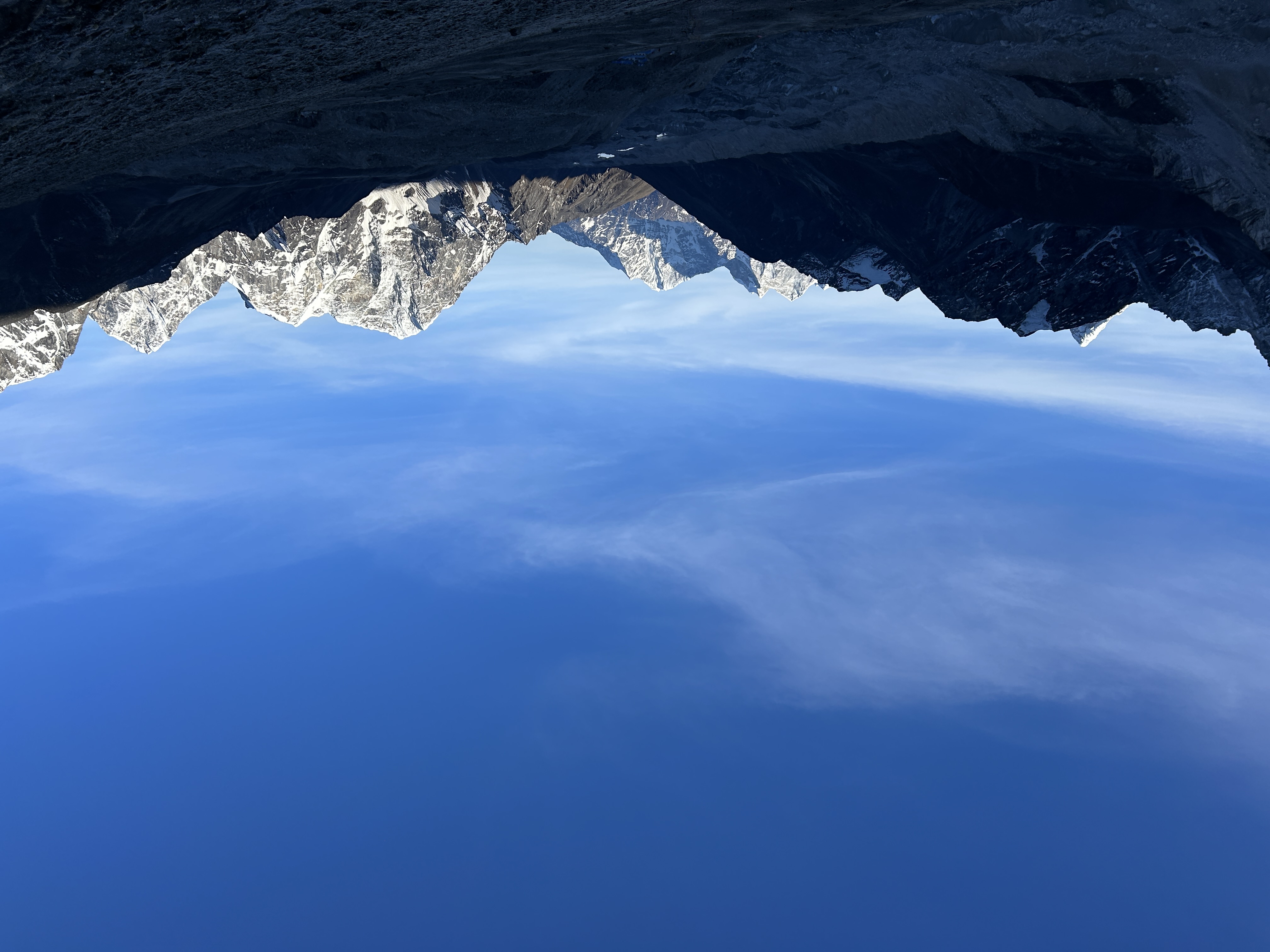
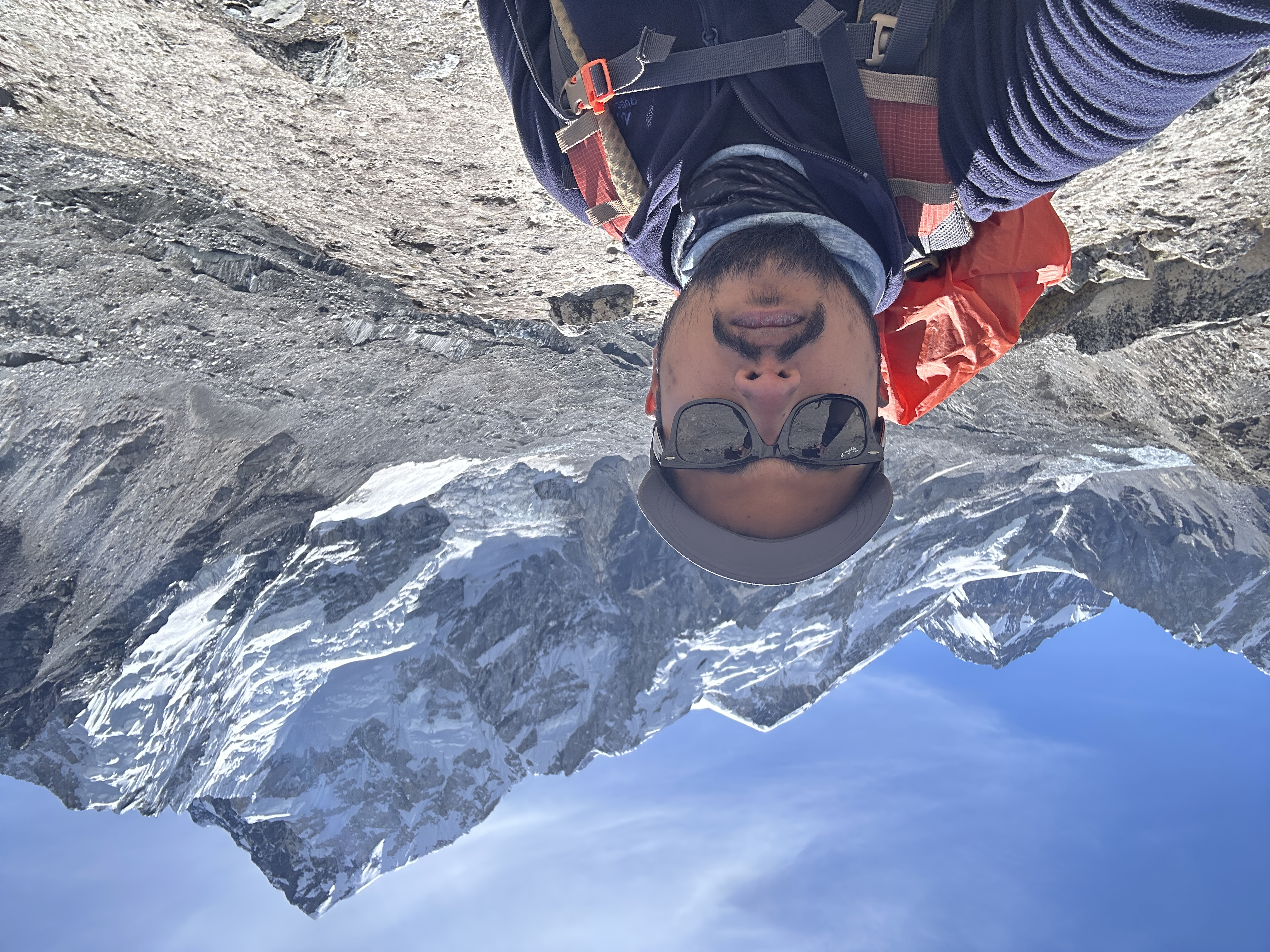
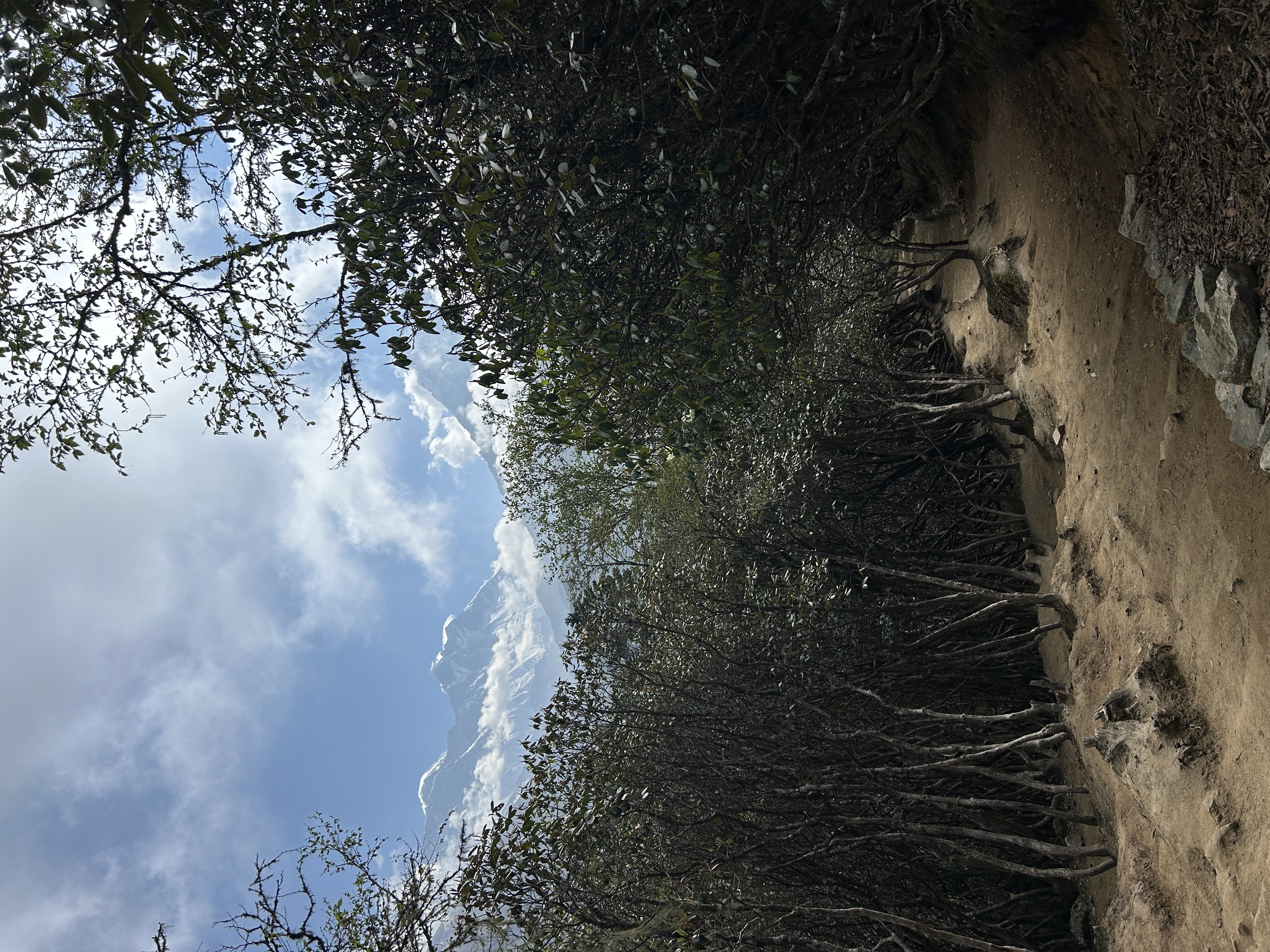
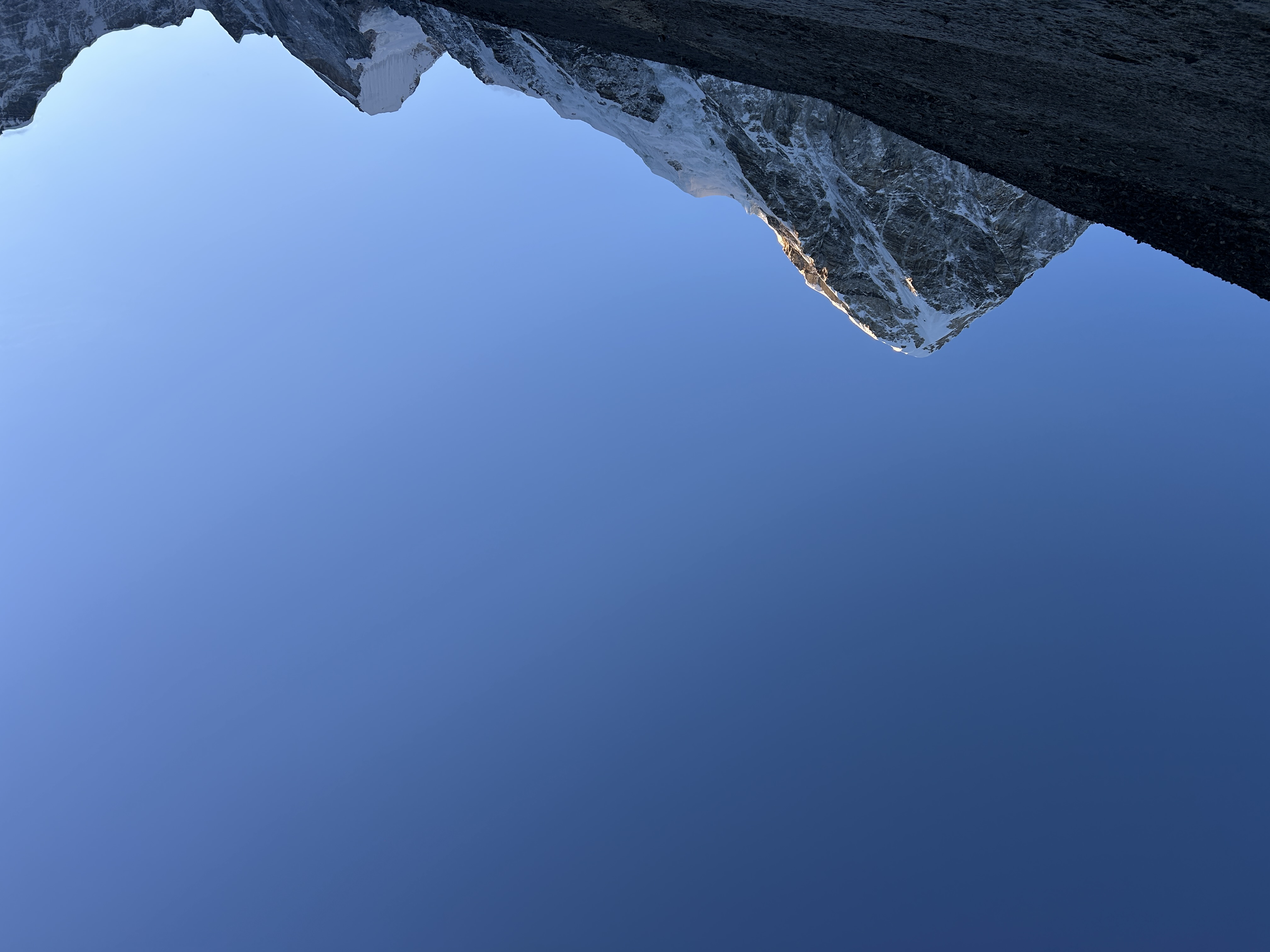
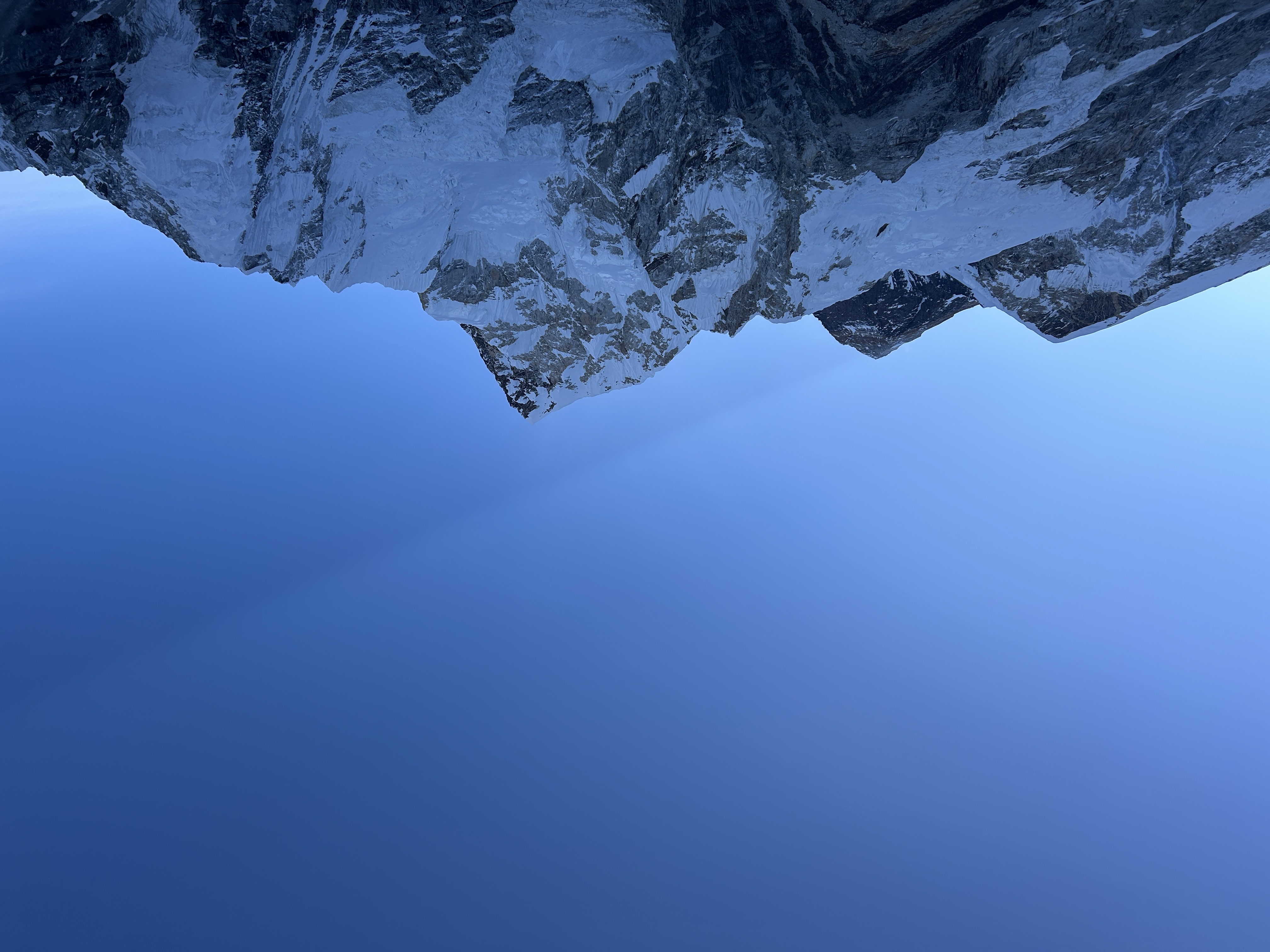
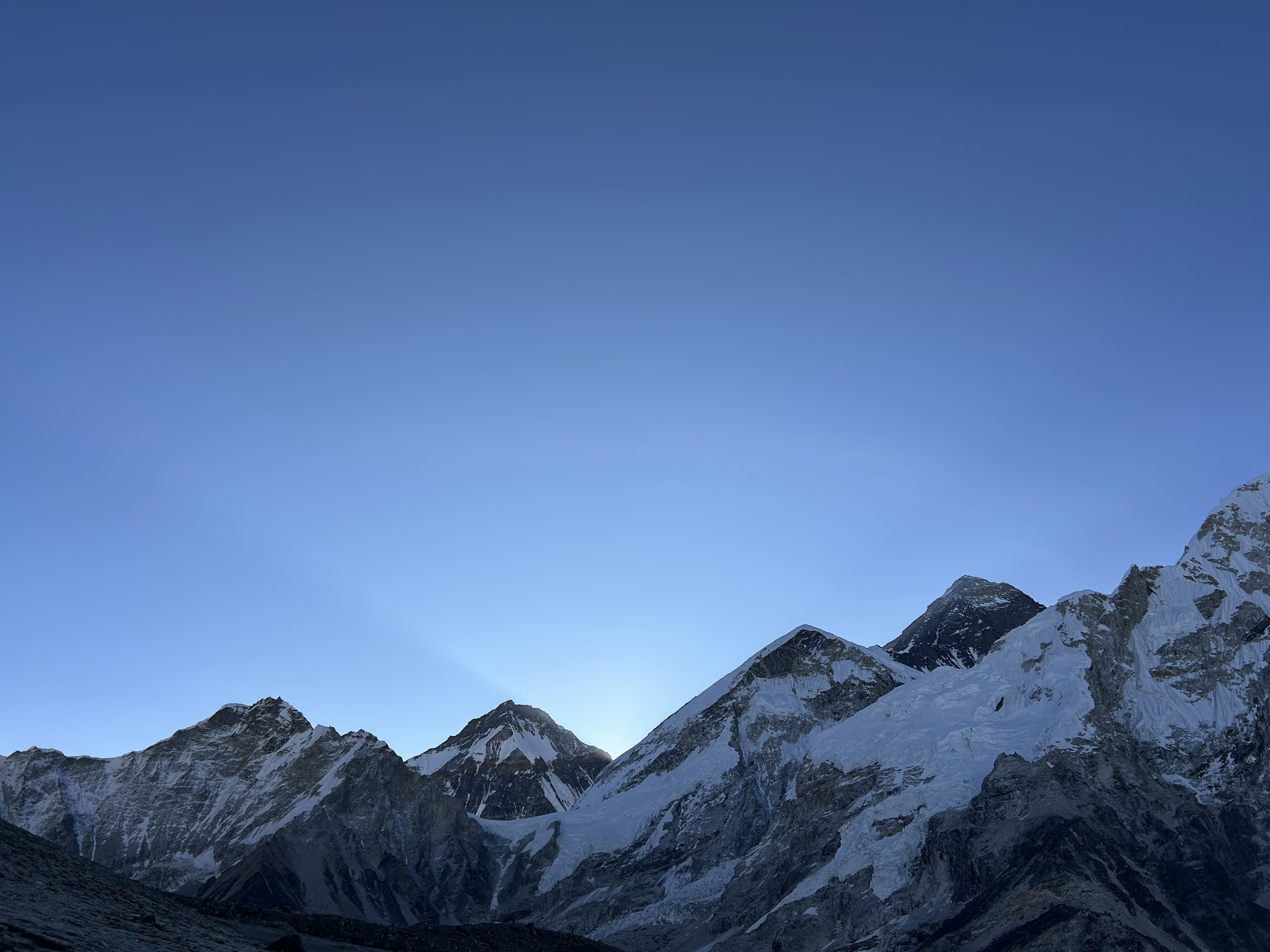
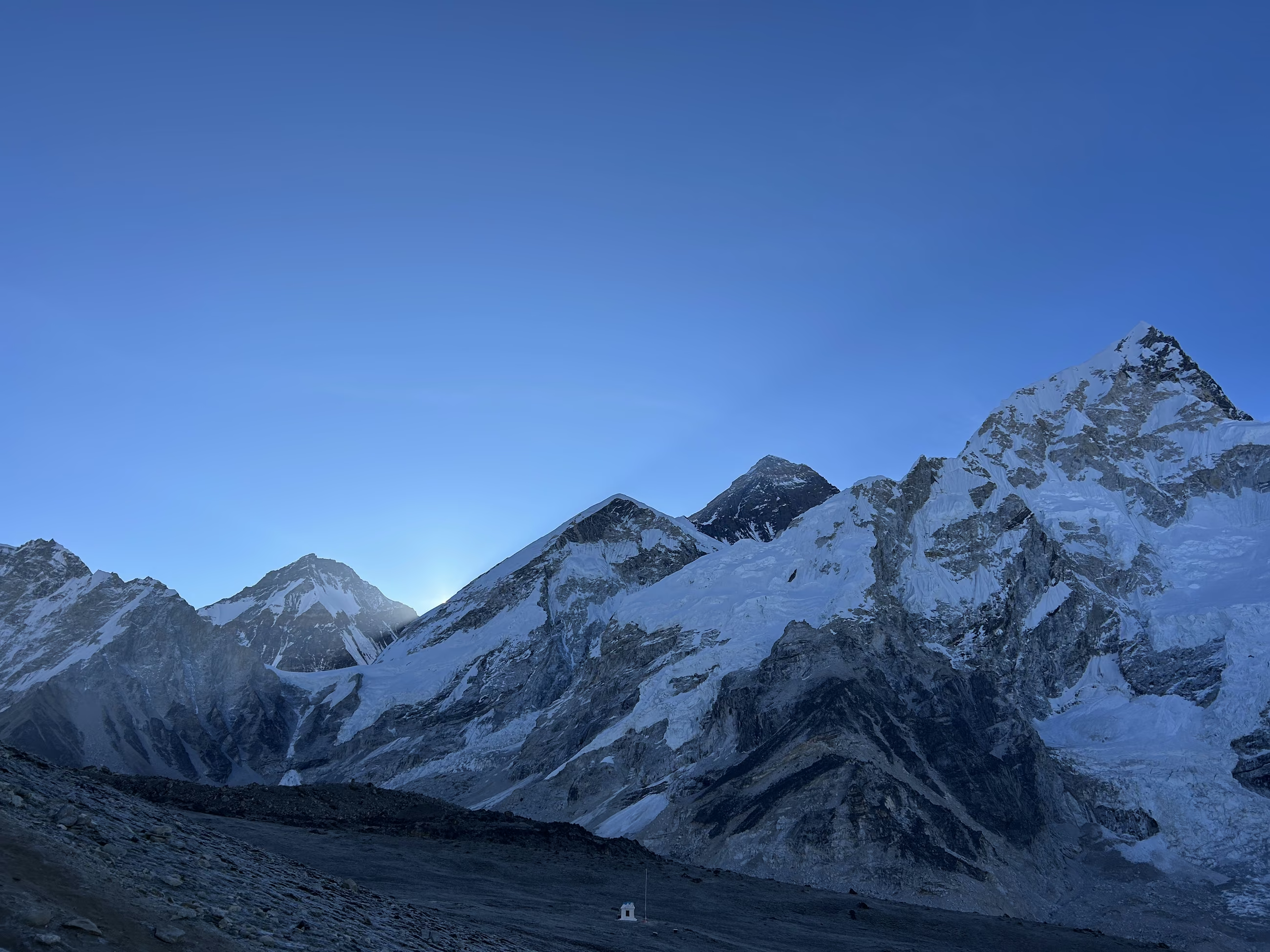
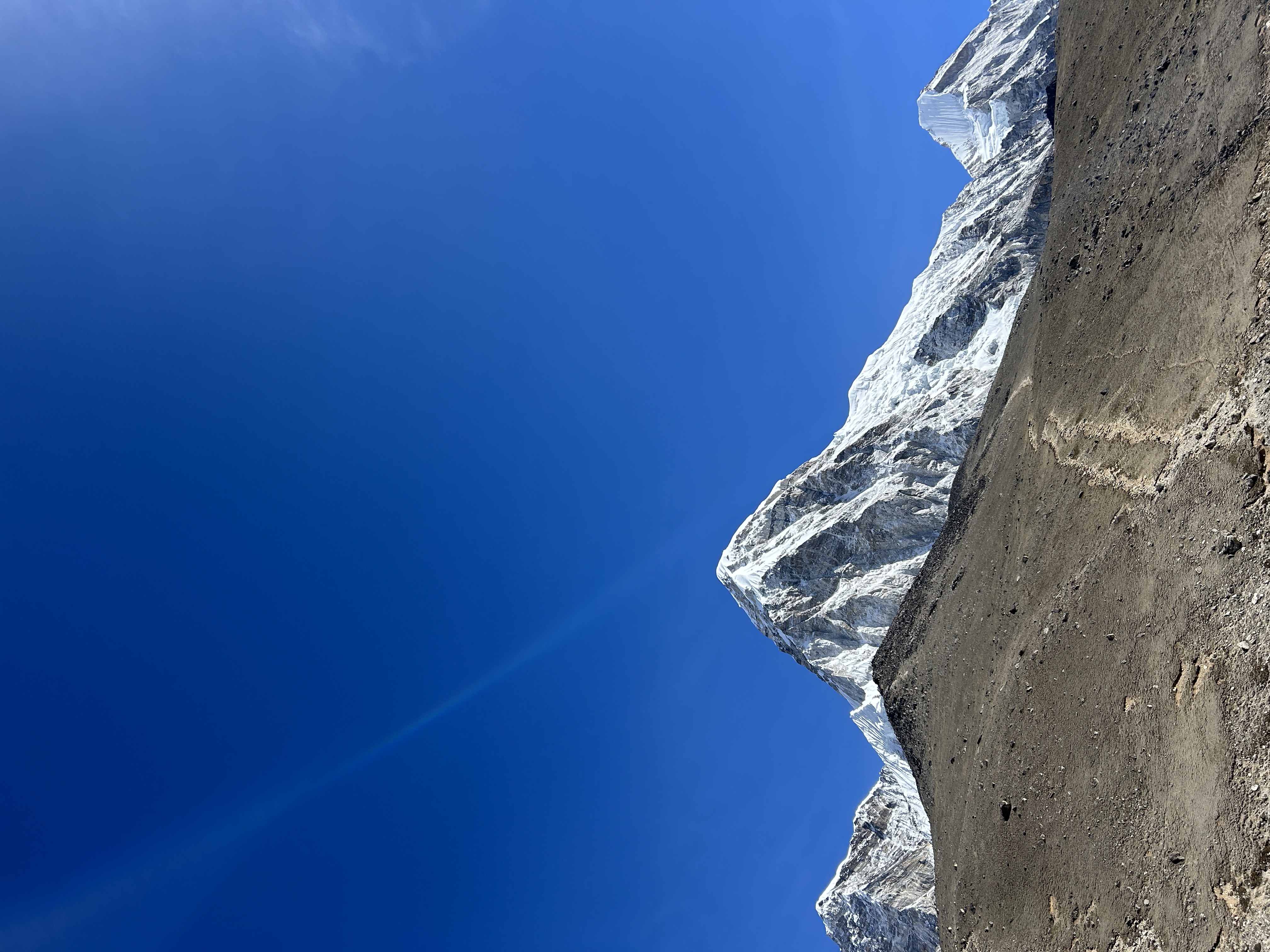
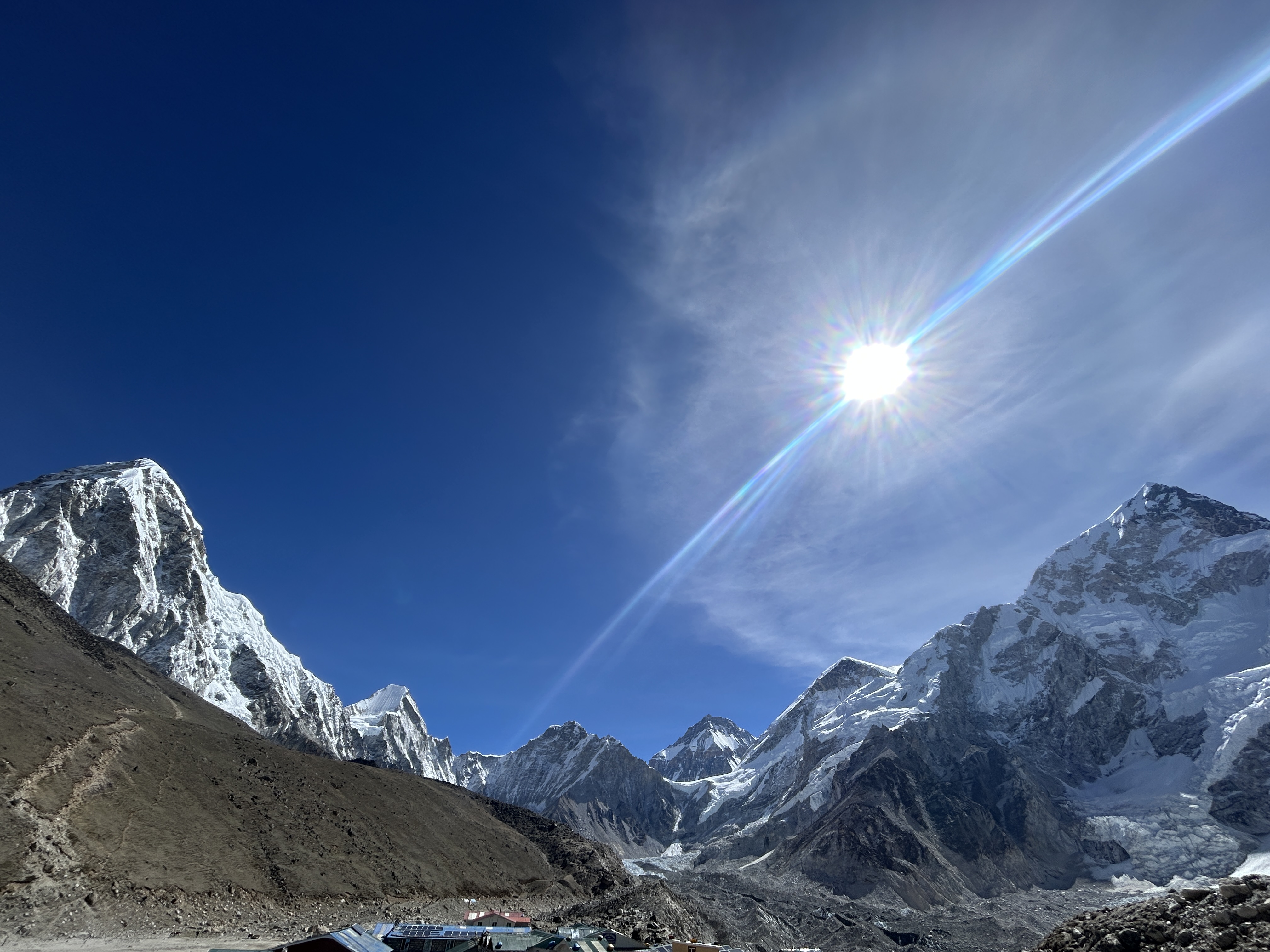
Everest’s dark pyramid was finally clear, with Nuptse’s great snowy wall beside it. In another direction, Pumori rose above the ridge. The whole morning felt impossibly generous.
I stayed for hours. I watched the light change, took photographs, sat with it, and took a few more. The clouds at base camp had disappointed me. Here, I could not think of anything more to ask for.
I had not made it to the top of Kala Patthar. I did not need that to make this morning complete.
Sound in the player
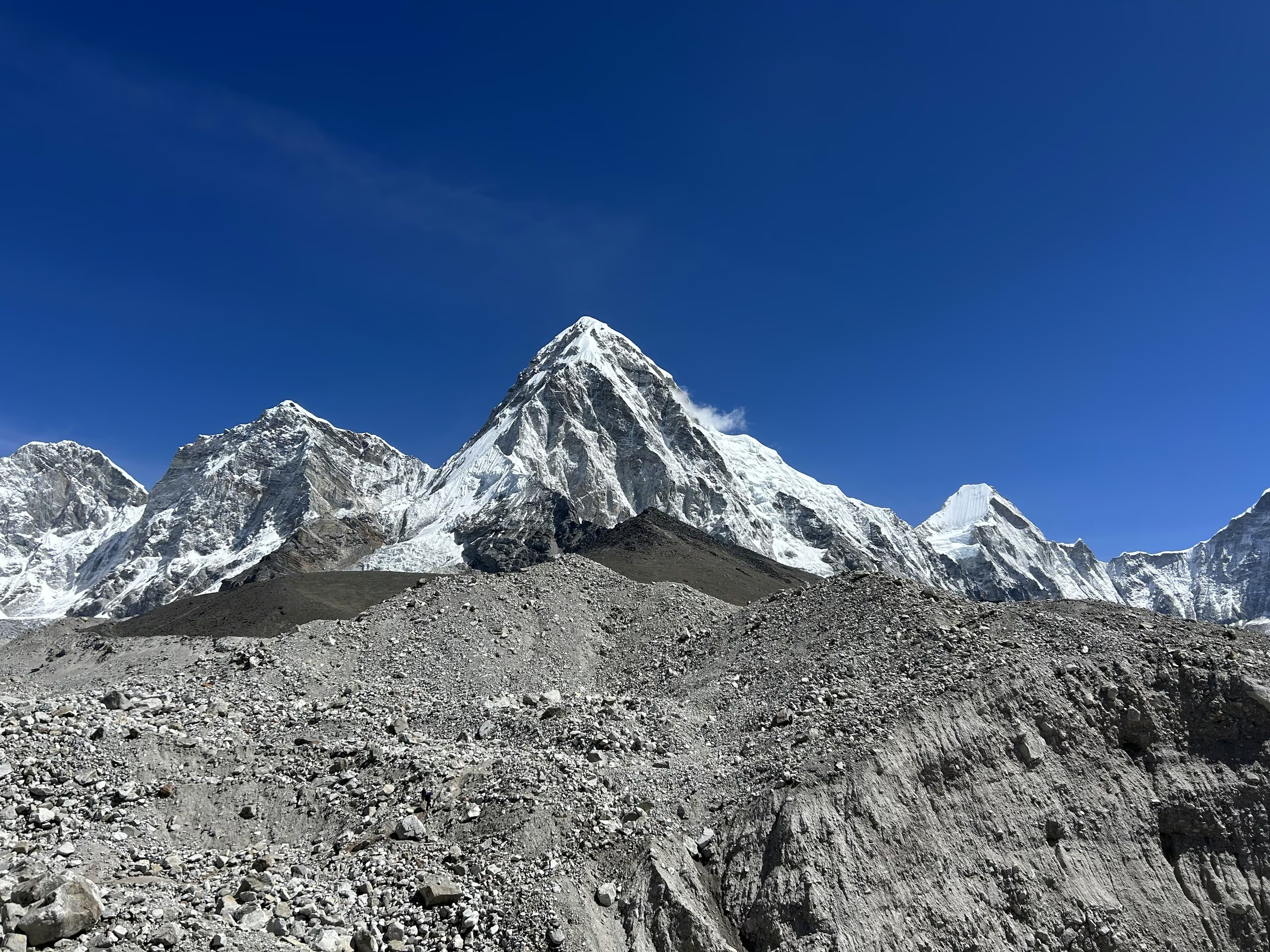
Pumori / clear in the morning light.
Sound in the player
12 / Gorakshep → Pheriche → Namche
The same path.
A different person on it.
Back at Gorakshep, I collected my bags and took far too many happy photographs with the mountains. Then I started down towards Pheriche for the night. The same landscape that had felt hidden on the way up was suddenly wide open.
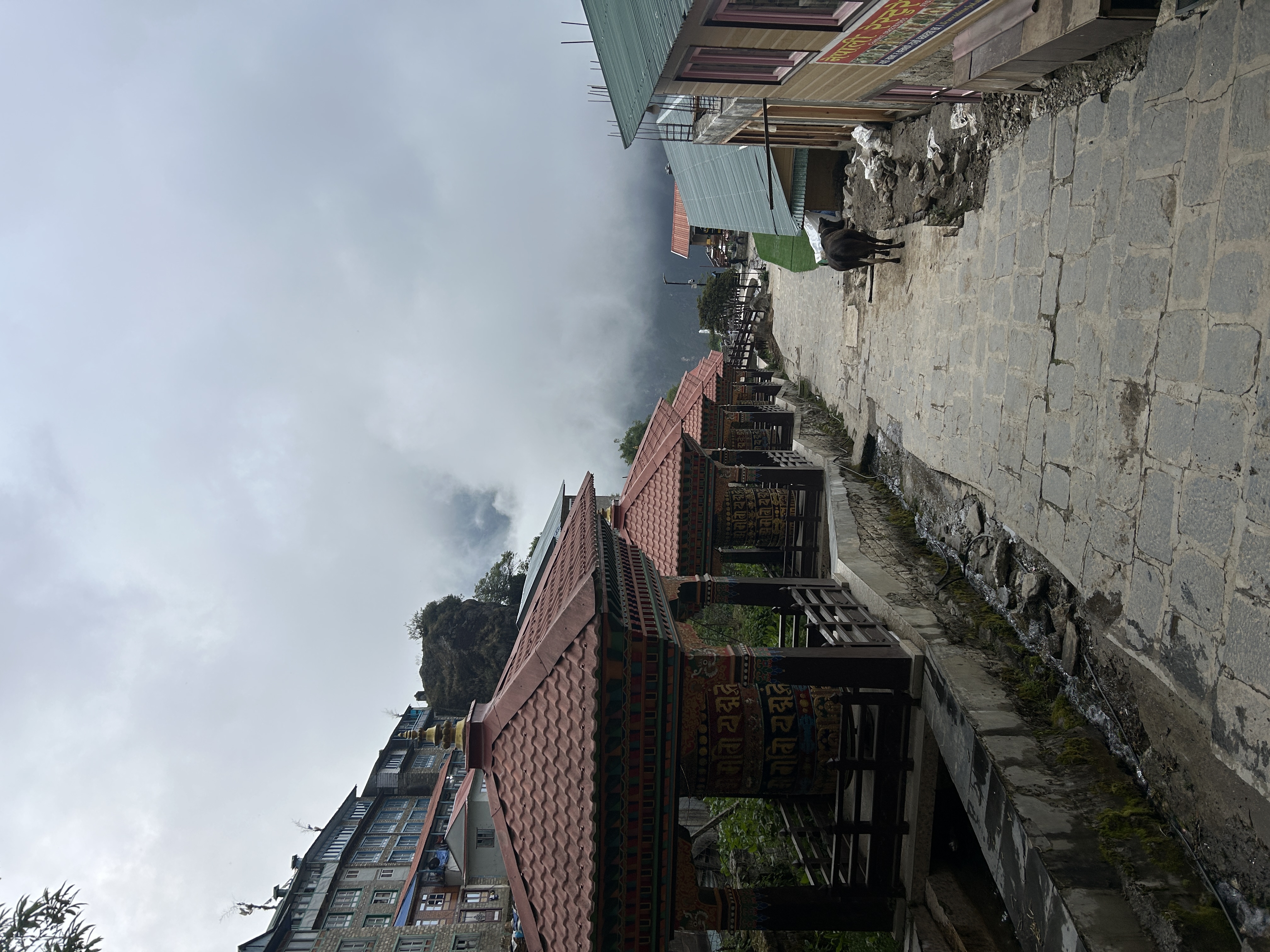
The next day I walked from Pheriche to Namche. The green returned, then the trees, then the familiar streets. I collected the luggage I had left behind. So much had happened since I last held it.
There was time to rest in Namche before the final walk to Lukla. I was going home with more trust in myself than I had brought.
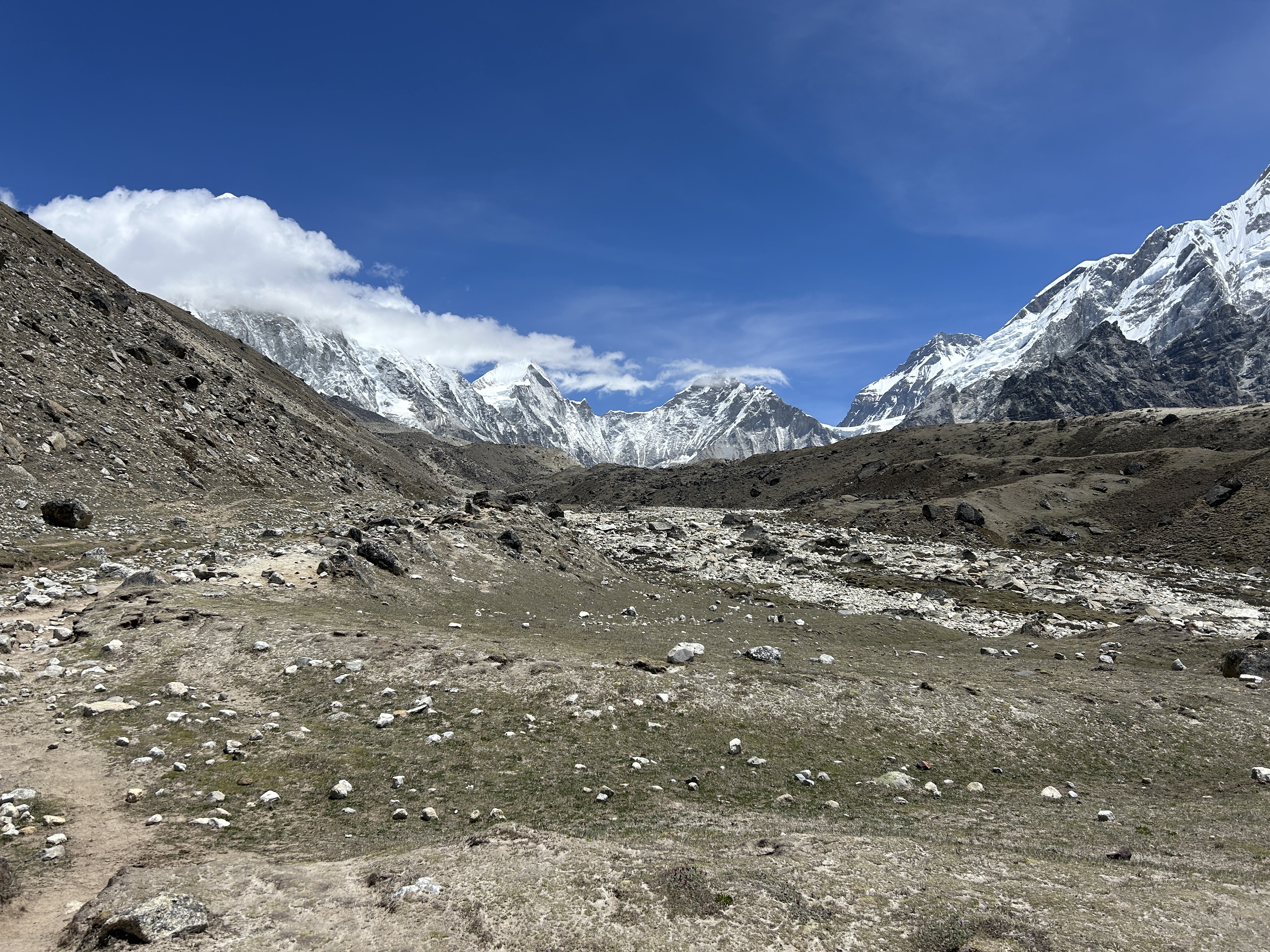
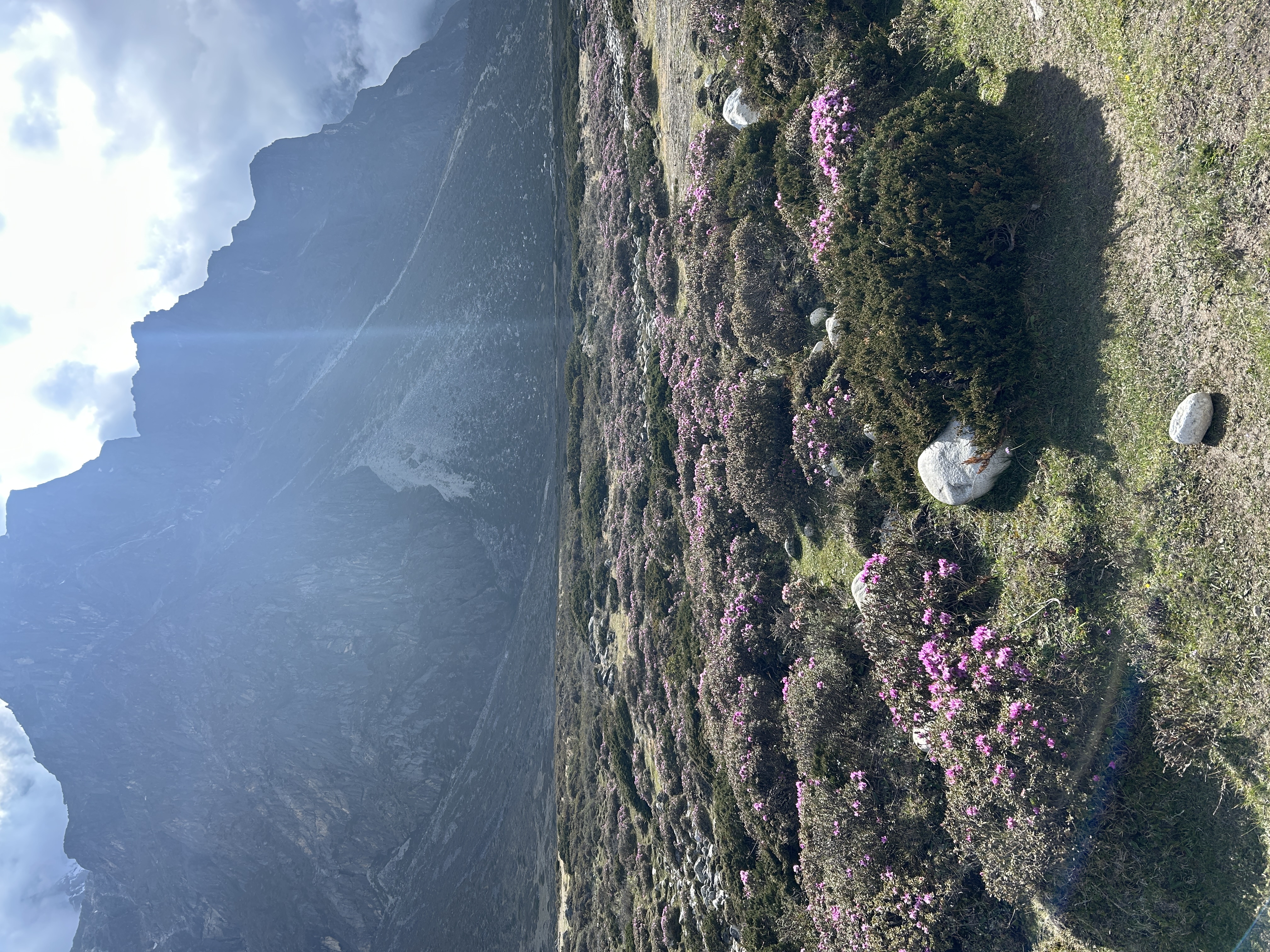
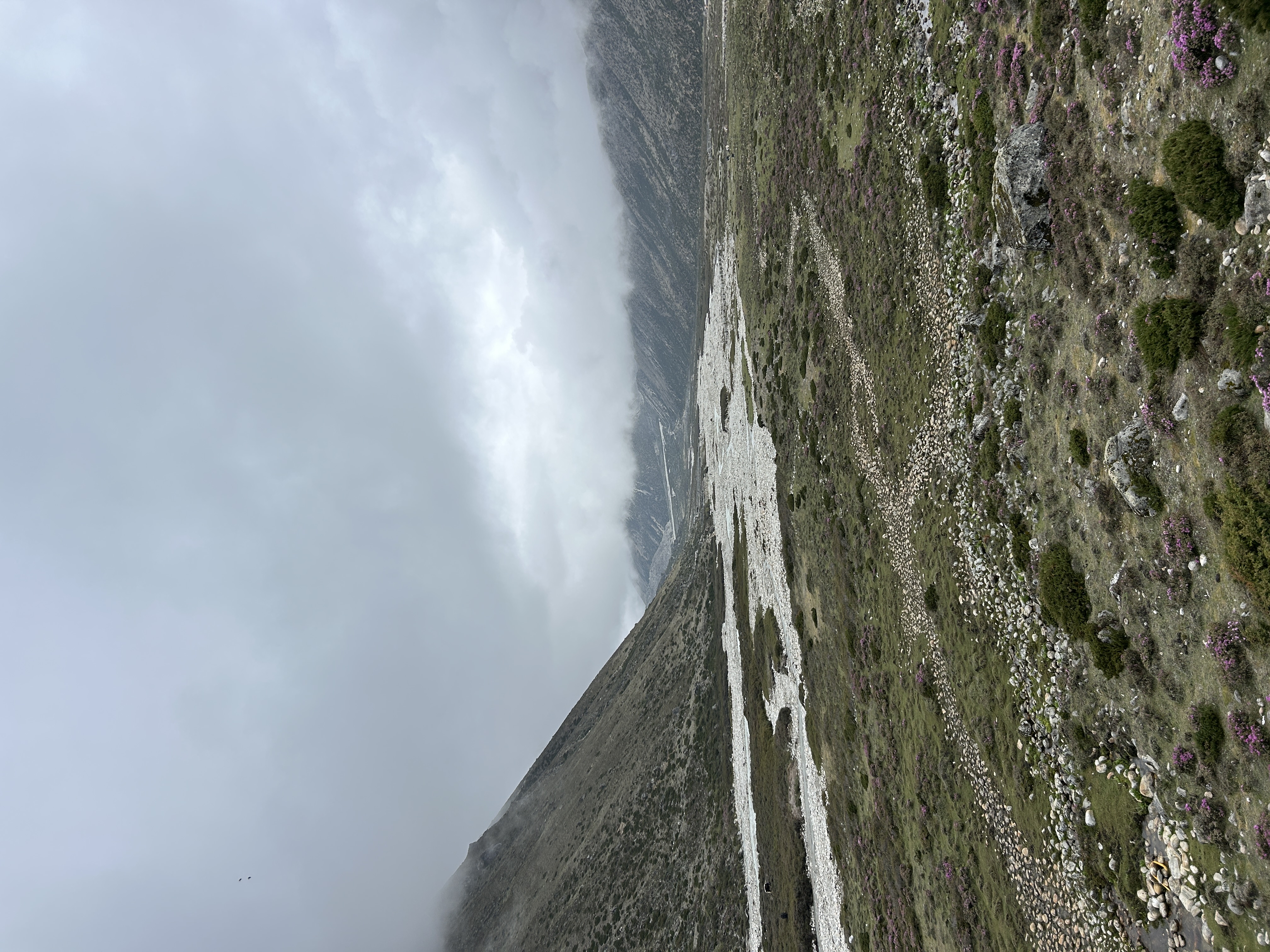
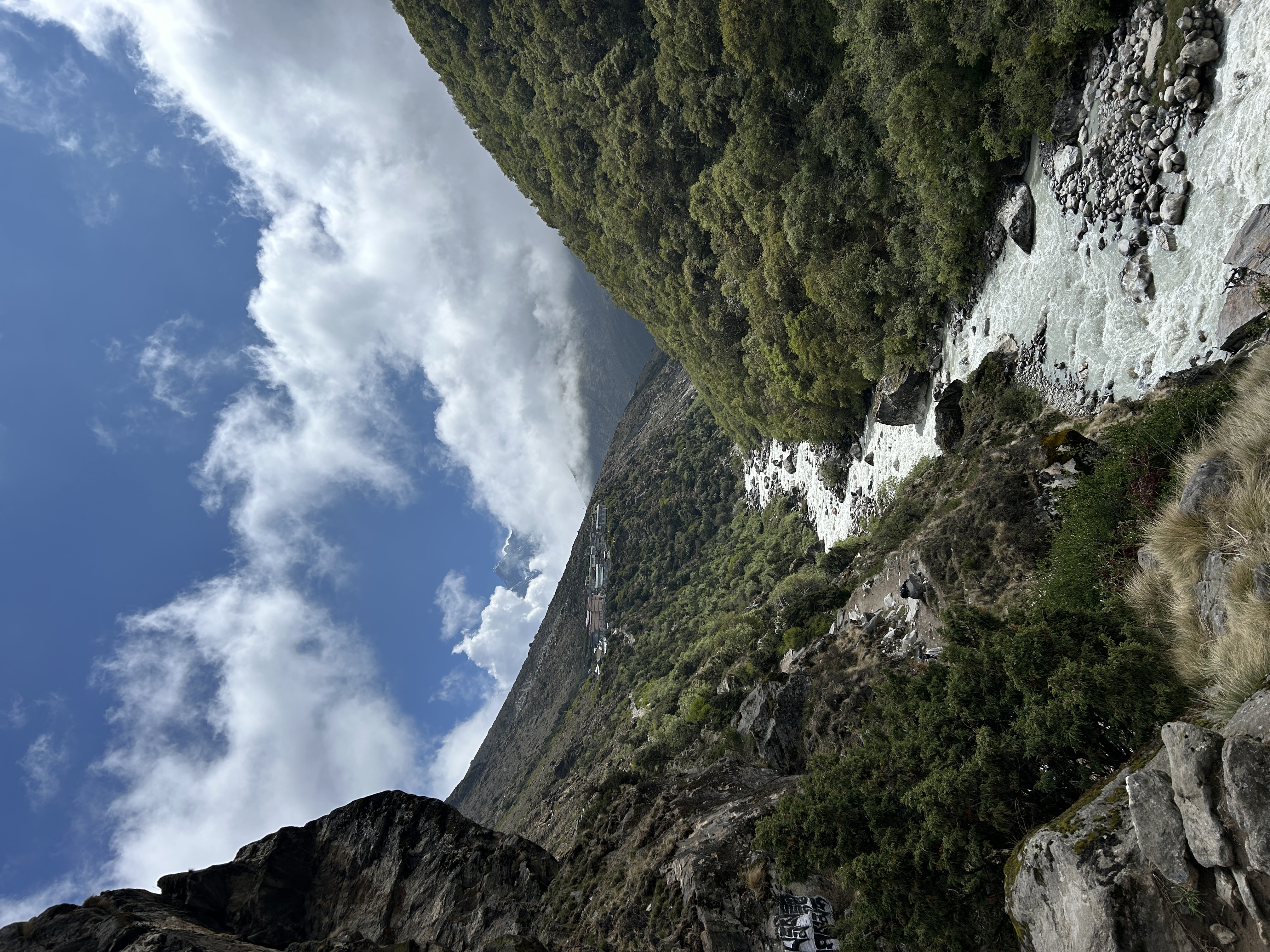
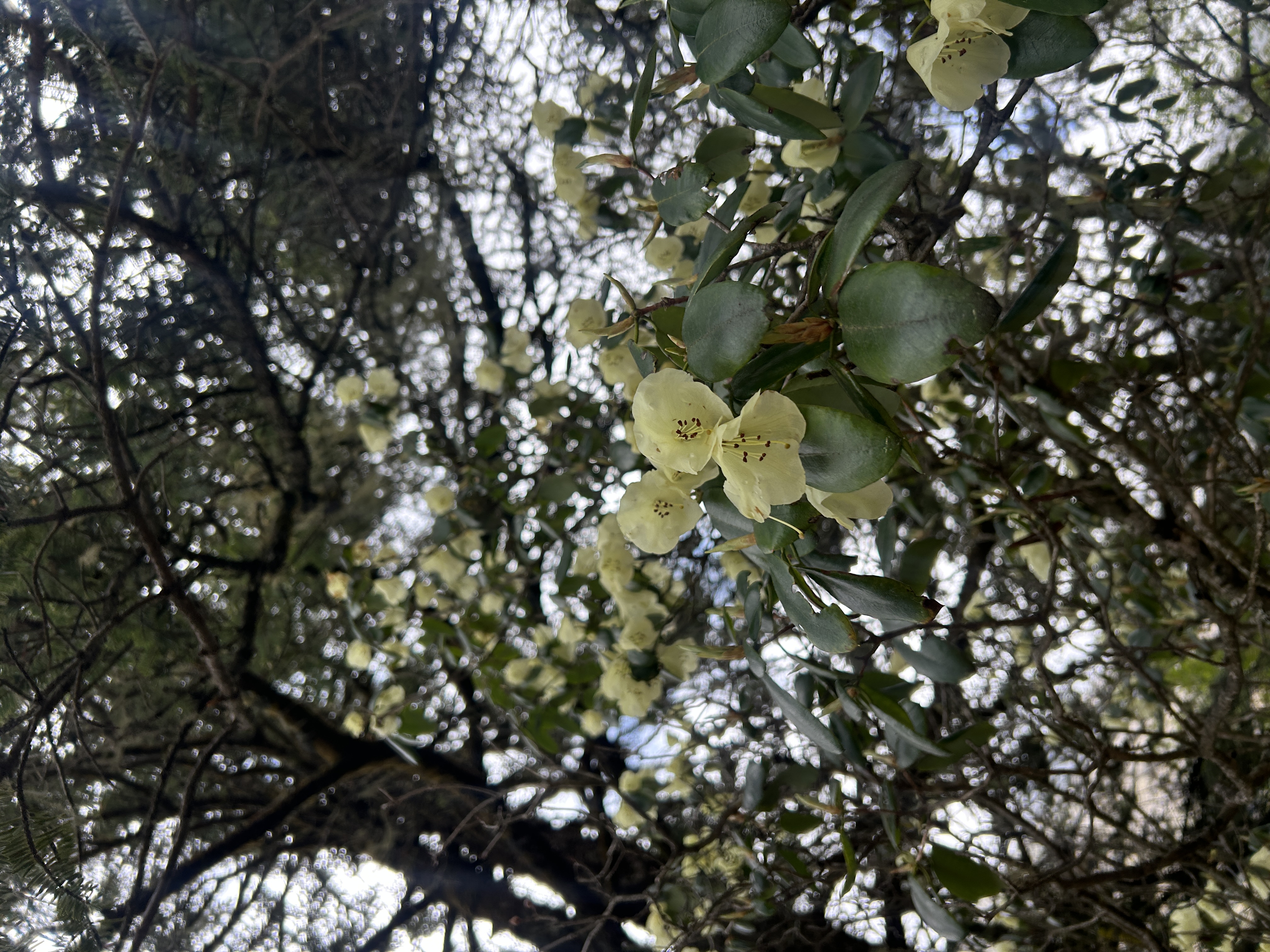
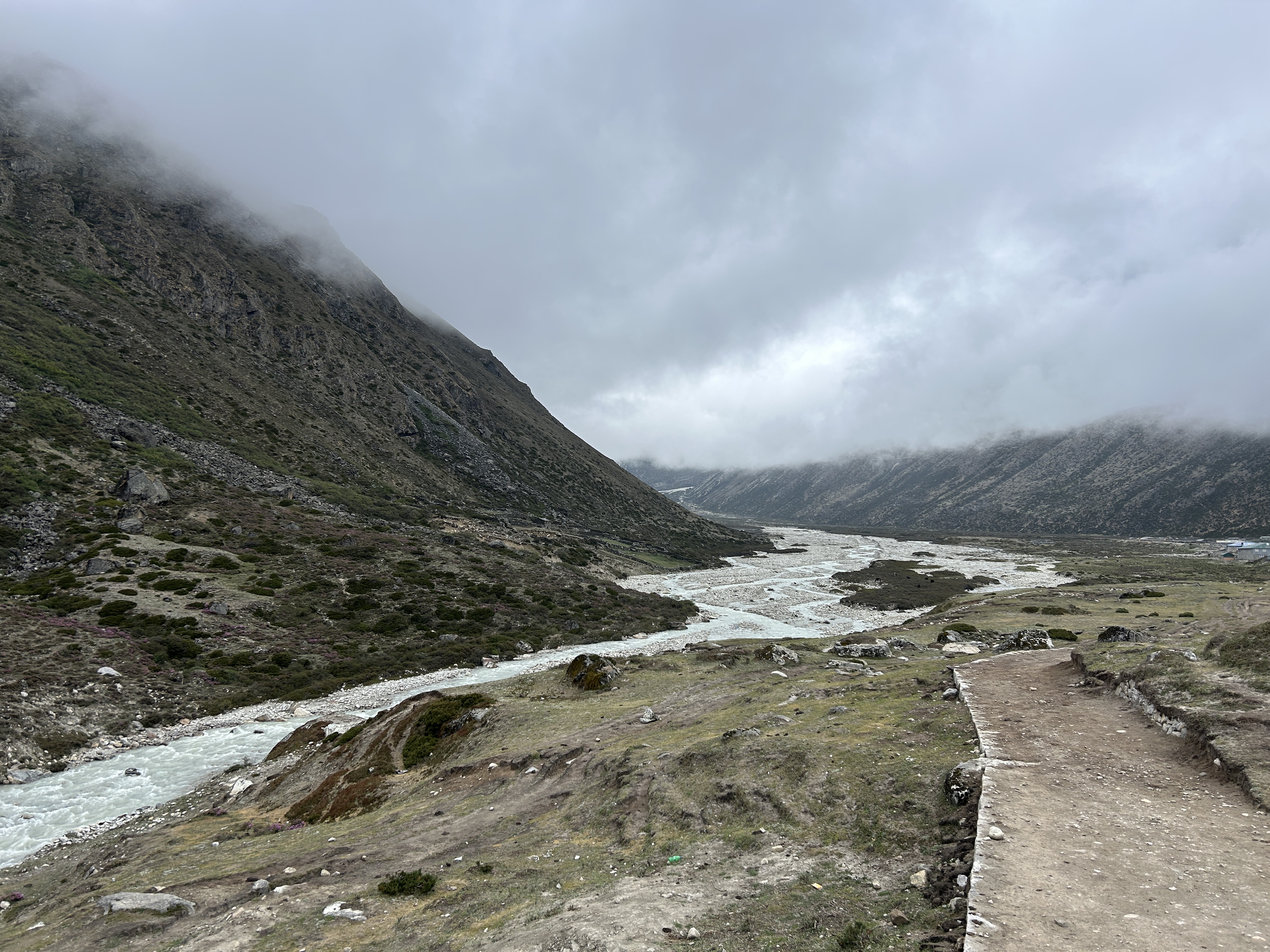
The trees came back. So did the sound of the river.
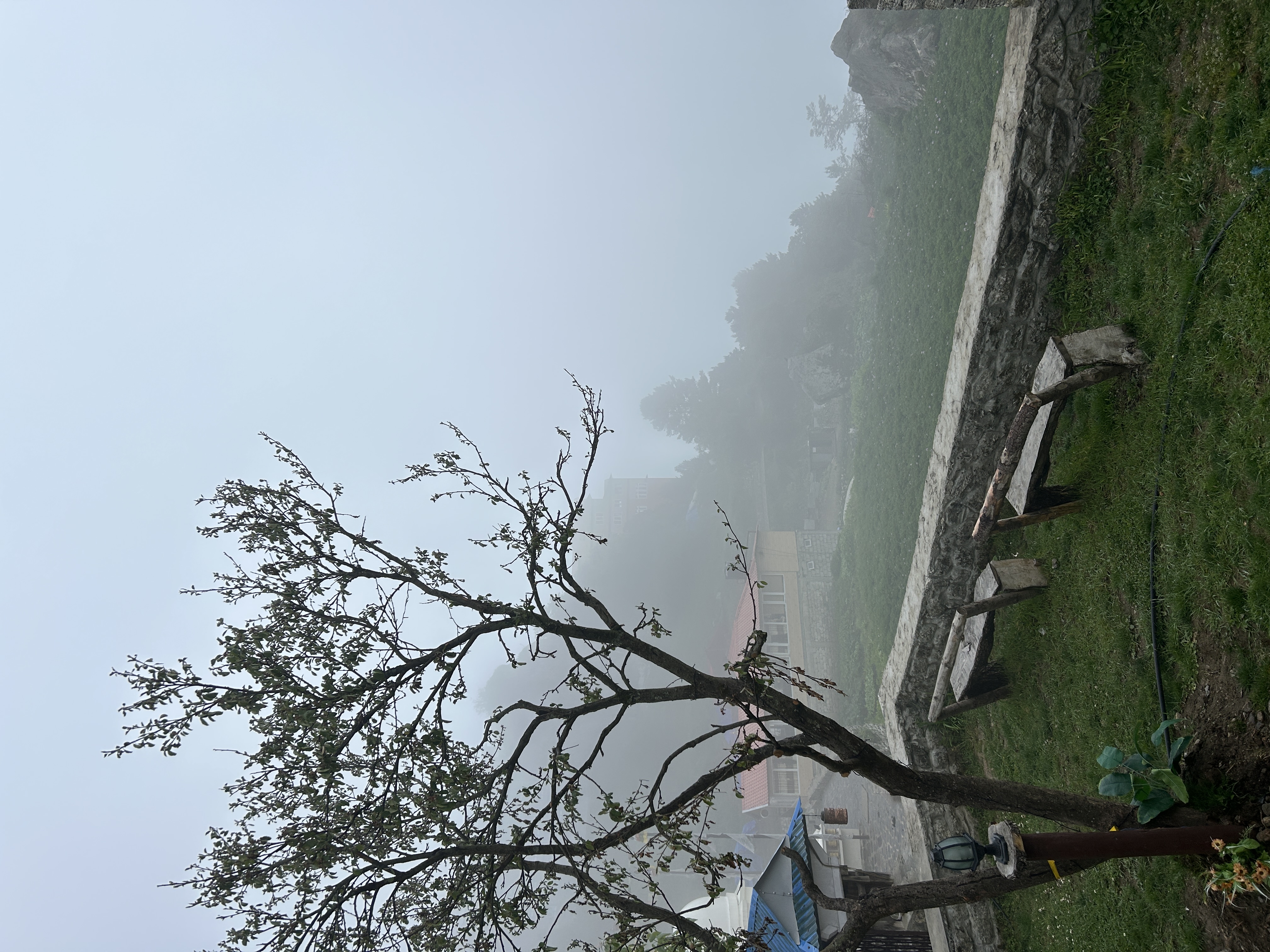
Back under the trees, walking into the mist.
13 / Namche → Lukla
A bar opened.
A stranger became a friend.
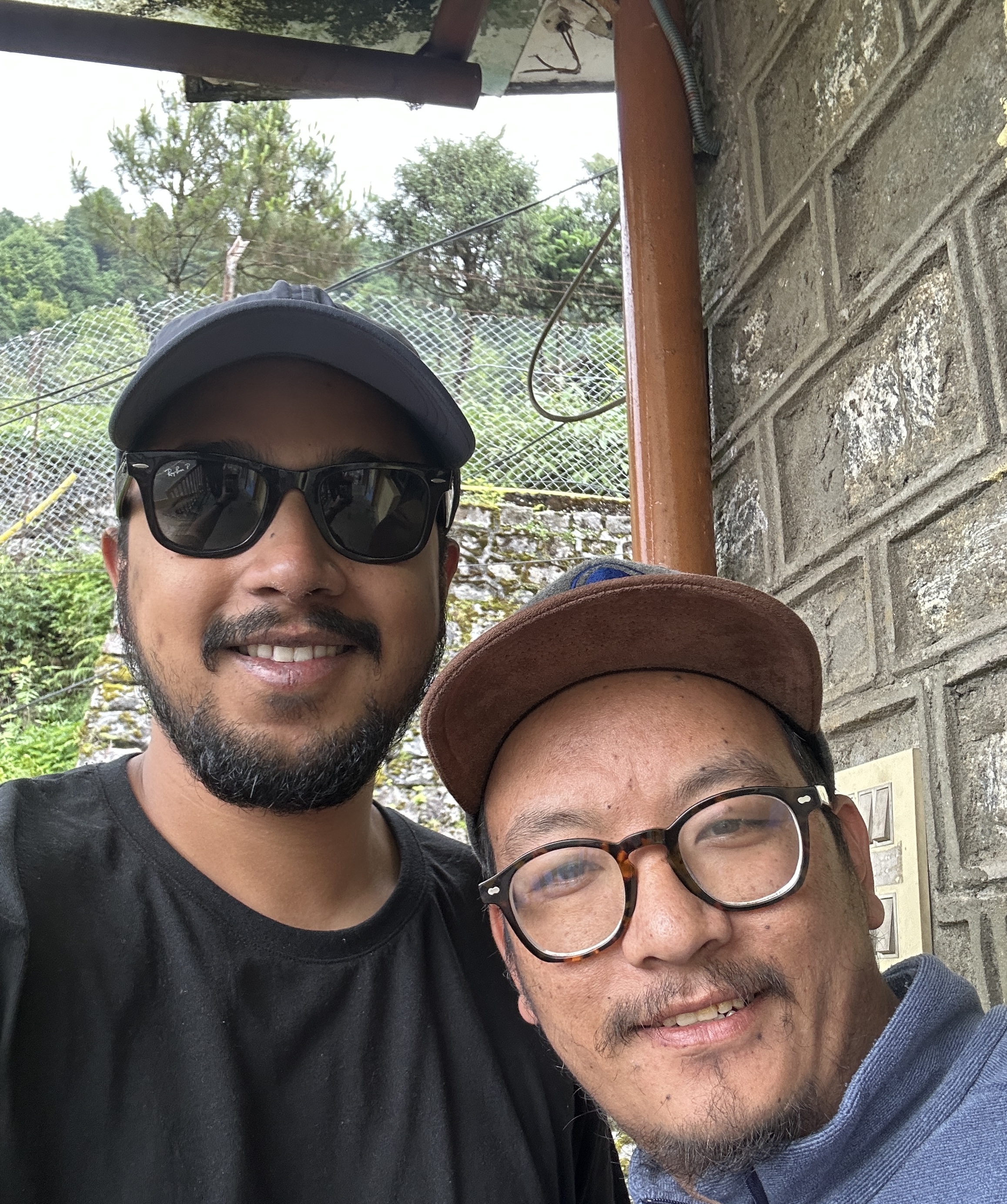
In Lukla, I met Nima Sherpa. He had a hotel there, and a bar that had been around for decades. He opened it for me. We had drinks, watched football, and the last night in the mountains turned into a celebration.
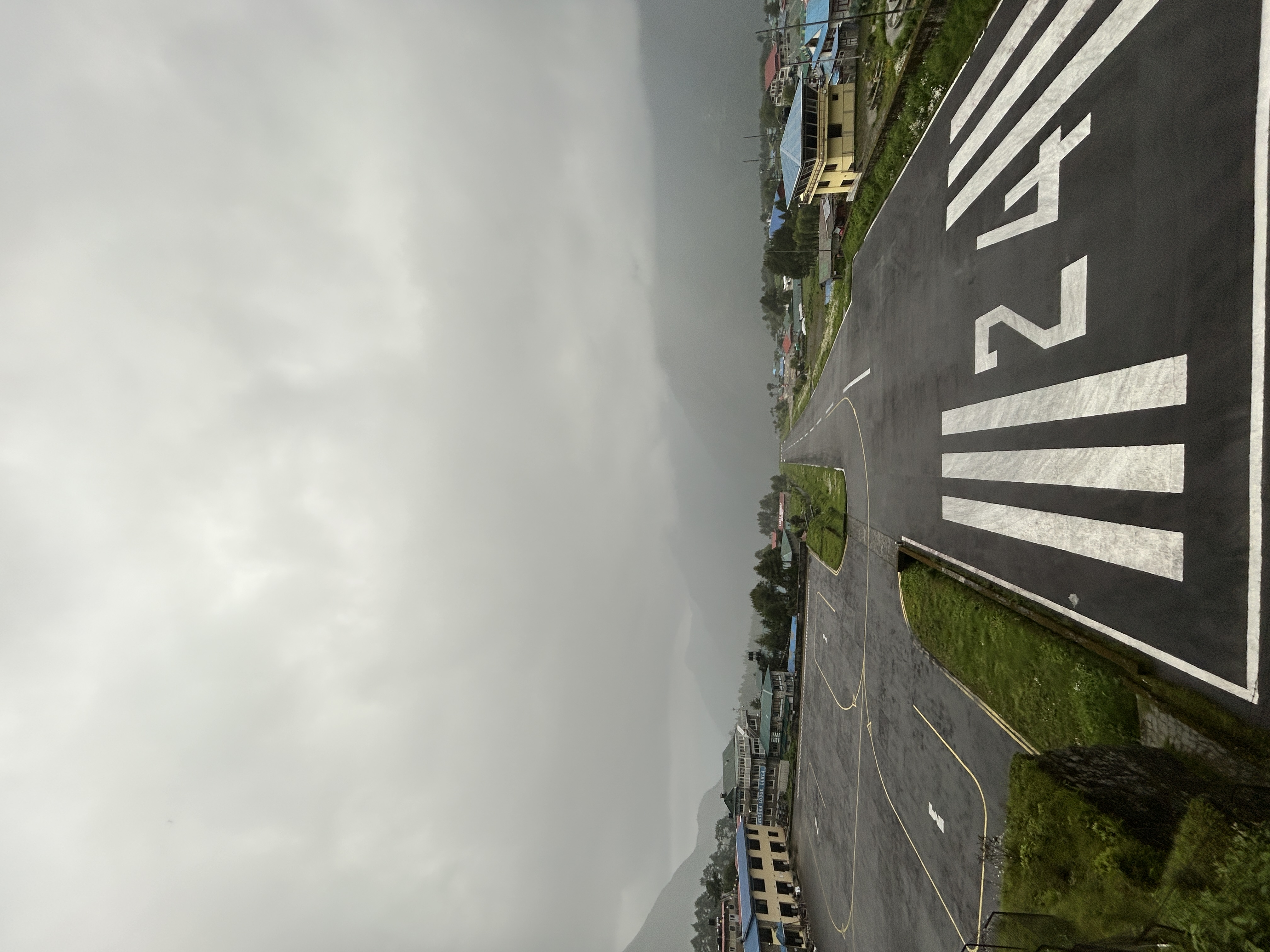
By morning, rain and low cloud were troubling the flights. Nima walked with me to the airport. We waited for an hour, then heard that the flight would not go. I went back to the property, half relieved to have a little longer.
About half an hour later, Nima came to find me. The plane had left Kathmandu. My flight was on. I gathered my things with half a heart and went back to the runway.
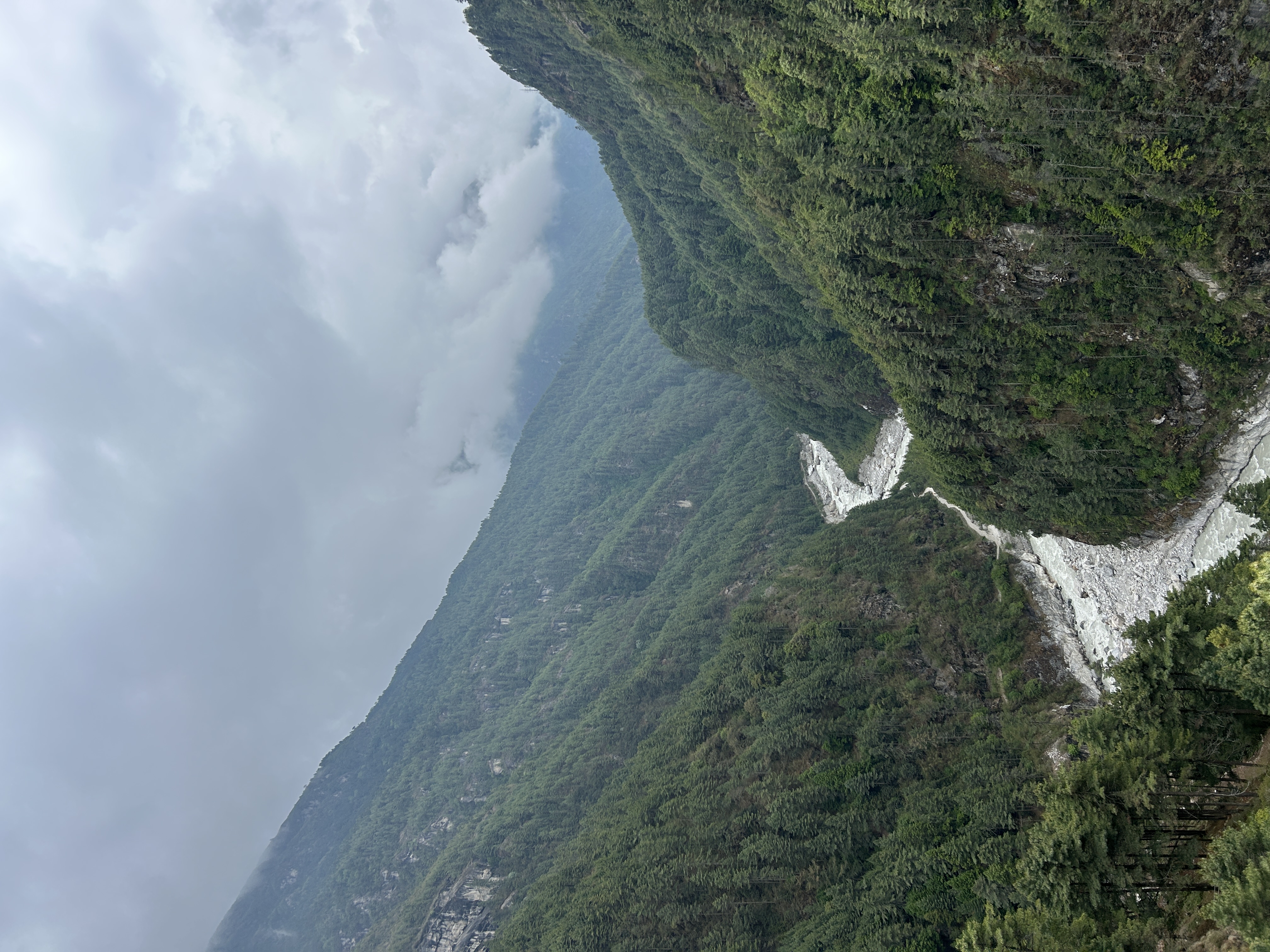
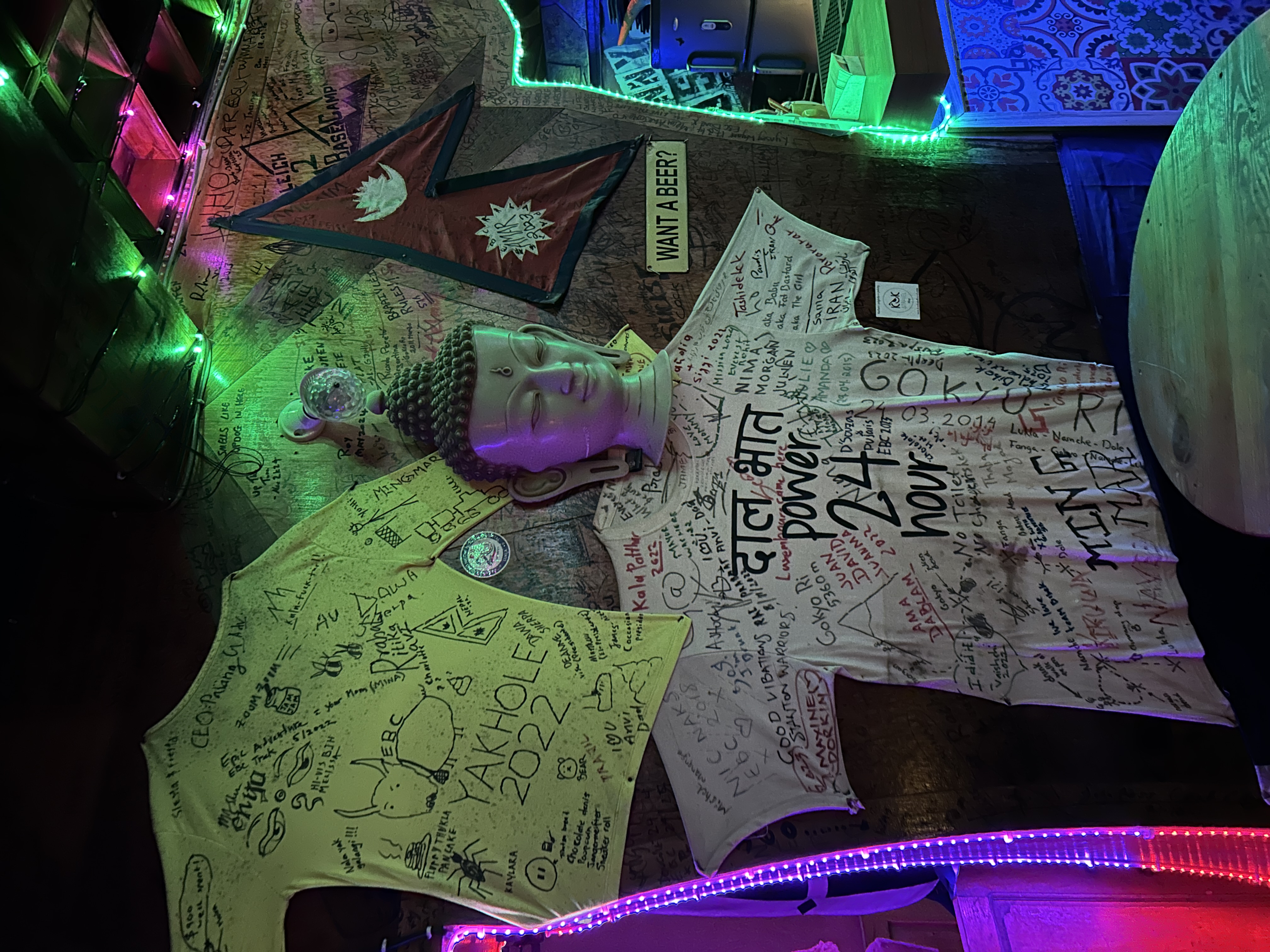
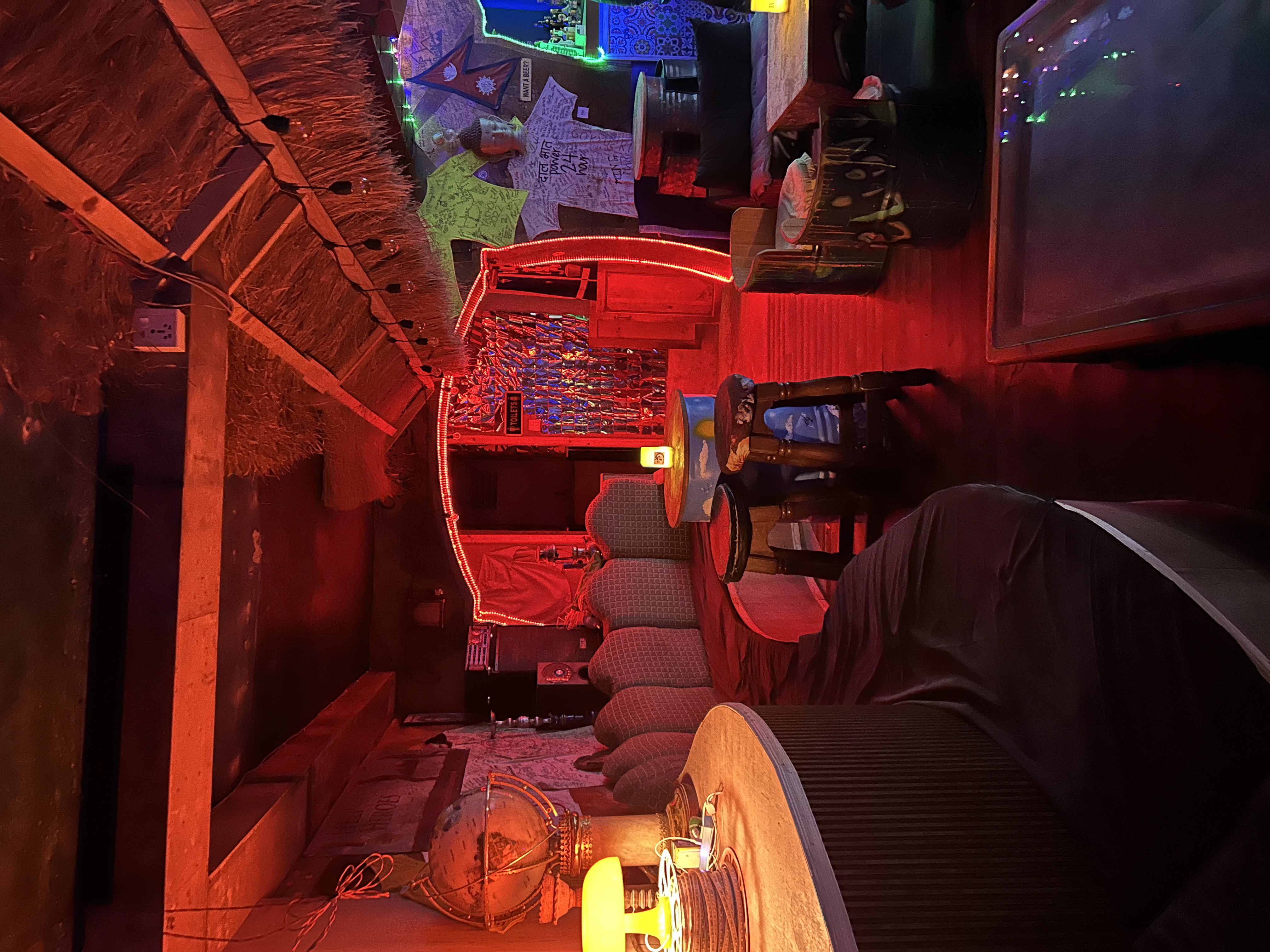
Nima opened the bar for me. I remember the welcome as much as the drink.
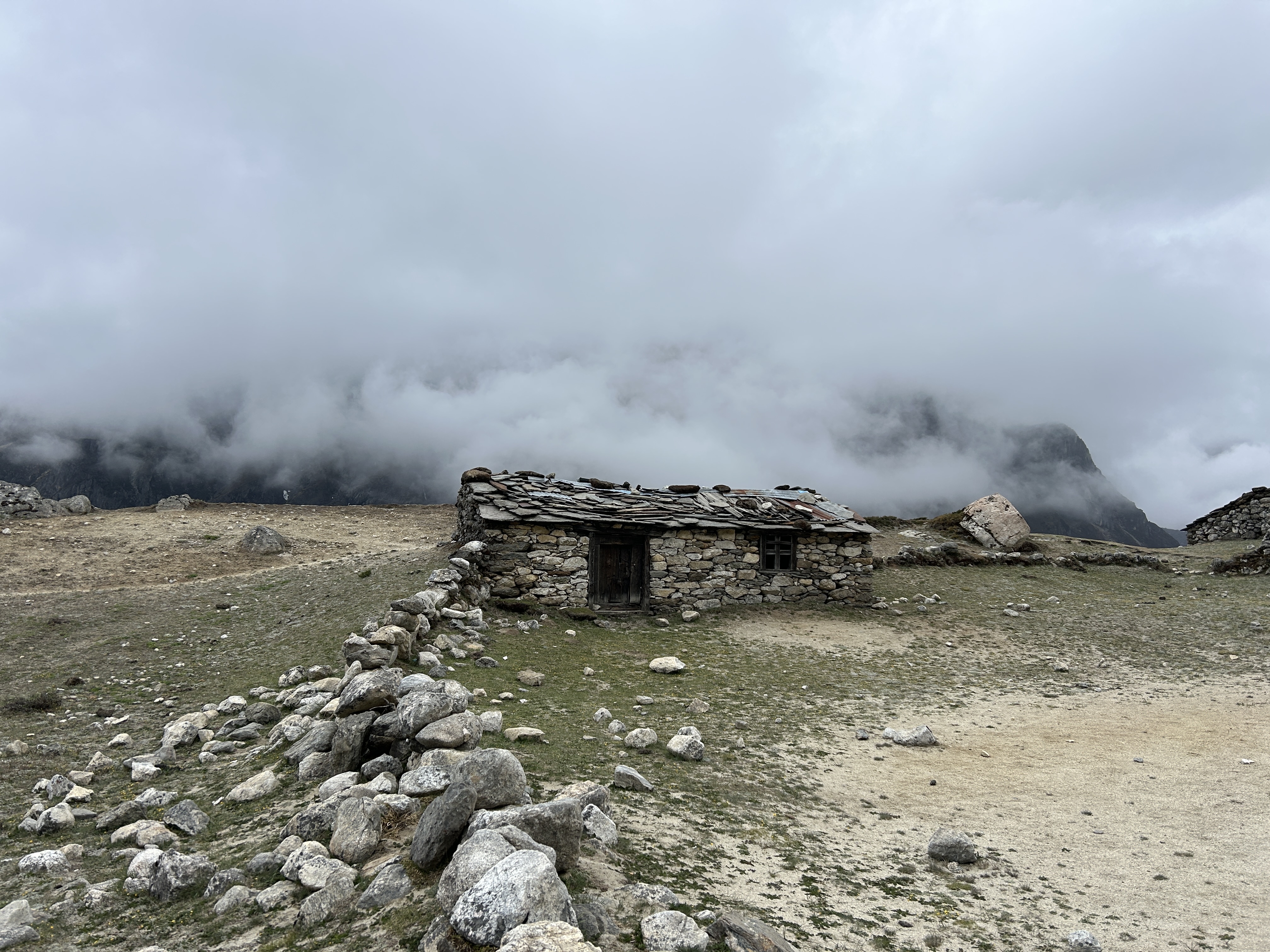
A wet runway, low cloud, and a little more time in Lukla.
14 / Lukla → Kathmandu
I came back
with something quieter.
The flight took me out of the mountains. From a window, the places I had crossed on foot were already becoming a memory.
I had set off feeling low, with a body that was ill and a plan made in a rush. Along the way I had found hard climbs, warm rooms, good food, and kindness from people who owed me nothing.
This journey strengthened something in me. It gave me conviction, and a kind of peace I could not have planned for. I went to see Everest. I came home feeling more able to be myself.
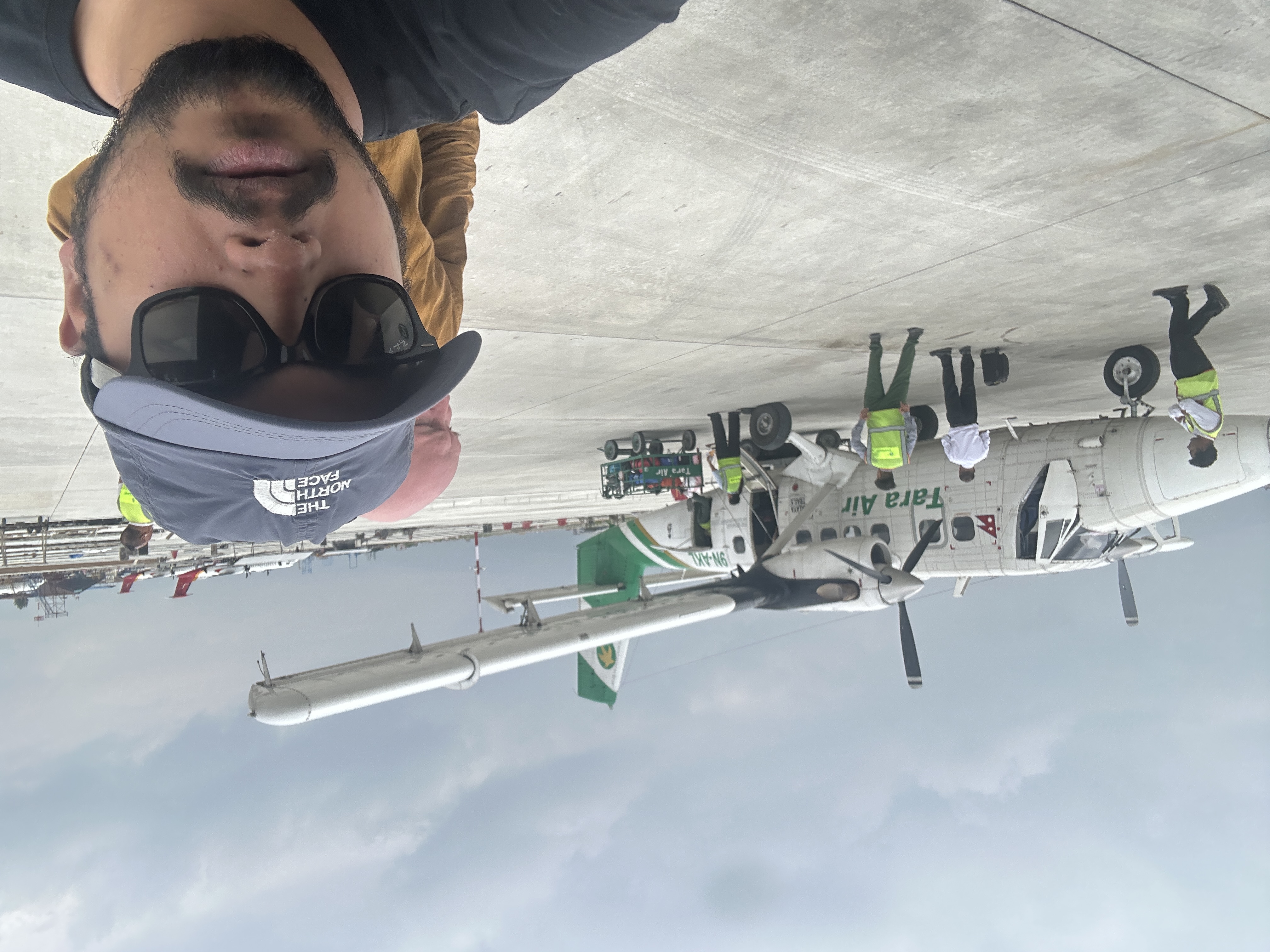
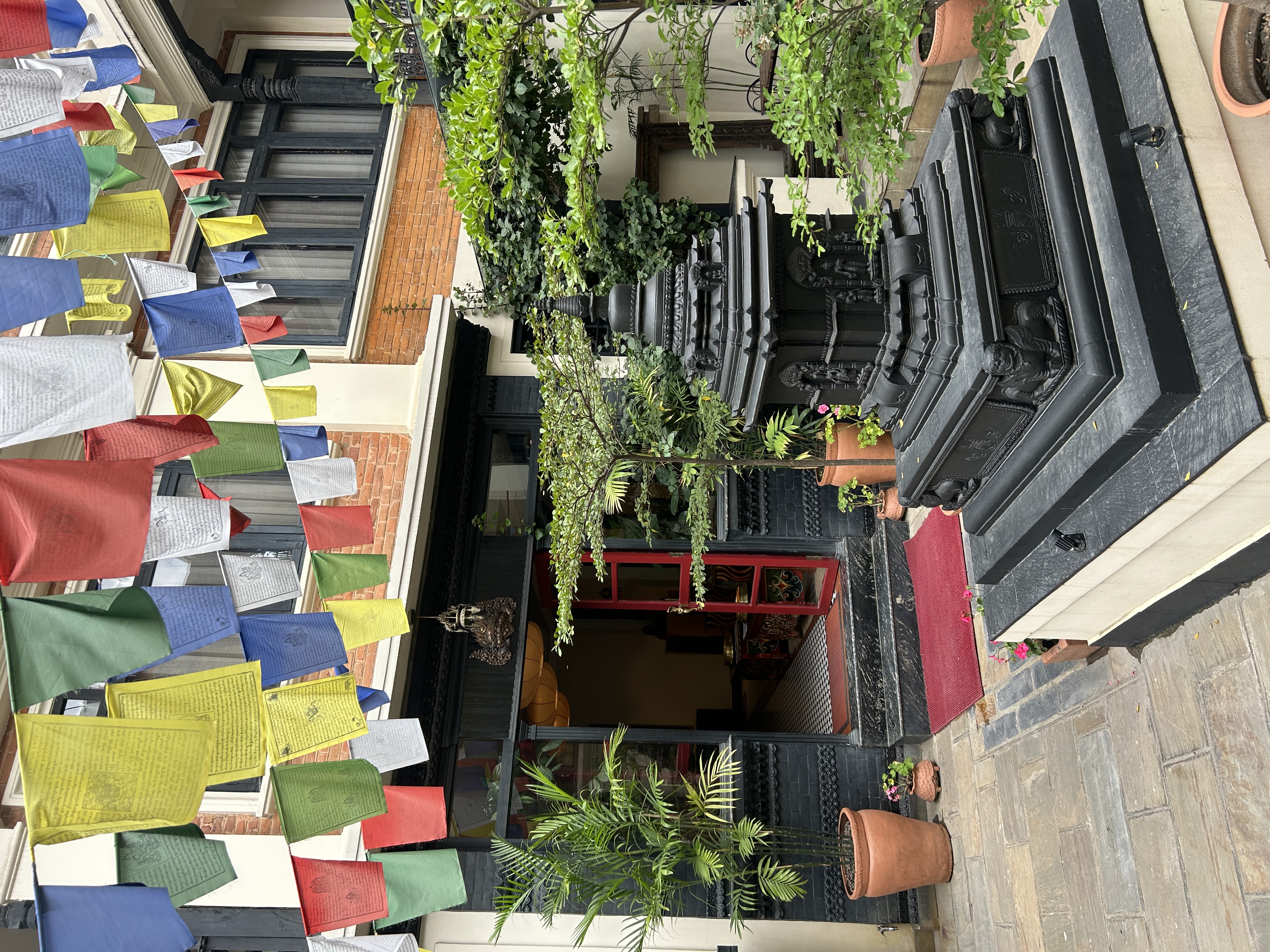
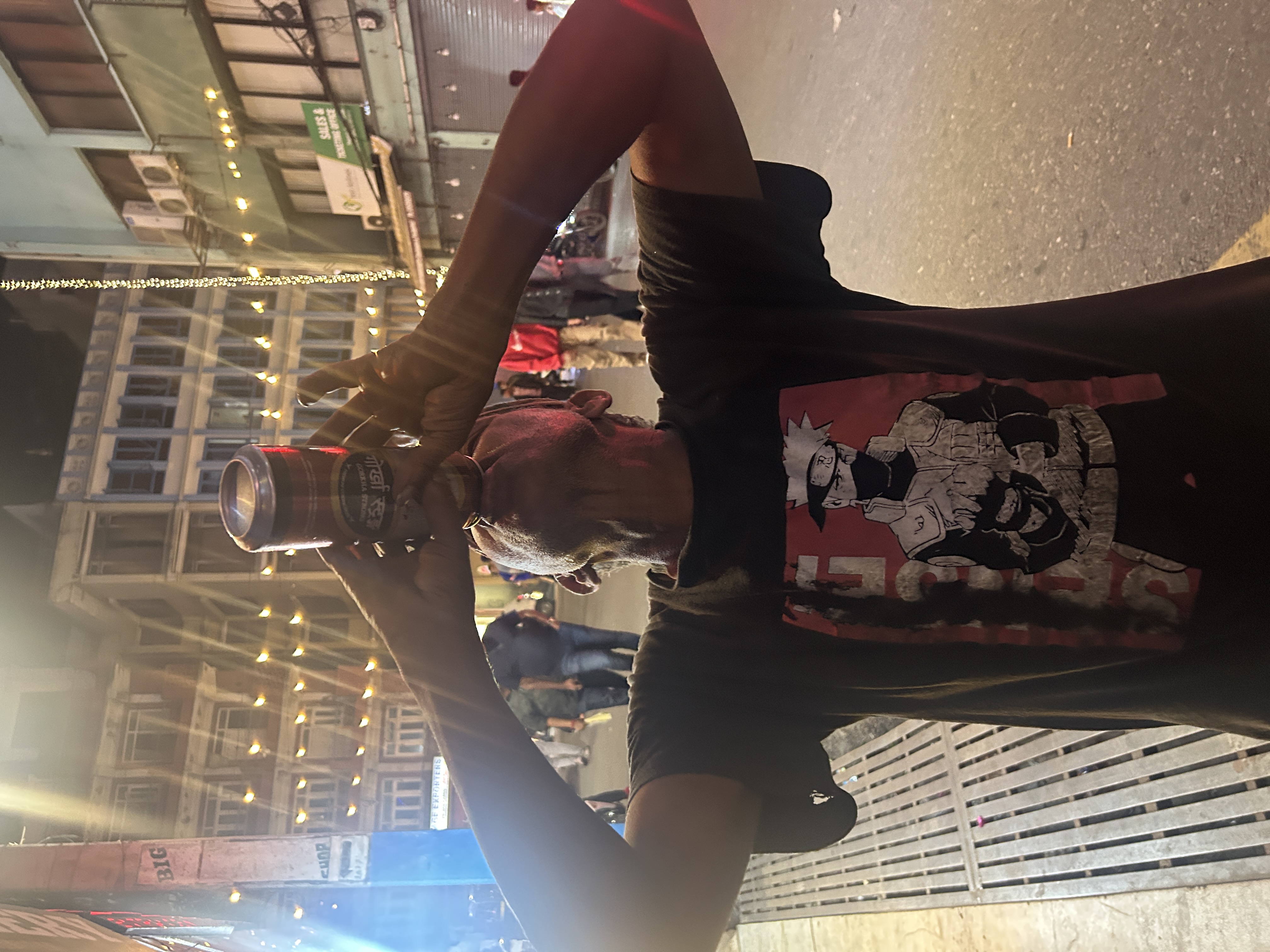
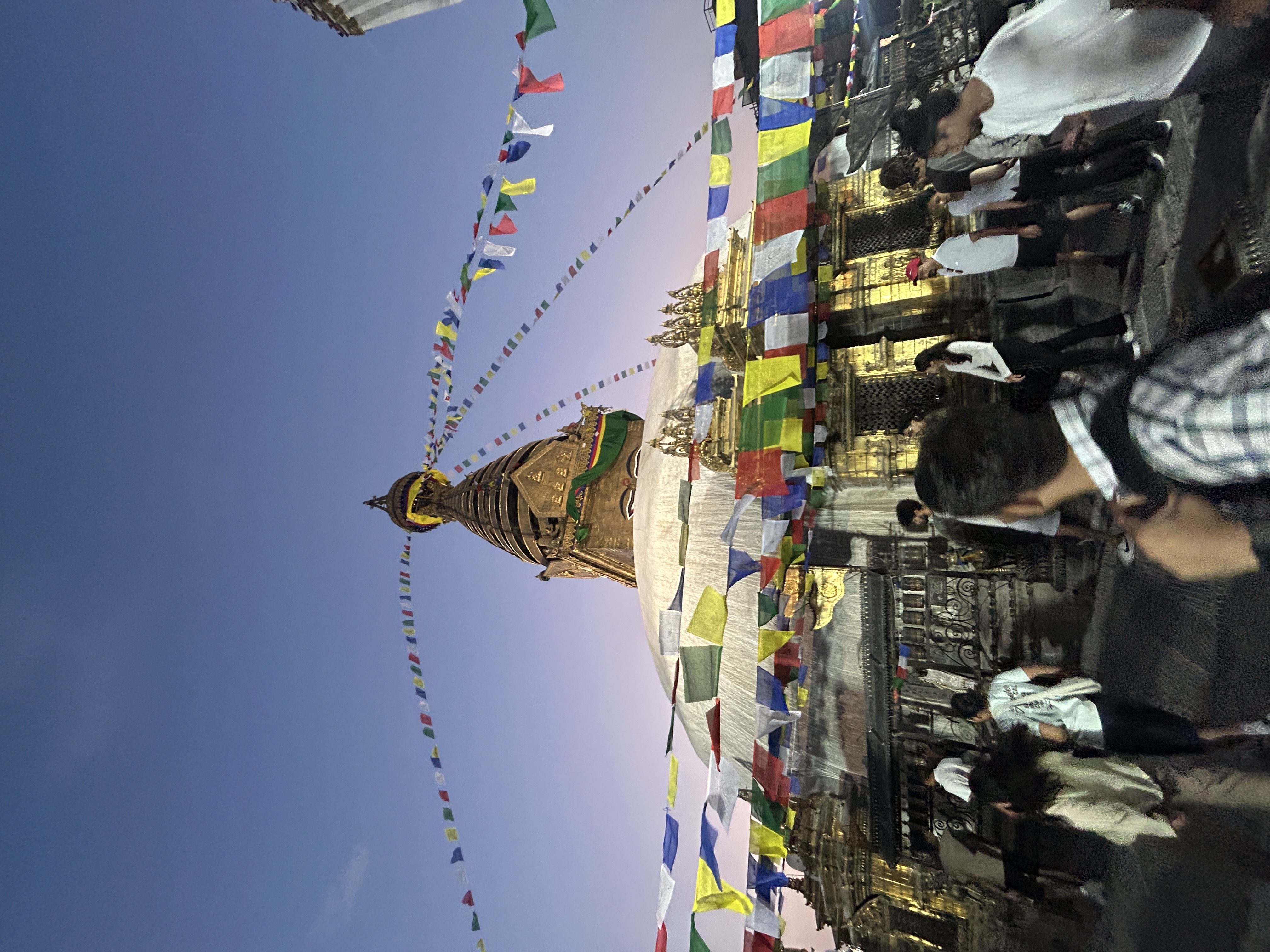
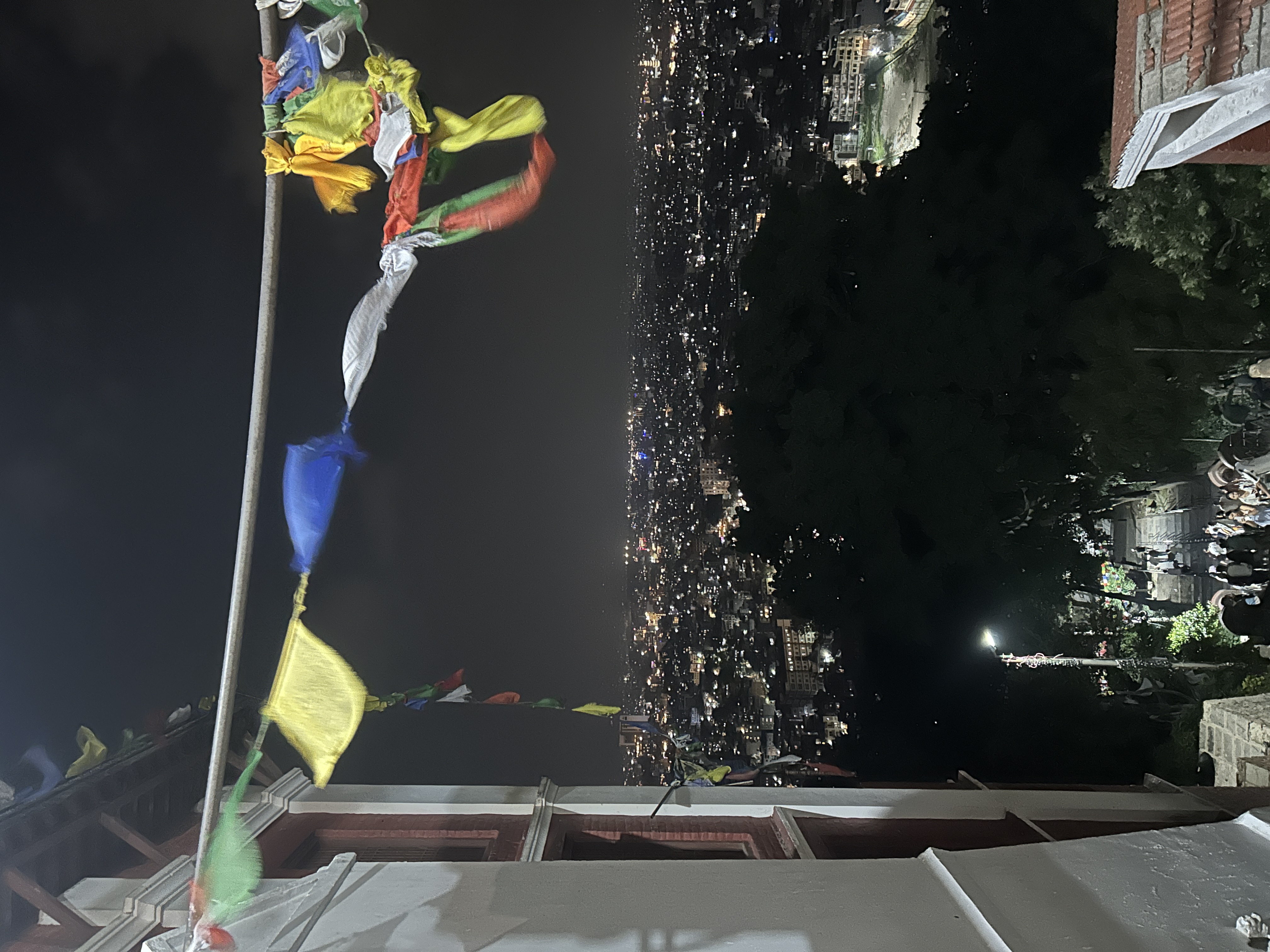
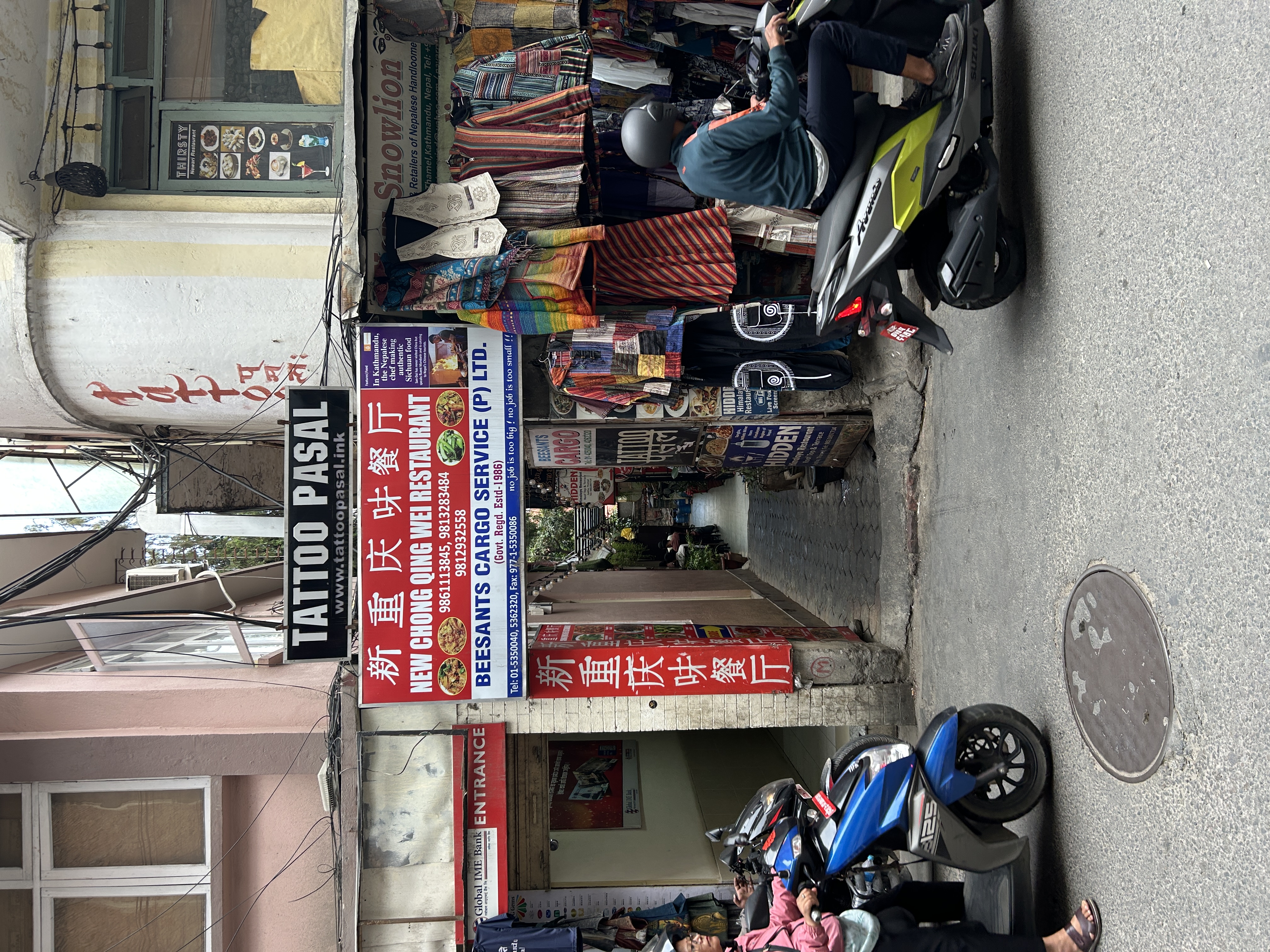
Back in Kathmandu, I was still carrying the quiet of the mountains.
A little light at the end of a very long walk.
The moving memories / June 2026
Some moments
need their own time.
27 complete films, in the order I travelled. The landing, the crossings, the ice and the morning light. Open a film and use the player’s sound control to hear the original audio.
A tiny plane, a mountain runway, and the beginning of everything I had come for.
On the ground in Lukla. The cold air made it all feel real.
I had climbed into Namche in the dark. This was the world waiting above it.
My first Himalayan monal. A little colour worth stopping for.
Some stretches gave me only the next few steps. That was enough to keep walking.
I kept looking through the cloud. Every opening felt like a gift.
All that green between one hard climb and the next.
Outside Tengboche monastery. Inside, I put the camera away and stayed a while.
The river kept moving beneath me. I had another climb ahead.
Higher now. Fewer trees, more space, a slower breath.
Another bridge, another brief pause above the water.
The valley had changed. I was learning to change my pace with it.
Dingboche ahead. A bed, a warm meal, and permission to stop.
Above Thukla, I walked more quietly among the memorials.
I had never stood this close to anything on this scale.
Beside the Khumbu Glacier, I kept finding reasons to stop and look.
Before the sun, I could already see what the clouds had hidden.
I stayed. The light kept changing. I had nowhere else I wanted to be.
The same way back, with a whole new world above it.
I walked back with the mountains finally in view.
The trees came back. So did the sound of the river.
Back under the trees, walking into the mist.
Back in Namche, light through the mist.
Nima opened the bar for me. I remember the welcome as much as the drink.
A wet runway, low cloud, and a little more time in Lukla.
Back in Kathmandu, I was still carrying the quiet of the mountains.
A little light at the end of a very long walk.
The selected photographs / June 2026
The whole way.
In my own time.
163 frames, in the order I travelled.
Open a photograph to see its full composition.
Stay with the morning as long as you like.
163 photographs
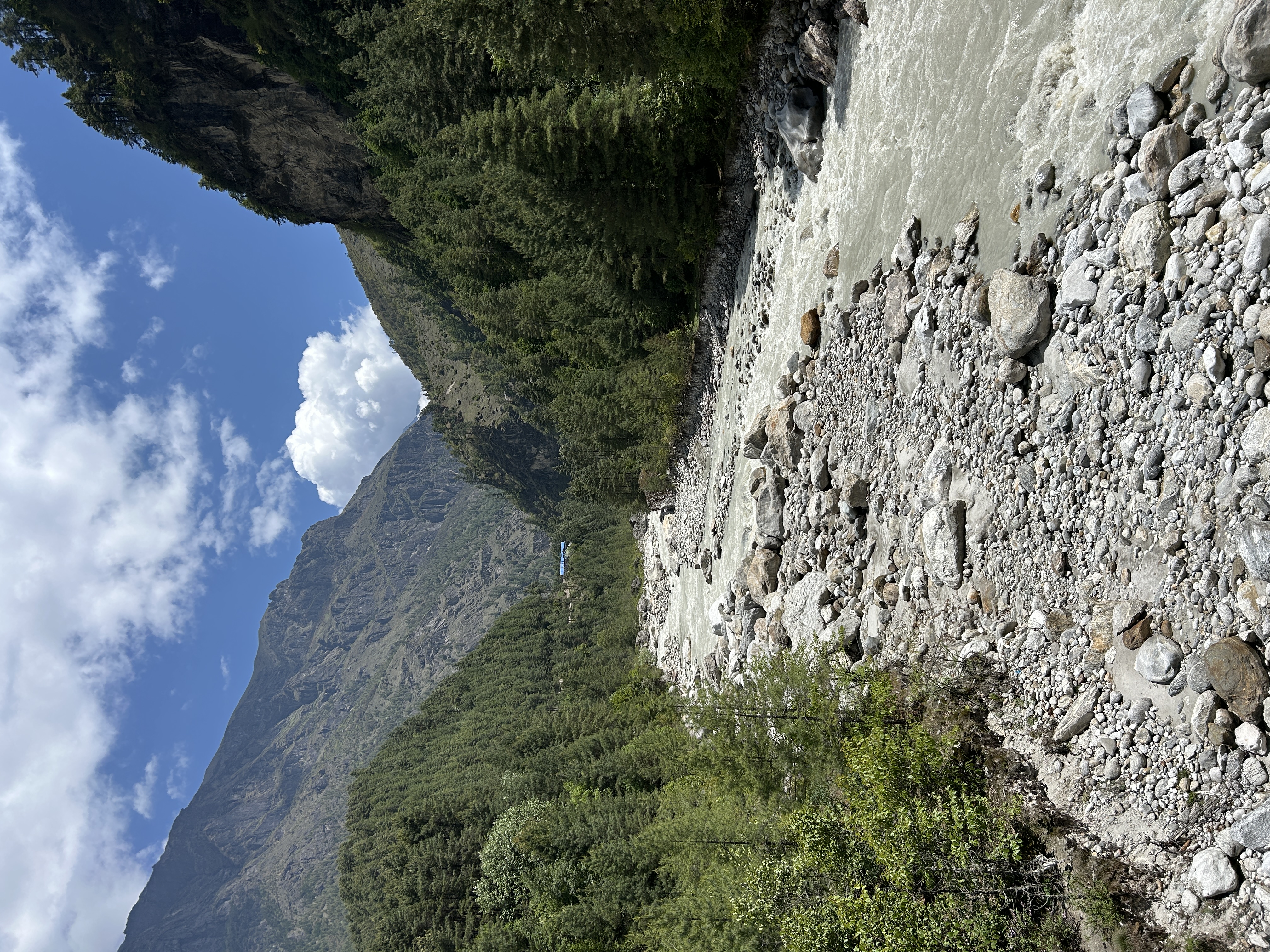
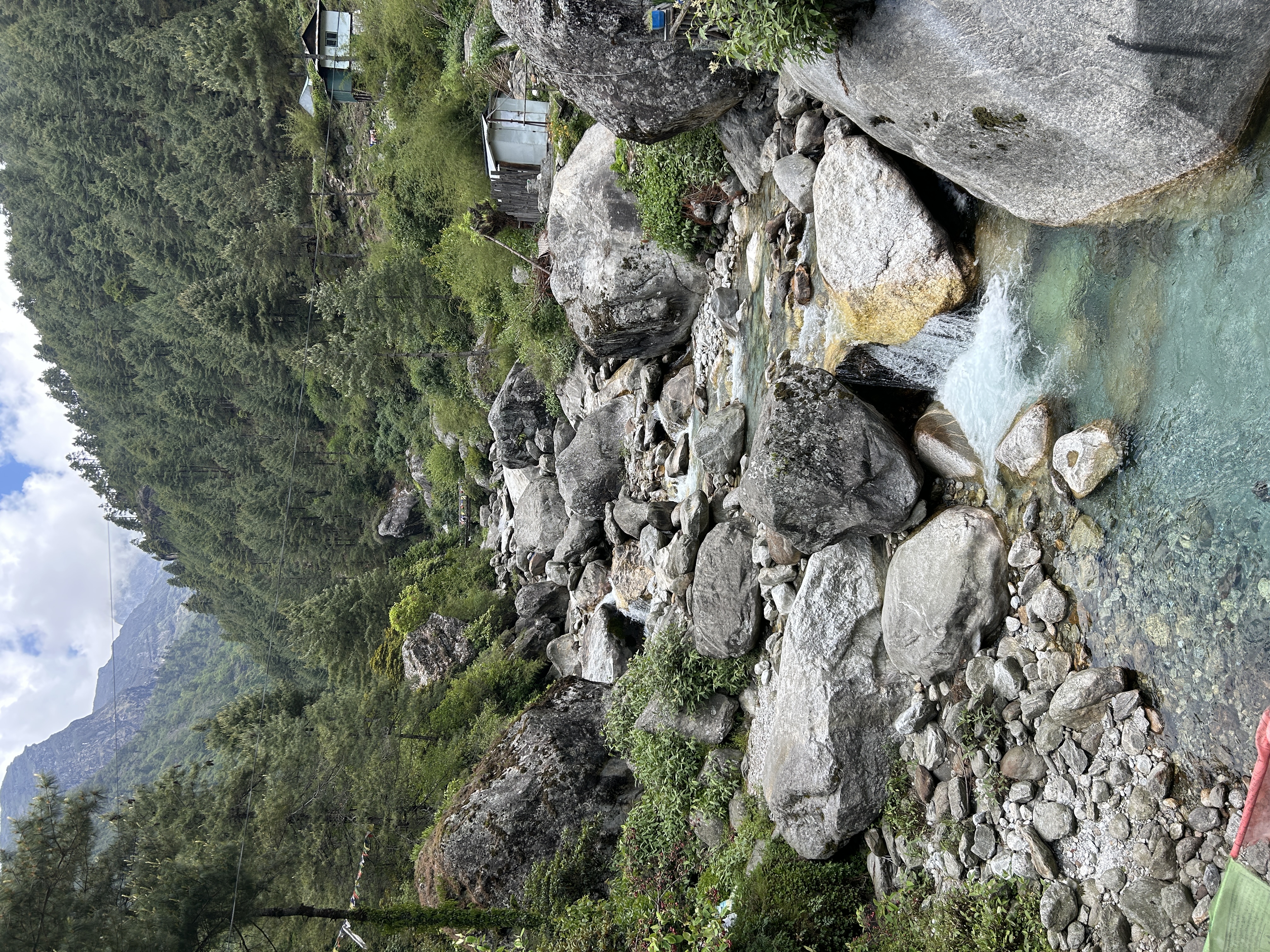
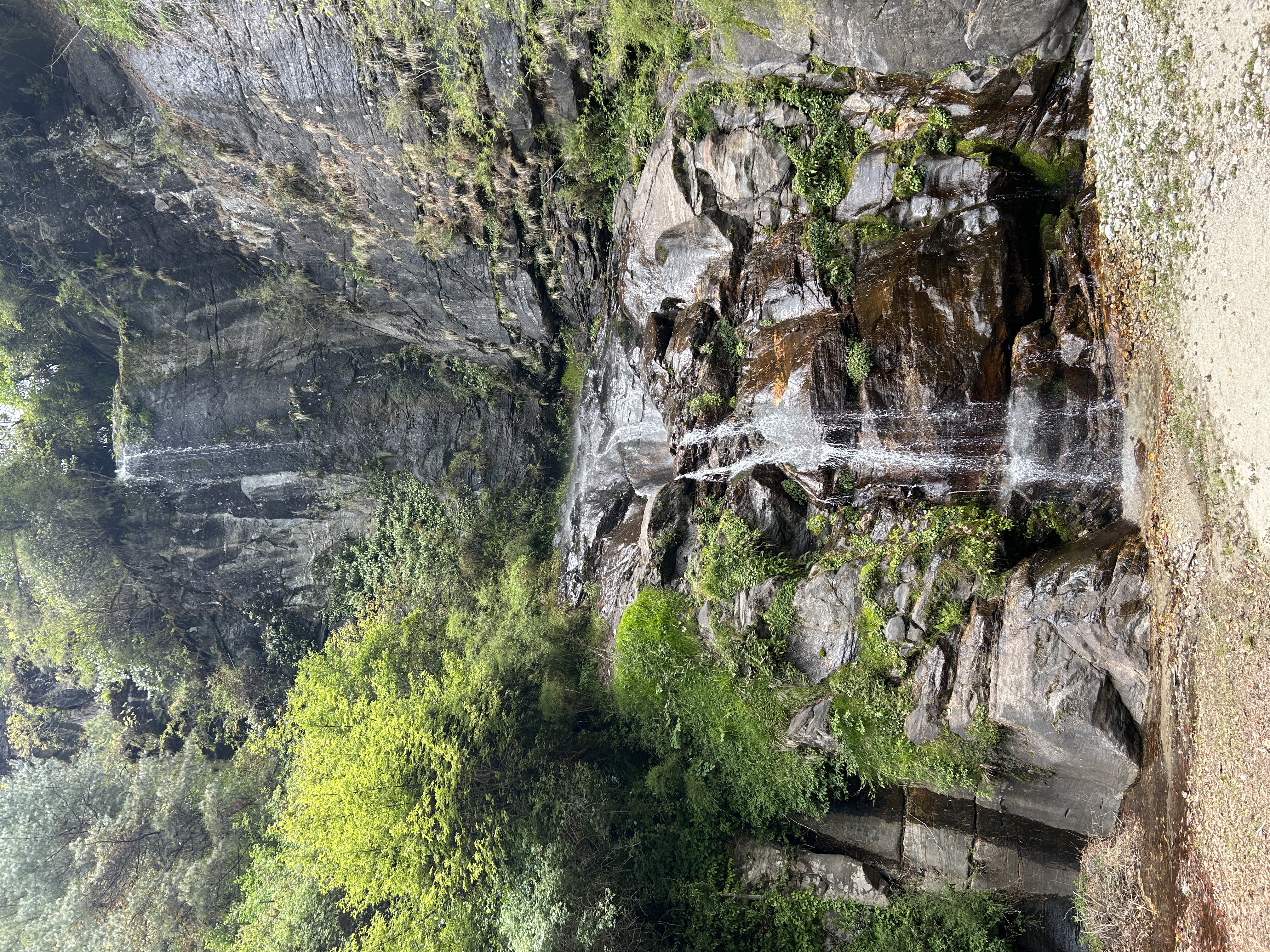
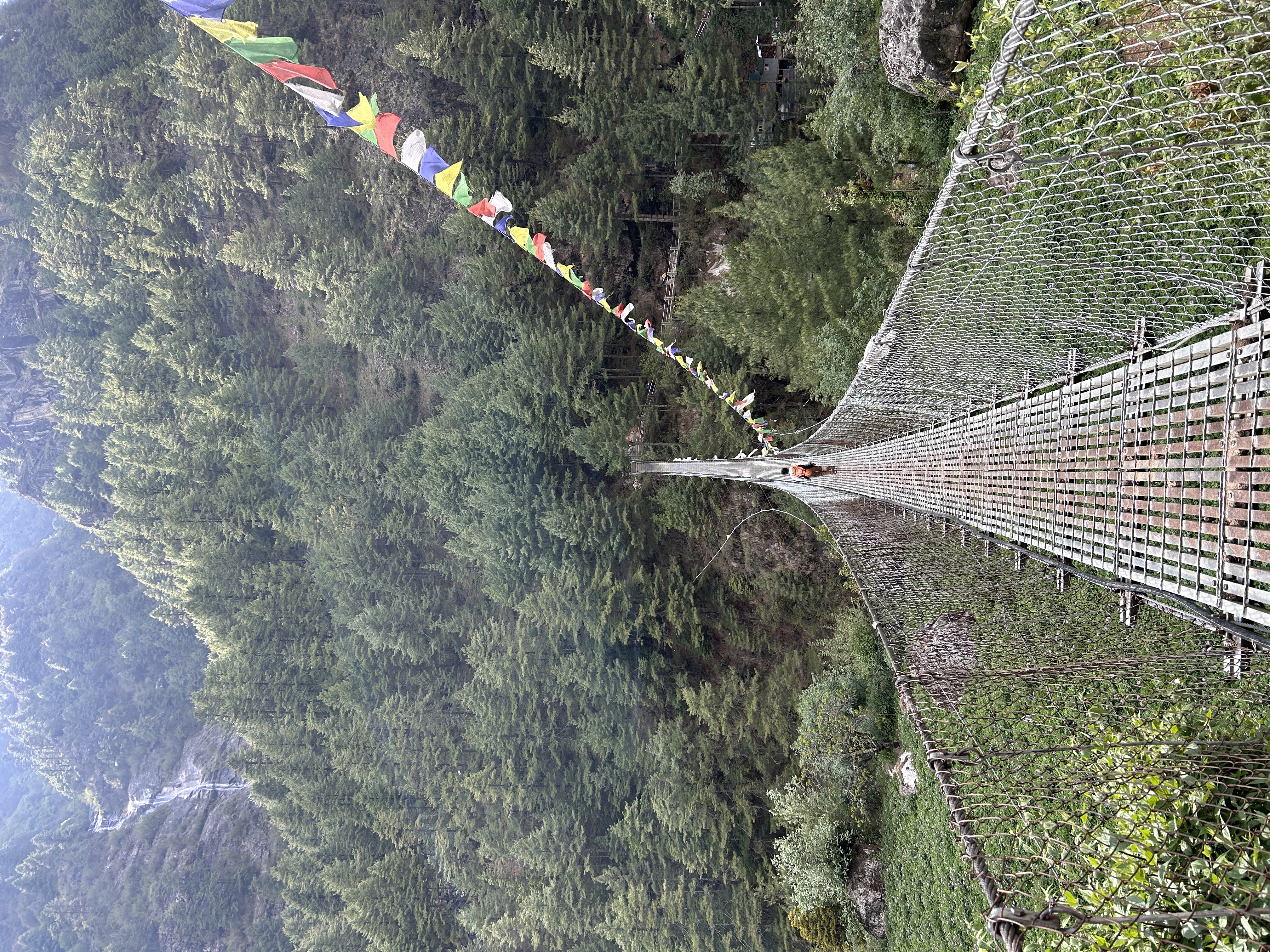
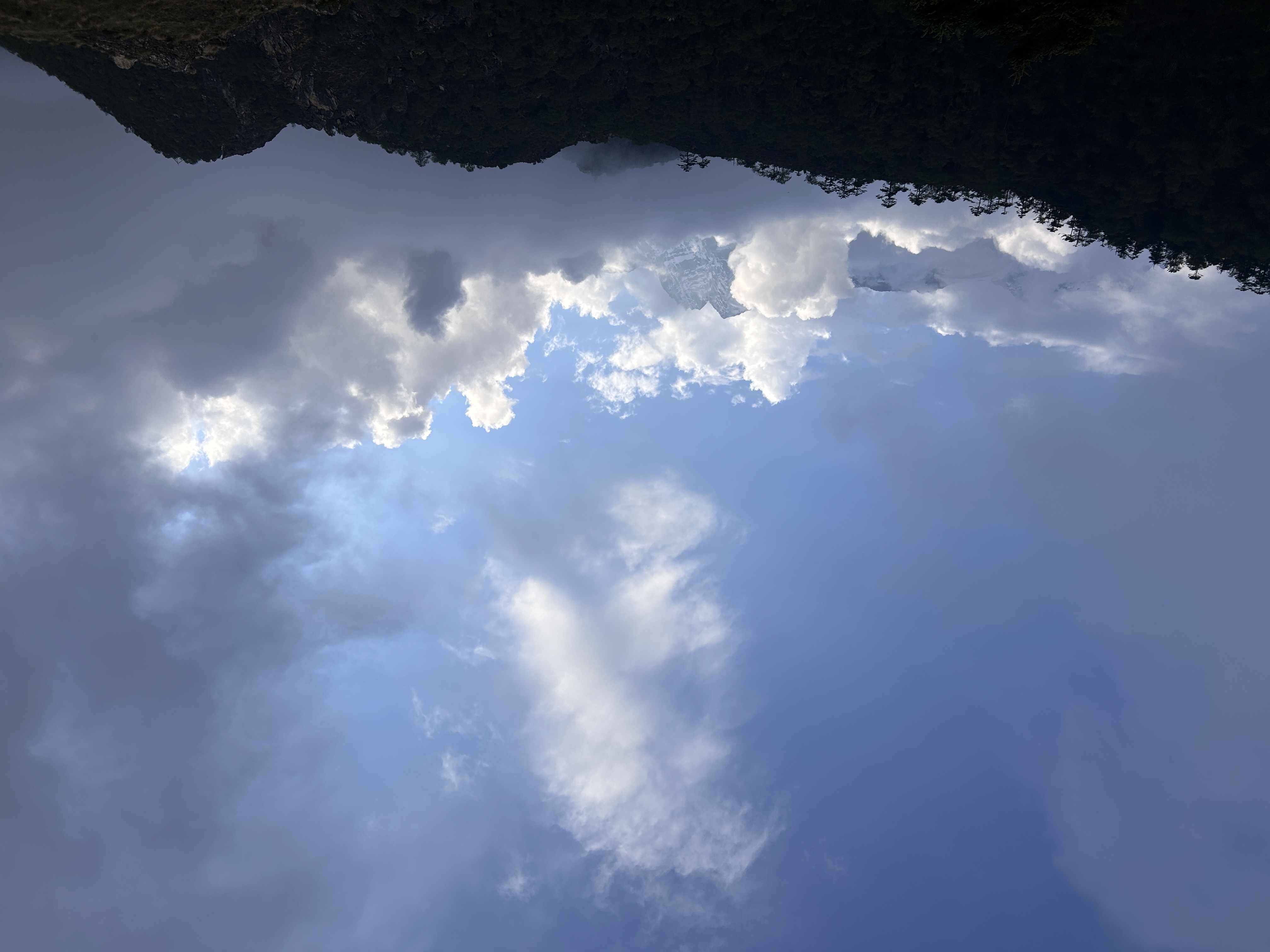
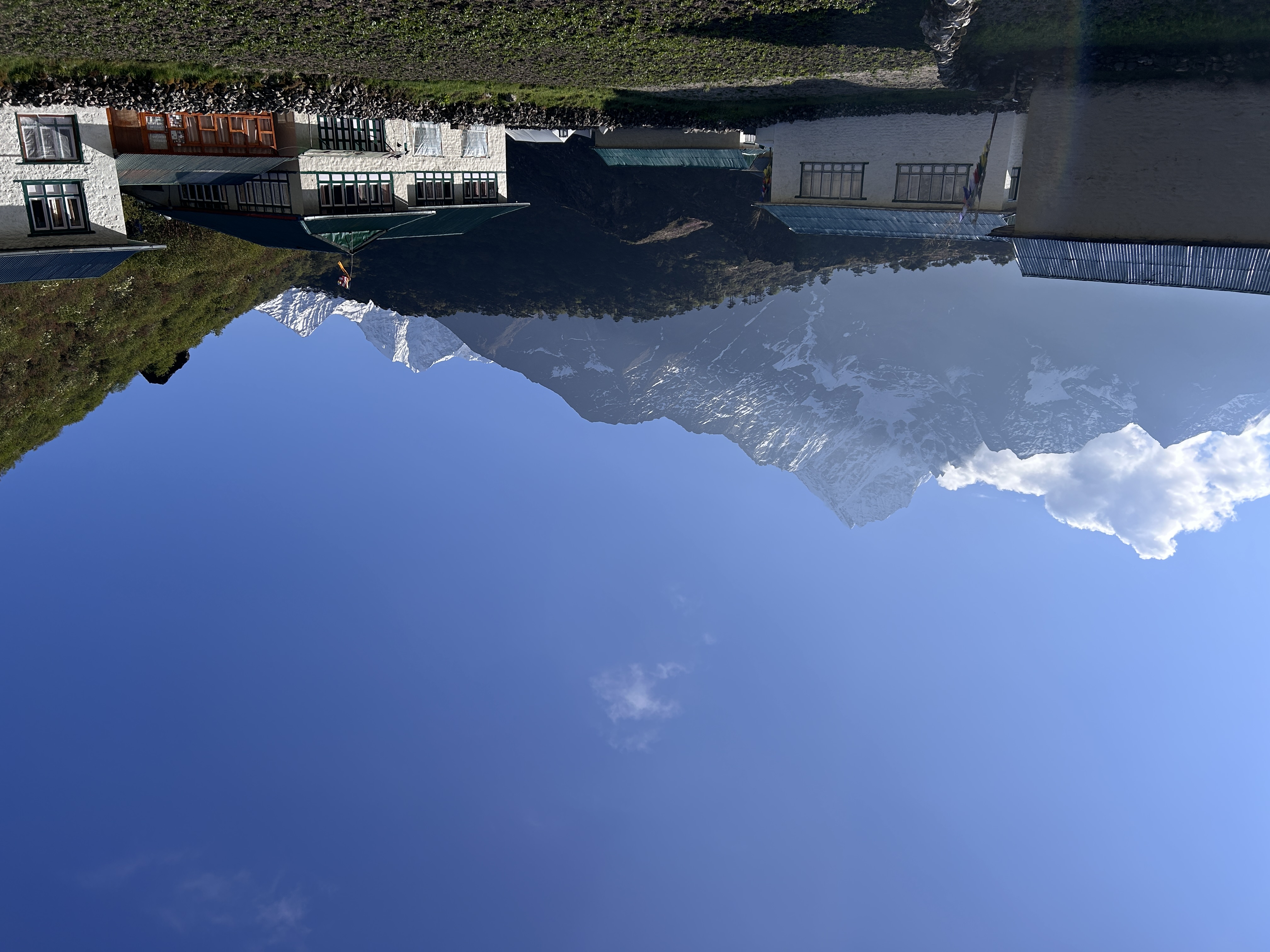
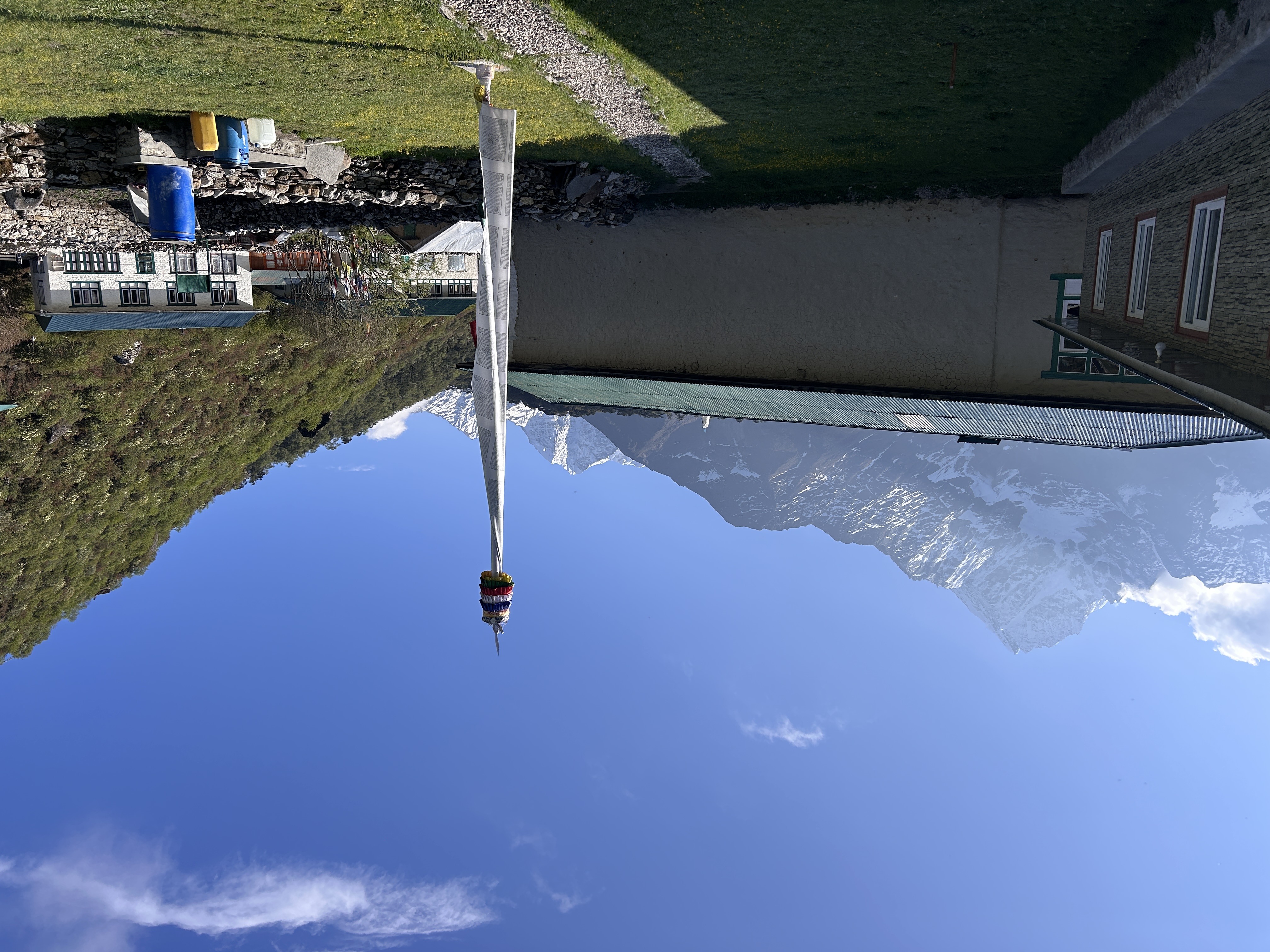
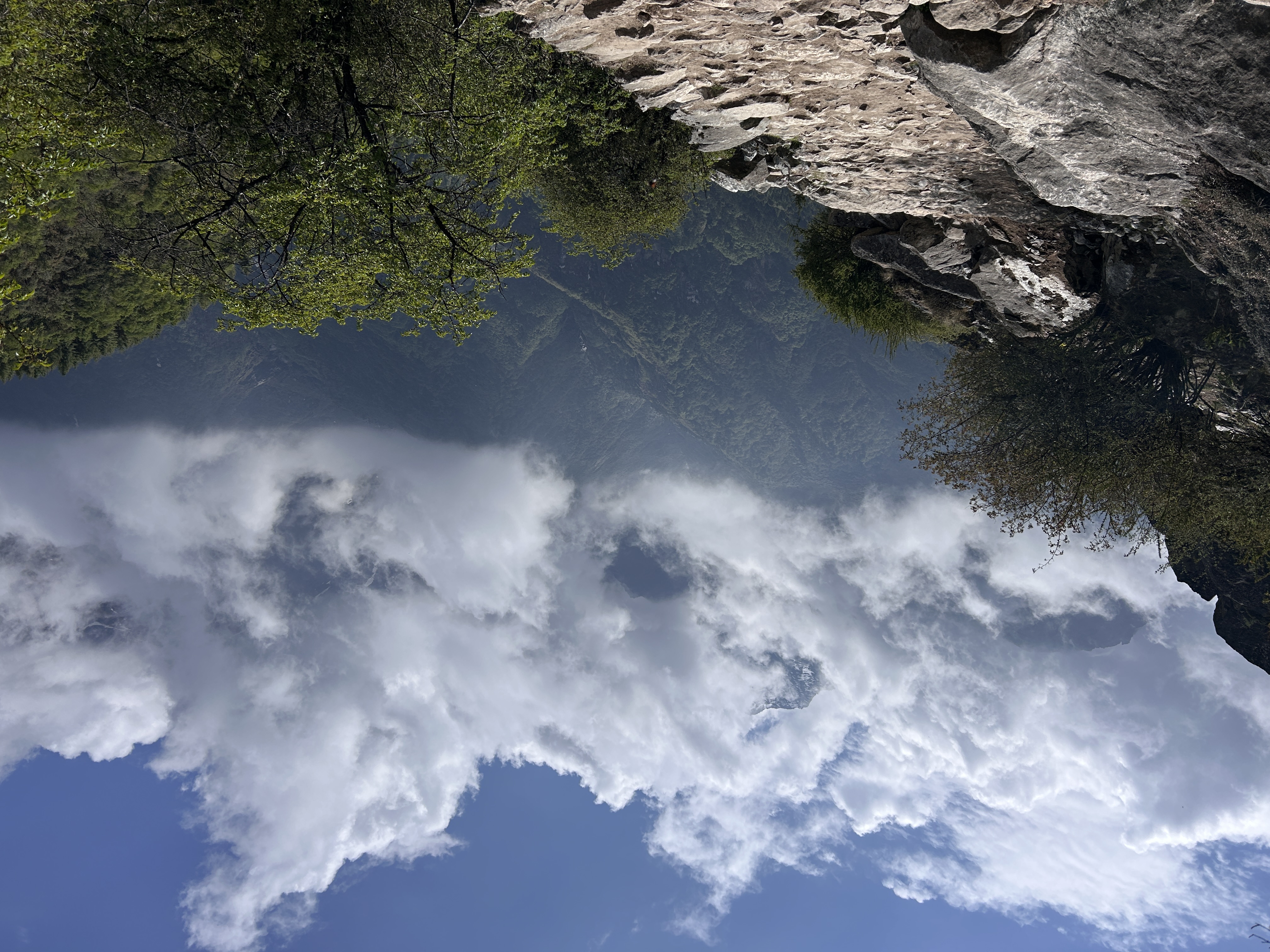
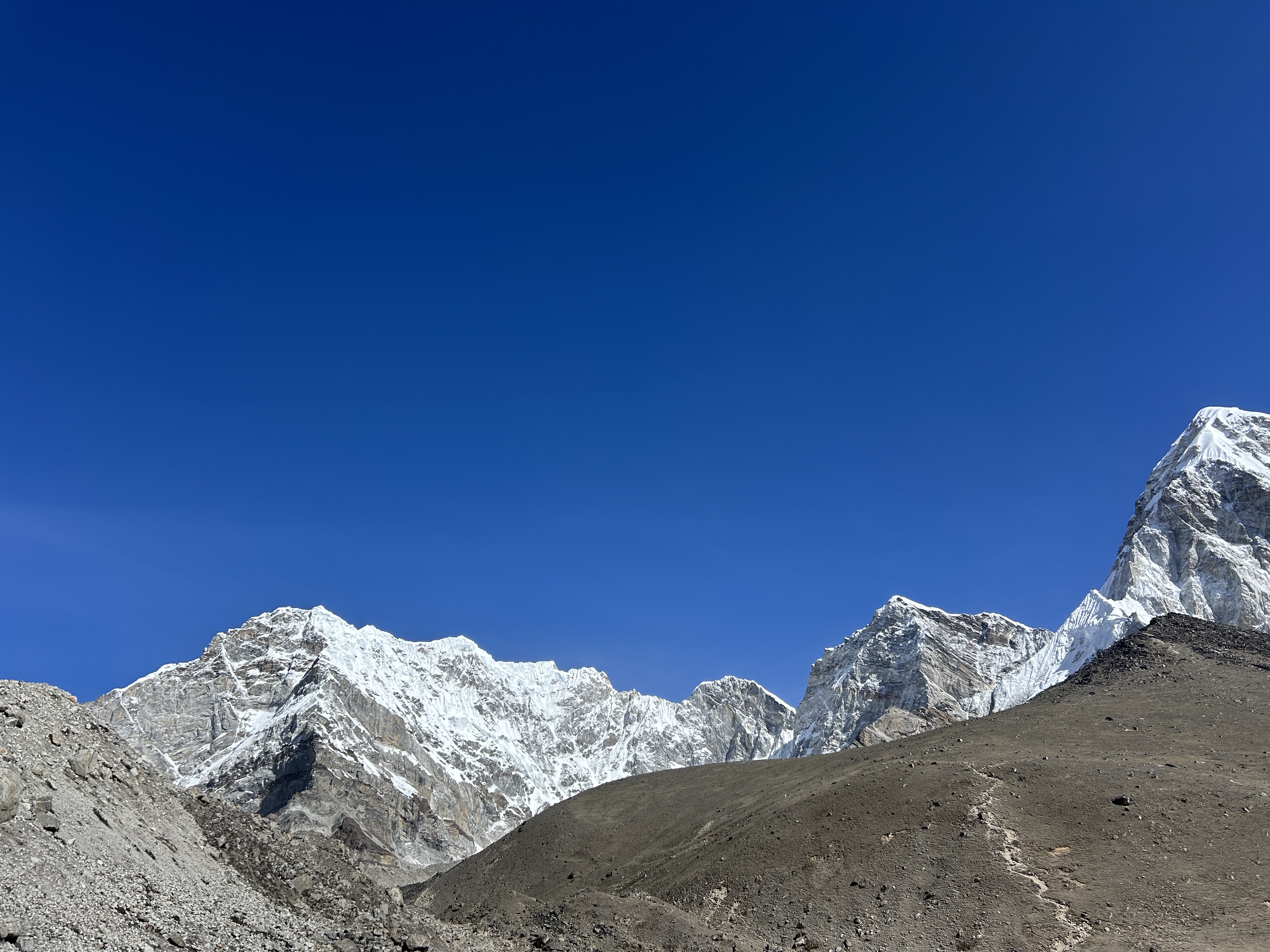
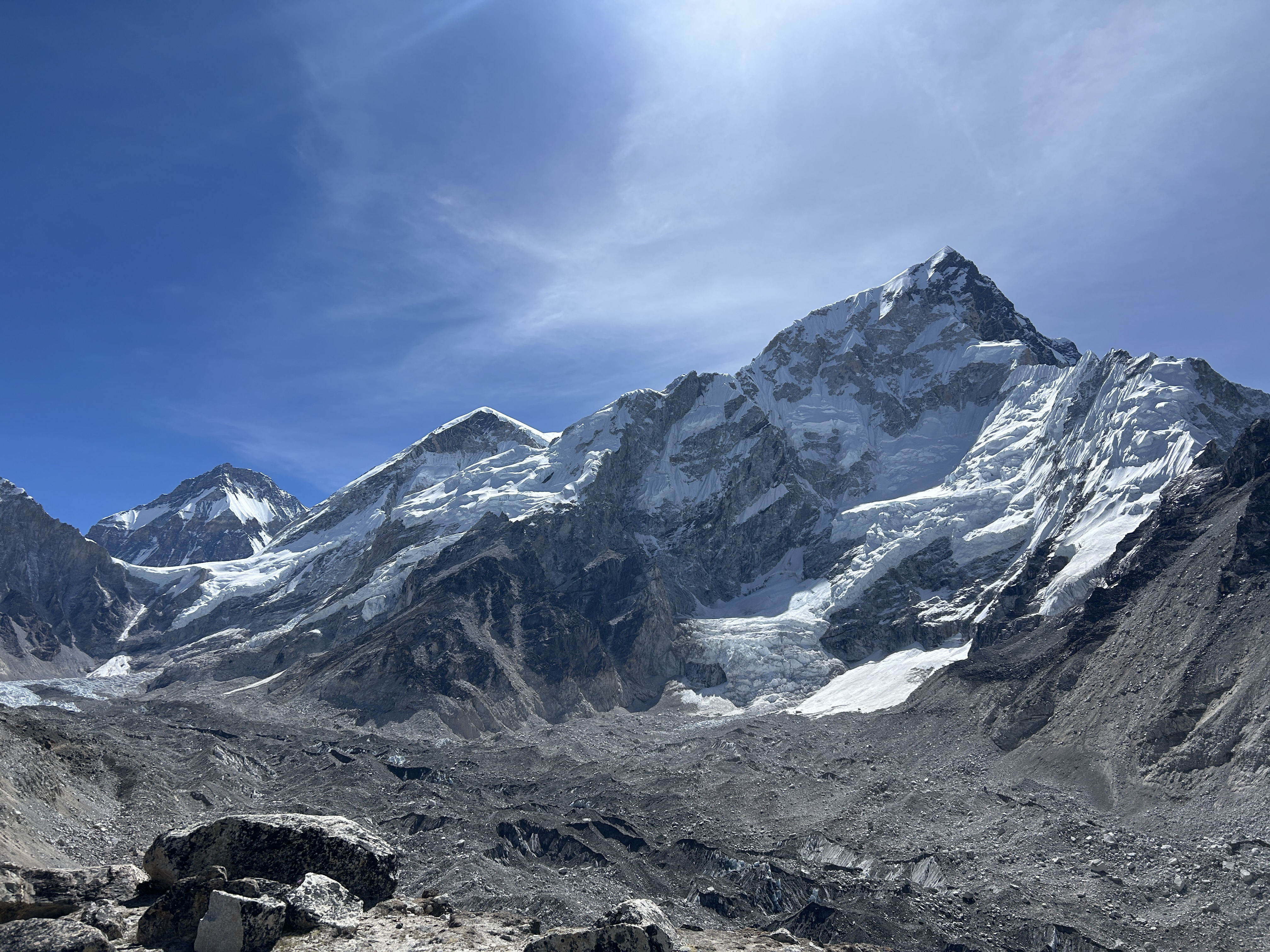
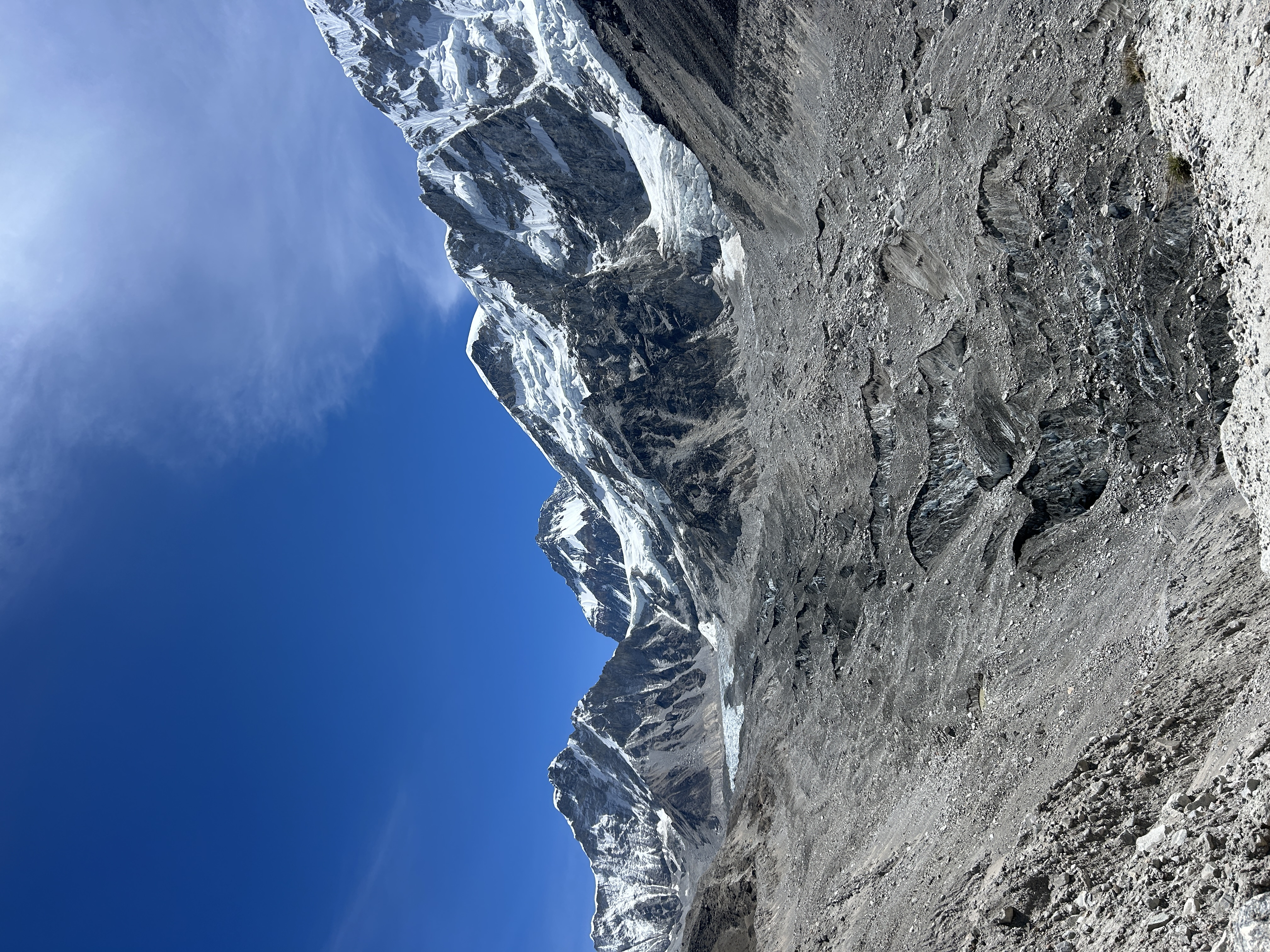
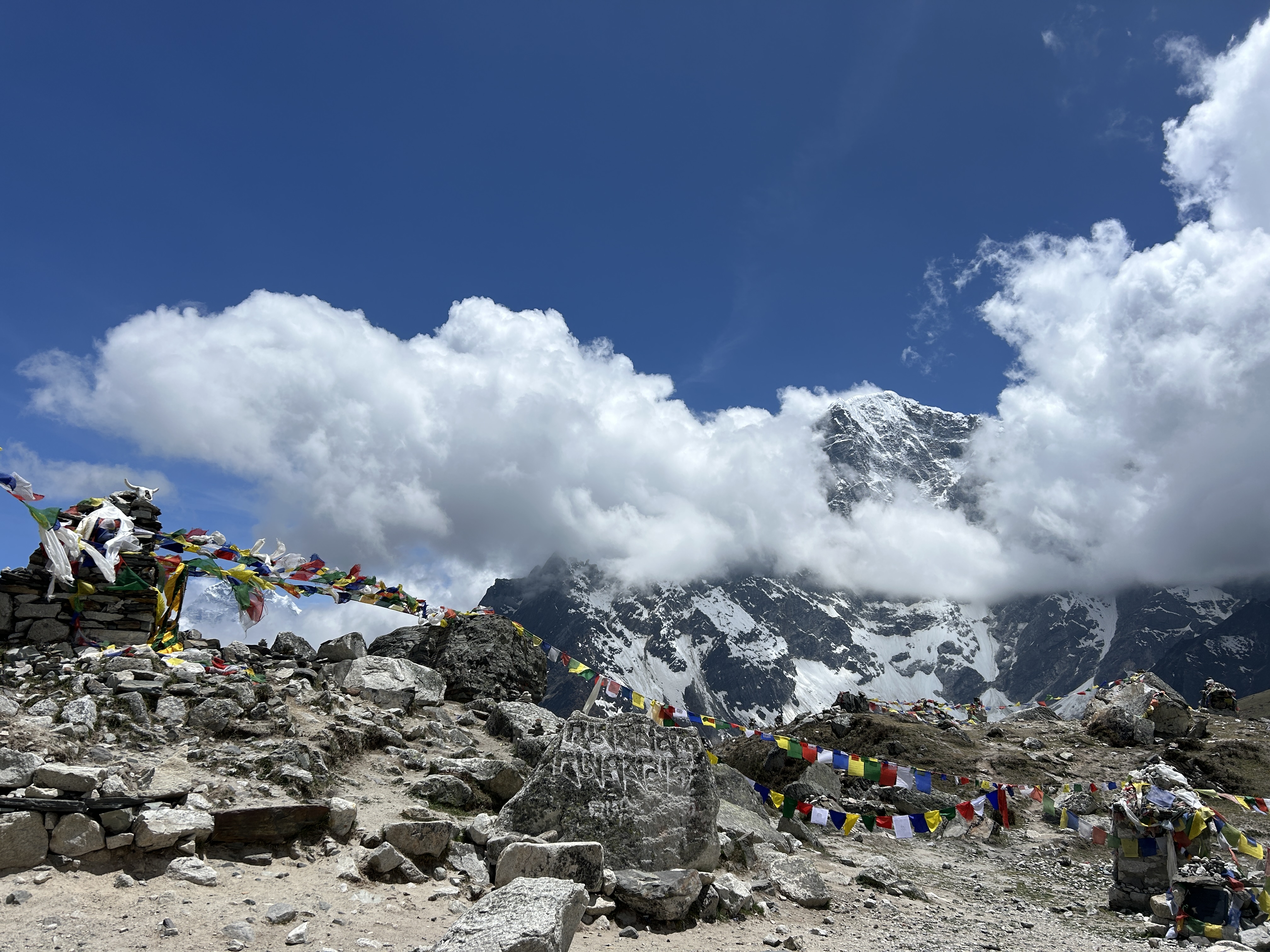
A few notes on the places and peaks
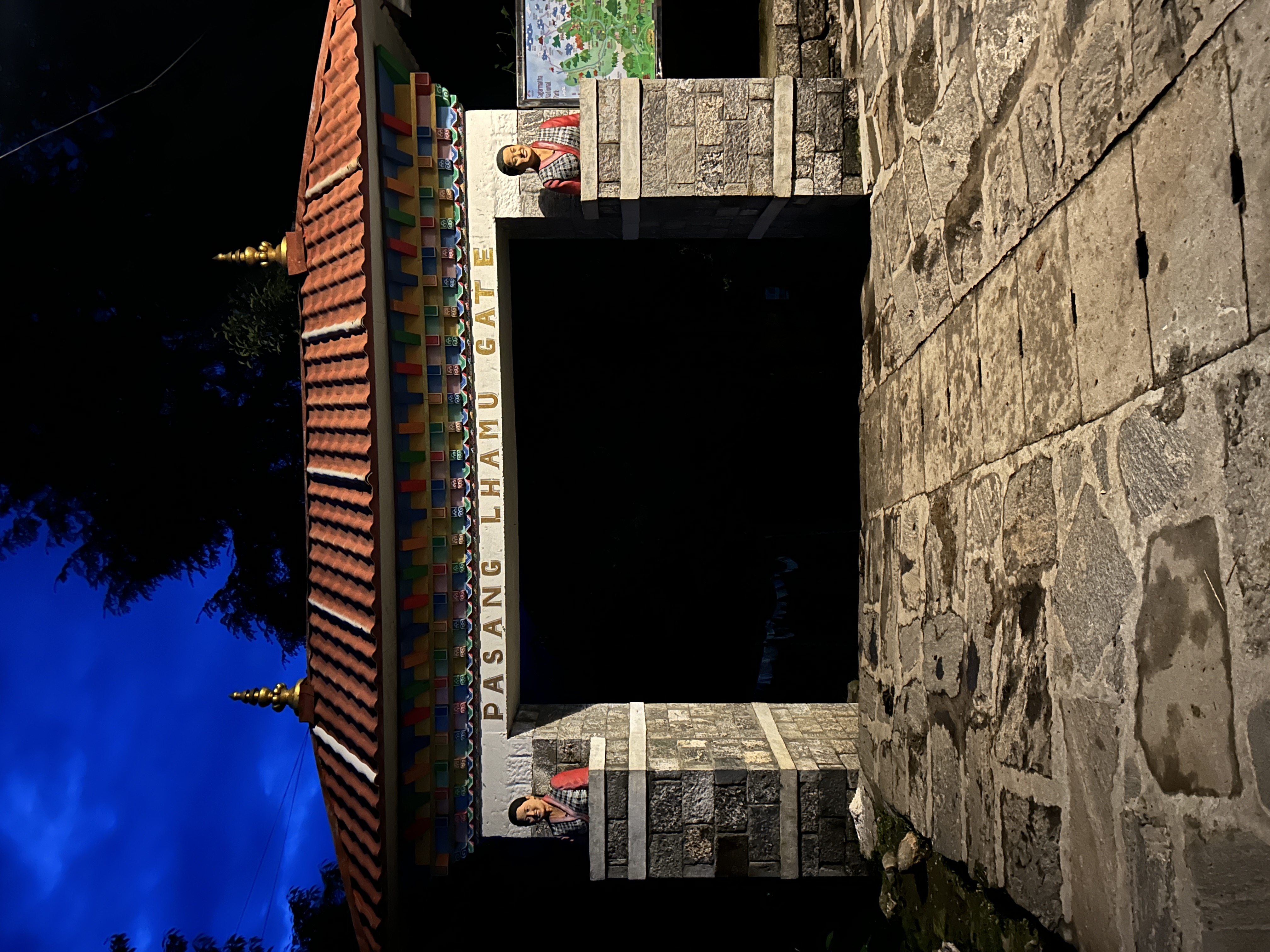
The Sagarmatha National Park checkpoint is beyond Monjo, on the way from Phakding to Namche; the Lukla arch marks the beginning of my walk. I followed the base-camp approach beside the Khumbu Glacier, without climbing the technical Icefall route. I stopped on the slopes of Kala Patthar rather than reaching its summit. Everest and Nuptse are identifiable in the sunrise frames; Pumori is the prominent pyramid in the clear-morning photograph. Other overlapping summits are left unnamed. Route and viewpoint references: Nepal Tourism Board and Alpine Ascents. Bird identifications were checked against Cornell/eBird’s Tibetan snowcock and Himalayan monal descriptions.
Everest Base Camp / June 2026 / Solo
The mountains stayed.
Something in me shifted.
I remember the view. I remember the people. More than anything, I remember how it felt to find a little more strength and peace inside myself, one day’s walk at a time.
Back to all six journeys